
Soaring summer energy bills are the reality for many American households in Florida, with cooling costs spiking upwards of 40 percent during peak months. Switching to solar power not only empowers you to take charge of your energy future, but also helps slash expenses and protect the environment. This guide shows how to carefully evaluate solar providers, negotiate the right financing, and secure long-term support, so you can confidently begin your journey toward independence and lower costs.
Table of Contents
- Step 1: Determine Solar Energy Needs And Goals
- Step 2: Research Available Local Solar Providers
- Step 3: Compare Service Offerings And Financing Options
- Step 4: Verify Licenses, Certifications, And Customer Reviews
- Step 5: Schedule Consultations And Evaluate Proposals
- Step 6: Confirm Provider’s Warranty And After-Sales Support
Quick Summary
| Key Point | Explanation |
|---|---|
| 1. Assess Your Energy Needs | Start with a comprehensive energy audit to determine electricity consumption and future goals for solar energy. |
| 2. Research Local Providers | Verify the credentials and experience of potential solar providers, focusing on their specific expertise in Florida’s solar landscape. |
| 3. Compare Financing Options | Understand the different financing strategies available, evaluating their long-term financial implications for your solar investment. |
| 4. Review Warranties and Support | Confirm warranty details and after-sales support to ensure your investment is protected and well maintained. |
| 5. Schedule Consultations for Proposals | Meet with multiple providers to gather detailed proposals and insights into each one’s approach to system design and installation. |
Step 1: Determine solar energy needs and goals
Selecting the right solar provider starts with understanding your home’s unique energy requirements. Before diving into provider comparisons, you’ll want to conduct a comprehensive assessment of your current electricity consumption and future energy goals. The U.S. Department of Energy’s solar guidebook recommends starting with a detailed energy audit that examines your household’s specific power usage patterns.
Begin by collecting your electricity bills from the past 12 months to establish a baseline. Look for total kilowatt-hour consumption, peak usage periods, and seasonal variations. Florida homeowners should pay special attention to summer months when air conditioning dramatically increases electricity demand. Florida’s Office of Energy resources suggests analyzing your average monthly consumption to determine the appropriate solar system size that matches your household needs. Consider factors like roof orientation, available sunlight hours, current energy efficiency of appliances, and potential future changes in household energy consumption.
Your solar energy goals might range from reducing utility bills to achieving complete energy independence or minimizing environmental impact. Some homeowners aim to offset 50% of their electricity usage, while others pursue full solar replacement. Draft a clear list of objectives that will guide your solar provider selection process and help you communicate effectively with potential installers.
Pro tip: Create a spreadsheet tracking your energy consumption and goals to present a clear picture when consulting with solar providers.
Step 2: Research available local solar providers
Now that you understand your energy needs, it’s time to explore solar providers in Florida. The Florida Solar Energy Center at the University of Central Florida serves as an excellent starting point for identifying reputable local solar companies. Begin by creating a comprehensive list of potential providers operating within your specific region, focusing on those with extensive experience in Florida’s unique solar landscape.
Start your research by checking licensing and certifications from state authorities. The Florida Energy Clearinghouse recommends verifying each provider’s credentials, including their solar contractor license, insurance documentation, and professional affiliations. Look for companies with North American Board of Certified Energy Practitioners (NABCEP) certification, which indicates a high standard of professional knowledge and commitment to quality installation practices. Utilize online resources like local solar industry directories, consumer review platforms, and state energy office recommendations to gather initial information about potential providers.
Compare multiple providers by requesting detailed quotes, assessing their equipment brands, understanding warranty terms, and evaluating their track record of installations in Florida. Pay special attention to companies with demonstrated experience in handling local climate conditions, including hurricane resistance and optimal system design for maximum sun exposure.
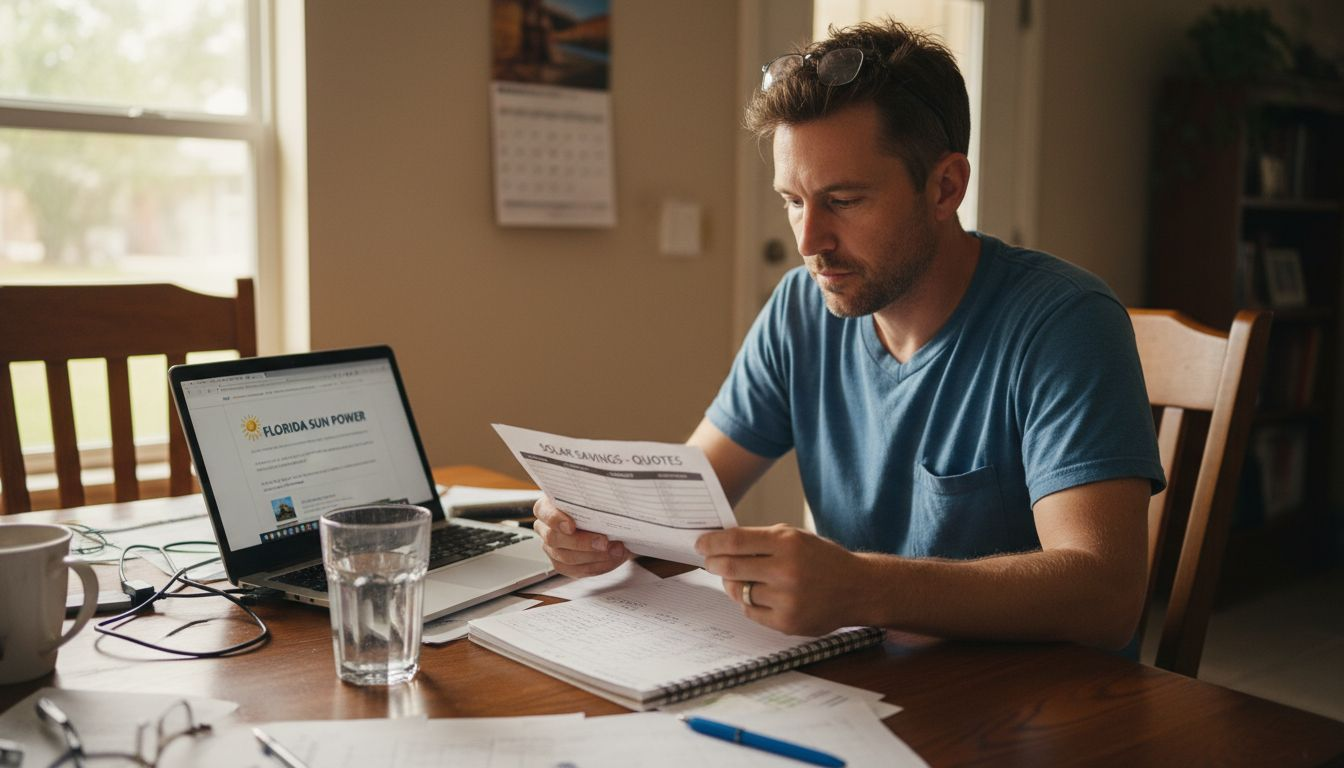
Pro tip: Request references from at least three solar providers and contact previous customers to gain insights into their real world installation experiences.
Step 3: Compare service offerings and financing options
Solar United Neighbors highlights four primary financing strategies for Florida homeowners: purchasing, loans, leasing, and power purchase agreements. Each option carries unique financial implications that can significantly impact your long-term solar investment. Understanding the nuanced differences between these models will help you select the most appropriate approach for your specific financial situation and energy goals.
Forbes Home Improvement’s solar financing guide recommends carefully evaluating the total cost of ownership, including upfront expenses, potential tax credits, and long-term savings potential. Purchase options typically provide the highest return on investment, allowing you to own the system outright and maximize available tax incentives. Solar loans offer a middle ground, enabling you to spread installation costs over time while building equity. Leasing and power purchase agreements can reduce initial expenses but may limit your long-term financial benefits and potential system ownership.
When comparing providers, request detailed financial breakdowns that outline total system costs, expected energy production, warranty terms, maintenance responsibilities, and projected savings. Pay close attention to performance guarantees, equipment quality, installation expertise, and the provider’s track record of customer satisfaction in Florida’s unique solar market.
Pro tip: Request multiple quotes with comprehensive financial projections and calculate your estimated break-even point for each financing option before making a final decision.
Here’s a comparison of common solar financing options available to Florida homeowners:
| Financing Method | Upfront Cost | Ownership | Long-Term Savings Potential |
|---|---|---|---|
| Purchase | Highest investment | Homeowner owns | Maximum, full tax incentives apply |
| Solar Loan | Moderate downpayment | Homeowner owns | High, payments build system equity |
| Lease | Minimal upfront cost | Provider owns | Moderate, limited by lease terms |
| Power Purchase Agreement (PPA) | Minimal or none | Provider owns | Lower, fixed price per kWh used |
Step 4: Verify licenses, certifications, and customer reviews
The Florida Solar Energy Center provides critical guidance for verifying solar provider credentials in Florida. Before committing to any solar installation, you must thoroughly investigate the provider’s professional standing, ensuring they meet all state and industry standards. This verification process protects you from potential subpar installations and helps guarantee the long-term performance of your solar investment.
Florida’s Department of Business and Professional Regulation offers an online license verification tool that allows homeowners to confirm a contractor’s current licensing status. Begin by checking the solar provider’s state contractor license, paying special attention to any solar specific certifications. Look for additional professional credentials like North American Board of Certified Energy Practitioners (NABCEP) certification, which indicates advanced technical expertise. Beyond official licenses, investigate the provider’s reputation by examining customer reviews across multiple platforms, checking their Better Business Bureau rating, and requesting references from recent local installations.
Review online testimonials and independent review sites carefully, looking for patterns in customer experiences. Pay attention to comments about installation quality, system performance, customer service responsiveness, and post installation support. A reputable solar provider will have a consistent track record of positive customer interactions and transparent communication.
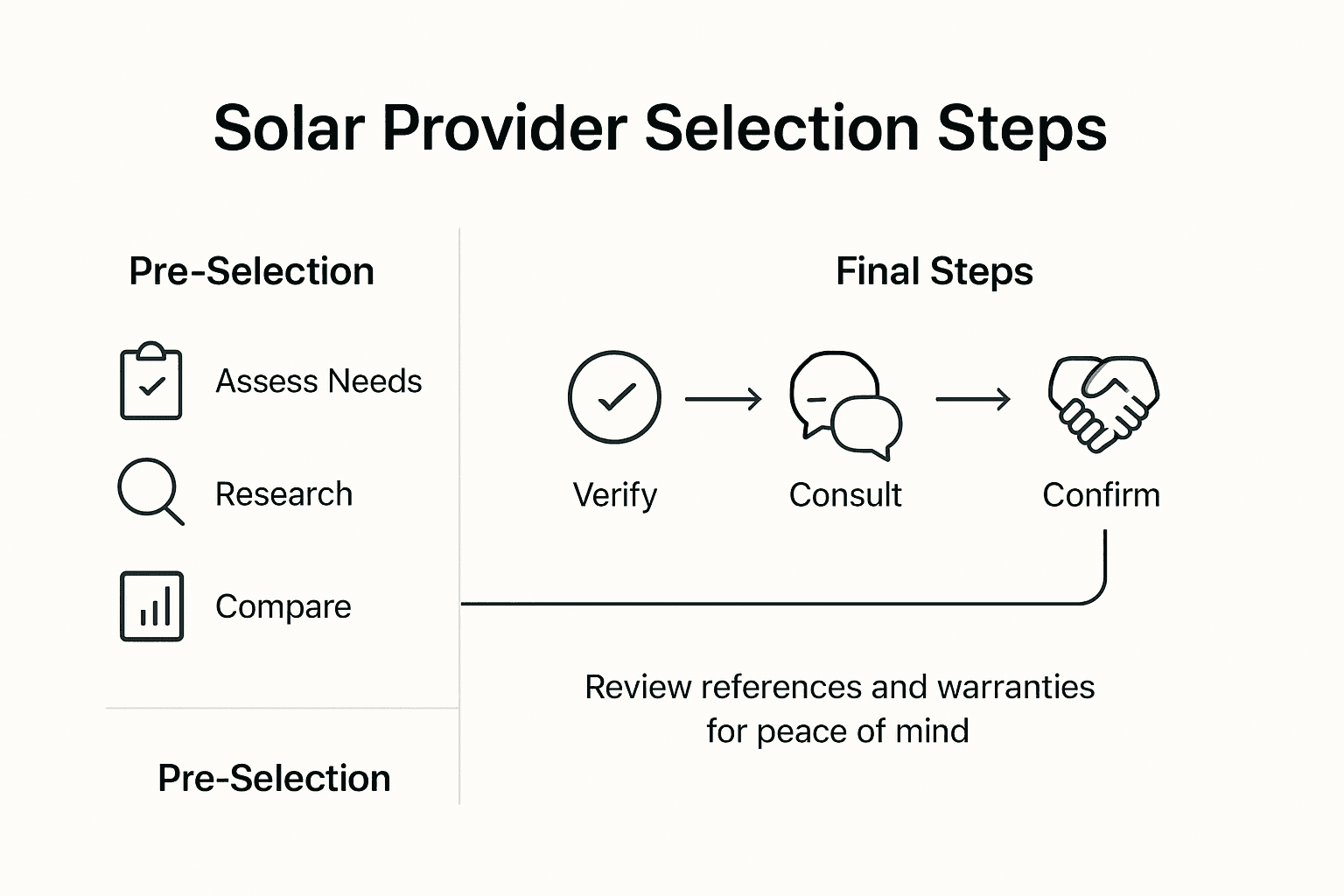
Pro tip: Request a list of recent local references and personally contact at least three past customers to gain unfiltered insights about their actual solar installation experience.
Step 5: Schedule consultations and evaluate proposals
The U.S. EPA’s proposal evaluation guidelines recommend scheduling consultations with multiple solar providers to gather comprehensive insights into your potential solar installation. These initial meetings are critical for understanding each provider’s approach, technical expertise, and ability to meet your specific energy requirements. Prepare a list of detailed questions covering system design, equipment specifications, installation timelines, warranty terms, and expected energy production.
During consultations, request comprehensive written proposals that include a complete breakdown of system components, estimated energy generation, total installation costs, financing options, and projected long term savings. Pay close attention to the level of detail and transparency demonstrated by each provider. A high quality proposal should include precise system sizing calculations, detailed equipment specifications, performance guarantees, and a clear explanation of how the proposed solar solution aligns with your specific energy goals.
Compare each proposal systematically, evaluating not just the price but the overall value proposition. Consider factors like equipment quality, installer expertise, warranty coverage, estimated system performance, and the provider’s reputation for customer service. Look beyond the initial cost and focus on the total value the solar installation will bring to your home in terms of energy savings, property value enhancement, and environmental impact.
Pro tip: Create a standardized comparison spreadsheet to objectively score each proposal across multiple key criteria, ensuring you make a well informed decision.
Step 6: Confirm provider’s warranty and after-sales support
The Florida Solar Energy Center’s certification standards emphasize the critical importance of understanding comprehensive warranty coverage before finalizing your solar installation. A robust warranty protects your investment and provides peace of mind about your system’s long term performance. Focus on examining not just the duration of the warranty but the specific components and conditions covered by the solar provider.
The Florida Department of Environmental Protection recommends requesting detailed documentation that outlines warranty terms for solar panels, inverters, mounting equipment, and labor. A high quality warranty should cover panel performance degradation, manufacturing defects, and installation issues. Pay special attention to the provider’s process for addressing system malfunctions, replacement protocols, and response times for maintenance requests. Verify whether the warranty is transferable if you sell your home and understand any conditions that might void the coverage.
Seek clarity on the provider’s after-sales support structure. Inquire about their maintenance programs, emergency repair services, monitoring capabilities, and customer support channels. Ask specific questions about how they handle performance issues, system updates, and potential equipment replacements. A reputable solar provider will offer transparent, comprehensive support that extends well beyond the initial installation.
Pro tip: Request a written breakdown of the full warranty terms and have a legal professional review the document to ensure you understand all nuanced conditions and potential limitations.
This table summarizes key warranty and after-sales support features to confirm with your provider:
| Coverage Aspect | What to Look For | Why It Matters |
|---|---|---|
| Panel Warranty | Covers performance degradation | Ensures reliable energy production |
| Inverter Warranty | At least 10 years of coverage | Prevents out-of-pocket repairs |
| Labor & Installation | Includes workmanship issues | Protects against faulty installation |
| Transferability | Warranty can be transferred | Maintains home value on resale |
| Support Response | Clear repair/maintenance process | Quick resolution of system problems |
Find Your Trusted Partner to Navigate Florida Solar Choices with Confidence
Choosing the right solar provider can feel overwhelming with all the options and technical details to consider. The article highlights key challenges like assessing your unique energy needs, comparing financing options, verifying licenses, and ensuring strong warranties. You want to avoid costly mistakes and select a trusted expert who understands Florida’s climate, local incentives, and installation best practices.
At PES Solar, we specialize in helping Florida homeowners achieve their energy independence and financial goals. From tailored system design and premium REC solar panels to flexible financing and Tesla Powerwall integration, our experienced team covers every detail for a smooth, worry-free solar journey. We hold all necessary certifications and prioritize transparent communication to deliver lasting value and service you can trust.
Take the guesswork out of your solar decision today and partner with a proven local leader who puts your needs first.
Experience the benefits of top-quality solar solutions designed just for Florida homes.
Start by visiting PES Solar’s homepage to schedule your free consultation. Discover how easy it is to lower your energy bills and increase your property value with support from trusted experts committed to your long-term satisfaction.
Ready to move forward with confidence? Learn more about our financing options and explore customized solar panel installation solutions that fit your lifestyle and budget.
Frequently Asked Questions
How do I determine my solar energy needs before selecting a provider?
To determine your solar energy needs, begin by conducting a detailed energy audit of your household. Gather your electricity bills from the past 12 months to assess total kilowatt-hour consumption and peak usage periods, then identify your energy goals.
What should I look for when researching local solar providers?
When researching local solar providers, verify their licenses, certifications, and experience in your region’s climate conditions. Begin by creating a list of potential providers and check their credentials for solar contractor licensing and relevant certifications.
How can I compare financing options for solar systems?
To compare financing options, explore methods such as purchasing, loans, leasing, and power purchase agreements. Request detailed quotes from multiple providers, including the total costs, potential savings, and terms of ownership to evaluate which financing strategy aligns best with your financial situation.
What warranties should I expect from a solar provider?
Expect warranties that cover panel performance, inverters, and installation quality. Request clear documentation outlining the duration and specific components covered, and ensure you understand the support provided for maintenance and repairs after installation.
How do I evaluate proposals from multiple solar providers?
When evaluating proposals, focus on detailed breakdowns that include system components, costs, and projected energy savings. Use a standardized comparison method, scoring each proposal based on pricing, warranty terms, equipment quality, and customer service reputation.
What factors influence the long-term performance of my solar system?
The long-term performance of your solar system is influenced by factors such as installation quality, equipment selected, and your household’s energy consumption patterns. Ensure you verify the provider’s experience with local installation conditions to achieve optimal efficiency over time.
Recommended
- 3 Reasons To Install Solar Panels On Your Florida Home | PES Solar
- What Are The Rules For Solar Panels In Florida? | PES Solar
- What Is The Best Solar Company In Florida? | PES Solar
- Is It Worth Getting Solar Panels In Florida? | PES Solar
- Solar Panel Installation Gainesville FL
- Solar Panel Installation West Palm Beach, FL
