
Florida businesses face rising operational costs, but solar power offers a practical way to cut expenses while advancing sustainability. Switching to solar energy aligns with the growing american demand for clean technology, with commercial installations generating as much as several megawatts of electricity in the Sunshine State. Understanding the key differences between commercial and residential solar systems helps property owners select solutions that improve efficiency and maximize long-term savings.
Table of Contents
- Defining Commercial and Residential Solar Systems
- Distinctive Features For Florida Property Owners
- Installation, Scale, And Maintenance Differences
- Cost Breakdown And Incentives Comparison
- Choosing The Right Solar Solution For Your Property
Key Takeaways
| Point | Details |
|---|---|
| System Size Differences | Residential systems range from 3 to 10 kilowatts, while commercial systems can go from 50 kilowatts to several megawatts. |
| Complexity and Maintenance | Commercial solar installations require advanced engineering and structured maintenance programs, unlike simpler residential systems. |
| Financial Incentives | Residential and commercial solar projects benefit from different incentives; residential systems enjoy a 30% federal tax credit, whereas commercial installations have access to additional depreciation benefits. |
| Local Climate Considerations | Florida’s unique weather conditions necessitate specialized engineering for solar systems, including durability against hurricanes and heat. |
Defining Commercial and Residential Solar Systems
Solar energy systems represent a transformative technology enabling electricity generation through photovoltaic (PV) panels, with distinct variations between commercial and residential applications. Photovoltaic systems convert sunlight directly into electricity through sophisticated semiconductor technology, serving different purposes based on scale and energy requirements.
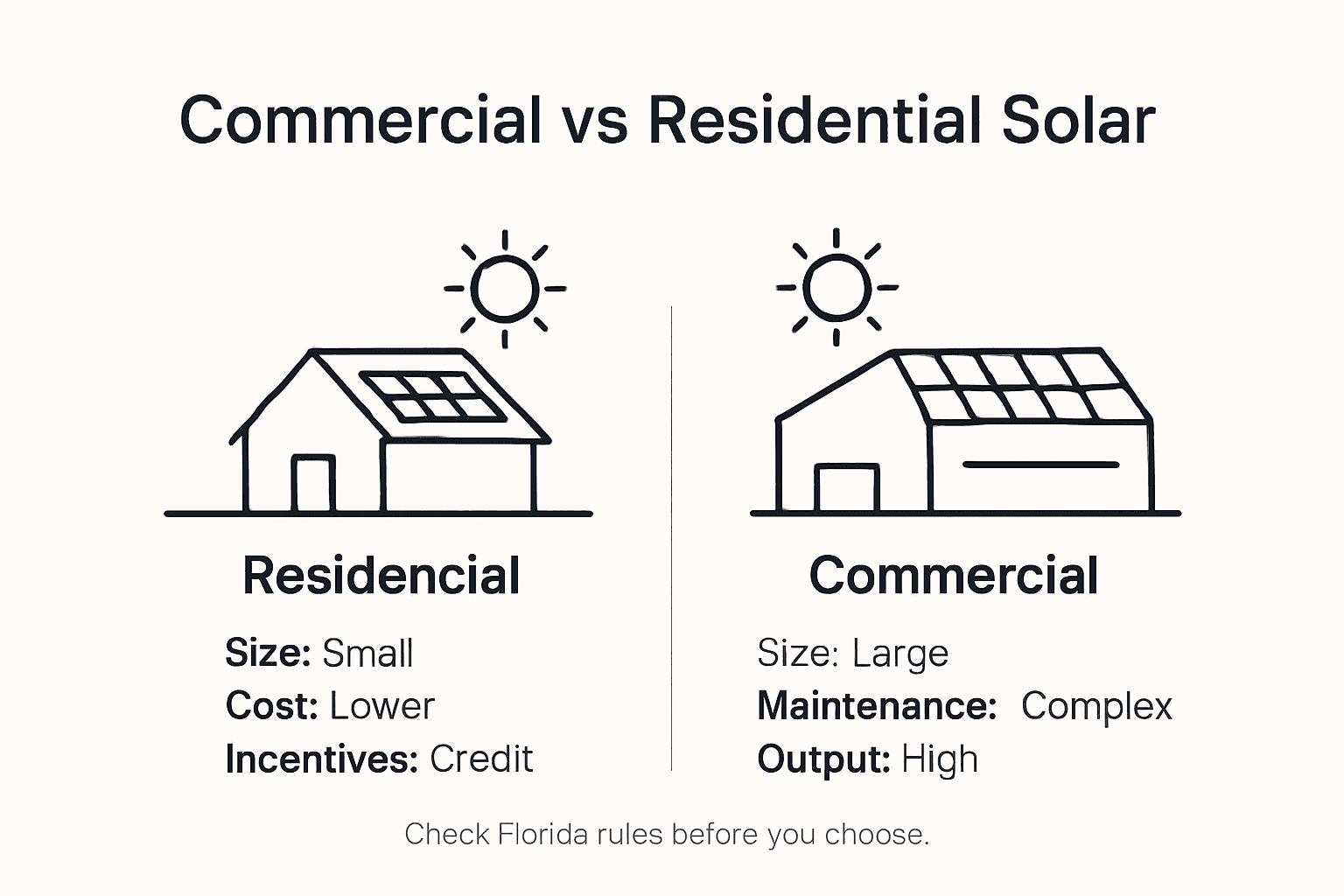
In Florida, residential solar systems typically range from 3 to 10 kilowatts, designed to meet the electricity needs of individual homes. These systems are characterized by smaller rooftop installations that connect directly to a household’s electrical infrastructure. Commercial solar systems, by contrast, are substantially larger installations ranging from 50 kilowatts to several megawatts, serving businesses, industrial facilities, agricultural operations, and institutional campuses.
The primary differences between commercial and residential solar systems extend beyond mere size. Commercial installations often feature more complex electrical configurations, advanced mounting systems, and higher efficiency panels optimized for consistent large-scale power generation. They may include ground-mounted arrays, carport solar structures, and sophisticated energy management technologies that residential systems typically do not incorporate. While both system types share fundamental components like solar panels, inverters, and mounting hardware, their design, scale, and implementation strategies diverge significantly.
Pro tip: When evaluating solar options in Florida, always conduct a comprehensive energy audit to determine whether a residential or commercial solar system best matches your specific power consumption patterns and financial goals.
Here’s a concise comparison of commercial and residential solar systems for Florida property owners:
| Aspect | Residential Solar | Commercial Solar |
|---|---|---|
| Typical System Size | 3–10 kilowatts | 50 kilowatts–several MW |
| Primary Location | Home rooftops | Rooftops, ground, carports |
| Complexity | Simple installation | Advanced engineering needed |
| Typical Owner | Homeowner | Business or institution |
| Key Maintenance Need | Occasional inspection | Structured, ongoing programs |
| Incentive Options | Federal tax credit, net metering | Tax credits, depreciation incentives |
Distinctive Features for Florida Property Owners
Florida’s unique solar landscape presents extraordinary opportunities and challenges for property owners considering solar installations. The Florida Solar Energy Center conducts specialized research on solar technologies tailored to local climate conditions, providing critical insights into system design and performance specific to the Sunshine State.
Property owners must consider several distinctive features when planning solar installations. Florida’s high solar irradiance creates an ideal environment for energy generation, but systems must be engineered to withstand intense weather conditions like hurricanes and extreme heat. Durability standards become paramount, with mounting systems and panel selections requiring advanced engineering to resist wind loads and potential storm damage. Specialized racking systems, impact-resistant panels, and enhanced structural reinforcements differentiate Florida solar installations from those in other regions.
Commercial and residential solar systems in Florida also require unique grid integration strategies. Solar technologies must account for local regulations and infrastructure peculiarities that impact energy production and storage. Many Florida property owners incorporate battery backup systems to enhance resilience during frequent thunderstorms and potential grid interruptions. These systems often include advanced energy management technologies that optimize power generation, storage, and distribution specifically designed for Florida’s dynamic electrical grid and climate challenges.
Pro tip: Consult with local solar experts who understand Florida’s specific solar regulations and climate conditions before designing your solar installation to maximize system efficiency and long-term performance.
This table summarizes unique solar challenges and solutions specific to Florida:
| Florida-Specific Factor | Challenge for Solar | Common Solution |
|---|---|---|
| High hurricane risk | Wind and storm damage | Impact-resistant racking |
| Intense heat and sunlight | Panel overheating | High-efficiency panel designs |
| Storm-related power outages | Grid interruptions | Battery backup systems |
| Regulatory complexity | Permit compliance | Local expert consultation |
Installation, Scale, and Maintenance Differences
Solar installations in Florida demonstrate significant variations between residential and commercial systems, particularly in terms of complexity, scale, and maintenance requirements. Photovoltaic system operations and maintenance differ substantially based on system size and application, with each type demanding unique approaches to design, implementation, and long-term care.
Residential solar systems typically involve rooftop installations ranging from 3 to 10 kilowatts, characterized by simpler electrical configurations and more straightforward maintenance protocols. Mounting complexity remains relatively low, with most systems utilizing standard roof-mounted panels and basic inverter technologies. By contrast, commercial solar installations often encompass ground-mounted arrays, carport structures, and more sophisticated tracking systems that require advanced engineering and more intensive maintenance strategies.
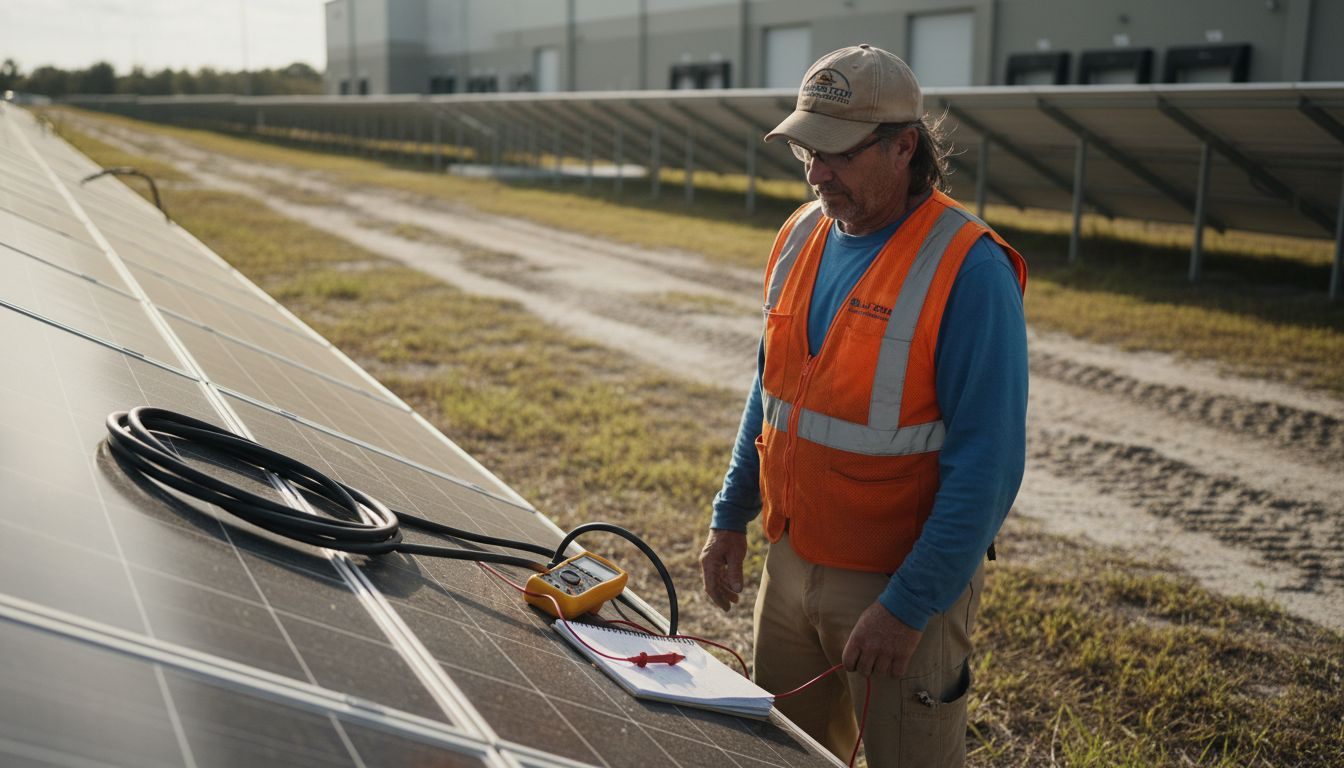
Commercial solar systems demand comprehensive maintenance programs to ensure reliability and maximize return on investment, with maintenance cycles that are significantly more structured and complex than residential installations. These large-scale systems frequently incorporate multiple monitoring technologies, advanced inverters, and specialized cleaning and inspection protocols. Commercial property owners must invest in more robust maintenance strategies, including regular electrical system checks, detailed performance monitoring, and proactive component replacement to maintain optimal system efficiency over extended periods.
Pro tip: Schedule professional solar system assessments annually, regardless of system size, to identify potential performance issues and maintain maximum energy production efficiency.
Cost Breakdown and Incentives Comparison
The Residential Clean Energy Credit offers significant financial advantages for Florida solar adopters, with federal incentives dramatically transforming the economic landscape of solar investments. Residential and commercial solar projects in Florida face distinct financial considerations, with multiple layers of potential savings and tax benefits influencing overall project economics.
Residential solar installations typically range from $15,000 to $25,000 before incentives, with homeowners benefiting from a substantial 30% federal tax credit that can immediately reduce system costs. Investment calculations become more complex for commercial projects, which often involve larger upfront expenses ranging from $50,000 to $500,000 depending on scale and energy requirements. These commercial installations frequently qualify for additional depreciation benefits and performance-based incentives that can offset initial investment challenges.
The Database of State Incentives for Renewables & Efficiency provides comprehensive insights into Florida-specific solar incentives, revealing a nuanced landscape of financial opportunities. Commercial property owners often have access to more sophisticated financing mechanisms, including accelerated depreciation, state-level grants, and performance-based incentives that can significantly improve project return on investment. Residential systems, while more limited in incentive options, still benefit from net metering policies, property tax exemptions, and the federal solar tax credit that makes renewable energy more financially accessible.
Pro tip: Consult with a tax professional who specializes in renewable energy incentives to maximize available credits and ensure you capture every potential financial benefit for your solar investment.
Choosing the Right Solar Solution for Your Property
Performance estimation tools help Florida property owners make informed solar investment decisions, considering the unique energy requirements and architectural characteristics of residential and commercial properties. The selection process involves carefully evaluating multiple complex factors that extend far beyond simple energy production calculations.
Property owners must conduct comprehensive assessments of their specific energy consumption patterns, roof or ground space availability, and long-term financial objectives. Energy consumption analysis becomes critical in determining whether a residential rooftop system or a larger commercial installation makes the most strategic sense. Residential systems typically range from 3 to 10 kilowatts and work best for single-family homes with consistent energy needs, while commercial solutions can scale from 50 kilowatts to several megawatts, serving larger facilities with more complex power requirements.
Selecting the ideal solar solution requires careful consideration of local regulations, financial incentives, and property-specific characteristics, making expert consultation invaluable. Key decision factors include available sunlight exposure, structural integrity, electrical infrastructure compatibility, potential future energy expansion needs, and the specific financial incentives applicable to residential versus commercial installations. Commercial properties often have more flexibility in system design, potentially utilizing ground-mounted arrays or complex tracking systems, while residential installations are typically more constrained by rooftop limitations.
Pro tip: Conduct a professional energy audit before making your final solar investment decision to precisely map your current and future energy requirements.
Make the Right Solar Choice for Your Florida Property Today
Understanding the differences between commercial and residential solar systems is crucial for Florida property owners seeking to maximize energy savings and system performance. Whether you face the challenge of selecting the right system size, navigating Florida-specific weather conditions, or taking full advantage of local incentives such as the federal tax credit and battery backup options, the key is expert guidance and tailored solutions. At PES Solar, we help you conquer these complexities so you can enjoy lower energy bills and increased property value with confidence.
Your goals matter. We specialize in designing and installing both residential rooftop systems and large-scale commercial arrays that withstand Florida’s intense sunlight and hurricane risks. Our expertise includes integrating advanced energy management and battery systems like Tesla Powerwall to keep your property powered when the grid fails. Ready to match the best solar solution to your unique needs? Explore our comprehensive services and financing options at PES Solar and start your journey towards energy independence with trusted local professionals.
Are you ready to unlock your property’s solar potential?
Get a free customized solar consultation and estimate today from PES Solar. Visit our site now to learn more about both residential solar solutions and commercial solar installation. Don’t wait—transform your energy future with Florida’s leading solar experts.
Frequently Asked Questions
What is the difference between commercial and residential solar systems?
Commercial solar systems are larger installations typically ranging from 50 kilowatts to several megawatts, designed for businesses or institutions. In contrast, residential solar systems usually range from 3 to 10 kilowatts, tailored to meet the energy needs of individual homes.
What are the maintenance requirements for residential solar systems compared to commercial solar systems?
Residential solar systems generally require occasional inspections, while commercial solar systems demand comprehensive maintenance programs with structured cycles, regular checks, and advanced monitoring technologies to ensure reliability and maximum efficiency.
What financial incentives are available for solar installations?
Homeowners can benefit from a 30% federal tax credit and net metering options for residential solar systems. Commercial properties may qualify for additional benefits, such as accelerated depreciation and performance-based incentives, significantly impacting the overall project return on investment.
How do Florida’s climate and regulations affect solar installations?
Florida’s high solar irradiance provides excellent energy generation potential, but installations must withstand intense weather conditions like hurricanes. Local regulations also dictate compliance for grid integration, making expert consultation invaluable for successful installations.
Recommended
- What Are The Rules For Solar Panels In Florida? | PES Solar
- Is It Worth Getting Solar Panels In Florida? | PES Solar
- 3 Reasons To Install Solar Panels On Your Florida Home | PES Solar
- Invest In Sunshine: Benefits Of Florida Solar Panels | PES Solar
- Solar Panel Installation Winter Park FL
- Solar Panel Installation Pine Hills FL
