
Over half of American homeowners say they would consider solar power, yet many in Florida feel lost when it comes to choosing the right installation for their property. With electric bills on the rise and generous state incentives available, understanding your solar needs has never been more important. This guide will help you evaluate your options, avoid common pitfalls, and make confident, informed choices for your home’s energy future.
Table of Contents
- Step 1: Assess Your Solar Needs and Budget
- Step 2: Research Local Solar Installer Options
- Step 3: Verify Licenses, Certifications, and Experience
- Step 4: Compare Proposals and Financing Options
- Step 5: Check Reviews and Validate References
- Step 6: Schedule Onsite Consultation and Finalize Selection
Quick Summary
| Key Takeaway | Explanation |
|---|---|
| 1. Assess Energy Needs First | Review your electric bills to determine average monthly consumption, essential for sizing your solar system accurately. |
| 2. Research Financial Incentives | Explore state and federal rebates available in Florida to reduce installation costs substantially before finalizing your solar investment. |
| 3. Evaluate Installer Credentials | Verify solar installers’ licenses and certifications ensuring you choose qualified professionals for your solar installation project. |
| 4. Compare Detailed Proposals | Obtain multiple solar bids to analyze key metrics like system performance, energy production, and financing options for informed decision-making. |
| 5. Conduct Thorough Reference Checks | Examine online reviews and contact references to gauge installer reputation and customer satisfaction, ensuring a quality installation experience. |
Step 1: Assess Your Solar Needs and Budget
Choosing the right solar installation starts with understanding your home’s unique energy requirements and financial landscape. This critical first step helps you determine whether solar makes sense for your Florida property and how much you should invest.
Begin by analyzing your current electricity consumption. Review 12 months of electric bills to calculate your average monthly usage. Most Florida homes consume between 1000 and 1500 kilowatt hours monthly. Estimating your home’s solar potential involves mapping your roof’s sun exposure, checking its structural integrity, and understanding your energy consumption patterns. Consider factors like roof angle, shading from trees, and the direction your home faces. South facing roofs with minimal obstructions typically generate the most solar energy in Florida.
Financial planning is equally important. Research available state and federal incentives to offset installation costs. Florida offers attractive solar rebates through the HOMES Program, which provides financial assistance based on household income levels. Calculate your potential return on investment by comparing current electricity expenses against projected solar system costs. Most residential solar installations in Florida range between $15000 and $25000 before incentives.
Pro tip: Request detailed energy assessments from multiple solar installers to get precise recommendations tailored to your specific home and budget requirements. A professional assessment will provide the most accurate estimate of potential solar savings and system design.
Here is a summary of key factors to consider when evaluating your home’s solar potential and budget:
| Consideration | Why It Matters | Typical Florida Range |
|---|---|---|
| Average Monthly Consumption | Determines system size needed | 1000–1500 kWh |
| Installation Cost Range | Helps estimate investment required | $15,000–$25,000 before incentives |
| Roof Direction & Shading | Impacts solar energy production | South-facing, minimal shading |
| Incentive Availability | Offsets upfront and ongoing costs | Various state and federal options |
Step 2: Research Local Solar Installer Options
Researching local solar installers is a crucial step in finding the right partner for your Florida home solar project. This process involves identifying qualified professionals who can deliver high-quality installations and reliable service.
Start by exploring professional networks and certified directories. The Florida Solar Energy Industries Association consumer protection directory provides a comprehensive list of qualified solar contractors who have completed specialized training. Look for installers with credentials from recognized state and national organizations like the North American Board of Certified Energy Practitioners (NABCEP). Investigate each company’s background by checking their years of experience working specifically in Florida, reviewing customer testimonials, and verifying their licensing and insurance status.
Expand your research by consulting local solar advocacy groups and nonprofit organizations. Florida Solar For All offers resources connecting homeowners with reputable local installers, particularly for income-qualified families. Request detailed quotes from at least three different solar companies, comparing their proposed system designs, equipment quality, warranty offerings, and total installation costs. Pay close attention to each installer’s approach to system sizing, their understanding of local building codes, and their track record of successful residential solar projects in Florida.
Pro tip: Schedule in-person consultations with your top installer candidates to assess their communication skills, technical expertise, and willingness to provide comprehensive project details before making a final decision.
Step 3: Verify Licenses, Certifications, and Experience
Validating a solar installer’s professional credentials is a critical step in protecting your investment and ensuring a high quality solar installation for your Florida home. This verification process helps you distinguish between qualified professionals and potentially unreliable contractors.
Florida’s licensing requirements for solar contractors are comprehensive and designed to protect homeowners. Start by checking the contractor’s state license through the Florida Construction Industry Licensing Board. The Florida Solar Energy Industries Association consumer protection directory provides an additional layer of verification, listing professionals who have completed specialized training and meet rigorous industry standards. Look specifically for certifications from the North American Board of Certified Energy Practitioners (NABCEP), which represents the gold standard in solar professional credentials.
Dig deeper by requesting and independently verifying each potential installer’s documentation. Examine their insurance coverage, worker’s compensation policies, and general liability protection. Request a detailed list of completed projects in Florida, paying special attention to installations similar to your home’s configuration. Contact references directly and ask about their experience with the installation process, system performance, and the company’s responsiveness to post installation concerns.
Pro tip: Create a dedicated checklist of licensing and certification requirements before meeting with potential solar installers, ensuring you systematically evaluate each candidate’s professional qualifications and track record.
Step 4: Compare Proposals and Financing Options
Comparing solar installation proposals and exploring financing options is a crucial step in making an informed decision about your Florida home solar project. This process helps you understand the full financial landscape and select the most advantageous approach for your specific situation.
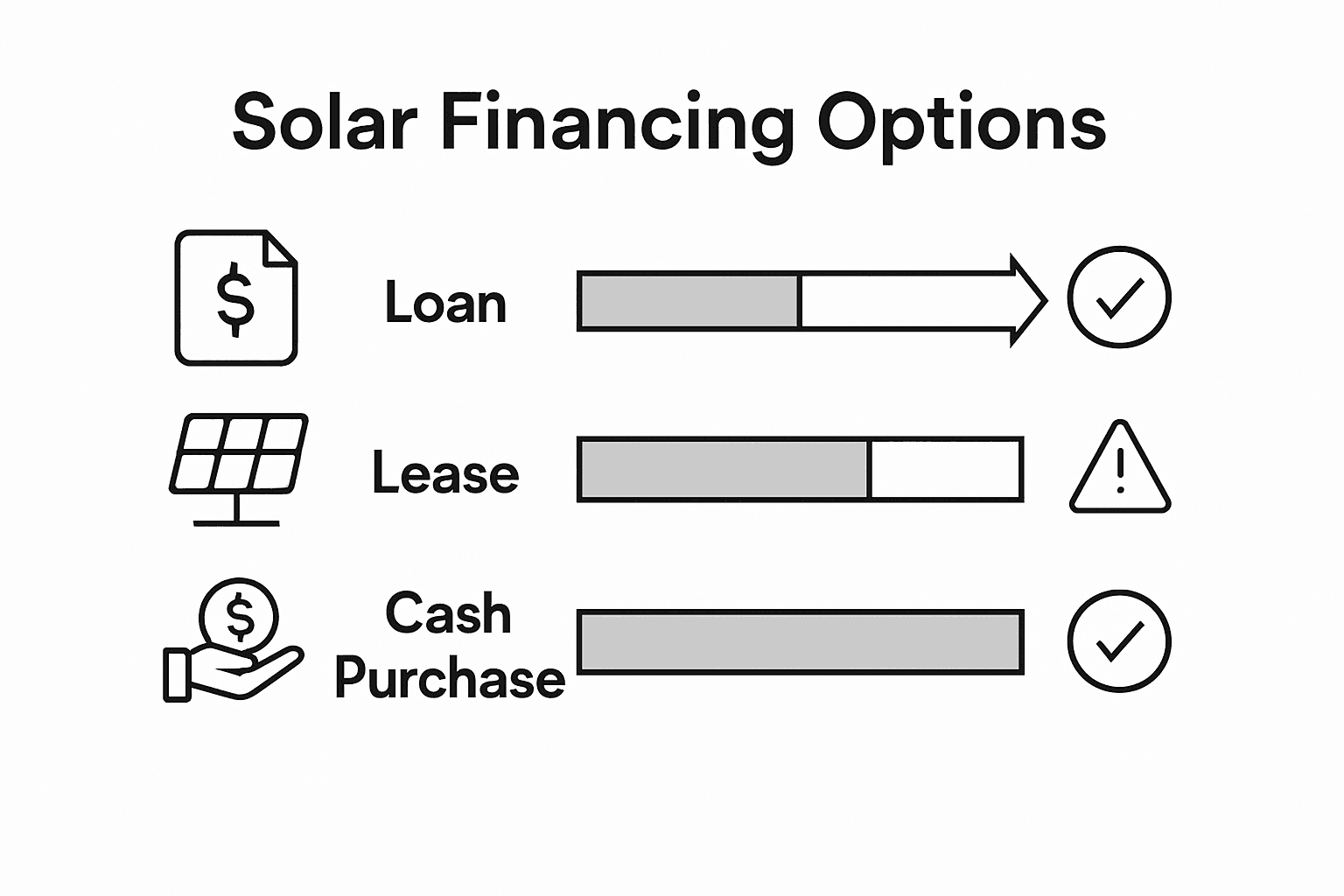
The Homeowner’s Guide to Solar from the U.S. Department of Energy recommends obtaining multiple detailed bids to make an accurate comparison. When reviewing proposals, look beyond just the total cost and examine each installer’s specific offerings. Analyze the proposed solar panel specifications, inverter types, expected energy production, warranty terms, and installation details. Pay close attention to the estimated system performance, projected energy savings, and the expected return on investment. The Florida Energy Saver Program’s HOMES Program provides additional insights into financial incentives that can significantly reduce your overall project costs. Explore various financing options including cash purchases, solar loans, home equity lines of credit, and solar leasing programs. Each option comes with unique advantages some offer immediate savings while others provide long term financial benefits.
Carefully evaluate the financial implications of each proposal. Calculate the total system cost, potential tax credits, state and federal incentives, and projected energy savings over the system’s lifetime. Consider factors like the installer’s reputation, equipment quality, installation warranty, and potential future maintenance costs. Some proposals might appear cheaper upfront but could result in higher long term expenses due to lower quality equipment or less efficient system design.

Pro tip: Create a detailed spreadsheet comparing each proposal’s key financial metrics including upfront costs, financing terms, estimated energy production, warranty details, and projected savings to make an objective side by side comparison.
The following table compares common solar financing options for Florida homeowners:
| Financing Option | Upfront Cost | Typical Term Length | Ownership & Benefits |
|---|---|---|---|
| Cash Purchase | Full system price | Immediate ownership | Maximum savings and incentives |
| Solar Loan | Low to moderate | 5–20 years | Ownership after loan is paid off |
| Solar Lease/Power Purchase Agreement | Little to none | 10–25 years | Third-party ownership; lower bills, fewer incentives |
| Home Equity Line | Variable based on equity | Flexible | Owner keeps incentives; added interest costs |
Step 5: Check Reviews and Validate References
Validating a solar installer’s reputation through comprehensive research is a critical step in protecting your investment and ensuring a quality installation experience. This process helps you gain insights beyond marketing materials and understand the real world performance of potential contractors.
The Florida Solar Energy Industries Association consumer protection resources recommend a thorough approach to vetting potential solar installers. Start by examining online reviews across multiple platforms including Google, Yelp, Better Business Bureau, and solar specific review sites. Look for patterns in customer feedback rather than focusing on isolated reviews. Pay attention to how installers respond to negative comments and their overall customer service approach. Request a detailed list of local references and contact at least three recent customers who have completed similar solar installations. Ask specific questions about the installation process, system performance, timeline adherence, communication quality, and post installation support.
Florida Solar For All’s consumer protection initiative emphasizes the importance of comprehensive background checks. Beyond online reviews, investigate the installer’s professional standing by checking for any formal complaints or legal actions. Verify the number of successful installations in Florida, particularly those similar to your home’s configuration. Look for additional credentials such as manufacturer certifications, industry awards, and professional association memberships that demonstrate ongoing commitment to excellence and professional development.
Pro tip: Create a standardized reference check questionnaire with specific performance and satisfaction metrics to ensure you gather consistent and comparable information from each installer’s references.
Step 6: Schedule Onsite Consultation and Finalize Selection
Scheduling an onsite consultation represents the critical final stage in selecting your solar installer where theoretical planning transforms into concrete project details. This meeting will help you confirm the most suitable solar solution for your Florida home and ensure alignment between your energy goals and the installer’s proposed approach.
The U.S. Department of Energy recommends working closely with your installer during the consultation to thoroughly evaluate your specific site conditions. Prepare for the onsite visit by gathering essential documents including recent electricity bills, property surveys, and roof specifications. During the consultation, expect a comprehensive assessment where the solar professional will conduct detailed measurements, analyze your roof’s structural integrity, evaluate sun exposure, and discuss specific system design options. Ask pointed questions about panel placement, expected energy production, potential shading issues, and how the proposed system matches your household’s unique energy consumption patterns.
Florida Solar For All’s consultation resources emphasize the importance of discussing financial considerations during this meeting. Request a comprehensive breakdown of total project costs, available incentives, financing options, and projected energy savings. Pay close attention to the installer’s communication style, technical expertise, and willingness to provide transparent and detailed explanations. Compare the proposed solutions against the research and proposals you have collected from other installers, ensuring you make an informed final selection based on comprehensive evaluation.
Pro tip: Bring a notepad and camera to the consultation to document specific recommendations, take photographs of your roof and property, and capture important details that will help you make a well informed decision.
Choose Your Trusted Florida Solar Partner with Confidence
Selecting the right solar installer for your Florida home can feel overwhelming. You want expert guidance that understands your unique energy needs, verifies credentials carefully, and offers clear financing options—all aligned with your budget and long-term savings goals. That is exactly where PES Solar steps in as your reliable local expert. We focus on delivering transparent solar panel installation with top-tier equipment like REC panels and Tesla Powerwall battery options backed by years of trusted Florida experience.
Key challenges like verifying licenses, comparing proposals, and managing incentives are simplified when you partner with specialists who prioritize your peace of mind. Visit our website to explore how we help homeowners like you unlock maximum energy independence and financial benefits. Let us handle the complex details while you enjoy lower energy bills and increased property value.
Take control of your solar journey today
Ready to skip the guesswork and start saving with expert support? Reach out now for a free, personalized consultation tailored to your Florida home. Discover how easy it is to turn sunlight into lasting energy savings by visiting PES Solar. Your trusted solar solution awaits.
Frequently Asked Questions
How do I assess my solar needs before choosing a solar installer?
To assess your solar needs, start by analyzing your average monthly electricity consumption over the past year. Review your electric bills and consider factors like roof direction, shading, and structural integrity, then use this information to determine the appropriate solar system size.
What should I look for when researching local solar installers?
When researching local solar installers, check their credentials, years of experience, and customer testimonials. Make sure they are listed in certified directories and have certifications from recognized organizations to ensure quality and reliability.
How can I compare different solar installation proposals?
Compare solar installation proposals by evaluating not just the total cost but also the specific equipment offered, warranty terms, and projected energy savings. Create a detailed spreadsheet to analyze key financial metrics, allowing you to make an informed side-by-side comparison.
What licenses and certifications should a solar installer have in Florida?
A Florida solar installer should have a valid state license and ideally certifications from the North American Board of Certified Energy Practitioners (NABCEP). Verify these credentials to ensure you are hiring a qualified professional for your installation.
How do I validate the reputation of a solar installer?
To validate a solar installer’s reputation, examine online reviews from multiple platforms and contact recent customers for references. Ask specific questions about their installation experience and the installer’s reliability to gauge satisfaction before making a decision.
What should I expect during an onsite consultation with a solar installer?
During an onsite consultation, expect the installer to conduct a thorough assessment of your property, including roof measurements and sun exposure analysis. Be prepared to discuss your energy goals and ask detailed questions about system design and estimated costs to ensure alignment with your requirements.
Recommended
- What Is The Best Solar Company In Florida? | PES Solar
- 3 Reasons To Install Solar Panels On Your Florida Home | PES Solar
- What Are The Rules For Solar Panels In Florida? | PES Solar
- How Much Does It Cost To Install Solar Panels In Florida? | PES Solar
- Solar Panel Installation Gainesville FL
- Solar Panel Installation West Palm Beach, FL
