
Over one million American homes now use solar panels to cut their monthly bills and add property value. If you are a Florida homeowner curious about energy savings, understanding the right steps sets you up for success. With local financing options and tax incentives available, this guide breaks down what you need to know before starting residential solar installation so you can make choices that fit your home and budget.
Table of Contents
- Step 1: Assess Your Roof and Energy Needs
- Step 2: Select Suitable Solar Panels and Components
- Step 3: Prepare Roof and Electrical Setup
- Step 4: Mount Solar Panels Securely
- Step 5: Connect System and Finalize Installation
- Step 6: Test System Performance and Ensure Compliance
Quick Summary
| Key Insight | Explanation |
|---|---|
| 1. Evaluate Roof and Energy Needs | Assess your roof’s condition and your household’s energy consumption before installing solar panels. |
| 2. Choose the Right Solar Components | Select appropriate types of solar panels and other equipment based on efficiency, budget, and space availability. |
| 3. Ensure Safety through Preparation | Conduct necessary structural and electrical checks to meet safety and compliance standards before installation. |
| 4. Properly Mount Solar Panels | Use correct mounting techniques and equipment to secure panels, optimizing energy production and maintaining roof safety. |
| 5. Complete System Connection and Testing | Connect the solar system to your electrical infrastructure, and ensure compliance through inspections to verify proper functionality. |
Step 1: Assess Your Roof and Energy Needs
Before installing solar panels, you need to carefully evaluate your home’s energy potential and roof characteristics. This crucial first step determines whether solar is a viable and cost effective option for your property. The goal is to understand your current energy consumption and assess whether your roof can support a solar panel system.
Start by examining your roof’s condition, age, and orientation. Solar panels work best on roofs that are relatively new, structurally sound, and have a southern facing direction in the United States. You want minimal shade from trees or nearby buildings, which can significantly reduce energy production. The PVWatts Calculator from the National Renewable Energy Laboratory provides an excellent tool for homeowners to estimate potential solar energy generation based on specific location and roof characteristics. This online resource helps you calculate expected energy production by inputting details like your address, roof pitch, and local weather patterns.
To determine your energy needs, review 12 months of utility bills to understand your average monthly electricity consumption. Most residential solar systems are designed to offset 70 to 100 percent of your total energy usage. Factors like total square footage, number of occupants, and major electrical appliances will impact the recommended system size. Consumer Reports recommends carefully evaluating your current and projected energy consumption to ensure you design the most effective solar panel configuration for your specific household requirements.
Pro Tip: Schedule a professional energy audit before finalizing your solar plans. An expert can provide precise measurements of your home’s energy efficiency and recommend potential improvements that could reduce your overall energy needs.
Step 2: Select Suitable Solar Panels and Components
Choosing the right solar panels and components is crucial for creating an efficient and long lasting solar energy system for your home. This step involves understanding the different types of solar technologies available and selecting components that match your specific energy needs and roof characteristics.
Solar panel selection begins with understanding the primary panel types. The Center for Sustainable Systems details three main solar panel technologies: monocrystalline, polycrystalline, and thin-film panels. Monocrystalline panels are typically the most efficient and perform best in limited roof space, while polycrystalline panels offer a more budget friendly option. Thin-film panels are lightweight and flexible but generally less efficient. Your choice will depend on factors like available roof area, budget, and local climate conditions.
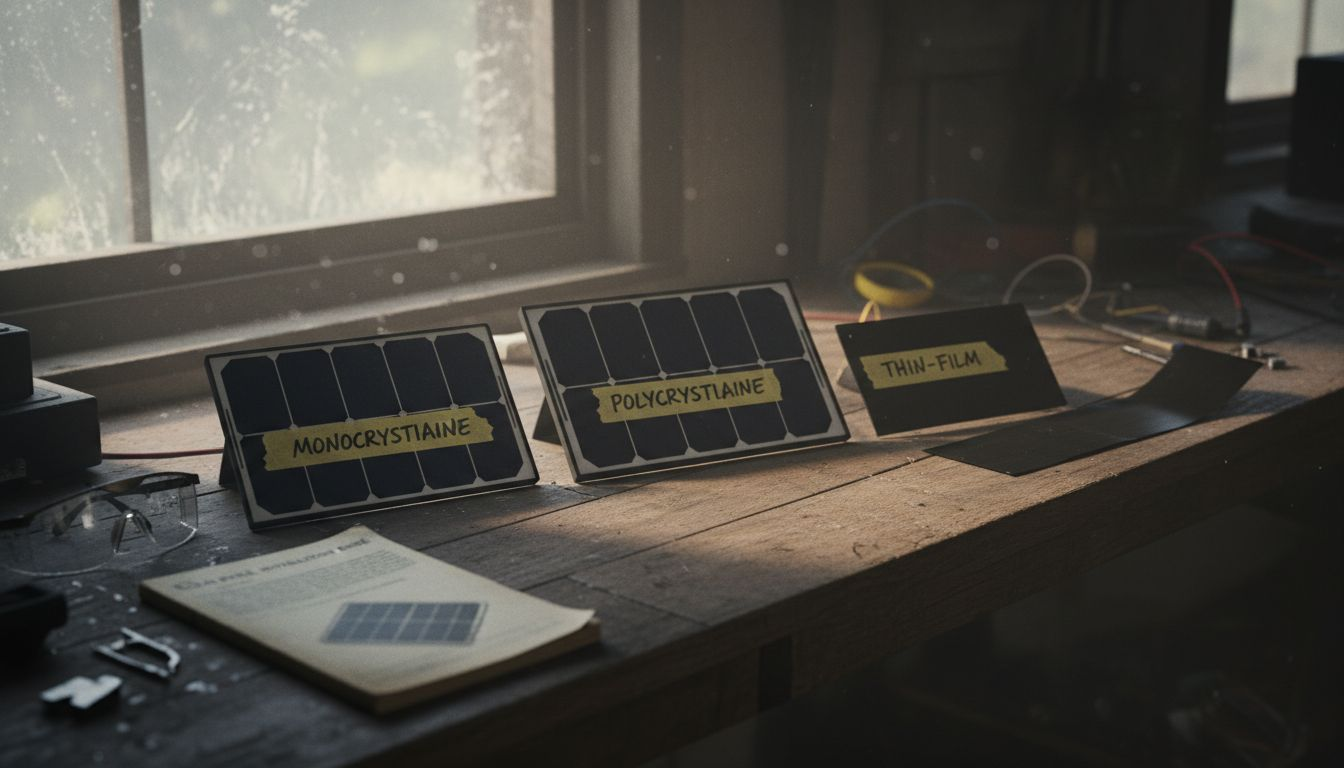
Here’s how the main solar panel types differ:
| Panel Type | Efficiency | Cost | Best Use Case |
|---|---|---|---|
| Monocrystalline | High (18–22%) | Most expensive | Limited roof space |
| Polycrystalline | Moderate (15–17%) | Moderate priced | Larger roof, lower budget |
| Thin-Film | Lower (10–13%) | Least expensive | Nontraditional surfaces |
When selecting solar system components, you need to consider more than just the panels. Research on solar photovoltaic system design emphasizes the importance of carefully matching inverters, wiring, and mounting hardware to ensure optimal system performance. The inverter converts direct current electricity from the panels into alternating current for home use. Pay attention to the inverter’s efficiency rating, warranty, and compatibility with your specific panel type. Additionally, consider factors like microinverters versus string inverters, which can impact overall system performance and maintenance requirements.
Pro Tip: Request detailed specification sheets from manufacturers and compare performance ratings, temperature coefficients, and warranty terms before making a final decision on solar panel components.
Step 3: Prepare Roof and Electrical Setup
Before installing solar panels, you must thoroughly prepare your roof and electrical system to ensure a safe and compliant solar installation. This critical preparation phase involves structural assessment, electrical compatibility, and meeting local building regulations.
The Department of Energy outlines specific permitting and inspection requirements that homeowners must navigate before solar panel installation. These requirements typically involve a comprehensive review of your roof’s structural integrity, ensuring it can support the additional weight of solar panels. You will need to have a professional structural assessment that examines the roof’s condition, age, and load bearing capacity. This assessment helps identify any necessary repairs or reinforcements before panel installation.
The National Fire Protection Association provides critical guidelines for residential solar installations, particularly focusing on safety and emergency access. Your electrical setup must include specific safety features like dedicated circuit breakers, proper grounding, and clear access pathways for emergency personnel. Work with a licensed electrician to upgrade your electrical panel if needed, ensuring it can handle the additional power generation and meet local electrical codes.
Pro Tip: Schedule a comprehensive roof inspection and electrical system evaluation simultaneously to streamline the preparation process and identify potential challenges early.
Step 4: Mount Solar Panels Securely
Securing solar panels properly is a critical step that ensures both optimal energy production and long term structural integrity for your home solar system. This phase requires precision, careful planning, and adherence to specific mounting guidelines to protect your investment and maintain roof safety.
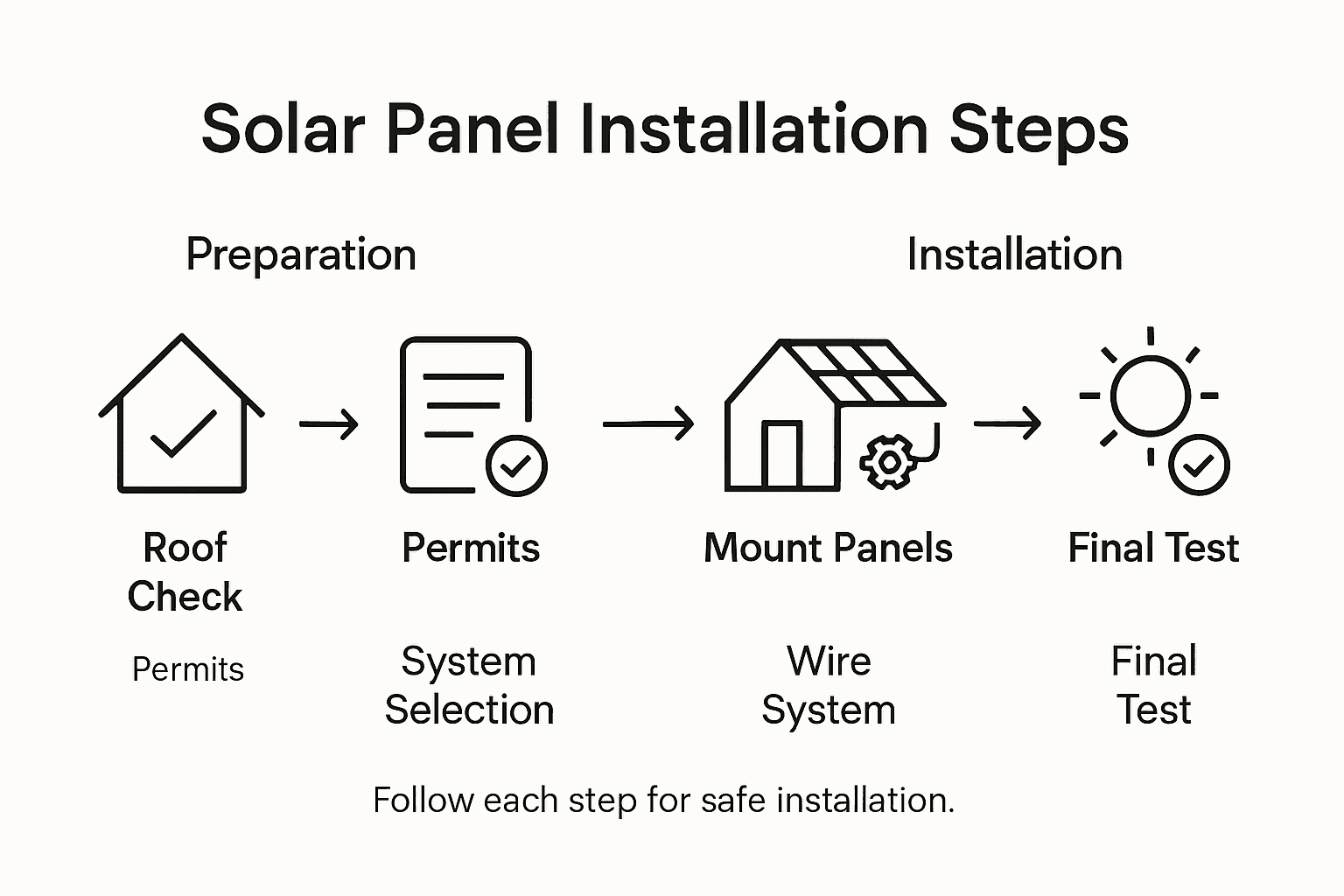
The Department of Energy’s Renewable Energy Ready Home Photovoltaic installation guide provides comprehensive recommendations for mounting panels that maximize performance and durability. Your mounting process should focus on creating a robust attachment system that distributes weight evenly across your roof’s structural supports. This involves using specialized racking equipment designed to withstand local wind loads, thermal expansion, and potential environmental stresses. Professional installers typically use aluminum or stainless steel mounting hardware that includes adjustable brackets, allowing for precise panel positioning and optimal solar exposure.
The Clean Energy States Alliance standards highlight the importance of code compliant mounting techniques that prioritize both performance and safety. Each mounting point requires careful sealing to prevent water intrusion, using high quality waterproof flashing and sealants specifically designed for rooftop solar installations. The mounting angle and orientation are equally crucial, with most residential installations in the United States aimed to maximize southern exposure and minimize potential shading from nearby structures or trees.
Pro Tip: Always use manufacturer approved mounting hardware and have a professional verify the installation meets local building codes and manufacturer warranty requirements.
Step 5: Connect System and Finalize Installation
The final stage of your solar panel installation involves carefully connecting your new solar system to your home’s electrical infrastructure and preparing for utility grid interconnection. This critical phase ensures your solar panels are not just mounted, but fully functional and ready to generate clean energy for your home.
The Department of Energy’s planning guide for home solar electric systems outlines the essential steps for proper system interconnection. Your installation requires a professional electrician to make precise connections between the solar panel array, inverter, and your home’s main electrical panel. This process involves installing a dedicated circuit breaker for the solar system, ensuring that the new energy source can safely feed electricity into your home’s power supply. The electrical connections must be meticulously done to prevent any potential short circuits or power management issues.
The National Renewable Energy Laboratory provides detailed guidance on system commissioning, which involves a comprehensive final inspection and testing process. After the physical connections are complete, you will need to schedule an official utility inspection to verify that your solar system meets all local and national electrical codes. This inspection typically involves checking wire connections, grounding systems, and ensuring that safety disconnect switches are properly installed. Once approved, your utility company will install a new bi-directional meter that can track both the electricity you consume and the excess energy your solar panels feed back into the grid.
Pro Tip: Request comprehensive documentation from your installer, including system specifications, warranty information, and inspection certificates, which you will need for future maintenance and potential insurance or tax credit purposes.
Step 6: Test System Performance and Ensure Compliance
The final verification stage of your solar installation involves comprehensive performance testing and ensuring your system meets all regulatory and safety standards. This critical phase confirms that your investment will function efficiently and safely, providing peace of mind and optimal energy production.
The Department of Energy’s Solar PV System Field Inspection Checklist provides a detailed protocol for systematic performance evaluation. Professional technicians will conduct multiple tests including visual inspections of panel mounting, electrical connection integrity, and overall system functionality. These tests verify that your solar array meets National Electrical Code requirements, checking for proper grounding, correct wire connections, and ensuring all safety mechanisms are functioning correctly. They will measure the system’s voltage output, assess inverter performance, and confirm that your solar panels are generating electricity at their expected efficiency levels.
The Clean Energy States Alliance standards guide emphasizes the importance of comprehensive documentation during the compliance process. This involves creating a detailed report that includes system specifications, test results, and verification of all installation parameters. Your installer will provide you with documentation showing that the system passes all local and national regulatory requirements, which is crucial for potential future insurance claims, tax incentives, and maintaining manufacturer warranties.
Pro Tip: Request a complete digital and printed copy of your system’s performance test results and compliance documentation, storing them in a safe location for future reference and potential insurance or tax credit applications.
Below is a summary of each solar installation stage and its primary focus:
| Step | Key Action | Main Goal |
|---|---|---|
| Assess & Plan | Evaluate roof & energy needs | Determine solar potential |
| Select Components | Choose panels & equipment | Maximize efficiency & value |
| Prepare Site | Check structure & electrical | Ensure safety & compliance |
| Mount Panels | Install racking & secure panels | Optimize energy output |
| Connect System | Wire & commission system | Enable grid interconnection |
| Test & Comply | Inspect & document | Validate performance & safety |
Make Your Solar Panel Installation Seamless with Experts You Can Trust
Planning and installing solar panels on your home requires careful assessment of your roof’s condition, system component selection, and professional mounting and electrical connection to ensure safety and optimal performance. If navigating these crucial steps like structural evaluation, inverter matching, and grid interconnection feels overwhelming, you are not alone. Many homeowners struggle with understanding technical details and ensuring compliance with local codes while aiming to maximize energy savings and long-term reliability.
At PES Solar, we specialize in turning your solar goals into reality with expert guidance and full-service installation across Florida. Our team handles everything from energy audits and component selection to secure mounting and final system commissioning. We help you unlock benefits like lower energy bills, increased home value, and tax incentives through high-quality REC solar panels and Tesla Powerwall battery options.
Ready to move forward confidently and avoid installation pitfalls? Visit PES Solar today for a free consultation. Discover how we tailor every step of the process to your unique needs while ensuring compliance and lasting value. Let us simplify your solar journey with trusted expertise and proven results.
Start your solar transformation now and experience the difference professional residential solar solutions make.
Learn more about our energy solutions and get a free estimate to take advantage of clean energy benefits.
Frequently Asked Questions
How do I assess my roof’s suitability for solar panels?
To assess your roof’s suitability, inspect its condition, age, and orientation. Ensure it is structurally sound, ideally facing south, and free from shade. If necessary, consult a professional for a thorough evaluation.
What is the first step in installing solar panels at home?
The first step is to evaluate your roof and energy needs. Review your utility bills from the past year to understand your average energy consumption and obtain a detailed energy audit if possible.
How do I choose the right type of solar panels?
Choose the right type of solar panels by considering efficiency, cost, and space availability. Research the main panel types—monocrystalline, polycrystalline, and thin-film—and select one that aligns with your budget and roof characteristics.
What should I do to prepare my roof for solar panel installation?
Prepare your roof for solar panel installation by conducting a structural assessment and ensuring it meets local building codes. Consider scheduling a roof inspection and making any necessary repairs to support the weight of the panels.
How can I ensure my solar panel system is safely connected?
Ensure safe connection by working with a licensed electrician to connect your solar system to your home’s electrical infrastructure. This includes installing a dedicated circuit breaker and conducting a final inspection to verify compliance with safety standards.
What is involved in testing the performance of my solar panel system?
Testing your solar panel system involves conducting visual inspections and performance evaluations to confirm it meets all regulatory standards. Schedule a comprehensive performance test shortly after installation to ensure optimal function and verify efficient energy production.
