
Most American businesses in Florida could lower their energy bills by as much as 70 percent just by switching to solar. With energy costs rising every year and customers increasingly looking for companies that stand out for their sustainability, more business owners are asking how solar power fits into their strategy. This guide reveals how solar panels can offer real financial relief while improving your company’s environmental profile.
Table of Contents
- What Solar Energy Means For Businesses
- Types Of Commercial Solar Solutions Available
- How Solar Systems Lower Business Costs
- Key Incentives And Tax Benefits In Florida
- Financial Risks And Maintenance Considerations
Key Takeaways
| Point | Details |
|---|---|
| Transformative Financial Benefits | Solar energy provides Florida businesses with cost stability, potential utility savings, and tax incentives that enhance long-term financial returns. |
| Environmental Responsibility | Adopting solar energy positions companies as sustainable entities, appealing to eco-conscious consumers and potential partners. |
| Diverse Solar Solutions | Businesses can choose from various solar configurations tailored to their energy needs, including rooftop, ground-mounted, and hybrid systems. |
| Incentives and Support | Florida offers significant tax benefits and financial mechanisms that can make solar investments more economically viable for businesses. |
What Solar Energy Means for Businesses
Solar energy represents a transformative opportunity for Florida businesses seeking sustainable and financially strategic energy solutions. By generating their own electricity, companies can dramatically reduce operational costs while establishing significant environmental credibility. Generating independent power allows businesses to break free from traditional grid dependency and create predictable energy expenditures.
The financial advantages of solar adoption extend far beyond simple utility bill reduction. Solar installations provide businesses with long-term energy cost stability, protection against rising electricity rates, and potential tax incentives specific to Florida’s renewable energy landscape. Companies can typically offset 70-100% of their electricity consumption through strategically designed solar systems, transforming an operational expense into a strategic investment with measurable returns.
Beyond financial benefits, solar energy positions businesses as environmentally responsible corporate citizens. Modern consumers and corporate partners increasingly evaluate companies based on their sustainability practices, making solar adoption a powerful marketing and reputation management tool. By demonstrating commitment to reducing carbon emissions and supporting clean energy infrastructure, businesses can attract environmentally conscious customers and potentially qualify for green business certifications.
Pro Tip: Solar Investment Strategy: Before installing solar, conduct a comprehensive energy audit to precisely understand your current consumption patterns and design a solar system that maximizes your return on investment while meeting your specific operational needs.
Types of Commercial Solar Solutions Available
Commercial solar solutions have evolved dramatically, offering Florida businesses a diverse range of options to meet their unique energy requirements. Solar photovoltaic (PV) systems represent the most common approach, enabling businesses to generate electricity directly from sunlight and dramatically reduce operational energy costs. These systems can be seamlessly integrated into existing building infrastructure, making them an adaptable solution for companies across various industries.
Businesses in Florida have multiple solar configuration options to consider. Rooftop solar installations are ideal for companies with significant roof space, allowing them to maximize unused real estate and generate power without additional land requirements. Ground-mounted systems provide an alternative for businesses with expansive property, offering greater flexibility in panel positioning and potential for larger energy generation. Some industries, such as manufacturing and agriculture, can even implement specialized solar solutions like solar-powered equipment and integrated energy management systems.
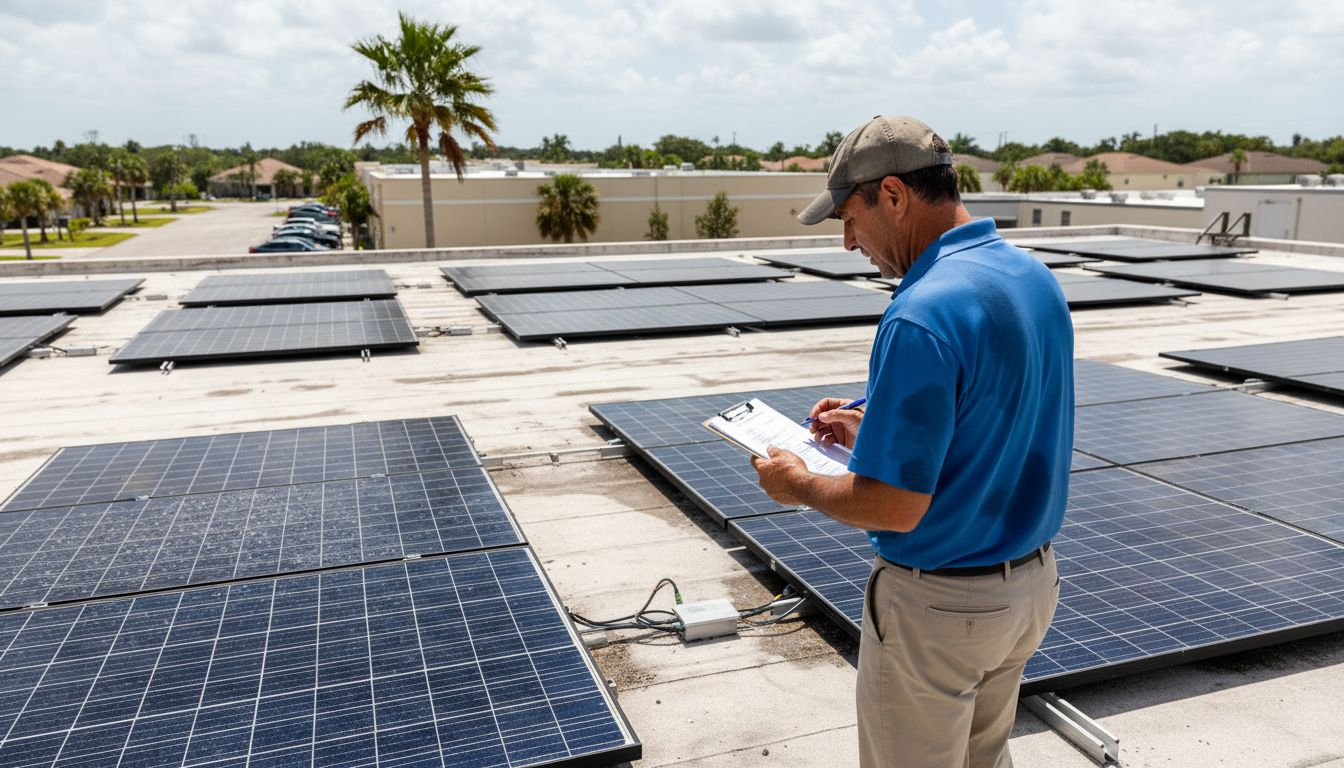
Hybrid solar configurations offer advanced flexibility for businesses seeking comprehensive energy strategies. These systems combine multiple renewable energy sources, such as solar PV with battery storage or wind complementary technologies, creating more robust and reliable energy infrastructure. By implementing customized solar solutions tailored to specific operational needs, businesses can achieve significant energy independence, reduce carbon footprints, and create predictable long-term energy expenditures.
Here’s a summary comparing the main commercial solar solutions available for Florida businesses:
| Solution Type | Ideal For | Main Benefit | Key Consideration |
|---|---|---|---|
| Rooftop Solar | Buildings with large roofs | Uses existing space | May be limited by roof condition |
| Ground-Mounted Solar | Properties with land | Flexible panel placement | Requires additional land |
| Hybrid Systems | Complex or high usage | Combines sources for reliability | Higher upfront complexity |
Pro Tip: Solar Configuration Assessment: Conduct a comprehensive site evaluation with a professional solar consultant to determine the most efficient solar solution for your specific business layout, energy consumption patterns, and financial objectives.
How Solar Systems Lower Business Costs
Solar systems provide a strategic approach to reducing operational expenses for Florida businesses by fundamentally transforming energy consumption models. Businesses adopting solar power experience reduced dependence on traditional electrical grids, which translates into immediate and long-term financial advantages. By generating their own electricity, companies can lock in energy costs, protecting themselves against unpredictable utility rate fluctuations and creating a more stable financial environment.
The economic benefits of solar extend far beyond basic utility bill reduction. Electricity generation costs drop dramatically as businesses leverage renewable energy infrastructure, with many organizations offsetting 70-90% of their current energy expenses. Tax incentives and depreciation benefits specific to solar investments further enhance financial returns, allowing businesses to recoup installation costs more rapidly. Additionally, solar systems require minimal maintenance, reducing ongoing operational expenses and providing a predictable, low-risk investment strategy.
Beyond direct financial savings, solar installations create substantial indirect economic advantages for businesses. Companies implementing solar solutions often experience increased property values, enhanced corporate reputation, and potential marketing advantages through demonstrating environmental responsibility. Some industries may even qualify for additional green energy credits or grants, creating supplementary revenue streams that further improve the overall economic impact of solar technology.
Pro Tip: Financial Solar Optimization: Conduct a comprehensive energy audit and financial analysis before installation to precisely calculate potential savings, ensuring your solar investment aligns perfectly with your specific business financial goals and consumption patterns.
Key Incentives and Tax Benefits in Florida
Florida offers an exceptional landscape of solar incentives designed to make renewable energy adoption financially attractive for businesses. Federal and state tax incentives significantly reduce the overall cost of solar installations, creating a compelling economic argument for solar investment. The federal Investment Tax Credit allows businesses to deduct 30% of solar system installation costs directly from their federal tax liability, representing a substantial financial benefit that dramatically improves project economics.
The state of Florida provides additional tax advantages that further enhance solar project feasibility. Businesses benefit from property tax exemptions specifically designed for solar energy systems, meaning the added value of solar installations will not increase property tax assessments. Sales tax exemptions for solar equipment purchases represent another critical financial incentive, effectively reducing upfront installation costs and improving overall return on investment. These state-level incentives complement federal programs, creating a multi-layered financial support structure for solar adoption.
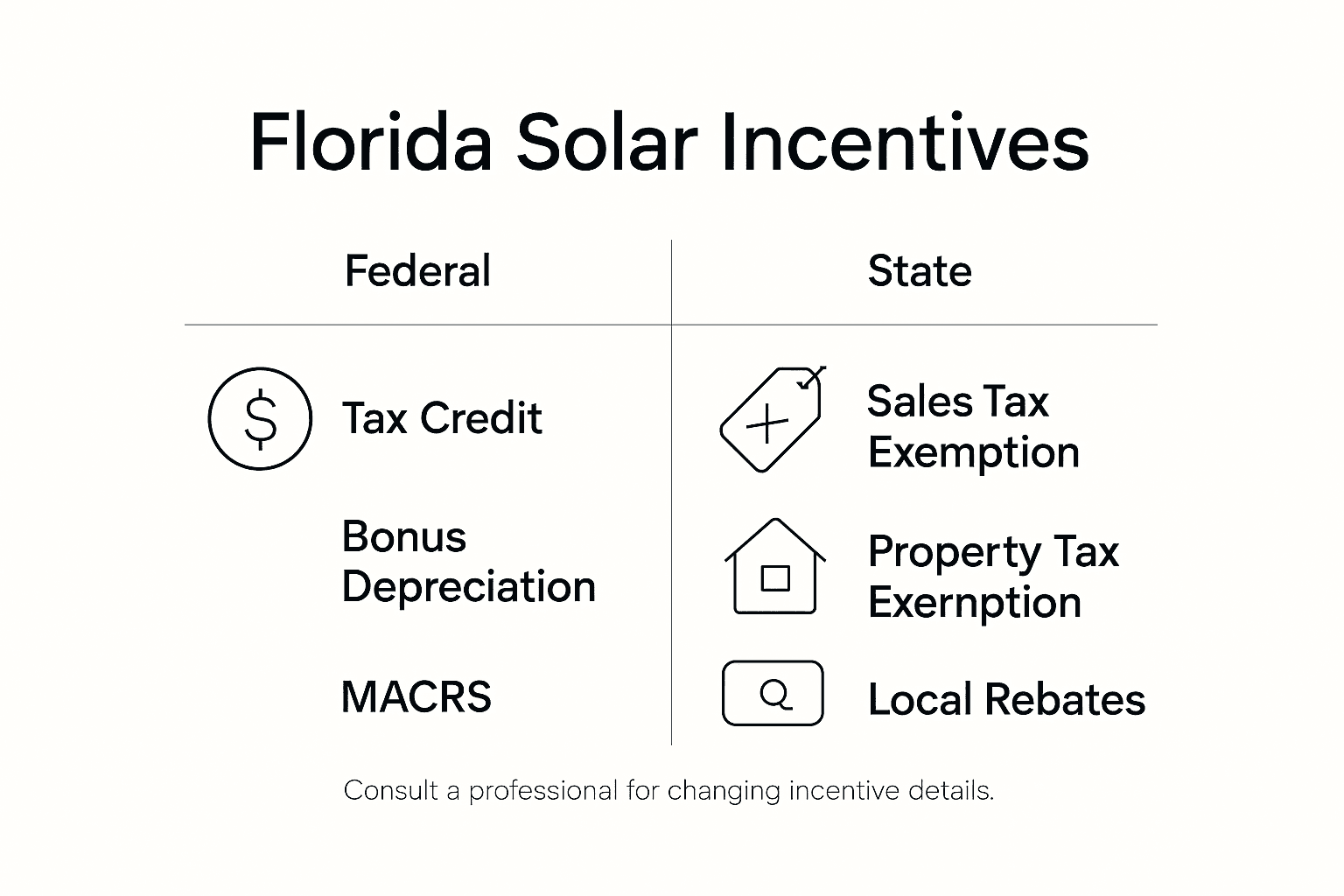
Beyond direct tax benefits, Florida businesses can leverage numerous financial mechanisms that make solar investments increasingly attractive. Accelerated depreciation rules allow companies to write off solar assets more quickly, generating additional tax savings. Net metering policies enable businesses to receive credits for excess electricity generated, creating potential additional revenue streams. Some local utilities even offer performance-based incentives or grants for businesses transitioning to solar, further improving the financial calculus of renewable energy investments.
This table outlines major financial incentives Florida businesses can use when adopting solar energy:
| Incentive Type | How It Benefits Businesses | Example Impact |
|---|---|---|
| Federal Tax Credit | Reduces federal taxes by 30% of install cost | Lowers payback period |
| State Tax Exemptions | Eliminates property and sales taxes | Decreases total upfront costs |
| Net Metering | Provides credits for excess electricity | Generates additional revenue |
Pro Tip: Tax Credit Navigation: Consult with a tax professional specializing in renewable energy investments to maximize your solar tax benefits and ensure you capture every available financial incentive for your specific business structure.
Financial Risks and Maintenance Considerations
Solar energy investments come with nuanced financial considerations that Florida businesses must carefully evaluate. Solar panels demonstrate remarkably low maintenance requirements, with most systems operating efficiently for 25 years or more without significant operational disruptions. This extended lifespan represents a critical financial advantage, significantly mitigating potential long-term investment risks and providing businesses with a predictable, stable energy infrastructure.
The initial investment cost remains the most substantial financial risk for businesses considering solar adoption. While upfront expenses can appear considerable, comprehensive financial analysis reveals that solar systems typically generate returns through energy savings, tax incentives, and potential revenue streams. Businesses should conduct thorough cost-benefit analyses that account for potential performance variations, potential equipment degradation, and regional solar efficiency factors specific to Florida’s unique climate conditions.
Maintenance strategies play a crucial role in managing solar system financial risks. Unlike traditional energy infrastructure, solar panels require minimal ongoing maintenance due to their lack of moving mechanical parts. Regular cleaning, periodic professional inspections, and monitoring system performance can help businesses maximize energy generation and prevent potential efficiency losses. Additionally, most solar equipment manufacturers provide extensive warranties covering potential equipment failures, further reducing financial uncertainties associated with solar investments.
Pro Tip: Risk Mitigation Strategy: Develop a comprehensive solar performance tracking system that monitors energy generation, identifies potential efficiency drops, and allows for proactive maintenance interventions to protect your solar investment’s long-term financial performance.
Take Control of Your Business Energy with Expert Solar Solutions
If you are concerned about unpredictable utility bills and want to protect your business from rising electricity costs in Florida, harnessing solar energy is the smart choice. This article highlights the crucial need for cost stability, energy independence, and maximizing tax incentives through well-planned solar investments. At PES Solar, we understand these challenges and specialize in creating tailored commercial solar systems that deliver long-term financial savings and sustainability benefits.
Our comprehensive services include professional energy audits, custom solar panel installation, and advanced options like Tesla Powerwall battery integration to enhance energy reliability. By choosing PES Solar, you gain a local partner committed to maximizing your return on investment while reducing operational costs and boosting your environmental reputation.
Experience the difference a trusted Florida solar provider can make for your business energy strategy.
Unlock your solar potential today.
Ready to reduce your energy expenses and take full advantage of Florida’s tax incentives? Visit PES Solar’s website for expert guidance and to schedule your free consultation now. Discover how our commercial solar solutions can transform your business energy future.
Frequently Asked Questions
What are the main financial benefits of installing solar energy systems for businesses?
Installing solar energy systems can lead to long-term energy cost stability, significant reductions in utility bills, and potential tax incentives that enhance the return on investment. Many businesses can offset 70-100% of their electricity consumption with solar, transforming energy costs into a strategic investment.
How do different types of solar solutions impact my business’s energy needs?
There are various solar solutions such as rooftop, ground-mounted, and hybrid systems, each suited for different business operations. Rooftop solar is ideal for those with large roofs, while ground-mounted options are available for businesses with more land. Hybrid systems combine solar with other renewable sources for increased reliability and flexibility.
What incentives are available for businesses considering solar energy investments?
Businesses can take advantage of federal tax credits that cover 30% of installation costs, as well as state-level property and sales tax exemptions. These incentives significantly lower the overall cost of solar installations and can improve project economics.
What maintenance is required for solar energy systems?
Solar energy systems generally require minimal maintenance, usually involving regular cleaning, periodic inspections, and system performance monitoring. With proper maintenance, solar panels can operate efficiently for 25 years or more, further mitigating financial risks associated with their initial investment.
Recommended
- 3 Reasons To Install Solar Panels On Your Florida Home | PES Solar
- Is It Worth Getting Solar Panels In Florida? | PES Solar
- What Are The Rules For Solar Panels In Florida? | PES Solar
- Invest In Sunshine: Benefits Of Florida Solar Panels | PES Solar
- Solar Panel Installation Gainesville FL
- Solar Panel Installation West Palm Beach, FL
