
Choosing solar panels for your Florida home can feel complicated with so many factors to consider, from roof shape to energy bills. When your goal is long-term savings and energy independence, taking a methodical approach pays off. This guide walks you through every key step, helping you assess your home’s solar potential, compare panel brands, review financing options, and select qualified installers using real numbers and trusted resources.
Table of Contents
- Step 1: Assess Your Home’s Solar Potential
- Step 2: Determine Energy Needs And Budget
- Step 3: Compare Solar Panel Types And Brands
- Step 4: Evaluate Financing And Incentives
- Step 5: Verify Installer Credentials And Reviews
- Step 6: Review System Proposals And Finalize Selection
Quick Summary
| Key Point | Explanation |
|---|---|
| 1. Assess Your Roof’s Solar Potential | Evaluate orientation, tilt, and shading of your roof to maximize the efficiency of your solar panel installation. |
| 2. Calculate Energy Needs and Budget | Analyze your electricity usage over the past year to determine the size of your solar system and establish your financial limits. |
| 3. Compare Solar Panel Types | Understand the efficiency differences between monocrystalline and polycrystalline panels to select the right type for your space and needs. |
| 4. Explore Financing Options | Investigate available incentives and financing methods to reduce upfront costs and table your long-term savings and benefits. |
| 5. Verify Installer Credentials | Ensure your chosen installer has proper certifications and a positive customer track record to secure a reliable solar system installation. |
Step 1: Assess Your Home’s Solar Potential
Your home’s solar potential depends on a few concrete factors. Start by examining your roof’s orientation and tilt. South-facing roofs are ideal in the Northern Hemisphere because they receive the most consistent sunlight throughout the day. The angle matters too—roofs with slopes between 15 and 40 degrees typically perform best, though modern systems can work with different angles through proper mounting techniques.
Next, assess shading on your property. Trees, buildings, and other structures can significantly reduce your system’s output. Walk around your home during different times of day and note which areas receive direct sunlight for the longest periods. This matters more than you might think—even partial shade from a single tree branch can impact efficiency. If you have mature trees, you might need to work around them or consider trimming branches that block southern exposure.
Check your roof’s condition as well. A solar installation typically lasts 25 to 30 years, so your roof should be in decent shape. If you’re planning a roof replacement in the next 5 years, address that first—it’s far easier and cheaper than removing and reinstalling panels later. Finally, measure your available roof space. You’ll need roughly 300 to 400 square feet for an average residential system, though smaller systems work for limited space.
For precise calculations, use online assessment tools. The PVWatts calculator uses your location’s weather data and system specifications to estimate production, while aerial imagery tools can map your roof and identify shading patterns automatically. These resources take guesswork out of the equation and give you real numbers to work with.
Understanding whether solar is right for your home goes beyond just roof measurements—it’s about matching your property’s specific characteristics with a system designed to maximize your investment and energy savings.
Pro tip: Take photos of your roof from multiple angles and note the direction each section faces, then cross-reference these with online tools to get accurate production estimates before contacting installers.
Step 2: Determine Energy Needs and Budget
Knowing how much energy your home uses is the foundation for sizing the right solar system. Pull out your electric bills from the past 12 months and add up your kilowatt-hour consumption. Most bills clearly show this number, and tracking the full year gives you an accurate picture since usage varies seasonally. Florida homes typically use more electricity during summer months for air conditioning, so a yearly average matters far more than a single month’s bill. Once you have that number, you have a concrete target for your solar system size.

With your energy needs established, think about your budget and financing options. Solar systems range widely in cost depending on size, equipment quality, and your location within Florida. Calculate what you can realistically spend upfront, then research the incentives that can reduce that number. The Federal Investment Tax Credit, state programs, and local utility rebates can significantly lower your out-of-pocket costs. Many homeowners forget to factor in financing options like solar loans, leases, or power purchase agreements, which can make solar accessible even with limited upfront capital. Tools that estimate system costs and payback periods help you understand the financial picture before committing.
Consider what your goals are beyond just energy production. Are you looking to eliminate your electric bill entirely, or would you prefer a system that covers 50 to 75 percent of your usage? Your answer affects system size and total investment. Some homeowners prioritize maximum savings and want the largest system their roof allows, while others prefer a smaller investment with a shorter payback period. There is no single right answer, but clarity on your priorities helps guide decisions. You should also review financing options and available incentives to understand how they fit into your overall budget and timeline.
Once you have numbers in front of you, the path forward becomes clearer. You will know roughly how much system capacity you need, what it might cost, and what incentives could apply to your situation. This information gives you confidence when talking to solar installers and helps you evaluate quotes properly.
Pro tip: Look for your utility’s net metering policy before finalizing your system size, as it determines how much excess energy you can sell back to the grid and affects your true payback timeline.
Step 3: Compare Solar Panel Types and Brands
Not all solar panels perform equally, and understanding the differences helps you make a choice that fits your needs and budget. The most common residential options are monocrystalline and polycrystalline silicon panels. Monocrystalline panels offer higher efficiency ratings, typically between 17 and 22 percent, meaning they convert more sunlight into usable electricity in less space. They also perform better in shade and high temperatures, making them ideal for Florida’s climate. Polycrystalline panels cost less upfront but have lower efficiency ratings around 15 to 17 percent, requiring more roof space to generate the same output. Both types have solid 25 to 30 year warranties and proven track records. Thin-film technologies like cadmium telluride exist but are less common in residential applications. Understanding different photovoltaic technologies helps you weigh efficiency gains against cost differences.
Brand reputation matters significantly because you are committing to a 25 to 30 year relationship with your equipment. Well-established manufacturers like SunPower, LG Solar, and others have built strong track records with excellent warranties and customer support. When evaluating brands, compare several factors beyond just the sticker price. Look at efficiency ratings, which determine how many panels you actually need. Check warranty coverage, including product warranties and performance guarantees. Read customer reviews focusing on installation experience and how the company handles issues. Some brands offer superior aesthetics with all-black designs or frameless options if appearance matters for your home. Research shows that leading solar panel brands combine high efficiency with reliable customer service and proven longevity.
Create a comparison spreadsheet for your top choices. List efficiency percentage, price per watt, warranty length, temperature coefficient (how performance changes in heat), and any special features. Florida’s intense sun and heat mean temperature performance becomes important. Panels with better temperature ratings maintain efficiency better during hot afternoons when your air conditioning demands peak electricity. Once you narrow your choices, discuss options with installers, as they often have partnerships with specific manufacturers and can offer insight into which brands perform best in your local area.
Here’s how the main residential solar panel types compare:
| Panel Type | Efficiency Range | Space Requirement | Cost per Watt |
|---|---|---|---|
| Monocrystalline | 17–22% | Least required | Highest initial |
| Polycrystalline | 15–17% | More required | Lower upfront |
| Thin-Film | 10–13% | Most required | Varies, often lower |
This table helps you quickly see how panel technology might impact roof space and investment needs.
Pro tip: Request sample quotes from multiple installers using your preferred panel specifications, as labor costs and company incentives can vary dramatically even when recommending the same equipment.
Step 4: Evaluate Financing and Incentives
Financing your solar system is often where homeowners discover unexpected opportunities to reduce costs significantly. Before evaluating payment options, research the incentives available in your area. The Federal Investment Tax Credit allows you to claim 30 percent of your installation costs on your federal income taxes, a benefit that applies through 2032. Beyond that, Florida offers additional state incentives, utility rebates, and local programs that vary by location. Use the Database of State Incentives for Renewables and Efficiency to search your zip code and see exactly what programs apply to your property. This tool reveals tax credits, rebates, performance payments, and financing programs you might not discover otherwise.
Once you understand available incentives, explore financing methods that work for your situation. Cash purchases offer the largest long-term savings but require significant upfront investment. Solar loans let you finance the system like a car, paying it off over 5 to 20 years while owning the system and claiming tax credits. Leases and power purchase agreements require little or no upfront money, but you do not own the system or receive tax incentives, though you still benefit from lower electricity bills. Home equity lines of credit can offer favorable interest rates if you have substantial home equity. Each option has different tax implications and payback timelines. Understanding financing options and their impact on savings helps you choose the approach that aligns with your financial situation and long-term goals.
Compare total costs across different financing scenarios. Calculate your net cost after applying the 30 percent federal tax credit and any state or local incentives. Then determine your payback period for each option. A system that costs 20,000 dollars with a 6,000 dollar federal credit, 2,000 dollars in state incentives, and savings of 1,200 dollars annually pays for itself in about 10 years. After that, you enjoy free electricity for the remaining system lifetime. Some homeowners focus on the lowest monthly payment, while others prioritize the fastest payback. Neither approach is wrong, but clarity on your priorities guides your decision. Request detailed financing proposals from installers, ensuring they clearly show incentives applied and long-term savings projections.
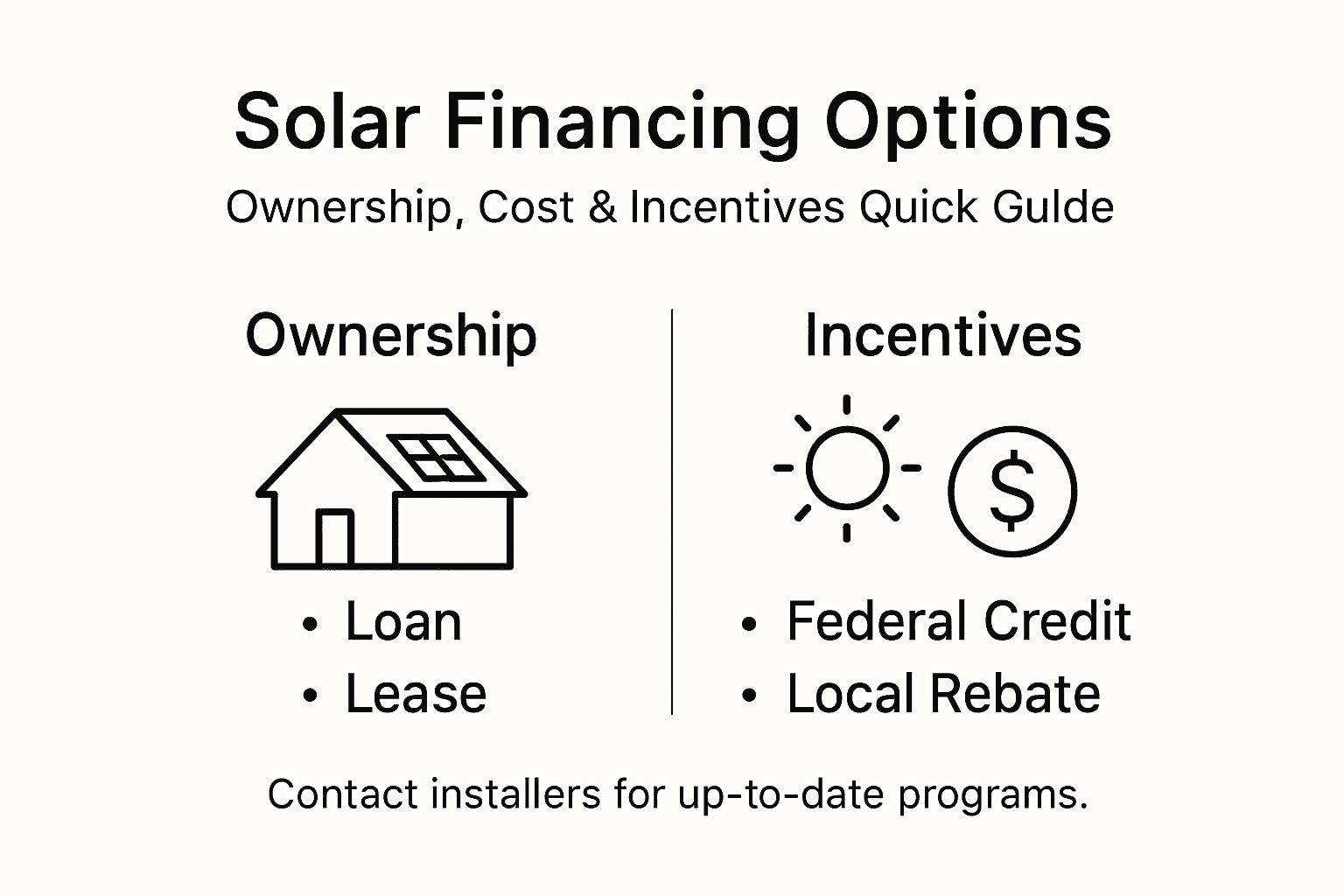
To clarify your solar financing options, see how each method impacts ownership, incentives, and savings:
| Financing Method | System Ownership | Upfront Cost | Eligible for Incentives |
|---|---|---|---|
| Cash Purchase | You own system | Highest | Yes |
| Solar Loan | You own system | Low to moderate | Yes |
| Lease | 3rd party owner | Minimal or none | No |
| Power Purchase Agmt | 3rd party owner | Minimal or none | No |
This comparison clarifies how each option influences your long-term savings and control.
Pro tip: Schedule your installation before year-end if you want to claim the 30 percent federal tax credit on that year’s tax return, as this timing maximizes your incentive benefit.
Step 5: Verify Installer Credentials and Reviews
Your solar system is only as good as the people who install it. Choosing a qualified, reputable installer protects your investment and ensures your system performs as promised. Start by verifying that any installer you consider holds proper licensing and certifications for Florida. Different states have different requirements, so check what credentials are mandatory in your area. Look for installers who hold NABCEP certification, which demonstrates they have passed rigorous training and ethics exams. This certification is nationally recognized and shows the installer has met industry standards for competence and professionalism. You can search the NABCEP directory to confirm an installer’s certified status before moving forward.
Beyond certifications, research each installer’s track record with real customers. Read online reviews on Google, the Better Business Bureau, and solar-specific platforms, but look beyond star ratings. Read actual customer comments about communication, timeliness, quality of work, and how the company handled problems. Pay attention to whether customers mention transparent pricing, whether the company explained the system clearly, and how they handled permitting and grid connection. Check if the installer carries proper insurance and bonding, protecting you if something goes wrong during installation. Ask for references from recent customers in your area, preferably those with similar roof types or system sizes to yours. A reputable installer should happily provide these without hesitation.
When you narrow your choices, request formal quotes from at least three installers. Compare not just pricing but also warranty offerings, equipment choices, and timeline. The lowest price does not always mean the best value if the company cuts corners or provides inferior customer service. Verify that installer licensing requirements are met through your state’s database to confirm legitimacy. Ask each installer about their experience with Florida installations, local utility interconnection processes, and any common challenges they encounter in your specific area. Their answers reveal how knowledgeable and established they are locally.
Pro tip: Request written warranties covering both equipment and labor for at least 10 years, then verify the installer stands behind these commitments by checking their financial stability and years in business.
Step 6: Review System Proposals and Finalize Selection
You now have multiple proposals in hand. This is your opportunity to compare them carefully and identify which option truly delivers the best value for your situation. Start by verifying that each proposal addresses your energy needs accurately. Does the system size match your calculated requirements from Step 2? Check the expected annual energy production in kilowatt-hours to ensure proposals align with your usage patterns and financial goals. Look at equipment specifications closely. Which panels and inverters does each proposal include? Are they the brands you researched earlier? Do warranties match what you verified during your installer vetting process? When comparing technical specifications, ensure you understand how system size, equipment quality, and expected production affect long-term performance and return on investment.
Now examine the financial details methodically. List the total system cost, federal tax credit, state incentives, local rebates, and financing options for each proposal side by side. Calculate your net cost after all incentives apply. Compare monthly payments if financing, or the cash investment required. Verify that each proposal shows your payback period calculation clearly. Do not just focus on the lowest upfront cost. A proposal with slightly higher equipment cost but better warranty protection and customer service might be the wiser choice. Ask clarifying questions about anything unclear. Professional installers expect questions and should answer them thoroughly. If a company becomes evasive or dismissive, that tells you something valuable about working with them long-term.
Before making your final decision, create a comparison scorecard. Rate each proposal on technical merit, equipment quality, warranty coverage, company reputation, customer service responsiveness, and timeline. Weight these factors based on what matters most to you. Some homeowners prioritize the fastest installation, while others want the absolute lowest cost or best long-term performance guarantees. There is no single perfect choice, but a deliberate evaluation process ensures you select the option that genuinely fits your needs. Once you choose, review the contract carefully before signing. Verify all promised equipment, timelines, warranties, and costs match what you discussed. Request written confirmation of incentives and financing terms.
Pro tip: Ask each installer for their cancellation policy and timeline before signing, so you understand your options if something changes or if you discover a better offer after reviewing proposals.
Make Your Florida Solar Journey Seamless with PES Solar
Choosing the right solar system for your Florida home can feel overwhelming. You face challenges like assessing your roof’s solar potential, understanding energy needs, selecting the best panel types, and navigating financing options all while ensuring you pick a trusted installer. At PES Solar, we understand these pain points and specialize in turning complex solar decisions into straightforward, confident choices. Whether you want to maximize savings with high-efficiency panels or leverage tax incentives effectively, our experienced team guides you every step of the way.
Why struggle alone when expert help is just a click away? Visit PES Solar to explore tailored residential solar solutions designed for Florida homeowners. Our certified installers provide transparent proposals and use top-tier equipment like Tesla Powerwall batteries and REC solar panels. Plus, we help you uncover all available incentives and financing options that make solar affordable.
Ready to lower your energy bills and increase your home’s value with a hassle-free solar installation? Get your free estimate today at PES Solar and take the first step to energy independence with confidence. Learn more about how to tell if solar power is right for your home and discover personalized options that meet your goals.
Frequently Asked Questions
How can I assess my home’s solar potential?
To assess your home’s solar potential, examine your roof’s orientation and tilt. Focus on south-facing roofs with a slope between 15 and 40 degrees, while checking for shading from trees or nearby structures.
What is the best way to determine my energy needs for a solar system?
Start by reviewing your electric bills from the past 12 months to calculate your total kilowatt-hour consumption. This helps you identify the appropriate system size to cover your energy usage throughout the year.
How do I compare different types of solar panels?
Compare solar panels based on their efficiency ratings, cost, and warranties. Look for detailed specifications, such as temperature performance and design features, to find the best fit for your home and budget.
What financing options are available for solar systems?
Common financing options include cash purchases, solar loans, leases, and power purchase agreements. Each has different upfront costs and ownership implications, so evaluate which aligns best with your financial situation.
How can I evaluate solar installers?
Verify installer credentials by checking for necessary licenses and certifications, like NABCEP certification. Read customer reviews to understand their reputation, service quality, and responsiveness before making a choice.
What should I include when reviewing solar system proposals?
When reviewing proposals, check for the system size, expected energy production, equipment specifications, and financial details like total costs and applicable incentives. Create a comparison scorecard to help you evaluate options systematically.
