
Staring at rising energy bills and long Florida summers, many homeowners start to wonder if solar panels could finally offer real savings. With the right steps, making the switch can not only cut costs, but also boost property value and tap into valuable state and federal tax incentives. This guide walks you through each stage, from gathering your energy data to comparing financing options, for a confident start toward solar.
Table of Contents
- Step 1: Gather Utility Bills And Property Details
- Step 2: Schedule A Personalized Consultation Call
- Step 3: Evaluate Site Conditions And Energy Needs
- Step 4: Review Custom Solar System Recommendations
- Step 5: Confirm Financing Options And Next Steps
Quick Summary
| Key Insight | Explanation |
|---|---|
| 1. Gather Utility Bills | Collect 12 months of electricity bills to assess energy usage necessary for accurate system sizing. |
| 2. Document Property Details | Note your roof’s age, pitch, and shading conditions to evaluate solar panel potential accurately. |
| 3. Schedule Multiple Consultations | Connect with at least two solar companies to compare proposals, ensuring better decisions based on options. |
| 4. Understand Financing Options | Explore various financing methods like cash, loans, or leases, as they significantly affect savings and investment returns. |
| 5. Confirm Local Incentives | Investigate Florida’s tax credits and rebates to lower installation costs while maximizing available financial benefits. |
Step 1: Gather Utility Bills and Property Details
Before any solar consultation moves forward, you need concrete data about your home’s energy usage and physical characteristics. This step forms the foundation of everything that follows, because solar professionals can’t properly size a system or estimate your savings without understanding what you’re actually working with. Spend some time pulling together your utility bills and basic property information—it’s simpler than it sounds and saves everyone time later.
Start by collecting your last 12 months of electricity bills from your utility provider. You’re looking for the total kilowatt-hours (kWh) you consumed each month, which tells the solar consultant how much energy you actually use throughout the year. Most Florida homeowners find their bills online through their utility’s website or app, but you can always call and request copies if needed. While you’re at it, note your current monthly electricity costs so you understand the financial impact. Then move to your property details. You’ll want to know your roof’s age, pitch (slope angle), and which direction it faces—south-facing roofs between 15 and 40 degrees perform best for solar panels. Check your property documents or simply walk around and observe. If you’re unsure about roof orientation, you can use a smartphone compass app. Also note any potential shading from trees, nearby buildings, or structures that might block sunlight during the day. Finally, grab your property records, which you can find through Florida property records or your local county assessor’s office. These records contain your home’s square footage, lot size, and other structural details that help solar professionals understand your property’s solar potential and estimate system sizing.
Organize this information in one place, either a simple document or folder on your computer. When you sit down with a solar consultant, having everything ready means they can focus on asking smart questions rather than hunting for details. You’re essentially doing the homework upfront so the consultation itself becomes more productive and targeted to your specific situation.
Use this summary to prepare key information before your solar consultation:
| Information Needed | Why It’s Important | How to Collect |
|---|---|---|
| Past 12 months’ energy use | System sizing and savings | Download utility bills online |
| Roof age and orientation | Affects panel performance | Inspect or check records |
| Shading issues | Impacts solar output | Observe and take photos |
| Property records | Confirms site suitability | Request from county office |
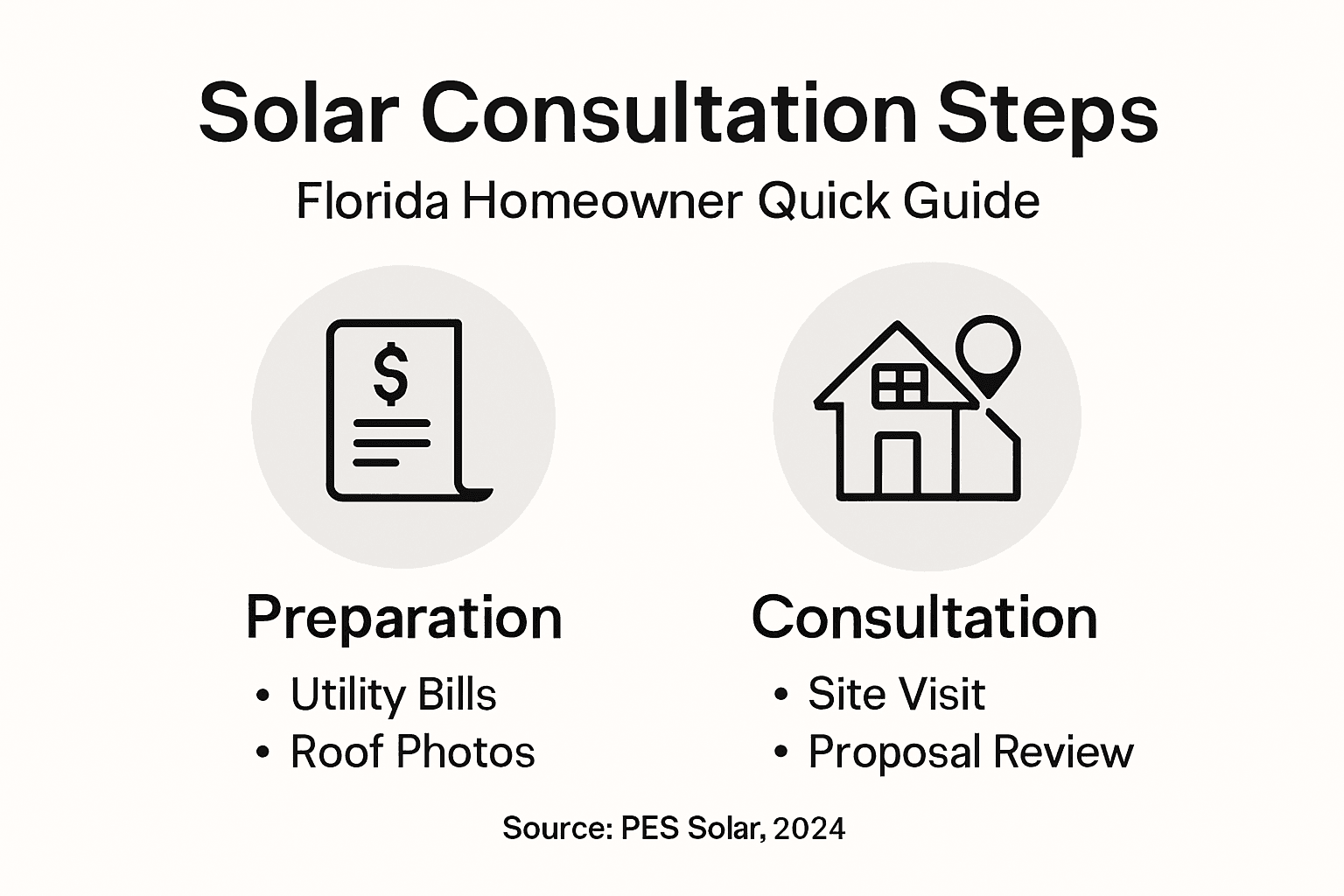
Pro tip: Take photos of your roof from different angles and note the time of day you notice shadows across your roof, since shading patterns change seasonally and affect solar production year-round.
Step 2: Schedule a Personalized Consultation Call
Now that you have your utility bills and property details organized, it’s time to connect with a solar professional who can evaluate your specific situation. A personalized consultation call is where your solar journey really begins because a qualified expert will assess whether solar makes sense for your home and start mapping out a customized solution tailored to your energy goals and budget.
Reach out to solar companies operating in your area and request a consultation. Most Florida solar providers offer free, no-obligation consultations where they’ll ask about your energy usage, financial goals, roof condition, and long-term plans for your home. During the call, be ready to share the information you gathered in the previous step, including your monthly electricity costs and bills. The consultant will likely ask questions about your roof’s age, sun exposure throughout the day, and whether you’re interested in financing options or paying upfront. They may also inquire about tax incentives and rebates available in your area, since Florida offers various programs that can significantly reduce your out-of-pocket costs. Many companies, including Solar United Neighbors programs, provide personalized guidance through consultations to help you understand your specific options and connect with trusted local installers. Be honest about your expectations. If you’re primarily motivated by lowering your energy bills, say that. If you want to maximize your return on investment or increase your home’s value, make that clear. The consultant’s job is to listen and determine whether solar aligns with your situation, so don’t hesitate to ask questions about anything you don’t understand.
After the call, you should receive a preliminary assessment or proposal outlining potential system size, estimated annual energy production, and projected savings. This gives you a clear picture of what solar ownership could look like for your home. You’ll likely have the option to schedule an in-home visit for a more detailed assessment, which is a natural next step.
Pro tip: Schedule consultations with at least two to three different solar companies so you can compare proposals, pricing, and approach before committing to any single provider.
Step 3: Evaluate Site Conditions and Energy Needs
During your consultation, the solar professional will conduct a thorough assessment of your property to determine whether solar is truly viable and what size system makes sense for your home. This evaluation goes beyond just glancing at your roof—it involves understanding your specific energy patterns, local weather conditions, and how your home’s physical characteristics affect solar potential. This is where your unique situation gets mapped out in detail.
The consultant will examine your roof’s condition, structural integrity, and sun exposure throughout the day. They’ll look at shadows cast by trees, buildings, or other structures at different times of year, since even partial shading can reduce your system’s output significantly. They’ll also assess local weather patterns and solar irradiance specific to your area, because Florida’s climate varies—coastal regions experience different conditions than inland areas. Your consultant will walk through your home discussing energy usage patterns. Do you run your air conditioning constantly in summer? Do you have electric heating in winter? Are you away for extended periods? These details matter because they help determine the optimal system size. A system that’s too small won’t meet your needs, while an oversized system wastes money on unnecessary capacity. The goal is matching your solar generation capacity precisely with your household energy demand to maximize return on investment.
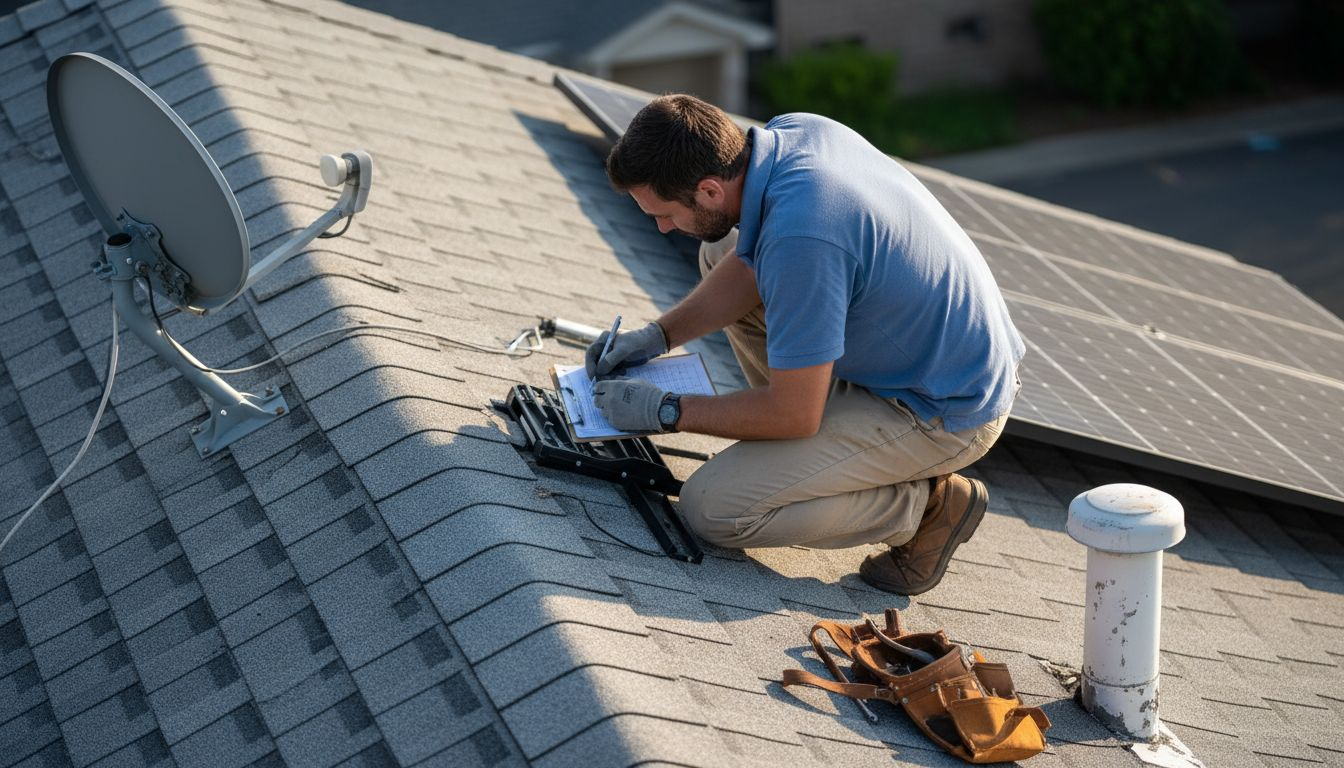
The consultant will also evaluate your home’s readiness for solar from a technical and permitting perspective. This includes reviewing electrical infrastructure, checking whether your panel placement requires roof repairs before installation, and understanding local building codes and permit requirements. They’ll compile all this information into a detailed site assessment report that becomes the foundation for your customized solar proposal.
Pro tip: Ask the consultant to show you their solar radiation measurements and shading analysis for your specific property, since these technical details directly impact your expected annual energy production and long-term savings.
Step 4: Review Custom Solar System Recommendations
Your solar consultant has now compiled all the data about your home and energy needs into a customized proposal. This document outlines exactly what your solar system would look like, how much energy it will produce, what it will cost, and how much money you can expect to save. Taking time to carefully review this recommendation ensures you understand what you are committing to and whether the numbers align with your goals.
Start by examining the system specifications. The proposal should detail the number and type of solar panels recommended, the inverter type, and total system capacity measured in kilowatts. It will show you where panels would be mounted on your roof and explain why that placement was chosen based on sun exposure and shading patterns. Next, look at the energy production estimates. The consultant should provide annual kilowatt-hour projections and show how production varies by season, since Florida’s weather patterns affect output throughout the year. Pay close attention to the financial breakdown. This is where system cost benchmarks become relevant because you can compare the quoted price against regional averages to ensure you are getting fair pricing. The proposal should itemize equipment costs, labor, permitting fees, and any other charges. It should also clearly show available tax incentives and rebates that apply to your situation, including Florida-specific programs that can substantially reduce your upfront investment. Then review the savings projections. Look at estimated annual energy bill reductions, payback period (how long until the system pays for itself), and 25-year lifetime savings. These numbers should be based on your actual utility costs and local electricity rate projections. Ask questions about anything unclear. If the consultant recommends battery storage, understand why and what additional cost and benefit it brings. If they suggest a particular financing option, make sure you comprehend the terms, interest rates, and monthly payments.
Compare this recommendation against proposals from other solar companies if you gathered them. Different companies may recommend slightly different system sizes or technologies, so seeing multiple options helps you make a well-informed decision about which approach best suits your priorities and budget.
Pro tip: Request a detailed shade analysis report and ask to see the software modeling showing your home’s solar potential, since visualizing how your roof receives sunlight throughout the year makes the recommendations much easier to understand.
Step 5: Confirm Financing Options and Next Steps
You have reviewed your customized solar proposal and the numbers make sense for your situation. Now comes one of the most critical decisions: how you will actually pay for your solar system. Your financing choice directly affects your monthly costs, long-term savings, and overall return on investment, so understanding each option thoroughly before committing is essential.
Most homeowners have three primary financing paths to consider. The first is purchasing the system outright with cash, which eliminates interest costs and maximizes your 25-year savings but requires substantial upfront capital. The second is financing through a solar loan, where you borrow money specifically for the solar installation and repay it over time with interest. Solar loans typically offer fixed rates and terms, so your monthly payment stays consistent throughout the loan period. The third option is a lease or power purchase agreement, where you rent the solar system from a company and pay for the electricity it produces, usually at a lower rate than your current utility charges. Each path has tradeoffs, and the right choice depends on your financial situation and priorities.
Here’s a concise comparison of the main solar financing options for homeowners:
| Financing Method | Upfront Cost | Ownership | Long-Term Savings |
|---|---|---|---|
| Cash Purchase | High initial amount | Homeowner owns system | Maximum over 25 years |
| Solar Loan | Low or none upfront | Homeowner owns system | Significant with interest |
| Lease/PPA | Minimal upfront | Company owns system | Moderate, less than loan |
Beyond financing method, you absolutely need to understand the incentives available to you. Florida and the federal government offer substantial tax credits and rebates that can reduce your out-of-pocket costs significantly. The federal solar tax credit alone allows you to deduct a percentage of your installation costs from your taxes. Check current Florida incentives and rebates to see exactly which programs apply to your property and eligibility requirements. Your solar consultant should have already included known incentives in their proposal, but confirming these details yourself ensures nothing gets overlooked. Once you have settled on your financing approach and confirmed your eligible incentives, discuss the timeline with your solar company. They will outline the next concrete steps, which typically include submitting a formal application, scheduling a final site inspection, obtaining building permits from your local municipality, and eventually scheduling your installation date. Understanding this sequence helps you mentally prepare for what comes next and know what to expect in the weeks ahead.
Pro tip: Compare financing offers from multiple sources before deciding, since solar loans from banks, credit unions, and solar companies can vary significantly in interest rates and terms, potentially saving you thousands over the life of the loan.
Take the Next Step Toward Solar Savings for Your Florida Home
Understanding every detail in the solar consultation process can feel overwhelming. From gathering utility bills and property details to evaluating site conditions and financing options this guide highlights the challenges many Florida homeowners face when trying to decide if solar is right for their home. You want clear answers about system sizing, energy savings, and how incentives like the federal tax credit will impact your final costs. You also need trusted expertise to analyze shading patterns roof orientation and your unique energy needs. At PES Solar we specialize in simplifying this journey. We provide personalized consultations so you can confidently explore solar panel installation options including advanced products like Tesla Powerwall batteries and REC solar panels designed for maximum efficiency in Florida’s climate.
Ready to make solar simple and affordable today Visit PES Solar to schedule your free consultation. Discover financing options tailored to your budget and incentives available only for Florida residents. Don’t wait to unlock lower energy bills increased home value and energy independence Our expert team is here to guide you every step of the way so you feel empowered with clear data-driven solutions. Take action now and transform your home into a sustainable power source with confidence.
Frequently Asked Questions
What information do I need to gather before my solar consultation in Florida?
Before your solar consultation, collect your last 12 months of electricity bills, details about your roof (such as age, pitch, and orientation), any potential shading issues, and your property records. Organize this information into a document so you can share it easily during your consultation.
How does the solar consultation process work for my home?
During the solar consultation, a qualified expert will assess your energy usage, roof characteristics, and financial goals to create a customized solar solution. Expect to discuss specific details about your energy habits, roof condition, and available financial options.
What should I expect from the customized solar proposal?
The customized solar proposal will outline the recommended system size, estimated energy production, associated costs, and projected savings. Take time to carefully review the proposal to ensure it aligns with your energy goals and budget before making a decision.
What financing options are available for a solar system in Florida?
In Florida, you can choose to purchase the solar system outright, finance it through a solar loan, or enter a lease or power purchase agreement. Each option has its benefits, such as potential long-term savings or reduced upfront costs, so assess what best suits your financial situation.
How can I compare solar proposals from different companies?
To compare solar proposals effectively, look at the system specifications, energy production estimates, and financial breakdowns provided in each proposal. Assess the proposed costs against local averages, and consider how various financing options impact your overall investment.
What steps follow after I agree to a solar system proposal?
After agreeing to a solar system proposal, the next steps typically include finalizing your financing, confirming available incentives, and submitting a formal application. You will also need to schedule a final site inspection and obtain necessary building permits before installation can begin.
Recommended
- Solar Installation Process Guide For Florida Homes
- Solar Installation Process: Lowering Florida Energy Bills
- How To Select Solar Provider For Florida Homes Easily
- 7 Key Questions To Ask Solar Installers In Florida
- 7 Key Advantages of Home Solar Systems for UK Homeowners – Skyenergi
- Solar Panel Installation Tampa FL
- Solar Panel Installation Orlando FL
