
Your solar panels promised decades of clean energy and lower bills, but Florida’s unique climate can quietly erode that performance if you skip regular upkeep. Salt air, pollen storms, hurricanes, and humidity create a perfect recipe for efficiency loss, costing you money and shortening your system’s lifespan. This guide walks you through practical, easy-to-follow maintenance steps designed specifically for Florida conditions, helping you protect your investment and keep your panels running at peak output year after year.
Table of Contents
- Key takeaways
- Understanding your solar panel maintenance needs in Florida
- Monthly and quarterly maintenance: hands-on steps for homeowners
- Monitoring system performance and professional upkeep
- Preparing your solar panels for Florida’s hurricane season
- Keep your solar system performing with expert maintenance
- Frequently asked questions
Key Takeaways
| Point | Details |
|---|---|
| Monthly visual inspection | A fifteen minute monthly check catches dirt, debris, shadowing, and signs of mounting or wiring issues before they become costly problems. |
| Regular cleaning frequency | Cleaning panels two to four times per year keeps dust, pollen, salt spray, and residue from reducing output and helps maintain efficiency. |
| Post storm inspections | After hurricanes and tropical storms, inspect for debris, loose mounts, and damage to prevent further losses. |
| Annual professional check | Have a qualified technician assess the system annually to verify connections, seals, and overall health and protect your investment. |
| Monitor production | Regular monitoring of energy output helps detect performance drops early and prompts timely maintenance. |
Understanding your solar panel maintenance needs in Florida
Florida’s environment creates unique challenges that directly impact how often and how thoroughly you need to maintain your solar system. Coastal homeowners face accelerated corrosion from salt spray requiring monthly rinses, while inland properties battle different issues. Pollen season from March through May blankets panels in a yellow film that blocks sunlight and reduces output, demanding more frequent cleaning during those months. Hurricane season brings the constant threat of flying debris, loose mounts, and structural damage that requires both preventive measures and careful post-storm inspections.
Humidity creates another layer of complexity by encouraging biological growth like algae, mold, and lichen on panel surfaces and frames. These organisms don’t just look unsightly; they create shadows and reduce light absorption, cutting into your energy production. Gentle cleaning methods become essential because harsh chemicals or abrasive tools can damage protective coatings and void warranties. Understanding these Florida-specific factors helps you build a maintenance routine that addresses real threats rather than following generic advice designed for other climates.
The key environmental factors driving your maintenance schedule include:
- Coastal salt exposure accelerating metal corrosion and requiring protective rinses
- Pollen accumulation during spring months reducing light transmission
- Hurricane debris and wind damage necessitating seasonal preparation and inspections
- High humidity promoting biological growth on surfaces and connections
- Intense UV exposure degrading sealants and protective coatings over time
- Afternoon thunderstorms leaving water spots that concentrate dirt buildup
Recognizing these challenges transforms maintenance from a chore into a strategic protection plan. You’re not just cleaning panels; you’re defending against specific threats that Florida throws at your system daily. This mindset shift helps you prioritize tasks based on actual risk rather than arbitrary schedules, making your efforts more effective and your system more resilient.
Monthly and quarterly maintenance: hands-on steps for homeowners
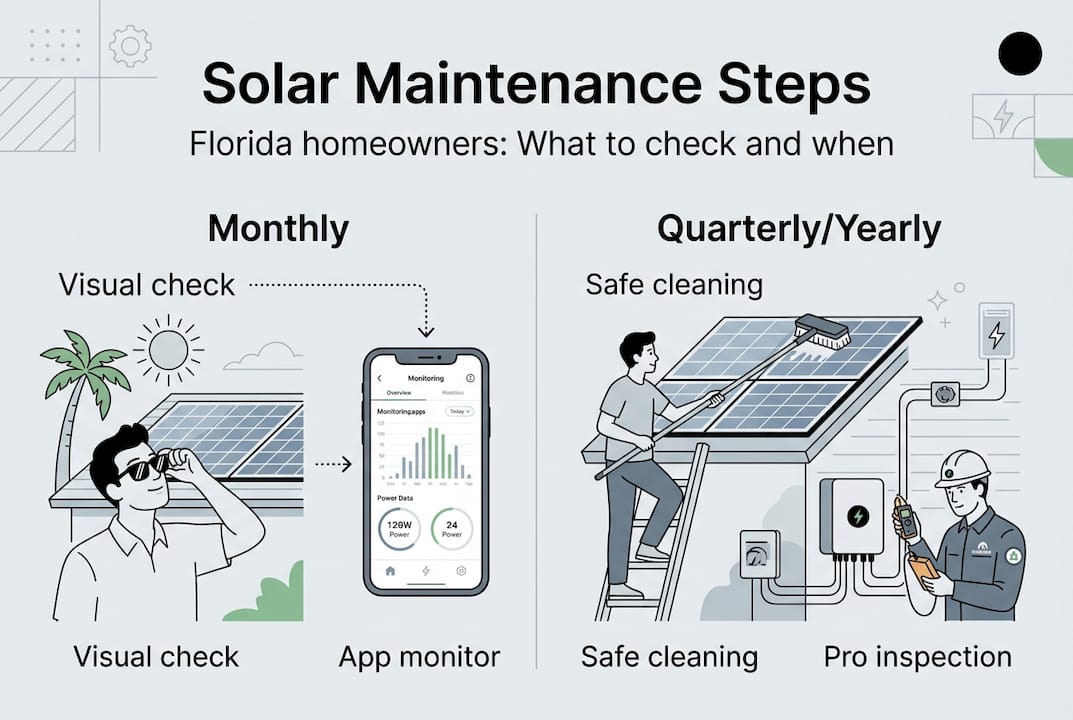
Establishing a consistent inspection routine catches small problems before they become expensive failures. Your monthly visual inspection takes just 15 minutes but provides invaluable early warning of developing issues. Start by checking for obvious dirt accumulation, fallen leaves, bird droppings, or debris that blocks sunlight. Look for cracks in the glass surface, even hairline fractures that might seem minor but can spread over time. Examine the area around your panels for new tree growth or structures casting shadows that weren’t there before, as shading dramatically cuts production.
Inspect mounting hardware for rust, loose bolts, or signs of movement that could indicate structural problems. Check beneath panels if accessible for wasp nests or rodent activity, both common in Florida and potentially damaging to wiring. Note any discoloration, burn marks, or unusual wear patterns on panel surfaces or frames. Document what you find with photos and dates, creating a visual record that helps you spot gradual changes over months.
Quarterly cleaning maintains efficiency and prevents buildup from becoming permanent. The process requires minimal equipment but careful technique to avoid damage. Gather these safe cleaning materials:
- Soft-bristled brush or microfiber mop with extension pole
- Garden hose with spray nozzle for gentle water pressure
- Bucket of plain water or mild soap solution (dish soap diluted 1:100)
- Squeegee for streak-free drying
- Safety equipment if accessing roof areas
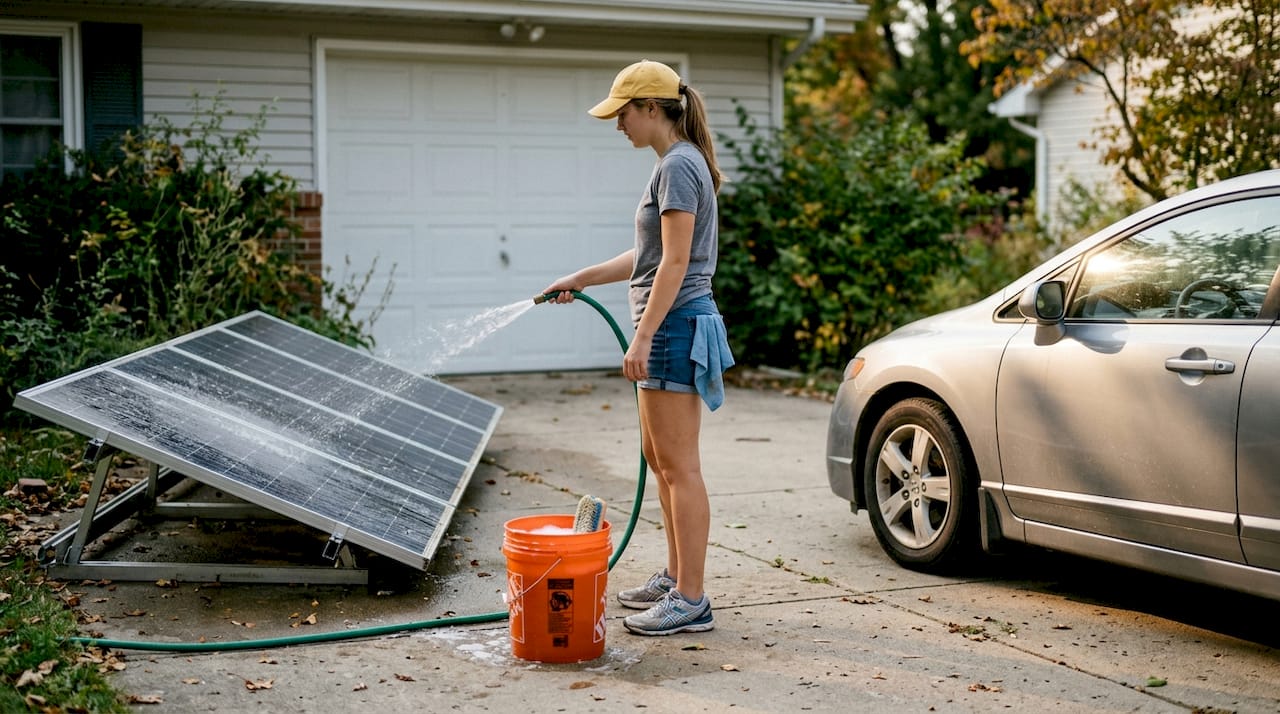
Never use abrasive scrubbers, harsh chemicals, or pressure washers, as these damage protective coatings and void warranties. Clean early morning or on cloudy days when panels are cool; spraying cold water on hot panels can cause thermal shock and cracking. Start by rinsing loose debris with plain water, then gently scrub stubborn spots with your soft brush and soapy water. Rinse thoroughly to remove all soap residue, which can leave films that attract more dirt. Let panels air dry or use a squeegee for faster results.
Pro Tip: Schedule quarterly cleanings to align with season changes (after spring pollen, before summer storms, after fall leaf drop, and mid-winter) to address Florida’s specific environmental patterns rather than arbitrary calendar dates.
Ground-level cleaning works well for accessible systems, but avoid DIY roof work if your panels require climbing or working at heights. The risk of falls far outweighs any cost savings, and professionals carry insurance and proper safety equipment. Focus your DIY efforts on tasks you can safely perform from the ground or through accessible monitoring systems. This approach keeps you involved in maintenance while leaving dangerous work to qualified technicians who handle it daily.
For peak performance, combine physical cleaning with monitoring habits that catch invisible problems. Clean panels look great but might still underperform due to electrical issues, inverter problems, or grid connection faults that only data reveals. Integrating both approaches creates comprehensive protection for your system.
Monitoring system performance and professional upkeep
Your inverter display or monitoring app provides the clearest window into system health, revealing problems that visual inspections miss entirely. Check energy production monthly, comparing current output to previous months and seasonal baselines. Most modern systems include smartphone apps showing real-time generation, daily totals, and historical trends. Production drops exceeding 10% over 30 days signal issues requiring investigation, whether from dirty panels, failing components, or grid problems.
Learn to distinguish normal seasonal variation from genuine problems. Winter months naturally produce less energy due to shorter days and lower sun angles, while summer peaks deliver maximum output. Cloudy weather reduces production temporarily without indicating system failure. However, sudden drops on clear days, error codes on your inverter, or complete shutdowns demand immediate attention. Document baseline performance during optimal conditions so you recognize when output falls below expected levels for current weather.
Monitoring thresholds and recommended actions:
- 5-10% production drop: Clean panels and check for new shading sources
- 10-20% production drop: Investigate inverter function and electrical connections
- Over 20% production drop: Contact professional service immediately for diagnosis
- Error codes or warning lights: Document codes and call qualified technician
- Complete system shutdown: Check circuit breakers, then contact professional if not resolved
Pro Tip: Set calendar reminders to check your monitoring app on the same date each month, creating consistent data points that make trends easier to spot than random checking.
While homeowners handle routine cleaning and monitoring, professional annual inspections address components and systems beyond DIY scope. Certified technicians examine electrical connections for corrosion, loose wires, or degraded insulation that create fire hazards or efficiency losses. They test inverter performance under load, measure voltage and current at multiple points, and verify proper grounding and safety systems. Structural inspections check mounting hardware for stress, corrosion, or movement that could lead to panel detachment during storms.
These professional checkups extend system life by 20% compared to neglected systems, catching small issues before they cascade into major failures. Technicians also verify warranty compliance, documenting that required maintenance occurred on schedule. Many warranties require professional service records to remain valid, making annual inspections a financial protection as much as a technical necessity. Schedule these visits during mild weather months when technicians have better availability and working conditions.
| Monitoring Metric | Check Frequency | Professional Service | Service Frequency |
|---|---|---|---|
| Energy production | Monthly via app | Inverter testing and calibration | Annually |
| Error codes | Weekly visual check | Electrical connection inspection | Annually |
| System voltage | Quarterly if accessible | Mounting hardware assessment | Annually |
| Weather-adjusted output | After major weather | Post-storm damage evaluation | After each major storm |
Post-storm inspections deserve special attention in Florida’s hurricane-prone climate. After any significant weather event, visually inspect your system from the ground for obvious damage like cracked panels, displaced mounting hardware, or debris accumulation. Never attempt to reactivate a system that shut down during a storm without professional assessment, as hidden damage could create electrical hazards or fire risks. Technicians use specialized equipment to test system integrity, verify proper operation, and document any insurance claims needed for repairs.
Common post-storm issues include micro-cracks in panel glass from hail or debris impacts, loosened mounting bolts from wind stress, water intrusion into junction boxes, and damaged wiring from fallen branches. These problems might not prevent immediate operation but will shorten system life and reduce efficiency if left unaddressed. Professional inspection costs pale compared to premature system replacement or safety incidents from hidden damage.
Preparing your solar panels for Florida’s hurricane season
Hurricane preparation starts well before the first tropical depression forms, ideally during the calm months of late winter or early spring. Walk your property and identify trees, branches, or structures that could impact panels during high winds. Trim back any vegetation within falling distance of your array, focusing on dead branches or weak limbs most likely to break. Inspect mounting hardware for any looseness or corrosion, tightening bolts and replacing degraded fasteners before storm season arrives. Verify that your system’s wind rating matches Florida building codes, typically 140 to 160 mph for coastal zones.
Pre-season preparation checklist:
- Remove or secure loose items near panels (patio furniture, decorations, tools)
- Document current system condition with dated photos for insurance purposes
- Verify emergency shutdown procedures and label breaker locations clearly
- Confirm contact information for your installation company and insurance provider
- Review your policy coverage for storm damage and understand claim procedures
- Consider temporary protective measures for extreme forecasts (consult professionals first)
As a storm approaches, focus on safety over equipment. Most modern solar installations are engineered to withstand hurricane-force winds when properly installed, making last-minute modifications unnecessary and potentially dangerous. Shut down your system according to manufacturer guidelines if evacuation is ordered, but never work on electrical components during deteriorating weather conditions. Your primary goal is protecting people, not panels.
After the storm passes and authorities declare your area safe, begin your post-hurricane inspection from the ground. Look for these common damage indicators:
- Cracked, shattered, or missing panels requiring immediate replacement
- Displaced or twisted mounting racks indicating structural failure
- Debris accumulation on or around panels blocking airflow and sunlight
- Roof damage near panel attachments compromising weatherproofing
- Visible wiring damage, exposed connections, or pulled conduit
- Standing water in junction boxes or inverter enclosures
- Scorch marks, melted components, or burning odors suggesting electrical faults
Document everything with photos and notes before touching anything. Contact your installation company or a certified solar technician before attempting to restart your system, even if damage appears minimal. Hidden problems like compromised grounding, internal wiring faults, or inverter damage can create serious safety hazards when the system energizes.
Never reactivate your solar system after a hurricane without professional inspection and clearance. What looks like minor cosmetic damage could hide dangerous electrical faults that risk fire, electrocution, or equipment destruction when power is restored.
Proper installation ratings make the difference between weathering storms successfully and facing catastrophic damage. Florida building codes require solar systems to withstand specific wind loads based on location, with coastal areas demanding higher ratings than inland properties. Verify during installation that your system meets or exceeds local requirements, and maintain documentation proving compliance. This protects both your investment and your family’s safety during Florida’s inevitable severe weather.
Post-storm recovery often reveals installation quality issues that routine maintenance never exposes. Systems installed by qualified professionals using proper techniques and materials consistently outperform cheaper installations during extreme events. If your panels suffer storm damage, use the opportunity to upgrade any substandard components or mounting methods that contributed to failure, preventing repeat problems in future seasons.
Keep your solar system performing with expert maintenance
While diligent DIY maintenance protects your daily investment, professional expertise ensures long-term performance and warranty protection. Certified technicians bring specialized tools, training, and experience that catch developing problems before they become costly failures. Regular professional service preserves manufacturer warranties, maintains system efficiency, and provides documentation valuable for insurance claims or property sales. Combining your monthly attention with annual expert care creates the comprehensive protection your solar investment deserves.
Exploring professional installation and ongoing maintenance services connects you with specialists who understand Florida’s unique challenges and latest solar technologies. Whether you’re planning a new system or optimizing an existing array, expert guidance on installation best practices and proper care routines maximizes your return on investment. Flexible financing options make professional maintenance affordable, spreading costs over time while protecting the substantial value your solar system represents.
Frequently asked questions
How often should I clean my solar panels in Florida?
Clean your panels 2 to 4 times yearly under normal conditions, increasing frequency during March through May pollen season or if you live in coastal areas with salt spray exposure. Monthly rinsing helps in high-exposure locations, while quarterly deep cleaning suffices for most inland properties. Monitor your system’s output to determine if your current schedule maintains efficiency or needs adjustment.
Can I perform all solar maintenance myself safely?
Ground-level visual inspections, monitoring checks, and accessible panel cleaning are safe DIY tasks for most homeowners. However, avoid roof work, electrical inspections, inverter servicing, and post-storm system reactivation without professional help. These tasks require specialized training, safety equipment, and insurance coverage that professionals provide. Focus your efforts on routine monitoring and cleaning you can safely perform from the ground.
What signs indicate my solar inverter needs professional service?
Error codes on the display, persistent warning lights, unusual noises, or production drops exceeding 10% over 30 days signal potential inverter problems requiring professional diagnosis. Complete system shutdowns, failure to restart after resetting breakers, or visible damage like scorch marks or melted components demand immediate expert attention. Regular annual inspections catch inverter issues before they cause system failures or safety hazards.
How can I protect my solar panels during hurricane season?
Trim surrounding trees and secure potential projectiles before hurricane season begins, typically by late spring. Verify your system’s wind rating meets Florida building codes for your location and document current condition with photos. Never attempt last-minute modifications or repairs as storms approach. After any hurricane, contact professionals for inspection before reactivating your system, even if visible damage appears minimal, as hidden electrical faults create serious safety risks.
