
Many Florida solar panel owners believe installation alone guarantees peak performance. Reality check: proper maintenance can boost output by up to 15%. Florida’s unique coastal salt air, humidity, and seasonal pollen create challenges that demand a structured approach. This comprehensive checklist guides homeowners and business owners through quarterly inspections, safe cleaning methods, inverter monitoring, and professional servicing schedules tailored specifically to Florida’s climate conditions.
Table of Contents
- How To Choose The Right Maintenance Approach For Your Solar System
- Cleaning Methods And Frequency
- Inspection Protocols: Panels, Mounts, Wiring
- Inverter Monitoring And Troubleshooting
- Record Keeping And Safety Precautions
- Professional Servicing Indications And Scheduling
- Summary Comparison And Situational Recommendations
- Get Expert Solar Panel Maintenance Support In Florida
- Frequently Asked Questions
Key Takeaways
| Point | Details |
|---|---|
| Quarterly inspections prevent up to 15% efficiency loss | Regular checks catch damage early and maintain peak output |
| Use soft tools and water only | Harsh chemicals damage panels and reduce lifespan |
| Monthly inverter monitoring detects faults early | Catching issues quickly avoids costly downtime |
| Professional servicing every 12-18 months | Complex systems need expert attention for warranty compliance |
| Keep detailed maintenance logs | Documentation tracks system health and supports warranty claims |
How to Choose the Right Maintenance Approach for Your Solar System
Deciding between DIY and professional maintenance depends on your system size, location, and comfort level. Weekly visual checks catch obvious issues like debris or bird nests. Monthly inverter monitoring ensures your system converts sunlight efficiently. Quarterly deep cleaning removes accumulated dirt and pollen that block sunlight.
Florida’s environment demands extra attention. Humidity accelerates corrosion on mounting hardware. Salt air from coastal areas leaves residue that solar panel maintenance requirements address through regular washing. Pollen seasons require more frequent cleaning than typical maintenance schedules suggest.
DIY cleaning works well for small to medium residential systems on accessible roofs. You need soft brushes, plain water, and basic safety equipment. Large commercial arrays or systems in coastal areas benefit from professional expertise. Complex installations with multiple inverters or battery storage require trained technicians.
Your budget matters but weigh it against potential losses. A dirty 10kW system losing 15% efficiency costs you roughly $200 annually in lost production. Professional cleaning twice yearly runs $150 to $300 but protects your investment. Balance expertise requirements with system complexity when planning your solar panel maintenance workflow.
Pro Tip: Document your system’s baseline performance in the first month after installation. This gives you a reference point for spotting efficiency drops that signal maintenance needs.
Cleaning Methods and Frequency
Clean your panels at least quarterly, or monthly during spring pollen season. Florida’s oak and pine trees release massive amounts of pollen from March through May. This yellow dust coats panels and blocks sunlight penetration. Coastal properties face salt spray year round that crystallizes on glass surfaces.
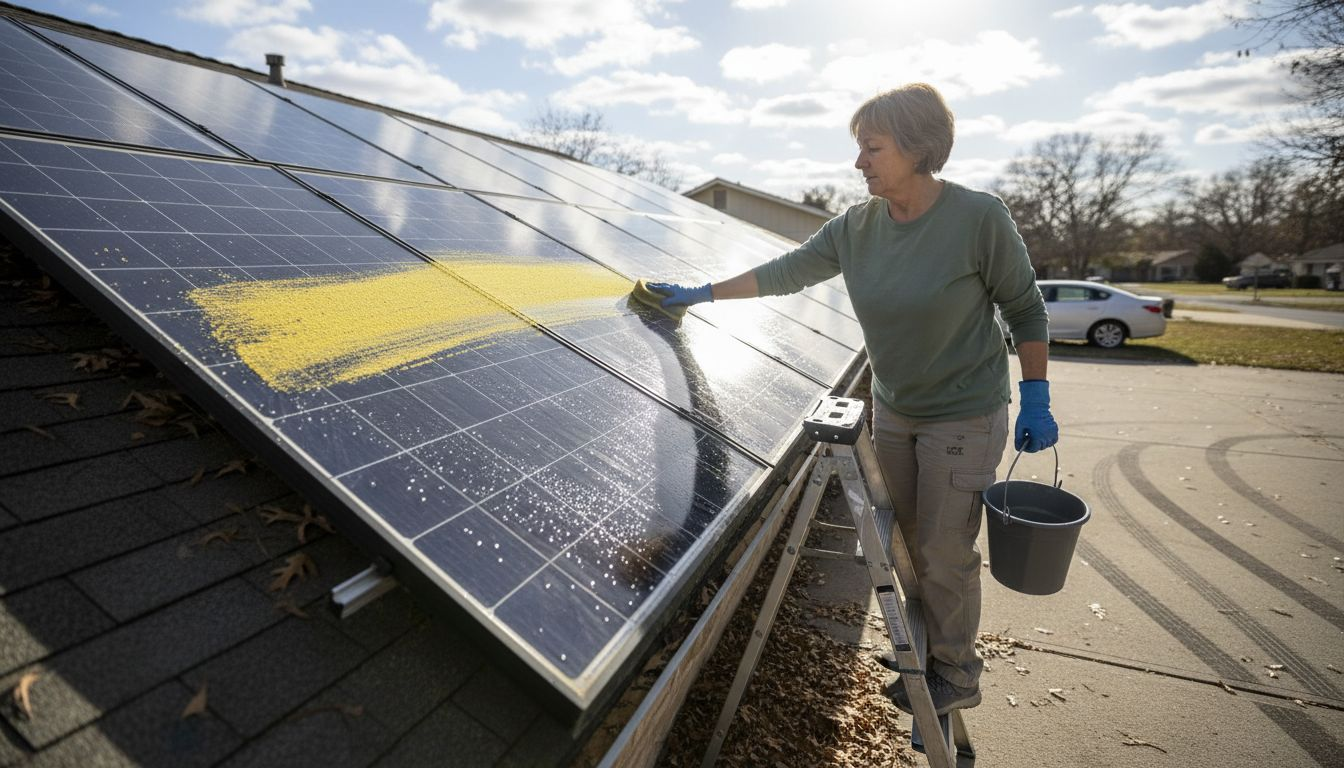
Dirty panels reduce efficiency by up to 20% according to industry data. Water alone removes most contaminants effectively. Fill a bucket with plain water and use a soft brush on an extension pole. Avoid detergents that leave residue or contain harsh chemicals. Dawn dish soap diluted heavily works if you face stubborn grime, but rinse thoroughly.
Timing matters for safety and effectiveness. Clean early morning or late evening when panels are cool. Hot glass plus cold water creates thermal stress that can cause micro cracks. Never walk on panels or use abrasive materials like steel wool. A garden hose with gentle pressure works for ground level systems.
- Schedule cleaning after major storms to remove debris
- Increase frequency to monthly near beaches or under trees
- Skip cleaning during drought when water restrictions apply
- Hire professionals for roofs steeper than 6:12 pitch
Salt buildup from coastal air reduces output significantly if ignored. The crystalline deposits scatter incoming light and create hot spots. Regular solar panel cleaning methods prevent this accumulation from becoming permanent etching. Systems within three miles of coastline need monthly attention during summer when salt spray peaks.
Pro Tip: Check solar cleaning efficiency data showing water temperature below 100°F prevents thermal shock while still dissolving most contaminants effectively.
Inspection Protocols: Panels, Mounts, Wiring
Quarterly visual inspections catch problems before they escalate into expensive repairs. Walk your array looking for cracked glass, discoloration, or delamination where layers separate. Check mounting clips for looseness and corrosion. Florida’s humidity oxidizes metal fasteners faster than dry climates.
Biannual electrical inspections prevent dangerous faults. Examine conduit connections for water intrusion. Look inside junction boxes for burned wires or loose terminals. Corroded connections create resistance that generates heat and wastes energy. This systematic approach follows solar inspection best practices proven in humid environments.
- Inspect panel surfaces for cracks, chips, or burn marks from hot spots
- Check frame integrity and mounting rail attachment points
- Examine all visible wiring for fraying, animal damage, or UV degradation
- Test ground fault protection and verify proper equipment bonding
- Document findings with photos and notes in your maintenance log
Seasonal adjustments optimize inspection timing. Schedule major checks before hurricane season in May and after in November. Inspect more frequently during summer thunderstorm season when lightning strikes nearby. The solar inspection protocols used during installation provide a baseline for comparison.
| Inspection Task | Frequency | Focus Areas | Florida Specific Concerns |
|---|---|---|---|
| Visual panel check | Quarterly | Cracks, discoloration | Hurricane debris damage |
| Mount hardware | Biannually | Rust, looseness | Salt air corrosion |
| Wiring inspection | Biannually | Connections, conduit | Humidity intrusion |
| Inverter status | Monthly | Error codes, temperature | Heat related shutdowns |
Pro Tip: Take dated photos during each inspection to track gradual changes invisible in single observations. Compare images quarterly to spot slow developing issues like mounting rail sag.
Inverter Monitoring and Troubleshooting
Check your inverter display monthly for warning lights or error messages. Modern units communicate system health through LED indicators and digital readouts. Green solid lights signal normal operation. Flashing yellow indicates minor faults. Red warnings demand immediate attention. Most manufacturers provide smartphone apps that send alerts automatically.
Common inverter problems include overheating during Florida summers, grid connection faults during storms, and firmware glitches. Overheating triggers automatic shutdowns that protect components but halt production. Ensure adequate ventilation around your inverter and shade it from direct sun. Grid faults resolve themselves once power stabilizes after outages.
Regular inverter monitoring extends the typical 10 to 15 year lifespan by catching issues early. A failing capacitor shows up as intermittent production drops. Loose DC connections create arcing visible in monitoring data as voltage fluctuations. Catching these problems early costs hundreds instead of thousands.
- Reset the inverter by cycling its disconnect switch if you see temporary faults
- Contact your installer immediately for persistent error codes
- Monitor daily production against weather and seasonal baselines
- Schedule professional diagnostics if output drops more than 10% unexpectedly
Know your limits. Inverters contain high voltage DC even when the AC breaker is off. Never open the cabinet yourself. Simple resets are safe but internal repairs require licensed electricians. Your inverter performance monitoring strategy should include both automated alerts and manual monthly checks of physical condition.
Pro Tip: Screenshot your inverter’s production graphs weekly during the first month. This baseline helps you recognize abnormal patterns that signal developing faults requiring inverter troubleshooting practices.
Record Keeping and Safety Precautions
Maintain a dedicated logbook documenting every maintenance activity. Record dates, tasks completed, issues found, and corrective actions taken. Note weather conditions, production data, and any unusual observations. This documentation proves invaluable for warranty claims and helps identify recurring problems. Tracking solar maintenance record keeping over years reveals patterns invisible in isolated incidents.
Document professional service visits thoroughly. Request detailed reports from contractors including photos of problem areas and repairs performed. Save invoices and parts receipts. Many manufacturers require proof of regular maintenance to honor warranties. Insurance claims for storm damage need documentation showing proper pre storm condition.
Safety must override all other considerations. Always shut down your solar system completely before any hands on maintenance. Flip the main DC disconnect near the inverter and the AC breaker in your panel. Even on cloudy days, panels generate dangerous voltage. Never work on wet equipment or during rain.
- Wear insulated gloves rated for electrical work when inspecting connections
- Use fall protection harnesses for any roof work above single story height
- Keep a fire extinguisher rated for electrical fires near your inverter
- Never spray water directly at inverters or junction boxes
- Schedule maintenance during mild weather to avoid heat exhaustion
Electrical safety protocols exist for good reason. DC electricity from solar panels does not let go like AC current. Contact means sustained shock until someone breaks the circuit. Treat your system with the same respect you give main electrical panels. The few minutes spent on proper shutdown procedures can prevent life threatening injuries.
Pro Tip: Create a simple checklist laminated and kept near your solar disconnect. List shutdown procedures, emergency contacts, and basic troubleshooting steps. This ensures anyone helping with maintenance follows safe protocols.
Professional Servicing Indications and Scheduling
Schedule professional servicing every 12 to 18 months even if your system seems fine. Comprehensive inspections catch subtle issues invisible to untrained eyes. Technicians use specialized tools to test electrical connections, measure panel output individually, and verify inverter calibration. These services maintain healthy solar panels and protect your investment long term.
Certain signs demand immediate professional attention. Persistent inverter fault codes after basic resets indicate internal problems. Visible cracks in panel glass need evaluation for safety and warranty coverage. Mounting hardware showing significant rust or looseness requires structural assessment. Discoloration or burn marks on panels suggest dangerous hot spots from electrical faults.
Coastal property owners and commercial system operators benefit most from frequent professional maintenance. Salt air accelerates corrosion requiring specialized treatment. Large arrays with multiple inverters need systematic testing beyond DIY capability. The cost of professional solar maintenance services runs $200 to $500 annually but prevents failures costing thousands.
- Budget $150 to $300 for residential system annual checkups
- Commercial systems need quarterly professional inspections
- Hurricane season preparation services cost $200 to $400
- Post storm damage assessments help with insurance claims
Weigh service costs against potential savings preservation. A $15,000 system losing 15% efficiency wastes $300 yearly in lost production. Professional maintenance protecting that efficiency pays for itself within two years. Most installers offer maintenance packages bundling inspections, cleaning, and priority service.
Pro Tip: Schedule your annual professional service during fall before peak winter production season. This ensures your system operates at maximum efficiency when electricity rates are highest.
Summary Comparison and Situational Recommendations
Different maintenance approaches suit different situations. Small residential systems under 10kW on accessible roofs handle quarterly DIY cleaning well. Add biannual professional inspections for electrical safety. Medium systems from 10kW to 25kW benefit from quarterly DIY visual checks plus professional cleaning and electrical work twice yearly.
Large commercial arrays and coastal properties need frequent professional attention. Salt exposure, complex inverter configurations, and liability concerns justify the expense. Ground mounted systems simplify DIY maintenance but face different challenges like vegetation encroachment and animal interference.
| Maintenance Task | Cost Range | Frequency | Key Benefits | Florida Challenge |
|---|---|---|---|---|
| DIY cleaning | $0-50 | Quarterly | Cost effective, immediate | Summer heat safety |
| Professional cleaning | $100-250 | Biannually | Thorough, safe | Scheduling during peak pollen |
| Visual inspection | $0 | Monthly | Early problem detection | Hurricane debris |
| Professional electrical | $150-300 | Annually | Safety, warranty compliance | Humidity corrosion |
| Inverter monitoring | $0 | Monthly | Prevents downtime | Heat induced faults |
Seasonal checklist adjustments keep your system optimized. Increase cleaning frequency to monthly from March through May during pollen season. Inspect mounting hardware in April before hurricane season starts. Schedule professional service in October or November after summer heat stress and before winter peak production. Check for storm damage within 48 hours after any hurricane or severe thunderstorm.
Small homeowners with straightforward rooftop systems can handle most tasks independently. Invest in quality soft brushes, safety equipment, and monitoring tools. Budget $300 to $500 annually for professional electrical inspections and complex troubleshooting. Larger systems and coastal properties should allocate $800 to $1,500 yearly for comprehensive professional maintenance.
- Accessible single story systems suit DIY approaches
- Steep roofs require professional safety equipment and expertise
- Systems within three miles of coast need monthly cleaning
- Commercial properties benefit from maintenance contracts
Tailoring your maintenance strategy to your specific system size, location, and complexity ensures optimal performance. Compare your situation against these guidelines and adjust frequency based on actual conditions. Your cleaning options comparison should factor in safety, effectiveness, and budget constraints. Effective maintenance scheduling advice balances proactive care with practical resource allocation.
Pro Tip: Track your monthly production in a spreadsheet alongside maintenance activities. This reveals which tasks deliver the biggest efficiency improvements for your specific conditions.
Get Expert Solar Panel Maintenance Support in Florida
Maximizing your solar investment requires both diligent self maintenance and strategic professional support. Florida’s unique climate challenges demand specialized knowledge and proper equipment.
PES Solar delivers comprehensive professional solar maintenance services throughout Florida. Our certified technicians understand coastal salt air, humidity impacts, and seasonal maintenance timing. We provide expert cleaning using proper techniques that protect your panels while maximizing efficiency. Our thorough inspections catch small problems before they become expensive failures.
Explore our detailed solar panel installation guidance and solar panel maintenance workflow resources. These guides complement your DIY efforts with professional insights developed through years of Florida experience. Protect your investment and maintain peak savings with proper care.
Frequently Asked Questions
What is the best frequency to clean solar panels in Florida?
Clean quarterly as a baseline, increasing to monthly during spring pollen season from March to May. Coastal properties within three miles of beaches need monthly cleaning year round due to salt spray accumulation. After major storms, inspect and clean immediately to remove debris.
How can I safely inspect my solar panels and wiring?
Shut down your entire system using both the DC disconnect and AC breaker before any inspection. Wear insulated gloves and use fall protection on roofs. Look for cracks, loose mounts, corroded connections, and damaged wiring. Never inspect during wet conditions or touch electrical components with power on.
When should I call a professional for solar panel maintenance?
Contact professionals immediately for persistent inverter error codes, visible panel damage, or mounting instability. Schedule annual professional servicing to maintain warranty validity and catch issues your inspections might miss. Coastal and commercial systems benefit from quarterly professional attention due to complexity and environmental exposure.
Do I need special tools for DIY solar panel maintenance?
Basic maintenance requires only soft brushes, plain water, and safety equipment like insulated gloves. Avoid pressure washers and harsh chemicals that damage panels. For roof work, invest in proper fall protection harnesses. A multimeter helps with basic electrical checks but leave complex diagnostics to licensed professionals.
How do I know if my solar panels need professional cleaning?
Compare current production to baseline data from similar weather conditions. A drop exceeding 10% suggests cleaning or other maintenance needs. Visible dirt, pollen coating, or salt residue indicates cleaning time. If DIY cleaning does not restore performance, professionals can identify underlying issues beyond surface contamination.
