
Most American homeowners in Florida are surprised to learn that installing solar panels can raise property value by a median of 2%, while dramatically reducing energy bills. With advanced solar technology, residents tap into Florida’s abundant sunshine for clean power at home. This guide breaks down how solar panels work, clears up common misconceptions, and explains incentives available, helping families make informed choices for greater savings and energy independence.
Table of Contents
- Solar Panels Defined And Common Misconceptions
- Types Of Solar Panel Systems In Florida
- How Residential Solar Power Works
- Upfront Costs, Savings, And Tax Incentives
- Impact On Property Value And Energy Independence
Key Takeaways
| Point | Details |
|---|---|
| Solar Panels Convert Sunlight | Solar panels use semiconductor materials to transform sunlight into electricity, offering an environmentally friendly energy solution. |
| Misconceptions About Solar | Common myths regarding solar energy, such as health risks and economic impracticality, are often unfounded and should be addressed. |
| Tax Incentives and Savings | Homeowners can benefit from significant financial incentives, including a 30% federal tax credit, making solar installations more accessible. |
| Property Value Enhancement | Installing solar panels can raise property values by a median of 2%, contributing to both financial and energy independence benefits. |
Solar Panels Defined and Common Misconceptions
Solar panels are sophisticated devices that transform sunlight directly into electricity through an ingenious process. Photovoltaic panels utilize semiconductor materials that generate electrical current when exposed to solar radiation, creating an innovative renewable energy solution for Florida homeowners.
At their core, solar panels work by capturing photons from sunlight and converting them into excited electrons that flow through an electrical circuit. When sunlight strikes the panel’s surface, semiconductor materials like silicon trigger a quantum reaction, generating direct current electricity. This process allows homeowners to harness clean energy without producing greenhouse gas emissions, making solar an environmentally responsible alternative to traditional power sources.
Despite their growing popularity, several persistent misconceptions continue to circulate about solar technology. A recent report by climate researchers highlights that many concerns about solar energy are unfounded. Common myths include claims about excessive waste generation, health risks, and economic impracticality. In reality, modern solar panels are designed with sustainability in mind, utilizing recyclable materials and providing long-term economic benefits for homeowners.
Pro tip: Before making a solar investment, schedule a professional energy assessment to understand your home’s specific solar potential and customize your panel system for maximum efficiency.
Types of Solar Panel Systems in Florida
Florida homeowners have access to multiple solar panel system configurations designed to maximize energy production and meet diverse residential needs. The primary categories include grid-connected systems, which allow homeowners to both consume and potentially sell excess electricity back to the utility grid, and stand-alone systems ideal for remote properties or those seeking complete energy independence.
The most common residential solar installations in Florida are rooftop and ground-mounted systems. Rooftop panels leverage existing home infrastructure, utilizing available roof space to generate electricity without requiring additional land. Ground-mounted systems offer greater flexibility in panel positioning and can be particularly advantageous for properties with significant unused land or those with roof structures unsuitable for solar panel installation. Photovoltaic technologies have advanced to provide multiple panel types, including crystalline silicon, thin-film, and emerging high-efficiency designs specifically suited to Florida’s unique solar landscape.
While selecting a solar panel system, Florida homeowners should consider factors like panel efficiency, installation location, energy consumption patterns, and local climate conditions. Some advanced systems incorporate solar tracking technology, which allows panels to dynamically adjust their angle throughout the day to maximize sunlight capture. These systems can increase energy production by up to 25% compared to fixed-tilt installations, making them an attractive option for residents seeking optimal solar performance.
Here’s a quick comparison of common solar panel system types for Florida homeowners:
| System Type | Main Advantage | Ideal Usage Scenario |
|---|---|---|
| Grid-Connected | Sell back excess energy | Homes with reliable grid access |
| Stand-Alone (Off-Grid) | Full energy independence | Remote or rural properties |
| Rooftop | Uses existing roof space | Homes with suitable roof area |
| Ground-Mounted | Flexible placement options | Large lots or unsuitable roofs |
Pro tip: Consult with a local solar professional to conduct a comprehensive site assessment, ensuring you select the most appropriate solar panel system tailored to your specific property characteristics and energy requirements.
How Residential Solar Power Works
Residential solar power transforms sunlight into electricity through an intricate process of photovoltaic energy conversion. The core of this system involves specialized semiconductor materials, typically silicon, that generate electrical current when exposed to sunlight. When photons strike the solar panel, they trigger a quantum reaction that causes electrons to become excited and flow through an electrical circuit, producing direct current electricity.
The solar energy system comprises multiple critical components working in seamless harmony. Solar power systems include solar modules, inverters, mounting hardware, and electrical wiring. Inverters play a crucial role by converting the direct current electricity generated by panels into alternating current electricity compatible with home appliances and the electrical grid. This conversion allows homeowners to utilize solar-generated power for everyday electrical needs, from running kitchen appliances to powering home electronics.
Florida homeowners benefit from solar power systems that offer multiple energy management options. Depending on the installation, excess electricity can be stored in battery systems, fed back into the electrical grid through net metering programs, or used immediately to power household needs. Modern solar installations can significantly reduce traditional electricity consumption, providing both financial savings and environmental benefits by decreasing reliance on fossil fuel-generated electricity.
Pro tip: Monitor your solar system’s performance using digital tracking apps to maximize energy efficiency and quickly identify any potential maintenance requirements.
Upfront Costs, Savings, and Tax Incentives
Navigating the financial landscape of solar panel installation requires understanding both the initial investment and potential long-term savings. Residential clean energy credits provide significant financial relief, offering homeowners a 30% federal tax credit for solar installations through 2032. This substantial incentive can dramatically reduce the overall cost of transitioning to solar power, making the initial investment more accessible for Florida residents.
The upfront costs of solar panel installation vary depending on system size and complexity, typically ranging from $15,000 to $25,000 before incentives. However, multiple financing options help mitigate these expenses. Financing mechanisms such as solar loans, leases, and power purchase agreements allow homeowners to spread installation costs over time. These strategies transform what might seem like a prohibitive expense into a manageable investment, with many homeowners experiencing net positive cash flow within 7-10 years of installation.
Florida offers additional state-level incentives that complement federal tax credits. Property tax exemptions for solar installations mean homeowners won’t pay additional taxes on the increased home value from solar panel systems. Net metering programs allow excess electricity generation to be credited back to homeowners, further reducing overall energy expenses. When combined with federal tax credits and potential utility savings, these incentives can offset a significant portion of the initial solar investment, making renewable energy both environmentally and financially smart.
Below is a summary of financial incentives and their benefits for Florida solar panel installations:
| Incentive Type | Description | Key Benefit |
|---|---|---|
| Federal Tax Credit | 30% tax credit on installation cost through 2032 | Lowers upfront investment |
| State Property Tax | Exemption on added home value from solar panels | Reduces long-term expenses |
| Net Metering | Credit for excess electricity sent to the grid | Reduces monthly bills |
| Financing Options | Solar loans, leases, and purchase agreements | Makes solar more affordable |
Pro tip: Request detailed quotes from multiple solar installers and carefully compare total costs, projected savings, and available financing options to maximize your financial benefits.
Impact on Property Value and Energy Independence
Solar panels have become a strategic investment that significantly enhances both property value and homeowner energy independence. Property value research demonstrates that solar installations typically increase home values by a median of 2%, providing a tangible financial benefit beyond energy savings. This appreciation stems from the growing market demand for energy-efficient homes with integrated renewable technology.
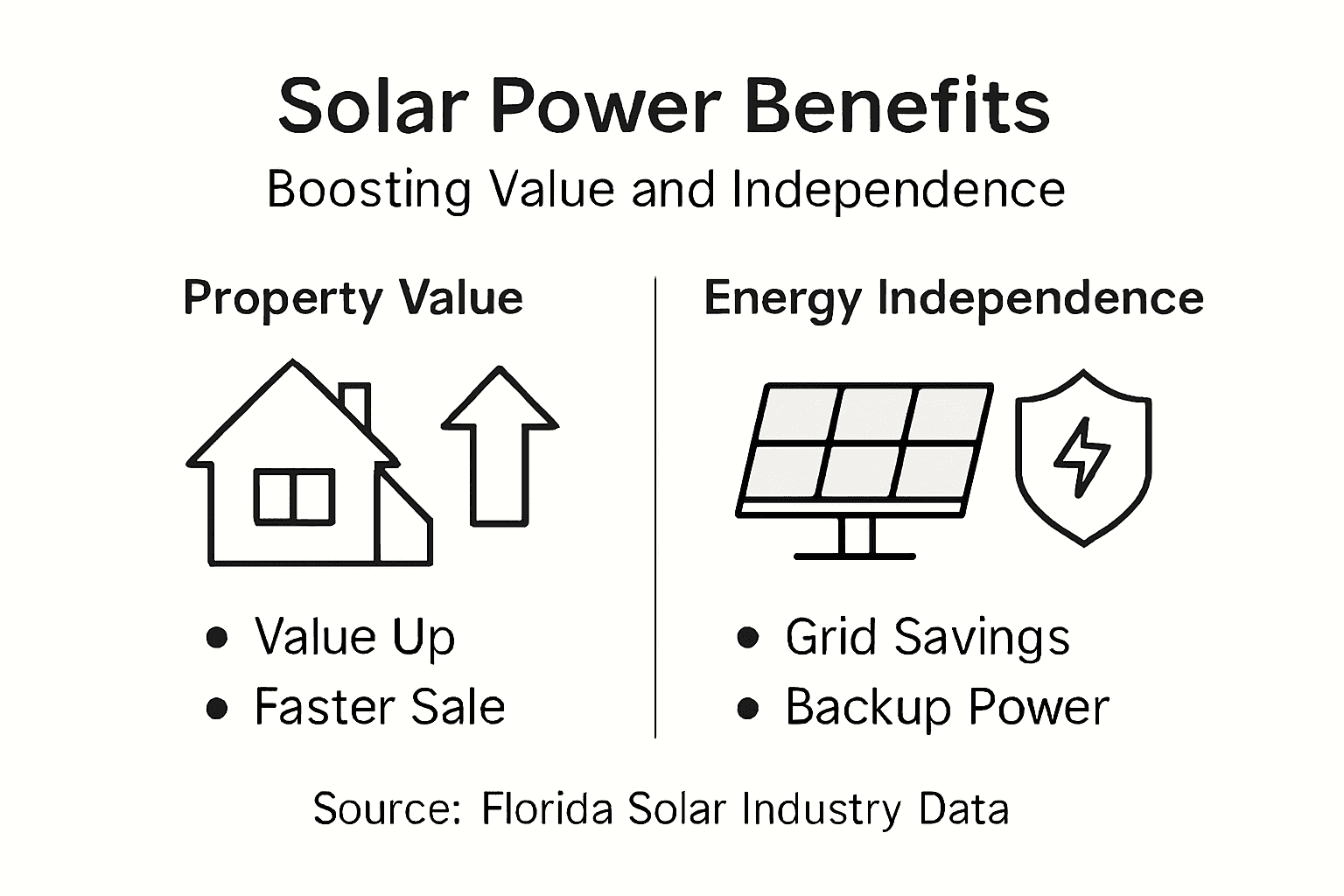
Energy independence represents a crucial advantage of solar panel installations, especially in a state like Florida with abundant sunshine. By generating their own electricity, homeowners reduce reliance on traditional power grids and fossil fuel-based energy sources. Solar energy adoption enables consumers to protect themselves against rising electricity costs and potential grid disruptions, creating a more resilient and self-sufficient home energy ecosystem.
Beyond individual benefits, solar panel installations contribute to broader community and environmental advantages. Homeowners who generate excess electricity can participate in net metering programs, effectively becoming small-scale energy producers. This approach not only reduces personal energy expenses but also supports the broader transition to renewable energy infrastructure. The cumulative impact of residential solar adoption helps decrease carbon emissions, create local green energy jobs, and strengthen regional energy security.
Pro tip: Consult with a local real estate appraiser to understand the specific property value impact of solar installations in your specific Florida neighborhood.
Discover How PES Solar Makes Going Solar in Florida Simple and Affordable
The article highlights common challenges Florida homeowners face when choosing solar panels like upfront costs, selecting the right system type, and maximizing financial benefits including tax incentives and energy independence. If you want to overcome these hurdles and turn solar misconceptions into clear benefits such as lower energy bills, increased property value, and sustainable clean energy, PES Solar is here to help. We specialize in personalized solar solutions tailored to Florida homes using high-quality products like Tesla Powerwall batteries and REC solar panels to maximize your energy savings.
Take control of your energy future today by partnering with local experts who understand Florida’s climate and electricity market. Our team provides free consultations and detailed site assessments to design the ideal system for your needs. We also offer flexible financing options that make transitioning to solar accessible and profitable. Learn more about our complete services at PES Solar and start saving now.
Ready for a smarter energy choice that adds real value to your home and wallet?
Get your free estimate and personalized quote from trusted Florida solar professionals. Visit PES Solar now and take the first step toward clean, cost-effective energy solutions that work for you.
Frequently Asked Questions
What are solar panels and how do they work?
Solar panels are devices that convert sunlight into electricity using semiconductor materials like silicon. They capture photons from sunlight to generate electrical current, providing a renewable energy source for homes.
What types of solar panel systems are available for homes?
The primary types of solar panel systems for homes are grid-connected systems, which allow homeowners to consume and sell excess energy back to the grid, and stand-alone systems, which are ideal for remote areas or those seeking energy independence. Rooftop and ground-mounted systems are common configurations.
How can solar panels increase my home’s property value?
Solar panel installations generally enhance property values, often increasing them by a median of 2%. This increase is due to the rising market demand for energy-efficient homes with renewable energy technology.
What financial incentives are available for solar panel installation?
Homeowners can benefit from a 30% federal tax credit, state property tax exemptions, and net metering programs that credit excess electricity sent back to the grid. These incentives can significantly lower upfront costs and long-term energy expenses.
Recommended
- Solar Energy In Florida: Benefits And Costs
- 3 Reasons To Install Solar Panels On Your Florida Home | PES Solar
- 3 Reasons To Install Solar Panels On Your Florida Home | PES Solar
- 7 Key Benefits Of Solar Panels Every Florida Homeowner Should Know
- Solar Panel Installation Winter Park FL
- Solar Panel Installation Pine Hills FL
