
Florida homeowners often juggle rising utility bills and the desire to add value to their properties. Adopting solar power turns the state’s abundant sunshine into clean, renewable energy and provides a practical path toward reducing household expenses. With solar technology converting sunlight into usable electricity, families across Florida can take control of their energy costs, support a greener lifestyle, and tap into generous tax incentives designed to make solar installations more affordable.
Table of Contents
- Solar Power Basics For Florida Homes
- Types Of Solar Panel Systems Available
- Solar Installation Process And Requirements
- Financial Impact: Costs And Incentives
- Increasing Property Value With Solar Energy
Key Takeaways
| Point | Details |
|---|---|
| Solar Energy Potential | Florida’s abundant sunshine provides an ideal environment for solar energy adoption, with approximately 230 sunny days per year. |
| Types of Systems | Homeowners can choose between grid-tied, stand-alone, and hybrid solar systems, each catering to different energy needs and preferences. |
| Financial Incentives | Various financial mechanisms, including tax credits and net metering, can significantly reduce the initial costs and enhance long-term savings of solar installations. |
| Property Value Enhancement | Solar installations may increase property values by 3% to 5%, attracting environmentally conscious buyers and enhancing marketability. |
Solar power basics for Florida homes
Florida homeowners have an incredible opportunity to harness clean, renewable energy through solar power systems. Solar technology converts sunlight into electricity using photovoltaic panels strategically installed on residential rooftops. These sophisticated systems capture abundant Florida sunshine and transform it into usable electrical power for homes, reducing reliance on traditional fossil fuel energy sources.
Typical residential solar installations in Florida include rooftop panel arrays composed of multiple photovoltaic modules. These panels work by capturing sunlight and generating direct current (DC) electricity, which is then converted to alternating current (AC) through specialized inverters compatible with home electrical systems. Florida’s geographic location provides significant solar energy potential, with an average of 230 sunny days annually making it an ideal state for solar adoption.
The fundamental components of a home solar power system include photovoltaic panels, mounting hardware, electrical inverters, and connection systems to the local power grid. Home solar panels generate electricity by releasing electrons when sunlight strikes their specialized semiconductor surfaces, creating an electrical current that can power household appliances, charge battery storage systems, or feed excess energy back into the regional electrical grid.
Pro tip: Before installing solar panels, have a professional conduct a comprehensive site assessment to determine your home’s specific solar potential and optimal panel placement for maximum energy generation.
Types of solar panel systems available
Florida homeowners have several distinct solar panel system configurations to choose from, each designed to meet specific energy needs and preferences. Photovoltaic systems are primarily classified into three main categories: grid-connected, stand-alone, and hybrid systems. These configurations offer unique advantages depending on a homeowner’s location, energy requirements, and long-term sustainability goals.
Grid-tied systems represent the most common solar installation for Florida residences. These systems connect directly to the local utility grid, allowing homeowners to both draw electricity when solar production is low and feed excess energy back into the grid. Solar panel systems typically operate through specialized inverters that convert direct current (DC) electricity generated by panels into alternating current (AC) electricity used by household appliances. This configuration often provides the most cost-effective and straightforward approach to solar energy adoption.
Stand-alone and hybrid systems offer alternative solutions for homeowners seeking greater energy independence. Stand-alone systems function completely off the electrical grid, utilizing battery storage to provide power during periods without direct sunlight. Hybrid systems combine grid connection with battery backup, creating a flexible energy solution that ensures consistent power supply while maintaining the ability to draw from or contribute to the regional electrical infrastructure. These configurations are particularly valuable in areas with unreliable grid service or for homeowners prioritizing energy resilience.
Here’s a side-by-side comparison of solar panel system types available for Florida homeowners:
| System Type | Grid-Tied | Stand-Alone | Hybrid |
|---|---|---|---|
| Grid Connection | Always connected | Not connected | Optional connection |
| Battery Storage | Rarely included | Always required | Included for backup |
| Typical Use | Lower utility bills | Full energy independence | Reliable power during outages |
| Best For | Urban areas, cost savings | Remote properties, off-grid | Areas with unstable grids |
Pro tip: Consult with a local solar professional to conduct a comprehensive energy audit and determine which solar system configuration best matches your specific household energy consumption patterns and budget.
Solar installation process and requirements
Installing solar panels in Florida involves a comprehensive process that requires careful planning, professional expertise, and adherence to local regulations. Obtaining the appropriate building permits is a critical first step for homeowners, ensuring compliance with state and local building codes. The process begins with a detailed site assessment to evaluate the property’s solar potential, roof condition, and energy consumption patterns.
The solar installation typically follows a structured sequence of steps. Homeowners first consult with a professional solar installer who conducts a comprehensive energy audit and designs a customized solar system. This design considers factors such as roof orientation, shading, electrical infrastructure, and the home’s specific energy needs. Professional installers then submit detailed plans to local authorities, including comprehensive documentation of system specifications, contractor certifications, and insurance information.
Florida’s unique environmental conditions demand specific installation requirements. The state’s building codes mandate rigorous standards for solar panel mounting, particularly regarding wind load resistance due to hurricane risks. Installers must use specialized mounting systems that can withstand high winds and meet strict structural integrity requirements. The installation process includes multiple inspection stages, with local building departments verifying compliance with electrical, structural, and safety regulations before final approval is granted.
Pro tip: Gather all necessary property documentation and energy consumption records before meeting with a solar installer to streamline the initial consultation and system design process.
Financial impact: costs and incentives
Solar investments for Florida homeowners represent a complex financial landscape with multiple considerations for initial costs and long-term savings. State incentives for solar adoption play a crucial role in making solar installations more economically attractive. The average residential solar system in Florida ranges from $15,000 to $25,000 before incentives, with potential for significant long-term energy cost reductions and increased property value.
Florida offers several financial mechanisms to offset solar installation expenses. Homeowners can benefit from the federal solar investment tax credit, which currently provides a 30% tax credit for solar system installations. State-level incentives include property tax exemptions for solar equipment, ensuring that the added home value from solar panels does not increase property tax assessments. Many local utilities also offer net metering programs, allowing homeowners to receive credit for excess electricity generated and fed back into the electrical grid.
Below is a summary of common financial mechanisms supporting solar investment in Florida:
| Incentive Type | Description | Potential Benefit |
|---|---|---|
| Federal Tax Credit | 30% of system cost credited to taxes | Substantial cost reduction |
| Property Tax Exemption | Excludes solar value from property tax | Added home value, no penalty |
| Net Metering Program | Credit for excess energy supplied to grid | Lower electricity expenses |
| Solar Loans & Leases | Financing options for upfront costs | Flexible payment plans |
The total financial impact of solar extends beyond immediate installation costs. Typical Florida homes can expect to recoup their solar investment within 8 to 12 years, with potential electricity savings of $20,000 to $30,000 over the system’s 25-30 year lifespan. Additional financial benefits include increased home marketability, protection against rising utility rates, and reduced carbon footprint. Financing options such as solar loans, leases, and power purchase agreements provide flexible pathways for homeowners to manage upfront costs and access solar technology.
Pro tip: Request detailed financial projections from multiple solar installers to compare estimated savings, payback periods, and total long-term financial benefits before making your investment decision.
Increasing property value with solar energy
Solar energy installations have emerged as a powerful method for enhancing residential property value in Florida’s dynamic real estate market. Property value impacts from solar installations demonstrate a nuanced but generally positive trend for homeowners. Studies indicate that homes equipped with solar systems can command higher market prices, with potential premiums ranging from 3% to 5% above comparable properties without solar technology.
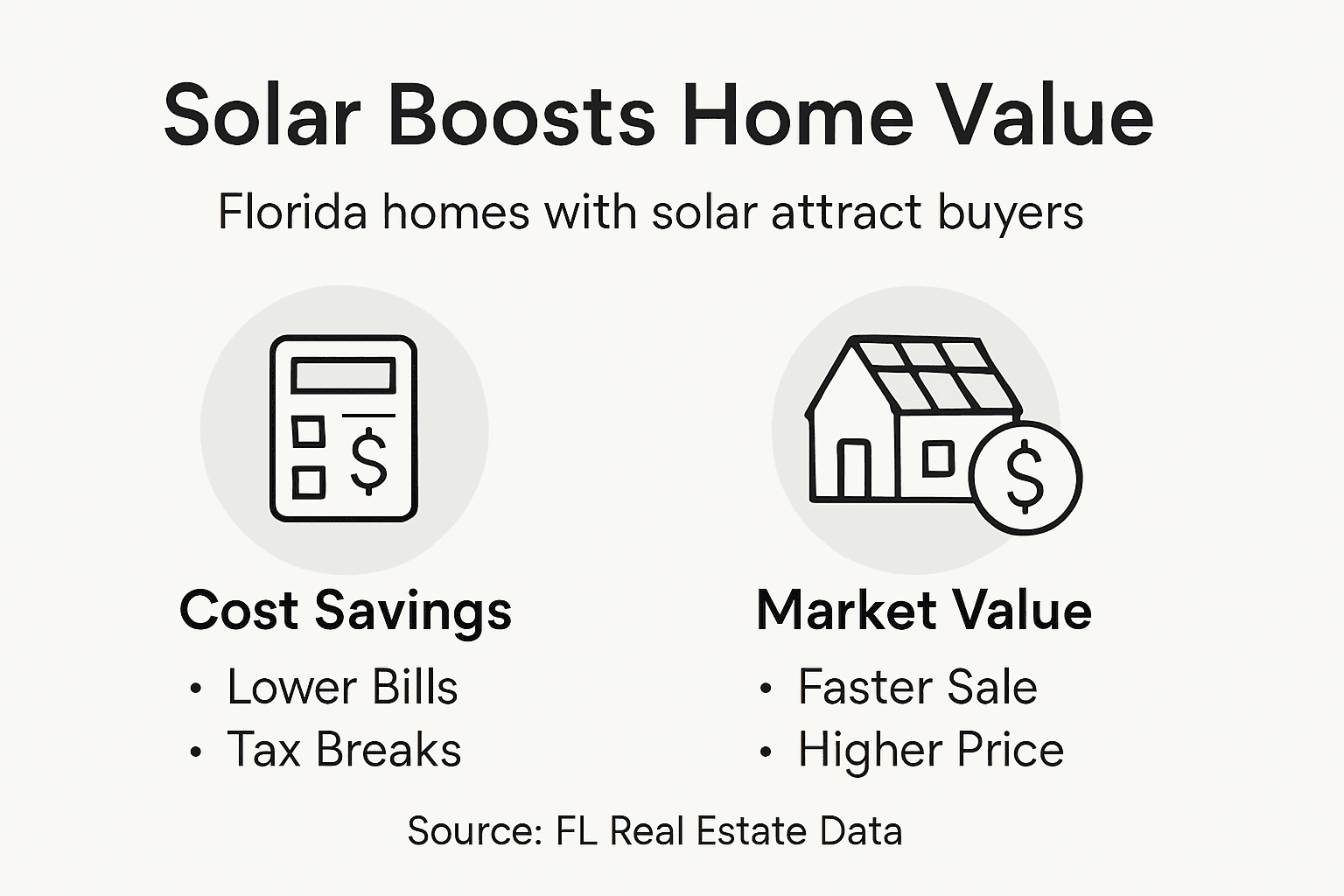
In Southwest Florida’s competitive housing landscape, solar-equipped homes attract environmentally conscious buyers seeking sustainable living options. The added value stems not just from the physical solar installation, but from the long-term energy cost savings and reduced carbon footprint. Potential buyers recognize that solar panels represent a significant home improvement that offers immediate financial benefits through reduced electricity expenses and potential utility credits from net metering programs.
The financial advantage of solar extends beyond immediate energy savings. Real estate market analyses in Southwest Florida suggest that solar installations contribute to home marketability, with younger homebuyers particularly valuing properties with existing renewable energy infrastructure. Factors such as system age, total capacity, and local energy market conditions play crucial roles in determining the precise value added by solar panel installations. Homeowners can expect increased property attractiveness and potential price premiums, especially in regions with strong environmental awareness and energy-conscious real estate markets.
Pro tip: Maintain comprehensive documentation of your solar system’s performance, installation details, and energy savings to maximize potential value when preparing to sell your home.
Unlock the Full Potential of Solar Energy for Your Florida Home
The article highlights common challenges Florida homeowners face such as navigating complex installation requirements, selecting the right solar panel system, and maximizing financial benefits through tax incentives and increased property value. It also stresses the importance of professional site assessments and understanding energy consumption patterns to achieve true energy savings and independence. If you want to stop worrying about high utility bills and want a trusted partner to guide you through these complex decisions, PES Solar can help.
PES Solar offers expert residential solar installations tailored for Florida homes with options like REC solar panels and Tesla Powerwall battery storage that enhance energy reliability and resilience. Our team understands Florida’s unique building codes and environmental demands so you benefit from durable systems designed specifically for the region. Plus, we simplify the financial side with detailed savings projections and access to federal and state tax incentives.
Discover how you can increase your property value while enjoying long-term energy savings by visiting PES Solar. Take the first step toward energy independence and financial peace of mind with a free consultation from our certified local experts.
Considering solar for your Florida home has never been easier or more rewarding.
Ready to lower your energy bills and boost your home’s worth today?
Get your free solar estimate now and see why so many Floridians trust PES Solar for sustainable energy solutions.
Frequently Asked Questions
What are the benefits of installing solar panels on my home?
Installing solar panels can lead to significant savings on electricity bills, increase your property value, offer tax incentives, and provide a sustainable energy source that reduces your carbon footprint.
How much can I expect to save on my energy bills with solar power?
Typically, homeowners can save between $20,000 to $30,000 on electricity costs over the lifetime of a solar system, with the initial installation costs recouped within 8 to 12 years.
What types of solar panel systems are available for homes?
There are primarily three types of solar panel systems: grid-tied systems, which connect to the local utility grid; stand-alone systems, which are off-grid and require battery storage; and hybrid systems, which combine both grid connection and battery backup for flexibility.
How does solar energy impact my home’s property value?
Homes equipped with solar installations generally see increased market value, with potential premiums ranging from 3% to 5% above comparable homes without solar. Buyers often value the long-term energy savings and reduced utility expenses associated with solar energy.
