
Florida is proud to shine as one of the top states for solar power, with over 230 sunny days every year fueling the american dream of lower energy bills and greener living. For homeowners looking to save money and add value, solar panels can cut monthly electricity costs by as much as 90 percent. This guide reveals how solar transforms energy use, boosts property value, and helps Florida families create a smarter, more sustainable home.
Table of Contents
- Solar Energy in Florida Explained
- Top Solar Incentives for Homeowners
- How Solar Reduces Your Electricity Bills
- Impact of Solar on Home Value
- Environmental Benefits and Energy Independence
Key Takeaways
| Point | Details |
|---|---|
| Solar Potential in Florida | Florida ranks third in solar capacity, with over 230 sunny days annually for optimal solar energy generation. |
| Financial Incentives | Homeowners can benefit from federal and state incentives that drastically reduce upfront costs for solar installations. |
| Home Value Increase | Installing solar panels can raise property value by approximately 4.1%, making homes more attractive to buyers. |
| Environmental Benefits | Solar energy significantly reduces carbon emissions and promotes energy independence, contributing to sustainability initiatives. |
Solar Energy in Florida Explained
Florida boasts remarkable potential for solar energy, ranking third nationally in solar capacity. The state’s abundant sunshine creates an ideal environment for solar power generation, transforming how residents think about electricity production. With over 230 sunny days annually, Florida presents an exceptional opportunity for homeowners to harness clean, renewable energy.
The solar landscape in Florida encompasses diverse applications, from residential rooftop installations to large-scale utility projects. Photovoltaic (PV) systems convert sunlight directly into electricity using semiconductor materials, enabling homeowners to generate their own power and reduce dependence on traditional grid electricity. This technology has become increasingly efficient and affordable, making solar an attractive option for many Florida residents.
Key advantages of solar energy in Florida include significant electricity cost savings, increased property values, and reduced carbon emissions. Homeowners can typically offset 70-100% of their electricity needs through properly designed solar panel systems. The state’s net metering policies allow excess energy generated to be credited back to the electrical grid, providing additional financial benefits and creating a more sustainable energy ecosystem.
Pro tip: Research local utility company solar incentives and net metering policies before installing your solar system to maximize potential savings and understand precise credit structures.
Top Solar Incentives for Homeowners
Florida homeowners have access to several compelling solar incentives that make transitioning to renewable energy more financially attractive than ever. The most significant opportunity is the federal solar tax credit, which allows homeowners to deduct 30% of solar installation costs directly from their federal tax liability. This substantial credit dramatically reduces the upfront investment required for solar panel systems, making renewable energy more accessible to a broader range of households.
Beyond federal incentives, Florida offers unique state-level benefits that further enhance solar affordability. Homeowners can take advantage of property tax exemptions for solar installations, meaning the added value of solar panels won’t increase property tax assessments. Additionally, net metering policies enable residents to receive credits for excess electricity generated, effectively allowing them to sell surplus energy back to the local utility grid and offset future electricity costs.
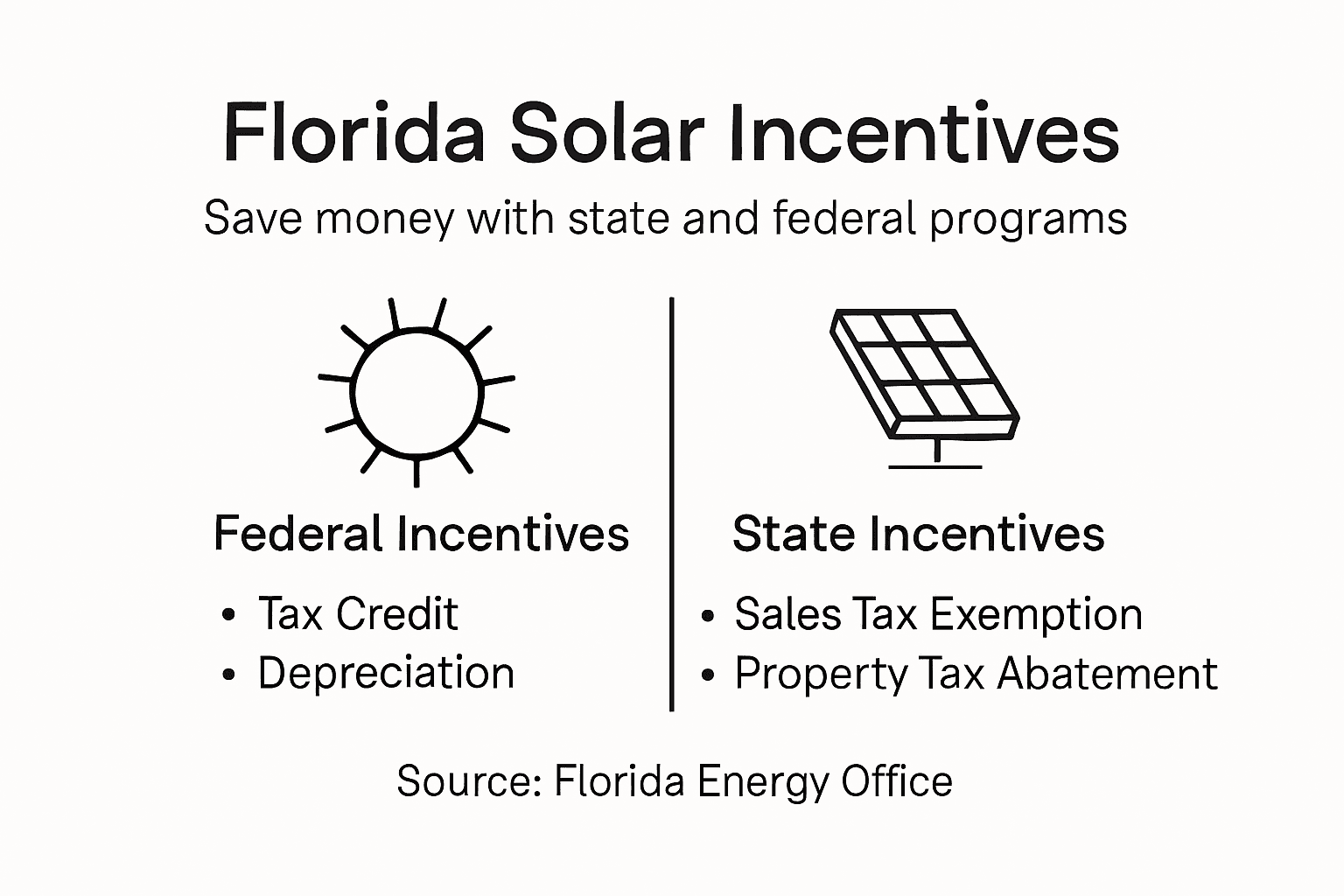
Local utility companies and municipal programs also provide supplemental incentives for solar adoption. These can include rebate programs, performance-based incentives, and special low-interest financing options designed to encourage renewable energy investment. Homeowners should research specific offerings from their local utility provider, as these programs can provide additional financial advantages beyond federal and state-level incentives.
Here’s a summary of key solar incentives available to Florida homeowners:
| Incentive Type | Who Offers It | Main Benefit | Typical Savings |
|---|---|---|---|
| Federal Tax Credit | Federal Government | 30% rebate on system cost | Lowers upfront cost by 30% |
| Property Tax Exemption | State of Florida | No property tax increase due to solar | Reduces ongoing taxes |
| Net Metering Credit | Utility Companies | Credit for excess energy sent to grid | Offsets future bills |
| Local Rebates/Loans | Utilities/Municipalities | Rebates or low-interest solar loans | Shrinks payback period |
Pro tip: Consult a tax professional and document all solar installation expenses meticulously to maximize your federal tax credit and ensure you capture every possible financial benefit.
How Solar Reduces Your Electricity Bills
Solar energy offers Florida homeowners a powerful strategy for dramatically reducing monthly electricity expenses. By installing photovoltaic systems that generate electricity, residents can offset a substantial portion of their grid energy consumption. These systems convert sunlight directly into electricity, allowing homeowners to produce their own power and significantly lower utility bills throughout the year.
The financial benefits of solar extend beyond simple energy production. Net metering policies in Florida enable homeowners to receive credits for excess electricity generated by their solar panels, effectively turning their roof into a mini power station. When solar panels produce more electricity than the home consumes during peak sunlight hours, the surplus is fed back into the electrical grid, creating a credit that can be applied to future electricity bills. This mechanism can result in dramatic reductions or even complete elimination of monthly electricity costs for well-designed solar installations.
Additional savings come from the long-term predictability solar provides against rising electricity rates. Traditional utility prices tend to increase annually, but solar panel owners lock in their energy costs by generating independent power. A typical solar system can offset 70-90% of a home’s electricity needs, translating to thousands of dollars in savings over the system’s 25-30 year lifespan. The initial investment is quickly recovered through reduced electricity expenses and available tax incentives.
Pro tip: Track your solar system’s daily energy production using monitoring apps to maximize understanding of your electricity generation and consumption patterns.
Impact of Solar on Home Value
Solar panel installations can significantly enhance property values in Florida, offering homeowners a strategic investment that extends beyond energy savings. Recent studies demonstrate solar’s positive impact on residential real estate, with potential buyers increasingly valuing energy-efficient homes equipped with renewable energy systems. Homes with solar installations typically command premium prices, reflecting the long-term economic and environmental benefits these systems provide.

The financial advantage of solar panels becomes particularly apparent during home resale. Prospective buyers recognize the immediate benefit of reduced electricity costs and appreciate the modern, sustainable technology integrated into the property. Research indicates that solar-equipped homes can sell for approximately 4.1% more than comparable properties without solar installations, translating to substantial added value. This price premium reflects not just the physical solar system, but the promise of lower future energy expenses and reduced carbon footprint.
Beyond direct monetary value, solar panels contribute to a home’s marketability and appeal. Environmentally conscious buyers are increasingly seeking properties with renewable energy solutions, making solar-equipped homes more attractive in a competitive real estate market. The technology signals a home that is modern, forward-thinking, and potentially more energy-efficient. Additionally, many buyers understand that solar panels represent a pre-installed asset that can provide immediate financial benefits, further enhancing the property’s overall perceived value.
Pro tip: Maintain detailed documentation of your solar system’s performance and energy savings to provide concrete evidence of value during home appraisals or potential sales.
Environmental Benefits and Energy Independence
Solar energy represents a transformative solution for environmental sustainability in Florida, offering profound benefits beyond traditional electricity generation. Solar technologies reduce carbon emissions dramatically, helping combat climate change while providing clean, renewable energy that minimizes ecological impact. By generating electricity without releasing greenhouse gases, solar panels create a pathway to significantly lower individual and community carbon footprints.
Energy independence emerges as another critical advantage of solar adoption. Florida’s abundant sunshine positions homeowners to break free from traditional utility dependencies, creating a more resilient and self-sufficient energy ecosystem. Solar installations enable residents to generate their own electricity, reducing reliance on fossil fuel-based power grids and protecting against potential energy price fluctuations. This independence becomes especially crucial during extreme weather events, where solar systems with battery storage can provide critical backup power.
The broader environmental impact extends to conservation of natural resources and ecosystem protection. Solar energy requires minimal water usage compared to traditional power generation methods, preserving water resources critical to Florida’s delicate environmental balance. Additionally, solar installations support local biodiversity by reducing air and water pollution associated with conventional energy production. The cumulative effect of widespread solar adoption can lead to significant improvements in regional air quality and long-term environmental health.
Compare how solar energy impacts your finances and the environment:
| Benefit Category | Impact on Homeowners | Long-Term Advantage |
|---|---|---|
| Electricity Savings | Lower monthly bills by up to 90% | Thousands saved over 25+ years |
| Home Value | Estimated resale premium of 4.1% | Increases property market appeal |
| Carbon Reduction | No emissions from power generation | Helps fight climate change |
| Energy Independence | Generates own power, less grid reliance | Protection from utility price hikes |
Pro tip: Consider installing a solar monitoring system to track your personal environmental impact and energy production in real time, helping you understand your direct contribution to sustainability.
Discover Lasting Savings and Increased Home Value with PES Solar
The article highlights real challenges Florida homeowners face such as rising electricity bills, maximizing tax incentives, and increasing property value through solar adoption. If you want to unlock significant monthly savings and harness the power of Florida’s abundant sunlight you need a trusted partner who understands these goals deeply. PES Solar offers tailored residential solar solutions that help you achieve energy independence, reduce your carbon footprint, and boost your home value with certified installations and leading solar technology like REC solar panels and Tesla Powerwall batteries.
Take the next step toward a smarter, more sustainable future by exploring how you can benefit from local incentives and net metering policies effectively. Visit PES Solar for comprehensive solar system installation, financing options, and expert support designed to fit your unique energy needs.
Unlock your solar potential now.
Ready to cut your energy bills and increase your property’s worth? Get your free personalized solar estimate today from PES Solar and start maximizing your savings with Florida’s best solar partner. Learn more about how solar works at PES Solar and make the switch with confidence.
Frequently Asked Questions
What are the benefits of solar energy in Florida?
Solar energy offers significant benefits, including lower electricity bills, increased property values, and reduced carbon emissions. Homeowners can offset 70-100% of their electricity needs with well-designed solar panel systems, resulting in substantial financial savings.
How do federal and state incentives work for solar installations?
Homeowners can take advantage of the federal solar tax credit, which allows a 30% deduction of solar installation costs from tax liabilities. Additionally, Florida offers property tax exemptions and net metering policies, allowing homeowners to receive credits for excess energy generated, further enhancing affordability.
How does solar energy reduce my electricity bills?
Solar energy helps reduce electricity bills by allowing homeowners to generate their own power, offsetting a significant portion of their grid energy consumption. With net metering, excess electricity produced can be credited back to future utility bills, potentially eliminating monthly costs altogether.
Does installing solar panels increase my home’s value?
Yes, solar panel installations can significantly enhance property values. Homes with solar systems typically sell for about 4.1% more than comparable properties without solar, appealing to environmentally conscious buyers and offering lower future energy expenses.
