
Rising energy costs can make it tough for Florida business owners to keep overheads in check. The shift toward commercial solar is more than just a trend—it is backed by generous government incentives that help cut expenses and improve cash flow. By taking advantage of programs like the Investment Tax Credit (ITC), you can access real savings while moving your business closer to energy independence and long-term resilience.
Table of Contents
- What Are Commercial Solar Tax Incentives?
- Federal Incentives For Solar Projects
- Florida State And Local Solar Incentives
- Eligibility Requirements For Business Owners
- Maximizing Financial Benefits And Avoiding Pitfalls
Key Takeaways
| Point | Details |
|---|---|
| Investment Tax Credit (ITC) | Businesses can receive a tax credit of up to 30% of solar installation costs, reducing tax liability significantly. |
| State and Local Incentives | Florida offers various incentives, such as property tax exemptions and net metering, to make solar investments more attractive. |
| Eligibility Requirements | To qualify for tax incentives, businesses must have taxable income and use new solar equipment installed within specified timelines. |
| Strategic Planning Necessary | Businesses should consult with tax professionals and maintain thorough documentation to maximize financial benefits and avoid pitfalls. |
What Are Commercial Solar Tax Incentives?
Commercial solar tax incentives are strategic financial programs designed to make renewable energy adoption more affordable for businesses in Florida. These government-backed initiatives essentially provide significant economic advantages that help offset the initial investment required for solar panel installation.
At the core, these incentives represent tax credits and financial mechanisms that reduce the overall cost of transitioning to solar energy. Commercial solar tax credits function as powerful economic tools that directly lower a business’s tax liability while simultaneously supporting sustainable energy development.
The most prominent commercial solar tax incentive is the Investment Tax Credit (ITC), which allows businesses to claim a substantial percentage of their solar installation expenses against their federal corporate income taxes. Key features of these tax incentives include:
- Percentage-based credits on total solar system installation costs
- Reduction of upfront capital expenditures
- Encouragement of clean energy technology adoption
- Potential long-term operational cost savings
- Support for corporate sustainability goals
To qualify for these incentives, businesses must meet specific requirements, such as:
- Installing solar photovoltaic systems within designated timeframes
- Ensuring systems are used by taxable entities within the United States
- Commissioning solar installations by predetermined deadline dates
Commercial solar tax incentives represent a win-win strategy: businesses reduce energy costs while contributing to environmental sustainability.
Pro tip: Consult with a tax professional who specializes in renewable energy incentives to maximize your potential savings and understand the precise application process for commercial solar tax credits.
Federal Incentives for Solar Projects
The federal government has established robust financial incentives to accelerate solar project adoption across the United States, particularly through the landmark Solar Investment Tax Credit program. This critical policy provides substantial economic support for businesses transitioning to renewable energy technologies.
The Inflation Reduction Act of 2022 dramatically enhanced these incentives, introducing comprehensive tax credits that significantly reduce the financial barriers to solar investments. Key federal solar incentives include:
- Investment Tax Credit (ITC) offering up to 30% tax credit
- Production Tax Credit (PTC) for clean electricity generation
- Additional tax credit adders for meeting specific labor and location requirements
- Scaled credit rates based on wage and apprenticeship standards compliance
Businesses can benefit from these incentives across different solar project types, including:
- Customer-sited commercial solar systems
- Utility-scale solar farm developments
- Rooftop and ground-mounted solar installations
Federal solar incentives are strategically designed to accelerate clean energy adoption by making renewable investments more financially attractive for businesses.
These tax credits not only provide immediate financial relief but also contribute to long-term sustainability goals by making solar energy more economically viable for businesses across various industries.
Pro tip: Consult with a renewable energy tax specialist to understand the precise requirements and maximize the potential tax credits for your specific solar project.
Florida State and Local Solar Incentives
Florida offers a unique landscape of state and local solar incentives designed to make commercial solar investments more financially attractive for businesses. Renewable energy incentives in the state provide multiple pathways for companies to reduce their solar installation costs and improve overall energy economics.
The Florida Solar Incentive Ecosystem encompasses several key financial advantages for commercial solar projects:
- Property Tax Exemptions for solar equipment installations
- Expedited Permitting Processes to reduce administrative delays
- Net Metering Programs that credit businesses for excess electricity generation
- Local utility-specific financial incentive programs
- Reduced bureaucratic barriers for solar project development
Key mechanisms for maximizing these incentives include:
- Understanding specific local utility rebate structures
- Documenting all solar equipment investments carefully
- Exploring county-level solar investment support programs
- Tracking changes in state renewable energy policies
Local solar incentives in Florida are strategically designed to complement federal tax credits and accelerate commercial solar adoption.
These state and local incentives work synergistically with federal programs to create a comprehensive financial support framework for businesses seeking to transition to solar energy. By carefully navigating these opportunities, Florida businesses can significantly reduce their solar investment costs and accelerate their renewable energy goals.

Here’s a quick comparison of major commercial solar incentives available to Florida businesses:
| Incentive Type | Description | Main Benefit |
|---|---|---|
| Federal ITC | Tax credit covering up to 30% of system cost | Reduces federal tax liability |
| Federal PTC | Tax credit per kWh generated | Increases return over time |
| Florida Property Tax | Exemption for added solar equipment value | No additional property tax dues |
| Net Metering Program | Credits for surplus solar energy sent to grid | Lowers overall energy expenses |
| Local Utility Rebates | Utility-specific financial incentives | Upfront or ongoing cost savings |
Pro tip: Engage a local solar consultant who specializes in Florida incentives to ensure you capture every available financial benefit for your commercial solar project.
Eligibility Requirements for Business Owners
Business owners must carefully navigate a complex set of criteria to qualify for commercial solar tax incentives. Commercial solar tax credit eligibility requires meeting specific federal guidelines that determine whether a solar project can receive financial benefits.
The Key Qualification Criteria for commercial solar incentives include:
- Businesses must have taxable federal income
- Solar systems must be located in the United States
- Equipment must be new and recently installed
- Systems must generate electricity for business operations
- Projects must meet specific IRS construction and commissioning deadlines
Businesses are ineligible for solar tax incentives if they fall into these categories:
- Tax-exempt organizations
- Non-profit entities
- Systems used exclusively for non-electrical purposes
- Projects using secondhand or refurbished equipment
Precise documentation and careful project planning are essential for successfully claiming solar tax incentives.
Understanding the nuanced requirements is crucial for businesses seeking to maximize their solar investment benefits. Detailed record-keeping, thorough project planning, and consultation with tax professionals can help ensure compliance with complex federal incentive guidelines.
Pro tip: Maintain comprehensive documentation of your solar project, including equipment specifications, installation dates, and system performance metrics to streamline the tax credit application process.
Maximizing Financial Benefits and Avoiding Pitfalls
Navigating the complex landscape of solar incentives requires strategic planning and meticulous attention to detail. Navigating government solar incentives demands a comprehensive approach that maximizes potential financial benefits while avoiding costly mistakes.
Businesses can optimize their solar investment returns through several Strategic Incentive Stacking techniques:
- Combine federal tax credits with state and local rebates
- Leverage multiple incentive programs simultaneously
- Document all project-related expenses carefully
- Track changing legislative landscapes
- Consult with specialized tax professionals
Key strategies for maximizing financial benefits include:
- Conducting thorough pre-project financial analysis
- Understanding precise eligibility requirements
- Maintaining comprehensive project documentation
- Timing project implementation with optimal incentive windows
- Regularly reviewing potential new incentive opportunities
Successful solar incentive optimization requires proactive planning and expert guidance.
The most common pitfalls businesses encounter involve missed deadlines, incomplete documentation, and failure to understand complex incentive interactions. By developing a systematic approach to tracking and applying for solar incentives, businesses can significantly reduce their solar investment costs and accelerate their return on investment.
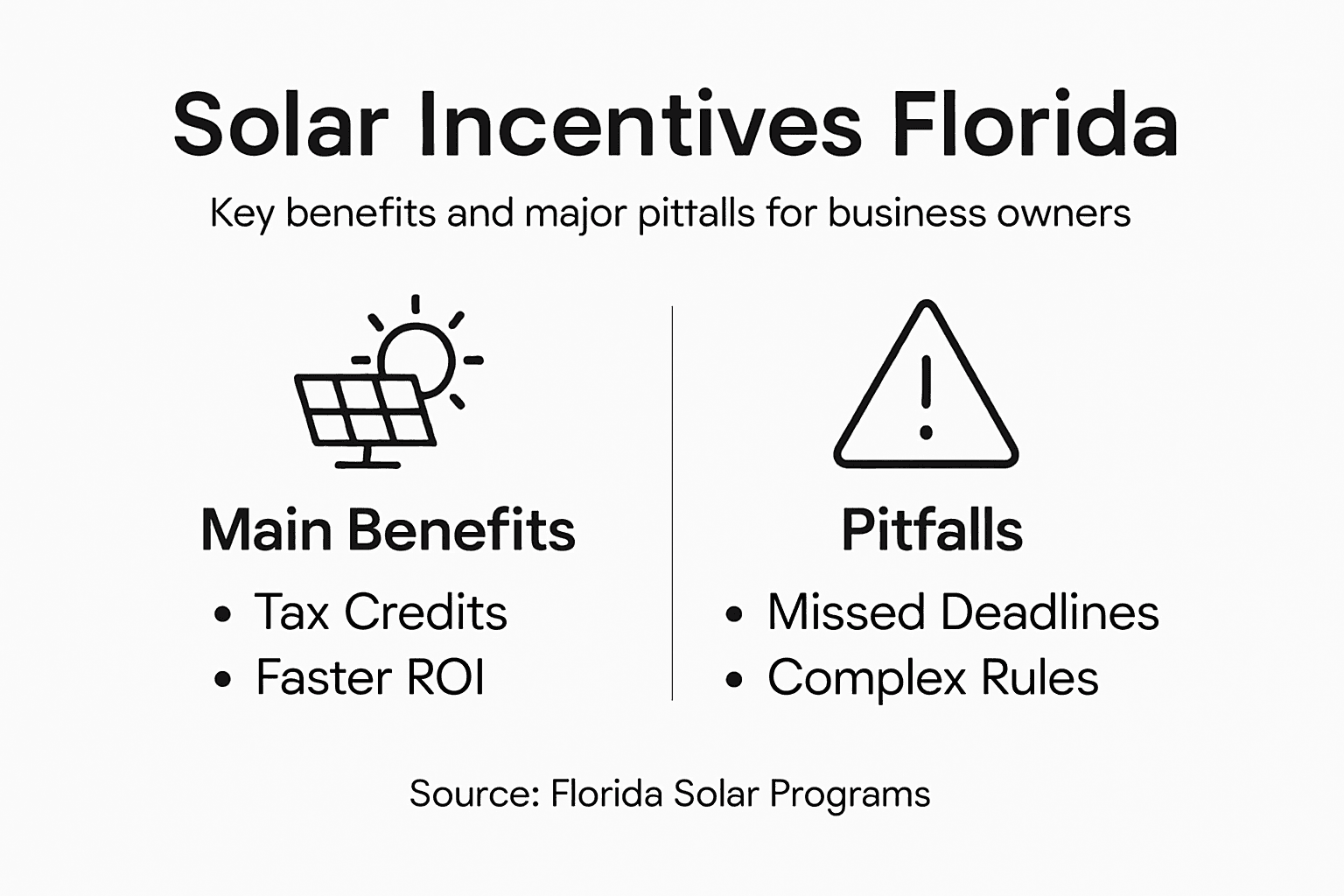
The following table summarizes eligibility and common pitfalls for solar tax incentives:
| Requirement | Key Consideration | Common Pitfall |
|---|---|---|
| Taxable Business Entity | Must pay federal taxes | Nonprofit or tax-exempt not eligible |
| New Solar Equipment | Only unused equipment qualifies | Recycled or used gear disqualified |
| Proper Documentation | Maintain thorough records | Missing installation proof |
| Commissioning Deadline | Install by IRS-stipulated dates | Delayed project installation |
Pro tip: Create a dedicated incentive tracking spreadsheet that monitors all potential credits, deadlines, and documentation requirements to ensure you never miss a valuable financial opportunity.
Unlock Maximum Savings on Commercial Solar with Pro Energy Solutions
Navigating complex commercial solar tax incentives in Florida can feel overwhelming. From meeting federal Investment Tax Credit deadlines to leveraging state and local programs like property tax exemptions and net metering, business owners face many challenges in maximizing their financial benefits. Delaying or missing key eligibility requirements could mean leaving thousands of dollars in savings on the table. That’s why partnering with a trusted local expert who deeply understands these specific incentive programs is essential.
At PES Solar, we specialize in guiding Florida businesses through every step of the solar transition, ensuring you capture all available tax credits and rebates while optimizing your installation for long-term savings. Our comprehensive commercial solar solutions include expert system design, certified installation of premium products, and personalized financial options tailored to your unique goals. Our team helps you avoid common pitfalls like documentation gaps and timing mistakes so you can confidently accelerate your return on investment.

Ready to take full advantage of Florida’s commercial solar tax incentives? Discover how our proven approach at PES Solar can turn solar energy adoption into a powerful financial and sustainability advantage for your business. Schedule your free consultation today and start saving now. Explore our reliable services by visiting PES Solar and make the smart choice for your energy future.
Frequently Asked Questions
What are commercial solar tax incentives?
Commercial solar tax incentives are financial programs designed to reduce the cost of installing solar panels for businesses by providing tax credits and other economic advantages.
How can businesses in Florida maximize their savings from solar tax incentives?
Businesses can maximize savings by combining federal tax credits with state and local incentives, carefully documenting all expenses, and consulting with tax professionals to ensure eligibility and compliance.
What qualifications do businesses need to meet to be eligible for commercial solar tax incentives?
Businesses must have taxable federal income, install new solar equipment, generate electricity for business operations, and meet specific deadlines set by the IRS to qualify for these incentives.
What are some common pitfalls businesses face when applying for solar tax incentives?
Common pitfalls include missed deadlines, incomplete documentation, and a lack of understanding of complex eligibility requirements, all of which can lead to missed financial opportunities.
Recommended
- Solar Incentives In Florida: Boosting Savings And Value
- 7 Key Commercial Solar Incentives For Florida Businesses
- Maximize Savings: Florida Solar Incentives Guide | PES Solar
- Maximize Savings: Florida Solar Incentives Guide | PES Solar
- Solar Panel Installation Tampa FL
- Solar Panel Installation Orlando FL
