
Your solar panels promise lower electricity bills, but what if they’re operating far below potential? Many Florida homeowners discover their systems underperform due to shading, humidity, or improper installation, leaving money on the table. This guide reveals proven optimization strategies tailored to Florida conditions that can boost your solar output by up to 30%, dramatically reducing energy costs and accelerating your return on investment.
Table of Contents
- Introduction To Solar Output Optimization In Florida
- Prerequisites: What You Need Before Starting
- Step 1: Optimal Solar Panel Orientation And Tilt
- Step 2: Regular Maintenance And Cleaning
- Step 3: Improving Efficiency Through Technology Choices
- Step 4: Battery Storage Integration
- Step 5: Leveraging Florida Incentives And Financing Options
- Common Mistakes And Troubleshooting
- Expected Results And Measuring Success
- Unlock Maximum Solar Savings With Pro-E Solar Solutions
- FAQ
Key Takeaways
| Point | Details |
|---|---|
| Optimize Panel Positioning | Set tilt angle to 25-30° and face panels south to maximize year-round energy capture in Florida’s climate. |
| Clean Panels Regularly | Biannual cleaning removes humidity, salt, and pollen buildup, improving output by 12-15%. |
| Add Battery Storage | Lithium-ion systems like Tesla Powerwall reduce grid reliance up to 70% and increase self-consumption. |
| Choose High-Efficiency Technology | Premium panels above 21% efficiency withstand Florida heat and generate 5-8% more energy. |
| Leverage Florida Incentives | Federal ITC and state rebates cut upfront costs significantly, shortening payback to 6-7 years. |
Introduction to Solar Output Optimization in Florida
Florida receives abundant sunshine year-round, creating ideal conditions for solar energy generation. The state’s high solar irradiance levels offer tremendous potential for homeowners and businesses to generate clean power. However, Florida’s unique environmental challenges complicate solar performance optimization.
Humidity, frequent storms, and dense vegetation create obstacles that reduce system efficiency. Shading from trees or nearby buildings can reduce solar panel output by 20-30%, significantly impacting your savings potential. Coastal salt accumulation and pollen further diminish panel effectiveness over time.
Ignoring these regional factors leaves your investment underutilized. Without proper optimization, your system may produce 30% less energy than designed capacity. This translates to higher electricity bills and extended payback periods that erode financial benefits.
Understanding Florida’s climate and environmental challenges is essential for tailored optimization. Local conditions demand specific strategies different from other states. The right approach transforms available sunlight into maximum usable energy.
Proper assessment and design help convert sunlight into maximum usable energy. Key optimization factors include:
- Analyzing the impact of shading on solar output from vegetation and structures
- Accounting for humidity and salt exposure in coastal regions
- Selecting heat-resistant panels suited for Florida’s intense summer temperatures
- Positioning systems to capture optimal sun angles throughout the year
- Planning for hurricane preparedness and storm resilience
Prerequisites: What You Need Before Starting
Successful solar optimization begins with thorough preparation and understanding of your current system. You need foundational knowledge before making physical changes or technology upgrades. This preparation prevents costly mistakes and ensures modifications deliver expected results.
Start by performing a detailed site assessment analyzing shading and sunlight patterns. Walk your property at different times during the day to identify shadows cast by trees, buildings, or other structures. Document these patterns across seasons, as sun angles change significantly between summer and winter months.
Understand your solar system components and current performance metrics. Review your inverter data, energy bills, and production reports to establish baseline output. Knowing your system’s current efficiency helps measure improvement after optimization.
Have proper tools for monitoring output and gentle cleaning. Essential equipment includes:
- Solar production meter or monitoring app
- Soft-bristle brushes with extended handles
- Garden hose with spray nozzle
- Safety equipment for roof access if needed
- Documentation tools for tracking performance
Be aware of Florida’s solar licensing, permits, and available incentives. The solar installation process in Florida requires specific permits and licensed professionals for major modifications. Understanding regulatory requirements prevents compliance issues.
Professional assessments reduce risk of costly inefficiencies. Licensed solar installers identify problems invisible to untrained eyes. They measure precise sun angles, calculate shading impacts, and recommend specific improvements based on your property’s unique characteristics.
Pro Tip: Schedule your site assessment during midday in both summer and winter. Seasonal sun angle variations dramatically affect which trees or structures create problematic shadows. What seems clear in June may be heavily shaded in December.
Step 1: Optimal Solar Panel Orientation and Tilt
Panel positioning directly determines how much solar energy your system captures. Even premium panels underperform when installed at incorrect angles or facing suboptimal directions. Florida’s latitude requires specific positioning to maximize year-round production.
Florida’s optimal tilt angle is 25-30 degrees to maximize sunlight capture, and south-facing panels boost year-round efficiency. This angle balances summer and winter sun paths for consistent energy generation. Steeper angles favor winter sun but sacrifice summer production, while flatter angles do the opposite.
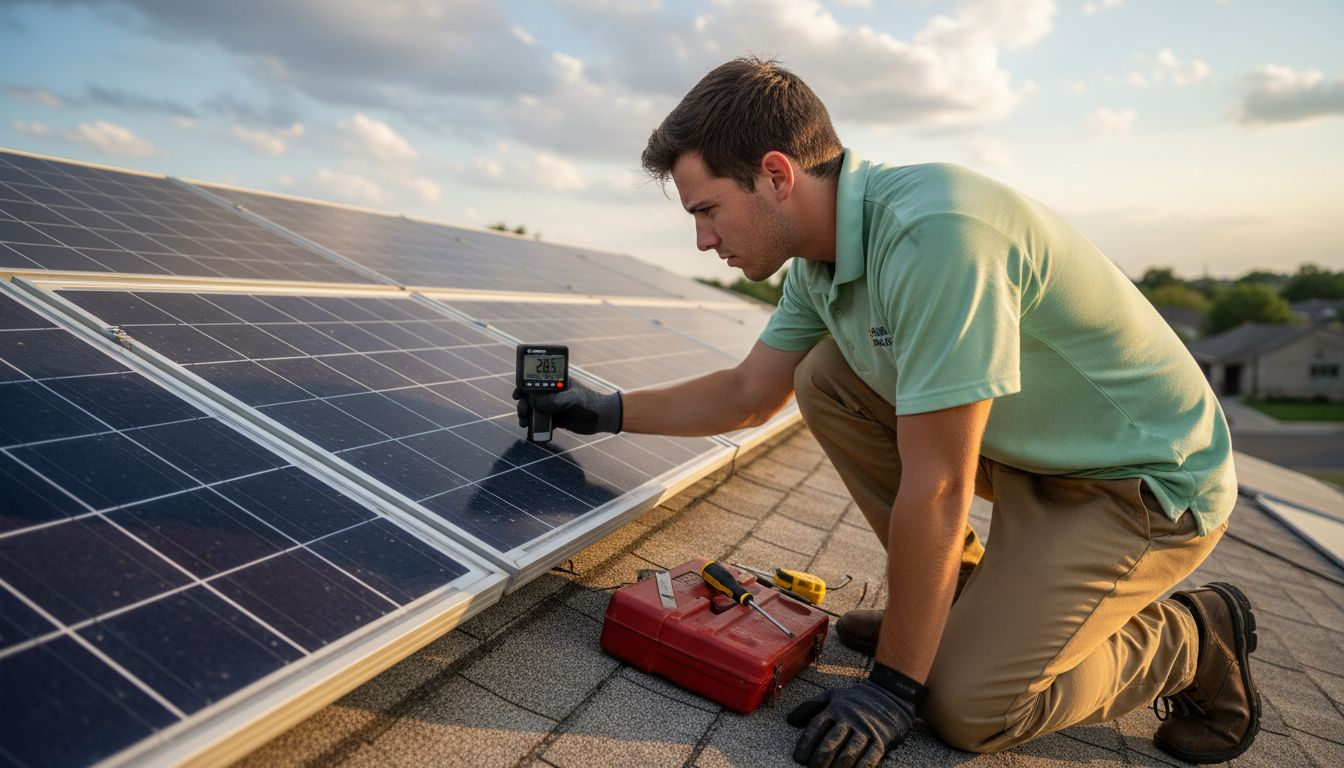
Panels should face true south for maximum daily solar exposure. True south differs from magnetic south by several degrees in Florida. Use a compass app with declination correction or hire a professional to determine precise south orientation.
Avoid shading by trimming trees and considering nearby structures. Even partial shade on one panel can reduce entire array output due to electrical series connections. Identify and remove shading obstacles before they impact performance. The optimal solar panel tilt angle matters little if shadows block sunlight during peak hours.
Incorrect tilt or orientation can reduce output up to 30%. Panels facing east or west produce significantly less daily energy than south-facing installations. Shallow or steep angles miss optimal sun angles, leaving potential energy uncaptured.
Key positioning strategies include:
- Using solar pathfinder tools to map sun exposure throughout the year
- Installing panels on south-facing roof sections whenever possible
- Considering ground-mounted systems if roof orientation is unfavorable
- Adjusting tilt within the 25-30 degree range based on specific latitude
- Accounting for future tree growth that may create new shading
Regularly check for new shading obstacles and adjust if possible. Trees grow, neighbors build additions, and nearby construction changes your solar environment. Annual shading assessments catch problems before they significantly reduce output.
Pro Tip: If your roof doesn’t face south, don’t abandon solar hopes. Southwest or southeast orientations sacrifice only 5-10% potential output compared to true south. East or west-facing panels still generate substantial energy, just with lower overall production.
Step 2: Regular Maintenance and Cleaning
Florida’s humid coastal environment accelerates panel soiling and degradation. Salt spray, pollen, bird droppings, and dust accumulate faster than in arid climates. Without regular maintenance, these contaminants block sunlight and reduce efficiency month after month.
Schedule biannual cleaning to remove dirt, salt, and pollen buildup. Spring and fall cleanings align with heavy pollen seasons and prepare your system for peak production periods. More frequent cleaning may be necessary near the coast or under trees.
Follow these cleaning steps for safe, effective maintenance:
- Clean panels early morning or late evening when surfaces are cool to prevent thermal shock
- Rinse panels thoroughly with garden hose to remove loose debris first
- Use only water and soft brushes to gently scrub remaining residue
- Avoid walking on panels or applying pressure that could crack glass
- Document cleaning dates and any visible damage or issues discovered
Cleaning solar panels with abrasive or harsh chemicals can damage surfaces and reduce efficiency by up to 7%. Stick to plain water and soft materials. Commercial glass cleaners may leave residue that attracts more dirt. Chemical damage often isn’t immediately visible but accumulates over time.
Conduct inspections for physical damage, wiring issues, and loose mounts. Look for cracked glass, corroded connections, or mounting hardware that has loosened due to wind or weather. These problems worsen quickly in Florida’s harsh environment.
Regular maintenance can improve panel output by 12-15%. Clean panels absorb maximum sunlight while dirty panels reflect and scatter light before it reaches photovoltaic cells. The solar panel maintenance requirements are minimal but essential for sustained performance.
Document cleaning schedules for consistent upkeep. Create calendar reminders and maintain a simple log noting cleaning dates, weather conditions, and any issues observed. This documentation helps identify patterns and proves maintenance if warranty claims become necessary.
Pro Tip: Never pressure wash solar panels. High-pressure water forces moisture into electrical connections and can crack panel surfaces. Following cleaning best practices to prevent efficiency loss protects your investment while maintaining peak performance.
Step 3: Improving Efficiency Through Technology Choices
Panel technology directly impacts how much electricity your system generates from available sunlight. Not all panels perform equally in Florida’s intense heat and humidity. Selecting high-efficiency, heat-tolerant equipment maximizes energy conversion and long-term reliability.
Choose panels with above 21% efficiency like high-efficiency REC solar panels for better energy yield. Efficiency measures how much sunlight converts to usable electricity. Higher efficiency means more power from the same roof space, crucial for homes with limited installation area.
Heat tolerance is essential to maintain efficiency in Florida’s intense sun and humidity. Standard panels lose 0.5% efficiency for every degree Celsius above 25°C. Premium panels use advanced cell technology that maintains performance even in extreme heat. During Florida summers when roof temperatures exceed 65°C, heat-tolerant panels significantly outperform standard options.
Consider inverter compatibility to avoid conversion losses. Inverters transform DC power from panels into AC electricity for home use. Mismatched systems create bottlenecks that waste generated energy. String inverters, microinverters, and power optimizers each suit different installation scenarios.
| Technology | Efficiency Range | Heat Tolerance | Best For | Cost Premium |
|---|---|---|---|---|
| Standard Monocrystalline | 17-19% | Moderate | Budget installations | Baseline |
| Premium Monocrystalline | 21-23% | High | Maximum output per area | 15-20% higher |
| Bifacial Panels | 20-22% | High | Ground mounts, reflective surfaces | 10-15% higher |
| High-Efficiency Modules | 22-24% | Very High | Limited roof space, extreme heat | 20-25% higher |
Higher upfront costs of premium panels yield 5-8% more energy and better ROI. Calculate total lifetime energy production rather than just installation price. An extra $2,000 invested in premium panels generates thousands more kilowatt-hours over 25 years, dramatically improving return on investment.
Technological upgrades can shorten payback periods and improve reliability. Modern panels include better warranties, superior weather resistance, and degradation rates below 0.5% annually. These advantages compound over decades of operation.
Step 4: Battery Storage Integration
Solar panels generate electricity only during daylight hours, but your home consumes power around the clock. Without storage, excess daytime generation flows to the utility grid while you purchase expensive grid power at night. Battery systems capture surplus solar energy for later use, maximizing your investment value.
Battery storage allows self-consumption of solar power during low sun periods or at night. Store excess midday production and discharge stored energy during evening peak hours when electricity rates are highest. This strategy reduces grid dependence while ensuring continuous renewable power availability.
Recommended technologies include lithium-ion batteries such as Tesla Powerwall for Florida homes. Modern lithium-ion systems offer high energy density, long cycle life, and sophisticated management software. They integrate seamlessly with existing solar installations and provide backup power during outages.
Storage integration can reduce grid reliance up to 70%. By capturing and using your own solar generation, you minimize purchased electricity. During extended cloudy periods or high-consumption days, the grid provides supplemental power as needed. This balanced approach delivers energy independence without sacrificing reliability.
Key battery storage benefits include:
- Using stored solar power during expensive peak-rate evening hours
- Maintaining electricity during grid outages and storms
- Participating in utility demand response programs for additional savings
- Future-proofing against rising electricity rates
- Increasing home value and appeal to environmentally conscious buyers
Federal and state incentives may offset battery addition costs. The Investment Tax Credit applies to battery systems installed with solar panels. Some Florida utilities offer additional rebates for storage that reduces grid demand during peak periods.
Improved energy independence increases resilience and savings. Florida’s hurricane season creates frequent outages lasting days or weeks. Battery backup keeps essential systems running while neighbors wait for grid restoration. Combined with solar generation, you maintain power indefinitely during extended outages.
Step 5: Leveraging Florida Incentives and Financing Options
Upfront solar costs deter many homeowners despite excellent long-term returns. Fortunately, federal and state incentives substantially reduce installation expenses. Understanding available programs and financing options makes solar accessible while accelerating payback timelines.
Federal Investment Tax Credit (ITC) offers a 30% credit on solar system costs for installations through 2032. This credit applies to equipment, labor, and permitting expenses. A $20,000 system generates a $6,000 tax credit, directly reducing your federal tax liability. The credit then steps down to 26% in 2033 and 22% in 2034.
Florida solar incentives and rebates further reduce installation expenses through property tax exemptions and sales tax exemptions. Florida exempts solar equipment from state sales tax, saving 6% on purchase price. The solar property tax exemption prevents increased property taxes despite adding valuable solar equipment to your home.
| Incentive Program | Type | Value | Eligibility |
|---|---|---|---|
| Federal ITC | Tax Credit | 30% of system cost | All residential solar installations |
| Florida Sales Tax Exemption | Sales Tax Waiver | 6% of equipment cost | Solar equipment purchases |
| Property Tax Exemption | Property Tax Waiver | 100% of added value | Residential solar installations |
| Net Metering | Bill Credit | Retail rate for excess generation | Varies by utility |
| PACE Financing | Low-interest loan | System cost financed through property tax | Participating counties |
Financing options from PES Solar make solar accessible with low upfront payments. Solar loans, leases, and power purchase agreements eliminate large initial investments. Many homeowners install systems with zero down payment, immediately reducing monthly electricity costs below previous utility bills.
Combining incentives with proper installation shortens payback periods to 6-7 years. After payback, your system generates essentially free electricity for decades. With 25-year panel warranties and 30+ year lifespans, you enjoy 18-24 years of pure savings.
Understanding eligibility and application process is crucial for maximizing benefits. Federal tax credits require sufficient tax liability to claim the full amount. Some incentives have application deadlines or limited funding. Working with experienced installers ensures you capture all available savings.
Common Mistakes and Troubleshooting
Even with careful planning, solar system owners encounter problems that reduce output and efficiency. Recognizing these issues early prevents prolonged energy losses and expensive repairs. Understanding common mistakes helps you avoid pitfalls and maintain optimal performance.
Shading overlooked can reduce output 20-30%, fix by professional site analysis. Many homeowners underestimate how small shadows impact production. Even shade covering 10% of one panel can reduce entire string output by 50% due to electrical characteristics. Professional assessments use specialized tools to map shading patterns you might miss.
Improper cleaning using abrasives can cause 7% efficiency loss, use water and soft brushes. Scratched panel surfaces scatter incoming light before it reaches photovoltaic cells. These microscopic scratches accumulate with each improper cleaning. Once damaged, panels cannot be restored to original efficiency.
Incorrect tilt angles too steep or flat reduce performance by up to 30%, adopt 25-30 degrees. Some installers use roof pitch regardless of optimal angle. Others set panels flat for aesthetic reasons. Either mistake significantly reduces annual energy production. Adjustable mounting systems allow angle correction without complete reinstallation.
Faulty wiring or inverter mismatch causes 10-15% losses, require certified installation. Undersized inverters create bottlenecks that waste potential generation. Loose connections increase resistance and generate heat instead of usable power. These electrical issues often have no visible symptoms but steadily reduce system output.
Other common problems include:
- Monitoring system failures that hide performance issues for months
- Inadequate ventilation causing excessive panel temperatures
- Pest damage to wiring from rodents or birds
- Corrosion from salt exposure in coastal installations
- Micro-cracks from hail or debris impacts
Regular monitoring and professional checkups catch issues early. Compare daily production to historical averages and weather conditions. Sudden drops indicate problems requiring investigation. The common solar panel mistakes in Florida page details regional issues and solutions specific to our climate.
Expected Results and Measuring Success
Optimization efforts should produce measurable improvements in energy generation and cost savings. Understanding realistic expectations helps you evaluate success and identify remaining issues. Proper measurement confirms your system operates at peak efficiency.
Maintenance and cleaning yield 12-15% efficiency gains compared to neglected systems. This translates to 300-400 additional kilowatt-hours annually for typical residential installations. Over 25 years, recovered efficiency generates thousands of dollars in additional savings.
Advanced panels and optimized tilt add 5-8% more energy output versus standard installations. Premium equipment and proper positioning compound maintenance benefits. Together, these improvements can boost total system production by 20-25% compared to poorly optimized systems.
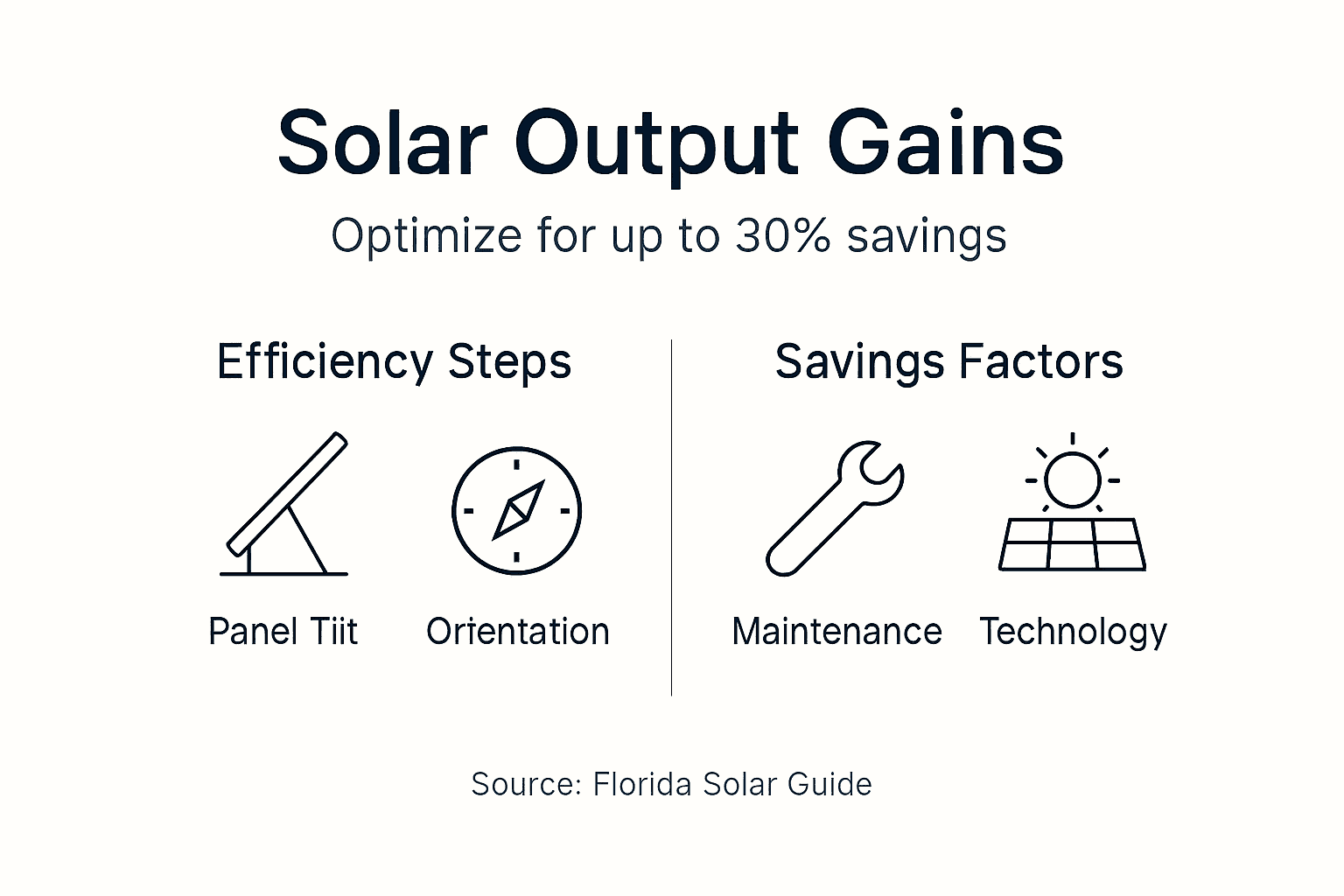
Battery storage reduces grid electricity use by up to 70% by maximizing self-consumption. Instead of exporting midday surplus to the grid, you store and use that energy during expensive evening hours. This dramatically increases the financial value of each kilowatt-hour your panels generate.
Key success metrics to track include:
- Monthly kilowatt-hour generation compared to system design estimates
- Electricity bills showing reduced grid consumption
- Self-consumption percentage when battery storage is installed
- System availability and uptime percentages
- Return on investment timeline based on actual savings
Typical payback periods improve from 9 to 6-7 years with full optimization. Faster payback means more years of pure profit from your system. The difference between 9-year and 6-year payback is three additional years of essentially free electricity.
Use monitoring tools and energy bills to measure solar performance objectively. Modern inverters include built-in monitoring showing real-time and historical production. Compare generation data to weather records and system specifications. Unexplained underperformance indicates problems requiring attention.
Unlock Maximum Solar Savings with Pro-E Solar Solutions
You now understand how to maximize your solar investment through proper orientation, regular maintenance, advanced technology, and strategic storage integration. Putting these strategies into practice requires expertise, quality equipment, and ongoing support. PES Solar delivers comprehensive solutions that transform your solar potential into real savings.
PES Solar offers licensed Florida professionals for optimized solar installation using the complete solar installation guide approach. Our team conducts thorough site assessments, designs systems for maximum output, and handles all permitting and inspections. Specialized solar panel maintenance services keep your system performing at peak efficiency year after year. We provide scheduled cleaning, performance monitoring, and rapid troubleshooting when issues arise. Flexible solar financing options make installation affordable with various payment plans suited to your budget. Our financing specialists also maximize your incentive applications to reduce total system cost. Contact Pro-E Solar today for a free consultation and discover how much you can save.
FAQ
How often should I clean my solar panels in Florida?
Clean your panels twice yearly at minimum, ideally in spring and fall when pollen is heaviest. Florida’s coastal humidity and salt accumulation may require quarterly cleaning for properties near the ocean. More frequent solar panel maintenance prevents buildup that reduces efficiency by double-digit percentages.
What is the best tilt angle for solar panels in Florida?
Install panels at 25-30 degrees facing true south to optimize Florida’s latitude. This range balances seasonal sun angle variations for consistent year-round production. The optimal solar panel tilt maximizes total annual energy generation across all seasons.
How do battery storage systems improve solar energy use?
Batteries store excess daytime solar generation for use during evening hours and overnight when panels aren’t producing. This increases self-consumption from 30-40% to 70-90%, dramatically reducing grid dependence. The benefits of Tesla Powerwall include backup power during outages and protection against rising utility rates.
What financial incentives are available for Florida solar owners?
The federal Investment Tax Credit provides 30% back on system costs through 2032, while Florida offers sales tax and property tax exemptions on solar equipment. Combined with net metering credits for excess generation, these Florida solar incentives and rebates reduce total investment by 35-40% and accelerate payback timelines significantly.
