
Installing solar panels can feel financially overwhelming for Florida homeowners and business owners. The upfront cost remains the biggest barrier to adoption, even though solar delivers long-term savings and energy independence. The good news is that multiple financing options exist to make solar affordable without draining your savings. This article walks you through practical examples of solar financing tailored for Florida residents, helping you evaluate criteria like monthly payments, tax benefits, and ownership implications. By understanding your options, you can confidently choose a path that fits your budget and maximizes your return on investment.
Table of Contents
- Criteria For Evaluating Solar Financing Options In Florida
- Examples Of Traditional Solar Financing Methods
- Understanding Florida’s PACE Program For Solar Financing
- Comparison Of Solar Financing Options For Florida Homeowners
- Find The Right Solar Financing Solution For Your Florida Home
Key takeaways
| Point | Details |
|---|---|
| Solar financing removes upfront barriers | Options like loans, leases, and PACE programs let Florida homeowners go solar without large cash outlays. |
| PACE financing uses property tax repayment | This unique option offers long terms but carries risks if you fall behind on property taxes. |
| Federal and state incentives lower net costs | Business-owned systems can still claim the 30% ITC in 2026, and Florida’s property tax exemption saves hundreds annually. |
| Ownership affects long-term value | Loans and cash purchases maximize savings, while leases and PPAs trade ownership for lower upfront costs. |
| Understanding terms prevents costly mistakes | Carefully review interest rates, repayment schedules, and eligibility requirements before committing. |
Criteria for evaluating solar financing options in Florida
Choosing the right solar financing options Florida requires a clear framework. Start by assessing your upfront budget and monthly payment capacity. Some options demand zero down payment, while others require substantial cash. Your monthly cash flow determines whether you can handle loan payments or prefer spreading costs over decades.
Next, evaluate eligibility for incentives. The federal Investment Tax Credit (ITC) and Florida’s property tax exemption significantly reduce net costs. However, not all financing methods let you claim these benefits. If you lease or sign a power purchase agreement (PPA), the third-party owner typically captures the tax credits, not you.
Loan terms and associated risks matter greatly. Interest rates, repayment periods, and penalties for early payoff vary widely. PACE financing, for example, ties repayment to your property taxes, creating unique risks if you fall behind. Always read the fine print to understand what happens if your financial situation changes.
Ownership implications shape long-term value. Owning your system outright maximizes savings because you keep all the electricity generated and benefit from increased home value. Leases and PPAs provide immediate savings but limit your financial upside. Consider whether you plan to stay in your home long enough to recoup the investment.
Credit requirements and approval ease also play a role. Traditional solar loans require good credit scores, while PACE programs may have more lenient standards. Knowing your credit profile helps you target the most accessible options and avoid wasted application time.
Pro Tip: Create a simple spreadsheet comparing your top three financing options side by side. Include columns for upfront cost, monthly payment, total interest paid, and net savings after incentives. This visual comparison makes the best choice obvious.
Examples of traditional solar financing methods
Cash purchases represent the most straightforward path to solar ownership. You pay the full system cost upfront and immediately own the equipment. This method maximizes your financial return because you avoid interest charges and capture all available incentives. Florida’s property tax exemption means your home’s assessed value won’t increase from the solar addition, saving you roughly $400 to $600 annually. You also qualify for any federal tax credits if you’re a business owner.
The main drawback is the high upfront cost, typically $15,000 to $30,000 for residential systems. However, if you have the cash reserves and want the highest lifetime savings, this option delivers unmatched value.
Solar loans spread the system cost over time, making solar accessible without depleting savings. You own the system from day one and qualify for all incentives. Fixed-rate loans provide predictable monthly payments, while variable-rate loans may offer lower initial rates but carry risk if rates climb. Most top solar financing options Florida homes include loan terms ranging from 10 to 25 years.
Interest rates vary based on your credit score and lender. Secured loans using your home as collateral typically offer lower rates than unsecured personal loans. Calculate the total interest paid over the loan term to understand the true cost. Even with interest, monthly loan payments often equal or beat your current electric bill, creating immediate cash flow benefits.
Leases and PPAs eliminate upfront costs by letting a third party own the system. You pay a fixed monthly lease payment or a per-kilowatt-hour rate under a PPA. These arrangements suit homeowners who want solar savings without ownership responsibilities like maintenance and repairs.
The trade-off is reduced financial benefit. The third-party owner captures the federal tax credits and depreciation benefits. For business-owned systems under PPAs or leases, the federal tax credit leasing panels remains at 30% in 2026, but that benefit goes to the lessor, not you. You also miss out on increased home value since you don’t own the equipment.
Pro Tip: If you’re considering a lease or PPA, ask about escalator clauses that increase your payments annually. Some agreements include 2% to 3% annual rate hikes, which can erode your savings over time. Negotiate a fixed-rate agreement whenever possible.
Here’s a quick pros and cons checklist for each method:
- Cash purchase: Maximum savings, full incentives, no interest costs; requires large upfront capital.
- Solar loan: Ownership with manageable payments, full incentives; interest adds to total cost.
- Lease: Zero upfront cost, predictable payments; no ownership, reduced long-term savings.
- PPA: Pay only for power used, no maintenance; third party keeps tax credits, potential rate escalation.
Understanding Florida’s PACE program for solar financing
Florida’s PACE (Property Assessed Clean Energy) program offers a unique financing structure for solar installations. Florida PACE program provides financing for energy-efficient and hurricane-resistant home improvements, including solar panels and battery storage. Unlike traditional loans, PACE financing is repaid through an additional assessment on your property tax bill, typically over 15 to 20 years.
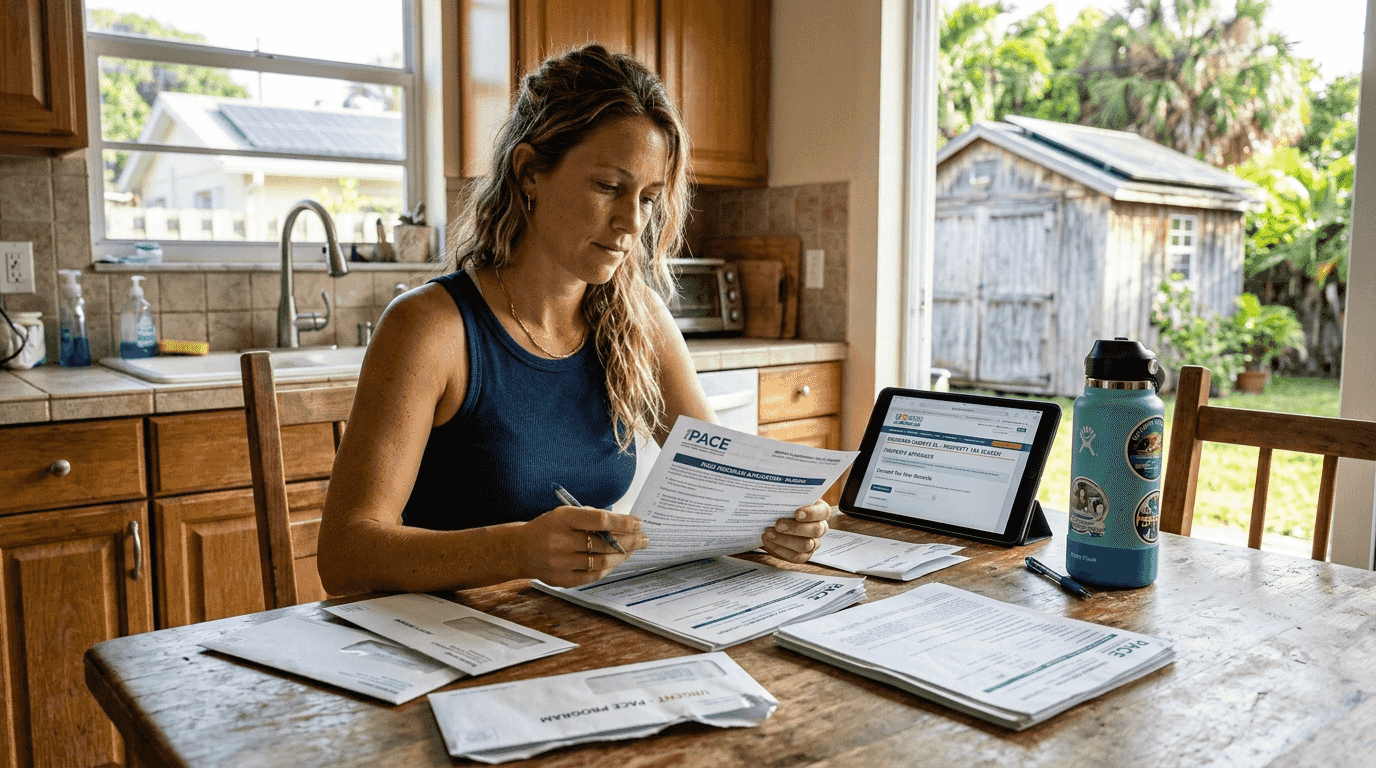
This approach benefits homeowners who prefer low upfront costs and extended repayment periods. The financing stays with the property, not the borrower, meaning the obligation transfers to the next owner if you sell. This can be advantageous if you plan to move, though it may complicate the sale if buyers are uncomfortable assuming the assessment.
PACE programs often have more lenient credit requirements than traditional loans, making solar accessible to homeowners with lower credit scores. The assessment is secured by your property, similar to a mortgage, which can offer lower interest rates than unsecured personal loans.
However, PACE financing carries significant risks. Homeowners who fall behind on PACE-related property taxes could risk losing their homes through tax foreclosure. Because the assessment is tied to your property taxes, it takes priority over your mortgage in the event of default. This senior lien status means PACE debt gets paid before your mortgage lender in a foreclosure, creating potential conflicts.
Recent regulatory developments have strengthened consumer protections. The U.S. District Court upheld CFPB’s final rule applying mortgage-style requirements to Residential PACE financing, including ability-to-repay assessments and disclosure requirements. These safeguards help ensure homeowners understand the terms and can afford the payments before committing.
Despite concerns, many homeowners report positive experiences. Studies show 86% of PACE users are satisfied with the program, citing benefits like improved home comfort, lower energy bills, and increased property resilience. The key is understanding the risks and ensuring you can comfortably afford the annual assessment alongside your regular property taxes.
Key considerations before choosing PACE:
- Verify your property tax payment history and ability to handle the additional assessment.
- Understand that the PACE assessment transfers to buyers, which may affect home marketability.
- Compare PACE interest rates and fees to traditional solar loans to ensure competitive pricing.
- Review the contractor’s reputation, as PACE programs often limit your choice of installers.
Pro Tip: Calculate your total annual property tax bill including the PACE assessment before signing. If the combined amount exceeds 5% of your gross income, consider a different financing option to avoid payment stress.
“PACE financing can be a powerful tool for homeowners who understand the risks and have stable income. The property tax repayment structure offers flexibility, but it demands disciplined financial management to avoid jeopardizing your home.”
Comparison of solar financing options for Florida homeowners
Comparing financing options side by side clarifies which method aligns with your priorities. The table below summarizes key factors for cash purchases, solar loans, leases, PPAs, and PACE financing. Use this to identify the best fit based on your budget, tax situation, and long-term goals.
| Financing Option | Upfront Cost | Monthly Payment | Tax Benefits | Ownership | Risk Level | Best For |
|---|---|---|---|---|---|---|
| Cash Purchase | High ($15k-$30k) | None | Full ITC and exemptions | Yes | Low | High savings seekers with available capital |
| Solar Loan | Low to none | Moderate (varies by term) | Full ITC and exemptions | Yes | Moderate | Homeowners wanting ownership without large upfront cost |
| Lease | None | Fixed monthly | None (lessor claims) | No | Low to moderate | Those prioritizing low upfront cost and simplicity |
| PPA | None | Per kWh rate | None (lessor claims) | No | Low to moderate | Homeowners wanting predictable power costs |
| PACE | None | Annual tax assessment | Full ITC and exemptions | Yes | High (tax lien risk) | Homeowners with lower credit needing long-term financing |
Florida’s Solar Property Tax Exemption provides a 100% exemption on solar panels and batteries added value, saving homeowners approximately $400 to $600 annually. This benefit applies to cash purchases, loans, and PACE financing, but not to leases or PPAs since you don’t own the system. Combining this exemption with federal tax credits (where applicable) maximizes your net savings.
For business owners, the federal ITC remains at 30% in 2026 for systems you own or lease to others. This makes solar loans and PACE attractive for commercial properties. Residential homeowners should note that the residential federal tax credit expired at the end of 2025, so focus on state-level incentives and long-term electricity savings.
Suitability recommendations:
- Choose cash purchase if you have savings and want maximum lifetime returns.
- Opt for solar loans if you prefer ownership but need to spread costs over time.
- Consider leases or PPAs if you want solar benefits without ownership responsibilities or upfront costs.
- Explore PACE if you have lower credit scores but stable income and can handle property tax increases.
Pro Tip: Layer incentives strategically. Start by claiming the property tax impact solar Florida exemption, then factor in federal credits if you’re a business owner. This stacking approach can reduce your net system cost by 40% or more, making even expensive systems affordable.
Actionable next steps:
- Request quotes from at least three solar installers to compare system costs and financing offers.
- Check your credit score to understand which financing options you qualify for.
- Calculate your current annual electricity costs to estimate payback periods for each financing method.
- Review your property tax bill to assess whether a PACE assessment is manageable.
- Consult a tax professional to confirm your eligibility for federal and state incentives.
For a deeper dive into financing mechanics, explore the Florida solar panel funding guide and solar financing Florida homes resources. These guides provide step-by-step walkthroughs of application processes and approval timelines.
Find the right solar financing solution for your Florida home
Now that you understand the financing landscape, it’s time to take action. Choosing the right solar financing requires balancing your budget, tax situation, and long-term goals. The resources available on this site can help you navigate the decision with confidence.
Explore comprehensive guides on solar financing options Florida to see detailed breakdowns of each method. Pair your financing research with practical installation advice from the install solar panels home guide to understand the full process from contract signing to system activation. When you’re ready to move forward, the fund your solar panels Florida resource walks you through application steps and approval timelines. Taking these next steps transforms your solar goals into reality, unlocking energy independence and long-term savings for your Florida home.
FAQ
What federal tax credits are available for solar leases and PPAs in Florida?
Business-owned solar systems under PPAs or leases can still claim the 30% federal Investment Tax Credit in 2026. However, the residential federal solar tax credit expired at the end of 2025, so homeowners leasing or buying systems in 2026 won’t receive this federal benefit. Business owners should verify their eligibility with a tax professional, as the ITC applies only to systems used in trade or business. For residential systems, focus on Florida’s property tax exemption and electricity savings instead. Learn more about tax credit for leasing solar panels to understand how ownership structure affects tax benefits.
How does Florida’s PACE program work for solar financing?
Florida’s PACE program allows homeowners to finance solar installations through an additional assessment on their property tax bill. Repayment typically spans 15 to 20 years, and the financing stays with the property if you sell. This structure offers low upfront costs and extended terms, but it creates a senior lien on your home that takes priority over your mortgage. Falling behind on PACE assessments can lead to tax foreclosure, so ensure you can comfortably afford the annual payment before enrolling. Review your total property tax liability and consult the solar and property taxes Florida guide to assess whether PACE fits your financial situation.
Are solar panels exempt from Florida property taxes?
Yes, solar panels and battery storage systems are 100% exempt from added property tax value in Florida. This exemption means your home’s assessed value won’t increase due to the solar installation, saving you approximately $400 to $600 annually. The benefit applies whether you purchase the system with cash, finance it through a loan, or use PACE financing. However, leased or PPA systems don’t qualify because you don’t own the equipment. This exemption is a significant long-term savings driver, reducing your total cost of ownership. Check the Florida solar property tax exemption page for details on how to claim this benefit when filing your annual property tax return.
