
Choosing the right solar power system in Florida feels overwhelming with so many panel brands, battery options, and financing routes emerging in 2026. This guide cuts through the noise by focusing on five proven criteria that help you maximize savings, system efficiency, and long-term performance tailored to Florida’s unique climate and incentive landscape.
Table of Contents
- Key Selection Criteria For Solar Power Systems In Florida 2026
- Solar Panel Options And Efficiency Comparison
- Battery Storage Options And Benefits
- Incentives And Financing Options
- Maintenance And Longevity Tips
- Summary Comparison And Situational Recommendations
- Explore Expert Solar Solutions For Florida Homes And Businesses
- Frequently Asked Questions About Solar Power In Florida 2026
Key Takeaways
| Point | Details |
|---|---|
| Five criteria simplify decisions | Efficiency, cost per watt, incentives, warranties, and storage guide your choice. |
| Top panels exceed 22% efficiency | Premium options like REC resist Florida heat and humidity better than generic brands. |
| Battery storage boosts resilience | Tesla Powerwall and similar systems provide energy independence during outages. |
| Federal and Florida incentives cut costs | Combined rebates and tax credits reduce net installation costs by up to 30%. |
| Regular maintenance sustains output | Cleaning and inspections improve panel performance by 5-10% annually. |
Key Selection Criteria for Solar Power Systems in Florida 2026
Florida’s 233 sunny days per year make solar an obvious winner, but picking the right system requires careful evaluation of five core factors. Panel efficiency above 20% ensures you capture maximum energy from available sunlight. Cost per watt typically ranges from $2.50 to $3.50 for residential installations, setting realistic budget expectations.
Incentives dramatically impact your bottom line. Federal tax credits, state rebates, and utility programs combine to slash upfront costs. Strong warranties protect your investment against manufacturing defects and performance degradation over 25 years. Battery storage capacity determines whether you maintain power during Florida’s frequent storms and grid disruptions.
Before diving into product comparisons, take time to assess your solar needs based on current energy consumption and future growth plans. This baseline helps you right-size your system and avoid overpaying for unused capacity. Understanding these five criteria gives you a framework to evaluate any solar proposal confidently.
Key factors to prioritize:
- Panel efficiency rating (target 20% or higher)
- Total system cost per installed watt
- Available federal, state, and utility incentives
- Warranty coverage for panels, inverters, and workmanship
- Battery storage capacity matching your backup power needs
Solar Panel Options and Efficiency Comparison
REC solar panels dominate Florida installations with efficiency ratings exceeding 22% and comprehensive 25-year warranties. These premium panels maintain performance even during scorching summer afternoons when temperatures soar. Heat reduces panel output by 10-15% on the hottest days, making temperature coefficient ratings critical for Florida buyers.
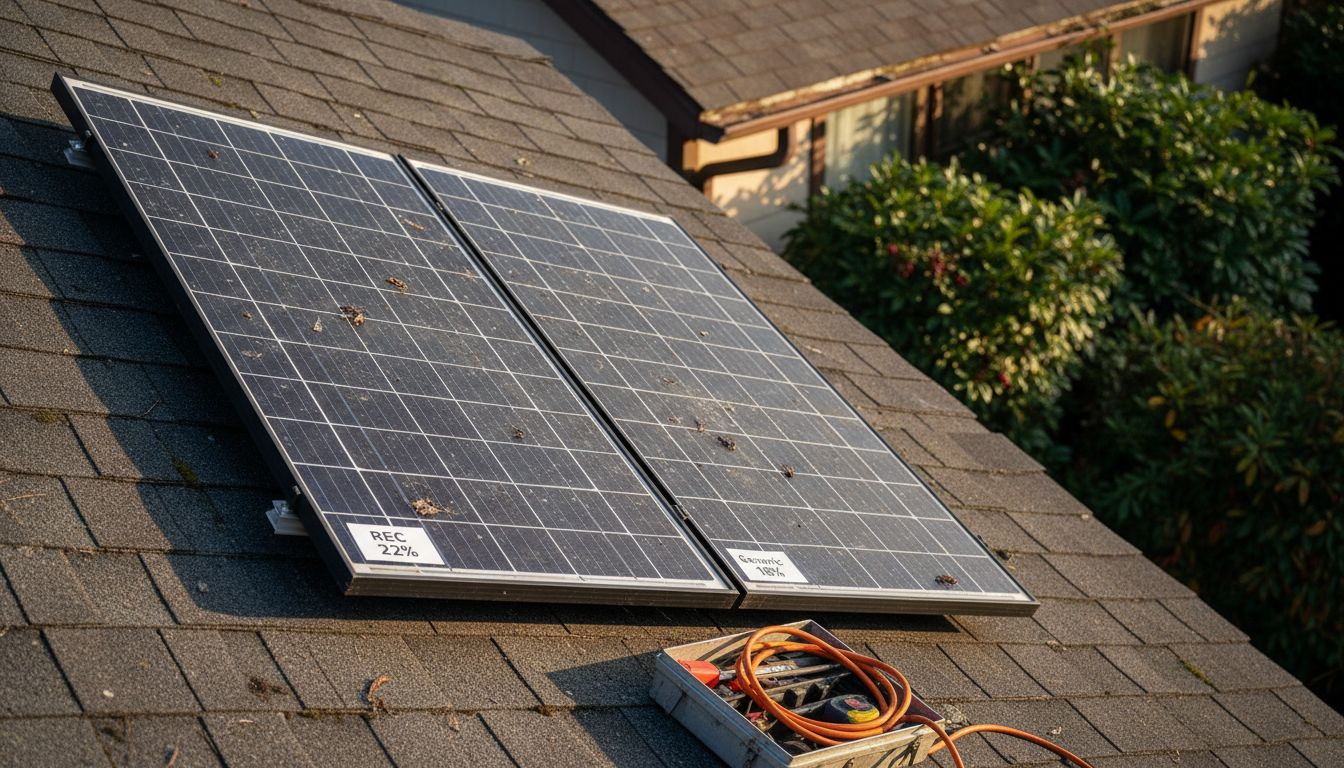
Generic panels from lesser-known brands may cost less initially but often sacrifice durability in humid coastal environments. REC Solar panels advantages include superior moisture resistance and better warranties compared to budget alternatives. You’ll find three main tiers in today’s market: premium (22%+ efficiency), mid-range (18-21% efficiency), and economy (15-17% efficiency).
The table below compares leading options available to Florida homeowners in 2026:
| Brand | Efficiency | Cost per Watt | Warranty | Florida Suitability |
|---|---|---|---|---|
| REC Alpha Pure | 22.3% | $3.20 | 25 years | Excellent heat/humidity resistance |
| LG NeON R | 21.7% | $3.10 | 25 years | Strong performance in high temps |
| Panasonic EverVolt | 21.2% | $3.00 | 25 years | Reliable with good warranties |
| Canadian Solar | 19.9% | $2.60 | 25 years | Budget-friendly with decent output |
| Trina Solar | 19.5% | $2.50 | 15 years | Economy option for tight budgets |
Understanding solar panel efficiency explained helps you calculate how much roof space you need for target energy production. Higher efficiency panels generate more power per square foot, critical if your roof area is limited by vents, chimneys, or shading.
Pro Tip: Check temperature coefficient specs before buying. Panels with coefficients below 0.35% per degree Celsius maintain better output during Florida summers. This single spec can mean 8-12% more annual production compared to panels with poor heat tolerance.
Your goal should be maximize solar benefits by matching panel selection to your specific roof orientation, shading patterns, and budget constraints. Premium panels justify higher costs when roof space is limited or you want maximum output from every square foot.
Battery Storage Options and Benefits
Tesla Powerwall leads residential battery storage with 13.5 kWh usable capacity and seamless integration with most inverter systems. Its modular design lets you stack multiple units for homes with higher backup power requirements. The 10-year warranty covers both capacity retention and component failures.
LG Chem RESU batteries offer 9.8 kWh capacity in a compact footprint, ideal for smaller installations or budget-conscious buyers. Both options provide automatic switchover during outages, keeping critical appliances running without interruption. Tesla Powerwall benefits extend beyond backup power to include time-of-use optimization and storm preparedness.
Battery costs range from $8,000 to $15,000 installed, depending on capacity and brand. This investment pays dividends during hurricane season when grid power fails for days or weeks. Florida’s frequent afternoon storms make battery storage particularly valuable for maintaining productivity in home offices and protecting food storage.
Storage considerations for Florida homes:
- Calculate backup runtime for essential loads (refrigerator, AC, lights)
- Verify battery chemistry suits hot garage or outdoor installations
- Compare warranty terms for capacity retention over 10 years
- Assess whether time-of-use rate optimization justifies added cost
Explore top home solar batteries to compare specs, pricing, and compatibility with different inverter brands. Your installer should help size battery capacity based on which circuits you want backed up during outages.
Adding battery storage increases project costs by 40-60% but dramatically improves energy independence. For coastal Florida residents facing regular storm threats, this investment often pays for itself through avoided food spoilage, maintained productivity, and peace of mind.
Incentives and Financing Options
The Federal Investment Tax Credit provides 30% back on total installation costs through 2032, making 2026 an excellent year to go solar. This credit applies to panels, batteries, inverters, and labor costs. Florida utility companies sweeten the deal with rebates ranging from $0.20 to $0.50 per watt installed.
Owning your system outright generates 20-30% more savings over 20 years compared to leasing arrangements. Cash purchases eliminate interest charges and maximize incentive capture. If upfront payment isn’t feasible, solar loans typically carry 3-7% interest rates with terms from 10 to 25 years.
Solar financing options include zero-down loans, home equity lines, and property-assessed clean energy (PACE) programs. Each financing method impacts your monthly savings differently. Loans preserve federal tax credit eligibility while spreading costs over time. The Florida solar financing guide breaks down how credit scores affect approval and rates.
Financing comparison:
- Cash purchase: Maximum lifetime savings, immediate equity, full incentive capture
- Solar loan: Zero down, preserve tax credits, fixed monthly payments
- Home equity loan: Lower rates, tax-deductible interest, leverages existing equity
- Solar lease/PPA: No upfront cost, limited savings, no tax credit eligibility
Leasing looks attractive with zero money down, but you forfeit the federal tax credit and long-term ownership benefits. Your monthly lease payment typically saves 10-20% versus utility bills, while ownership saves 40-60% after loan payoff.
Pro Tip: Apply for financing pre-approval before requesting solar quotes. Knowing your budget ceiling prevents wasting time on oversized proposals and strengthens negotiating position with installers. Check utility websites monthly for limited-time rebate programs that can add $500 to $2,000 in instant savings.
Combining federal credits, utility rebates, and smart financing typically reduces net system cost by 35-45%. Run the numbers carefully with installers to understand monthly cash flow, break-even timeline, and 25-year savings projections.
Maintenance and Longevity Tips
Florida’s pollen, dust, and occasional algae growth reduce panel output by 5-10% annually without regular cleaning. Most homeowners schedule professional cleaning twice yearly, typically before and after hurricane season. Solar panel maintenance tips include inspecting mounting hardware, checking electrical connections, and monitoring inverter performance.
Your inverter converts DC power from panels to AC power for home use. These units typically last 10-15 years, requiring replacement once during your system’s 25-year lifespan. Budget $1,500 to $3,000 for inverter replacement when planning long-term costs.
Trees grow slowly but steadily, creating shade that wasn’t present at installation. Even partial shading on one panel can reduce entire string output by 30-50% depending on system configuration. Trim branches annually to maintain clear sun exposure throughout the day.
Essential maintenance schedule:
- Visual inspections every 3 months for physical damage or debris
- Professional cleaning twice annually or after major storms
- Electrical testing annually to verify optimal performance
- Inverter monitoring through manufacturer apps for real-time alerts
- Tree trimming as needed to prevent shade development
Smart monitoring systems alert you immediately when production drops below expected levels. These apps help catch issues like failing inverters, damaged panels, or unexpected shading before they significantly impact energy generation.
Pro Tip: Schedule maintenance visits in April before hurricane season peaks. Your technician can verify mounting bolts are tight, electrical connections are secure, and panels are clean entering the stormy summer months. This proactive approach prevents small issues from becoming expensive repairs during peak usage periods.
Following manufacturer maintenance guidelines preserves warranty coverage and ensures panels deliver rated output for 25 years. Learning how to maximize solar savings through maintenance helps you protect your investment and sustain maximum energy production.
Summary Comparison and Situational Recommendations
The table below synthesizes key options to help match solutions with your specific situation:
| Scenario | Recommended Panel | Battery Option | Financing Method | Expected Savings |
|---|---|---|---|---|
| Maximum performance | REC Alpha Pure | Tesla Powerwall 2-3 units | Cash purchase | 60-70% utility reduction |
| Balanced value | LG NeON R | Tesla Powerwall 1 unit | Solar loan 15-year | 50-60% utility reduction |
| Budget conscious | Canadian Solar | LG Chem RESU | Solar loan 20-year | 40-50% utility reduction |
| Business/commercial | Trina Solar | Commercial battery bank | PACE financing | 45-55% utility reduction |
| Minimal upfront | Panasonic EverVolt | Optional add later | Solar lease/PPA | 15-25% utility reduction |
Homeowners prioritizing durability and maximum output should pair REC panels with Tesla Powerwall storage. This combination handles Florida heat exceptionally well and provides comprehensive backup during extended outages. Expect 25-year savings of $35,000 to $55,000 depending on current utility rates and energy consumption.
Business owners often prefer mid-tier panels with commercial battery banks to balance upfront investment against operating cost reductions. PACE financing attached to property taxes spreads costs over 20 years while immediately reducing monthly utility expenses.
Budget-focused buyers can still achieve meaningful savings with Canadian Solar panels and delayed battery addition. Start with panels now to capture federal incentives, then add storage in 2-3 years when battery prices drop further or emergency funds allow expansion.
Your final decision should weigh efficiency, warranties, storage needs, and financing costs against projected 25-year savings. Use this framework when choosing a solar installer to ensure proposals align with your priorities and budget realities.
Explore Expert Solar Solutions for Florida Homes and Businesses
Navigating solar options becomes simpler with expert guidance tailored to Florida’s climate and incentive landscape. PES provides comprehensive resources covering every decision point from initial sizing through long-term maintenance strategies.
Our detailed home solar installation guide walks you through permitting, equipment selection, and installation timelines specific to Florida regulations. Explore solar financing options to identify the payment structure that maximizes your monthly savings and long-term return on investment.
Maintaining peak performance requires ongoing attention to cleaning, monitoring, and component replacement. Our solar panel maintenance guide provides seasonal checklists and troubleshooting tips to keep your system producing maximum energy year after year.
Frequently Asked Questions About Solar Power in Florida 2026
What is the average cost to install solar panels in Florida in 2026?
Residential installations typically range from $2.50 to $3.50 per watt before incentives, translating to $15,000 to $21,000 for a standard 6 kW system. Final costs depend on panel brand, mounting complexity, and whether you include battery storage. Federal tax credits and utility rebates reduce net costs by 30-40%.
Are solar leases a good option for Florida homeowners?
Leasing eliminates upfront costs but limits long-term financial benefits compared to ownership. Purchasing or financing solar systems saves 20-30% more over 20 years by capturing federal tax credits and building home equity. Leasing makes sense only if you cannot qualify for financing or plan to move within 5 years.
How does Florida’s climate affect solar panel efficiency?
Florida’s 233 sunny days annually favor strong solar production, but heat reduces panel efficiency by up to 15% during peak summer temperatures. Selecting panels with low temperature coefficients and ensuring proper ventilation beneath arrays helps maintain output. Afternoon thunderstorms provide natural panel cleaning that sustains performance between maintenance visits.
Can I add battery storage to an existing solar system?
Most modern inverter systems support battery integration through AC-coupled or DC-coupled configurations. Adding storage later costs slightly more than installing everything together initially but remains feasible with compatible equipment. Consult your original installer or a qualified technician to verify your system supports battery expansion and identify suitable storage options.
