
Navigating solar financing shouldn’t feel overwhelming. Florida homeowners face unique energy costs and abundant sunshine that make solar adoption incredibly attractive, yet financing complexity often stops the process cold. This guide breaks down every step clearly, from understanding your options to securing the best deal, helping you unlock savings and boost property value with confidence.
Table of Contents
- Introduction To Solar Financing In Florida
- Prerequisites For Solar Financing Applications
- Step-By-Step Solar Financing Options Explained
- Timeline And Key Process Steps For Solar Financing In Florida
- Choosing A Solar Provider And Financing Partner In Florida
- Common Mistakes And Troubleshooting In Solar Financing
- Expected Results And Savings Benchmarks With Solar Financing
- Get Expert Solar Financing And Installation In Florida
- Frequently Asked Questions
Key takeaways
| Point | Details |
|---|---|
| Credit and documentation matter | Most solar financing requires a credit score around 650 or higher, plus income verification and property assessment. |
| Three main financing paths exist | Loans offer ownership and maximum savings, while leases and PPAs reduce upfront costs but limit long-term benefits. |
| Typical timeline spans 4 to 8 weeks | Application completeness and permit approvals determine speed, with seasonal demand affecting wait times. |
| Realistic payback periods range 6 to 10 years | Lifetime savings can reach $10,000 to $20,000 over 25 years depending on your financing choice. |
| Local expertise accelerates success | Certified Florida installers navigate permits faster and bundle financing options tailored to state incentives. |
Introduction to solar financing in Florida
Florida’s sunshine isn’t just plentiful, it’s profitable. Your energy bills climb during brutal summer months, but solar systems can slash those costs dramatically when financed correctly. The federal Investment Tax Credit (ITC) cuts upfront expenses by 30%, while Florida’s net metering policies credit you for excess energy production. Financing makes this possible without draining savings accounts.
Three primary financing methods dominate: solar loans, leases, and power purchase agreements. Each serves different financial situations and goals. Loans grant you system ownership, maximizing long-term savings and property value gains. Leases and PPAs eliminate or minimize upfront payments but transfer ownership to third parties, reducing your ultimate financial benefit.
Florida’s regulatory environment supports solar adoption through streamlined permitting in many counties and utility company rebate programs. This landscape creates opportunities, but choosing the wrong financing path costs you thousands over time. Understanding how solar financing options Florida work in practice separates successful installations from regretted decisions.
Consider these core financing realities:
- Solar loans typically carry interest rates around 5% with terms from 5 to 20 years
- Leases require little or no money down but lock you into 20 to 25 year contracts
- PPAs charge you per kilowatt-hour, often below utility rates but with annual escalators
- Credit requirements vary significantly, with loans demanding higher scores than lease options
Your choice impacts not just monthly payments but total system cost, tax benefit eligibility, and home resale value. With prerequisites clear, next we explain various available financing options so you can choose the best fit.
Prerequisites for solar financing applications
Lenders want proof you’ll repay. Solar loan requirements center on creditworthiness and financial stability, typically requiring scores around 650 or higher. If your credit falls short, consider a co-signer with stronger financial standing to unlock better rates and approval odds.
Documentation requirements include:
- Government-issued photo identification for all property owners
- Recent pay stubs or tax returns proving stable income
- Utility bills showing current energy consumption patterns
- Property deed or mortgage statement confirming ownership
- Homeowners insurance policy details
Site assessments determine system feasibility before financing approval. Certified installers evaluate roof condition, orientation, shading, and structural capacity. This process identifies potential obstacles like needed roof repairs or electrical panel upgrades that affect total project cost. Knowing these numbers upfront prevents financing shortfalls mid-project.
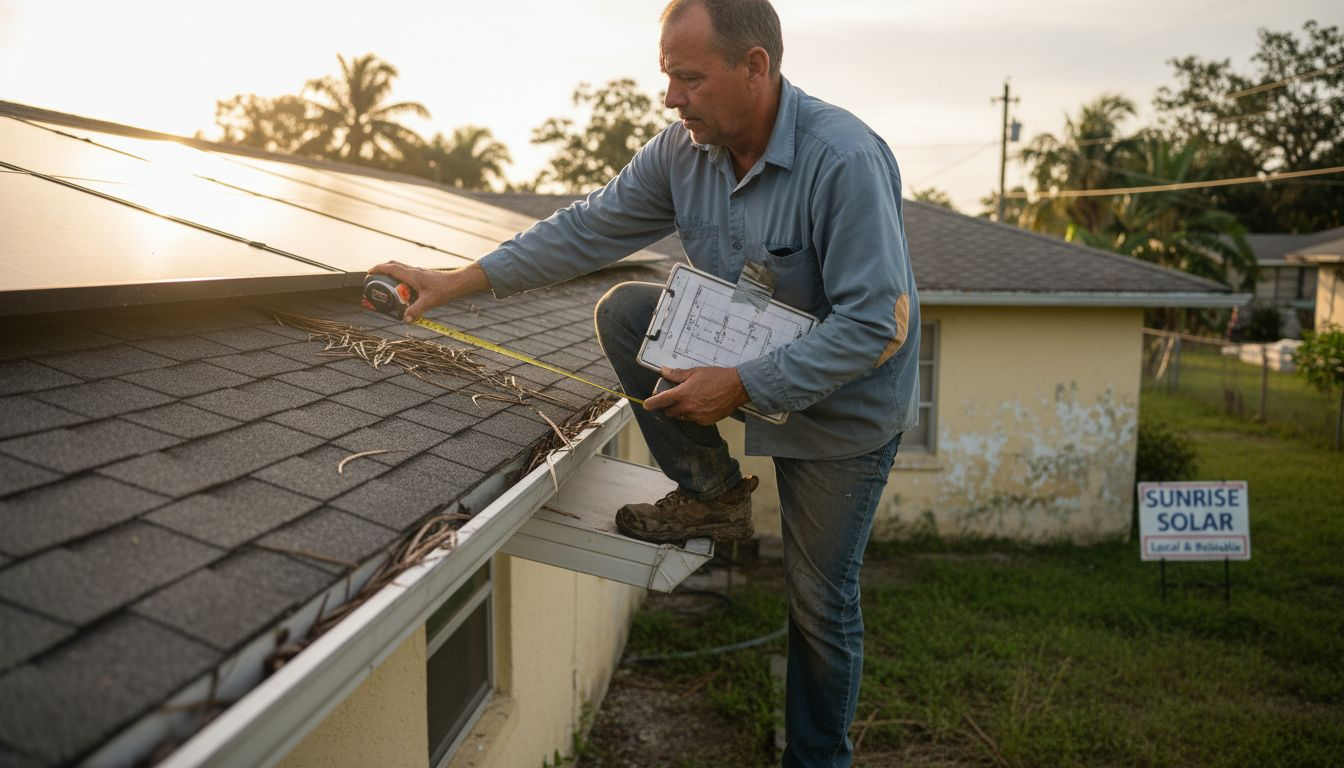
Your property’s solar potential directly impacts financing decisions. South-facing roofs with minimal shade generate maximum energy, justifying larger system investments. Heavily shaded properties might need tree removal or smaller systems, changing cost-benefit calculations. The fund your solar panels Florida financing guide walks through these considerations in detail.
Pro Tip: Request detailed system proposals from at least three installers before applying for financing. Price variations of 20% or more are common, and understanding market rates strengthens your negotiating position with lenders and contractors alike.
Estimate your total project cost including equipment, installation labor, permits, and potential upgrades. Florida residential systems typically range from $15,000 to $30,000 before incentives. After applying the 30% federal tax credit, your financed amount drops significantly, improving loan terms and monthly payments. After choosing the best financing option, you’ll want to understand the expected timelines and key process steps.
Step-by-step solar financing options explained
Solar loans function like home improvement loans or auto financing. You borrow the system cost, own the equipment immediately, and claim all tax credits and incentives. Interest rates hover around 5% for qualified borrowers, with terms spanning 5 to 20 years. Monthly payments remain fixed, and once paid off, you enjoy free electricity for the system’s remaining 25+ year lifespan.
Leases and power purchase agreements shift ownership to solar companies. You pay monthly lease fees or per-kilowatt-hour charges, typically lower than utility rates. The company maintains the system and claims tax benefits. Your savings are immediate but smaller over time, and you can’t claim federal credits or increase property value through ownership.
Payback periods vary dramatically by financing method. Loan-financed systems typically break even in 6 to 10 years, after which all savings go directly to you. Leased systems never reach full payback since you’re always making payments, though monthly cash flow remains positive from day one if structured properly.
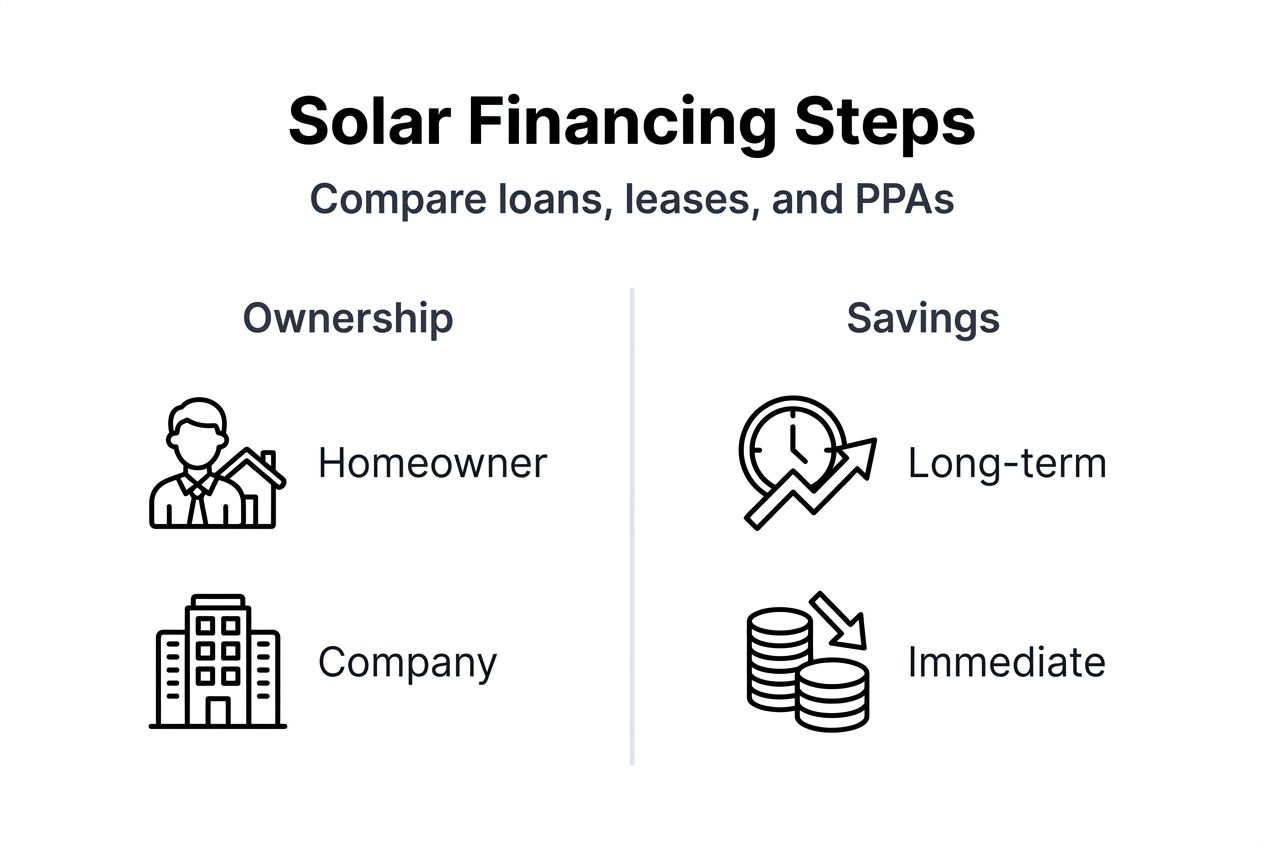
| Financing Option | Ownership | Upfront Cost | Credit Required | Long-term Savings | Best For |
|---|---|---|---|---|---|
| Solar Loan | You own | Low to moderate | 650+ score | Highest | Homeowners planning to stay 10+ years |
| Lease | Company owns | Zero to minimal | 600+ score | Moderate | Those wanting immediate savings with no maintenance |
| PPA | Company owns | Zero | 600+ score | Moderate | Risk-averse buyers preferring predictable costs |
Credit score impact cannot be overstated. Borrowers with scores above 720 qualify for premium rates, sometimes below 4%. Scores between 650 and 720 face rates from 5% to 7%. Below 650, your options narrow to higher-rate lenders or lease arrangements. Each percentage point in interest costs thousands over a 20-year term.
Pro Tip: Calculate total interest paid over your loan term, not just monthly payments. A $20,000 loan at 5% for 15 years costs about $4,700 in interest, while the same loan at 7% costs nearly $6,700. Shopping rates aggressively pays off.
Consider your timeline and financial flexibility when choosing between solar financing options list for Florida homes. Planning to sell within five years? Leases might make sense. Staying put long-term? Loans maximize value. The solar financing Florida homeowners comparison shows real examples. Understanding the timeline, next we discuss how to choose trusted providers to maximize financing success.
Timeline and key process steps for solar financing in Florida
Expect the entire process from application to energized system to take 4 to 8 weeks. This timeline assumes complete documentation, prompt responses, and normal permitting workflows. Delays happen when paperwork arrives incomplete or permit offices face backlogs during peak seasons.
Here’s the typical sequence:
- Submit financing application with all required documents to your chosen lender or installer’s financing partner, usually taking 2 to 5 business days for initial review and credit decision.
- Receive conditional approval and finalize system design with your installer, confirming equipment specifications, layout, and final pricing adjustments based on site assessment findings.
- Sign financing agreement and installation contract simultaneously, locking in rates and project scope while your installer prepares permit applications for local building and electrical departments.
- Wait for permit approvals from county or city authorities, typically requiring 1 to 3 weeks depending on jurisdiction workload and application completeness, with faster processing in solar-friendly counties.
- Schedule installation once permits arrive, with actual installation taking 1 to 3 days for most residential systems depending on size, roof complexity, and weather conditions.
- Complete final inspections by local building departments and utility companies, adding another 1 to 2 weeks before your system receives permission to operate and connect to the grid.
Permit approval speed varies wildly across Florida. Miami-Dade and Broward counties often process applications within 10 business days. Smaller counties might take 3 to 4 weeks. Installers familiar with local requirements submit cleaner applications, reducing back-and-forth delays.
Seasonal demand spikes occur from January through April when snowbirds return and temperatures remain comfortable for roof work. Applying during these months can add 2 to 3 weeks to normal timelines. Summer’s heat and afternoon thunderstorms slow installation but rarely affect financing approval speed.
Incomplete applications cause 20% of processing delays. Missing tax returns, unsigned forms, or unclear property documentation forces lenders to request additional information, restarting review clocks. Digital document submission through installer portals reduces errors compared to email or paper methods. With providers selected, we’ll look at common mistakes to avoid and troubleshooting tips to keep your financing on track.
Choosing a solar provider and financing partner in Florida
Certification matters immensely. Look for installers holding NABCEP (North American Board of Certified Energy Practitioners) credentials and Florida state contractor licenses. These certifications signal technical competence and regulatory compliance, reducing installation errors that delay final inspections or void warranties.
Local experience translates to smoother processes. Florida-based installers understand county-specific permit requirements, utility interconnection procedures, and seasonal weather challenges. They maintain relationships with local inspectors, sometimes accelerating approval timelines through familiarity and consistently clean applications.
Many providers offer in-house financing or partnerships with specialized solar lenders. These arrangements can simplify approvals since installers pre-qualify lending partners and streamline documentation workflows. Bundled deals sometimes include discounted installation rates when using preferred financing, though you should always compare terms against independent lenders.
Key provider evaluation criteria include:
- Years operating specifically in Florida markets, not just general contracting experience
- Customer reviews focusing on post-installation support and warranty claim responsiveness
- Transparent pricing breakdowns showing equipment costs, labor, permits, and markup separately
- Clear communication about timeline expectations and proactive updates during delays
- Willingness to provide multiple financing option comparisons without pressure tactics
The select solar provider Florida homes guide details vetting processes. Pay attention to how installers handle your questions. Dodging inquiries about equipment brands, warranty terms, or subcontractor usage raises red flags. Reputable companies provide detailed answers and written documentation.
Installer size creates tradeoffs. Large national companies offer established financing relationships and buying power for equipment discounts. Smaller local firms provide personalized service and flexibility but might have fewer financing partners. The choose solar installer Florida comparison explores these dynamics.
Pro Tip: Ask potential installers how many projects they completed in your county last year. High volume in your area indicates permit process familiarity and likely faster approvals than installers entering new territories. Avoiding common mistakes leads to smoother approval and timely installation; finally, let’s review expected financial results and savings.
Common mistakes and troubleshooting in solar financing
Incomplete documentation kills 20% of applications before approval. Lenders reject packages missing recent pay stubs, tax returns from the past two years, or clear property ownership proof. Creating a checklist before starting prevents these easily avoidable delays that restart entire review processes.
Credit score surprises derail many applicants who haven’t checked reports recently. Pull your credit from all three bureaus before applying. Errors like incorrectly reported late payments or outdated account information drag scores down artificially. Disputing inaccuracies takes 30 days but can boost scores enough to qualify for better rates.
Common pitfalls to avoid:
- Applying during peak season (January to April) without expecting 2 to 3 week delays
- Accepting the first financing offer without comparing at least three lenders or programs
- Ignoring total interest costs while focusing only on monthly payment amounts
- Failing to account for potential roof repairs or electrical upgrades in total budget
- Not reading lease escalator clauses that increase payments 2% to 3% annually
Timing applications strategically improves outcomes. Apply during slower periods (May through December) when lenders process applications faster and installers offer promotional rates to maintain workflow. Avoid major credit applications like car loans or credit cards during solar financing reviews, as new inquiries temporarily lower scores.
Co-signers expand options for applicants with borderline credit. A family member with strong credit and steady income can guarantee your loan, unlocking better rates or higher loan amounts. This strategy works best when co-signers understand their obligation continues until full repayment, typically 10 to 20 years.
The fund your solar panels Florida financing guide includes troubleshooting workflows for common application problems. Digital submission platforms reduce errors through built-in validation that flags missing documents or incomplete fields before submission.
Pro Tip: If denied for financing, request specific denial reasons in writing. Lenders must disclose factors like insufficient income, high debt-to-income ratios, or credit score shortfalls. Addressing these issues directly, whether through co-signers, debt paydown, or credit repair, positions you for approval on reapplication. With expected savings understood, next is how you can take advantage of expert solar financing and installation services.
Expected results and savings benchmarks with solar financing
Payback periods for financed solar systems in Florida typically span 6 to 10 years depending on financing method and energy consumption. Loan-financed systems reach break-even faster when system costs are lower and energy usage is higher. Leased systems technically never break even since payments continue indefinitely, though monthly savings remain positive.
| Financing Method | Payback Period | 25-Year Savings | Property Value Impact |
|---|---|---|---|
| Solar Loan (10-year term) | 7 to 9 years | $15,000 to $20,000 | Increases 3% to 4% |
| Solar Loan (20-year term) | 6 to 8 years | $12,000 to $18,000 | Increases 3% to 4% |
| Lease | N/A (ongoing payments) | $8,000 to $12,000 | Minimal to none |
| PPA | N/A (ongoing payments) | $7,000 to $11,000 | Minimal to none |
Lifetime savings projections assume 25-year system life, current utility rates around $0.12 per kWh, and annual rate increases of 2% to 3%. Florida’s net metering policies credit excess production at retail rates, boosting savings significantly for systems sized above consumption needs during low-use months.
Customer satisfaction surveys from solar industry associations show over 70% of financed solar customers report positive experiences two years post-installation. The primary complaint among dissatisfied customers involves overly optimistic savings projections from installers that don’t account for actual usage patterns or rate changes.
“Our solar loan paid itself off in eight years, and now we’re saving $150 monthly with zero electric bills. The financing process took six weeks total, and our installer handled all permits smoothly.” – Verified Florida homeowner review from solar industry satisfaction survey
Property value increases for solar-equipped homes depend on ownership status. Solar panels increase home value Florida studies show owned systems boost sale prices by 3% to 4% on average. Leased systems provide minimal value increase since buyers must assume lease obligations, sometimes deterring offers.
The role of solar in homes extends beyond pure financial returns. Energy independence during grid outages (when paired with battery storage), reduced carbon footprint, and insulation from utility rate volatility provide non-monetary benefits that many homeowners value highly.
Realistic expectations matter. Systems sized for 100% offset rarely achieve perfect annual balance due to weather variability, shading changes from tree growth, and consumption pattern shifts. Plan for 85% to 95% offset in practice, with remaining utility charges covering grid connection fees and backup power availability. After understanding the benefits of expert service, the FAQ section addresses common concerns and questions.
Get expert solar financing and installation in Florida
Navigating Florida’s solar landscape alone means juggling lender requirements, permit applications, and installer vetting simultaneously. Professional solar services consolidate these steps into streamlined processes where experienced teams handle documentation, financing applications, and regulatory compliance.
Local solar experts maintain relationships with multiple financing partners, presenting you with side-by-side comparisons tailored to your credit profile and financial goals. They understand which lenders offer the fastest approvals, lowest rates for specific credit tiers, and most flexible terms for unique property situations.
The Florida solar financing guide from established providers includes pre-qualification tools that estimate approval odds without hard credit pulls. This approach lets you explore options risk-free before committing to formal applications that affect credit scores.
Professional installation teams certified in Florida building codes and utility interconnection standards complete projects faster with fewer inspection failures. Their familiarity with county permitting offices means cleaner initial applications and quicker approvals. The solar installation steps guide outlines comprehensive processes from application through energization.
Bundled service packages often include free system monitoring, proactive maintenance scheduling, and warranty claim assistance that DIY approaches lack. When financing and installation come from coordinated teams, accountability remains clear and dispute resolution stays simple. Choosing the right select solar provider Florida homes partner makes the difference between smooth installations and prolonged frustrations.
Frequently asked questions
What credit score do I need to qualify for solar financing in Florida?
Most solar loans require a credit score around 650 or higher for approval. Scores above 720 unlock the best interest rates, sometimes below 4%. Co-signers with stronger credit can help you qualify if your score falls short of lender minimums.
How long does the solar financing and installation process take in Florida?
The typical process spans 4 to 8 weeks from application to energized system. Documentation completeness and permit approval speed determine actual timelines. Applying during off-peak seasons like summer and fall may reduce wait times by 2 to 3 weeks compared to busy winter months.
What are the main differences between solar loans, leases, and PPAs?
Loans provide system ownership, allowing you to claim tax credits and maximize long-term savings, but require good credit and sometimes down payments. Leases and PPAs eliminate upfront costs and maintenance responsibilities but transfer ownership and tax benefits to solar companies, reducing your total savings by 30% to 40% over system lifetime.
Are there any Florida-specific incentives to help with solar financing?
The federal Investment Tax Credit reduces system costs by 30% for all Florida residents. Florida offers net metering policies that credit excess energy production at full retail rates, plus property tax exemptions for solar equipment value. Some utilities provide additional rebates, though availability varies by service territory and changes annually.
