
Lowering electric bills in Florida often feels like a constant struggle, especially as hot summers drive up energy use. Many Florida homeowners wonder how solar panels could cut costs and add value, yet questions about initial costs, roof suitability, and financing often slow progress. By understanding your home’s unique energy needs, reviewing available incentives, and using tools like the PVWatts Calculator for accurate solar estimates, you gain the insight to make confident decisions about a solar investment that fits your budget and long-term goals.
Table of Contents
- Step 1: Assess Home Energy Needs
- Step 2: Evaluate Site and Grid Compatibility
- Step 3: Select Solar Equipment and Financing
- Step 4: Schedule Installation and Inspections
- Step 5: Verify System Performance and Incentives
Quick Summary
| Key Point | Explanation |
|---|---|
| 1. Track Monthly Energy Usage | Gather your last 12 months of electric bills and calculate your average monthly kWh consumption for accurate solar system sizing. |
| 2. Assess Roof Conditions | Evaluate your roof’s orientation, shading, and condition to determine solar panel effectiveness and ensure structural support for installation. |
| 3. Understand Site and Grid Compatibility | Check that your site meets solar requirements and understand your utility’s interconnection process to avoid installation delays. |
| 4. Compare Solar Equipment Financing Options | Research different financing methods, including cash purchases and loans, to maximize savings and return on investment for your solar system. |
| 5. Verify Installation and System Performance | After installation, monitor energy production and ensure you claim available incentives to protect your investment and maximize returns. |
Step 1: Assess Home Energy Needs
Understanding your current electricity consumption is the foundation of solar planning. You cannot size a solar system accurately without knowing how much energy your home actually uses each month. This step takes about an hour and gives you concrete numbers to work with.
Start by gathering your last 12 months of electric bills. Look for the kilowatt-hours (kWh) used each month. You’ll find this number prominently displayed on your utility bill. Write down the monthly totals and calculate your annual average.
Why does this matter? Your annual consumption determines the size of your solar system. A system designed for 800 kWh per month will not meet the needs of a home using 1,200 kWh per month. The math seems simple, but many homeowners skip this step and end up oversizing or undersizing their systems.
Here’s what to track from your bills:
- Monthly kWh consumption (the key number)
- Peak usage months (usually summer in Florida)
- Off-peak months (winter and spring)
- Any unusual spikes in consumption
Next, assess your roof conditions and home characteristics. Solar effectiveness depends on roof orientation, shading, and available space. Walk around your home and note any large trees, buildings, or structures that cast shadows on your roof during midday hours. Take photos of your roof from all angles. Check the age and condition of your roof—if it needs replacement within five years, address that before installing panels.
Use the PVWatts Calculator to estimate how much solar energy your specific location can generate based on historical weather data and your roof’s characteristics. This free tool uses 30 years of Florida weather patterns to give you realistic production estimates. Enter your address, roof orientation, and tilt angle to see potential yearly energy output.
For deeper analysis, you can access guides on assessing solar needs for Florida homes that walk through this process in more detail.
Know your annual consumption and roof conditions before moving forward. This information is essential for accurate system sizing and realistic savings projections.
Pro tip: Keep your utility bills in one folder and take roof photos during midday to see actual shade patterns. Overcast days show you worst-case scenarios for shading issues.
Step 2: Evaluate Site and Grid Compatibility
Your solar system must work with both your physical site and Florida’s electrical grid. This step determines whether your location is suitable for solar and ensures you understand the interconnection process. Most homes qualify, but evaluating these factors upfront saves time and prevents surprises later.
Start by confirming your roof has adequate space and sunlight exposure. Solar panels need unobstructed access to the sun, especially between 9 AM and 3 PM when the sun is strongest. Check that your roof isn’t heavily shaded by trees, neighboring buildings, or other structures. A south or southwest-facing roof is ideal in Florida, though east or west-facing roofs also work. If your roof is heavily shaded, consider ground-mounted systems or trimming vegetation if feasible.
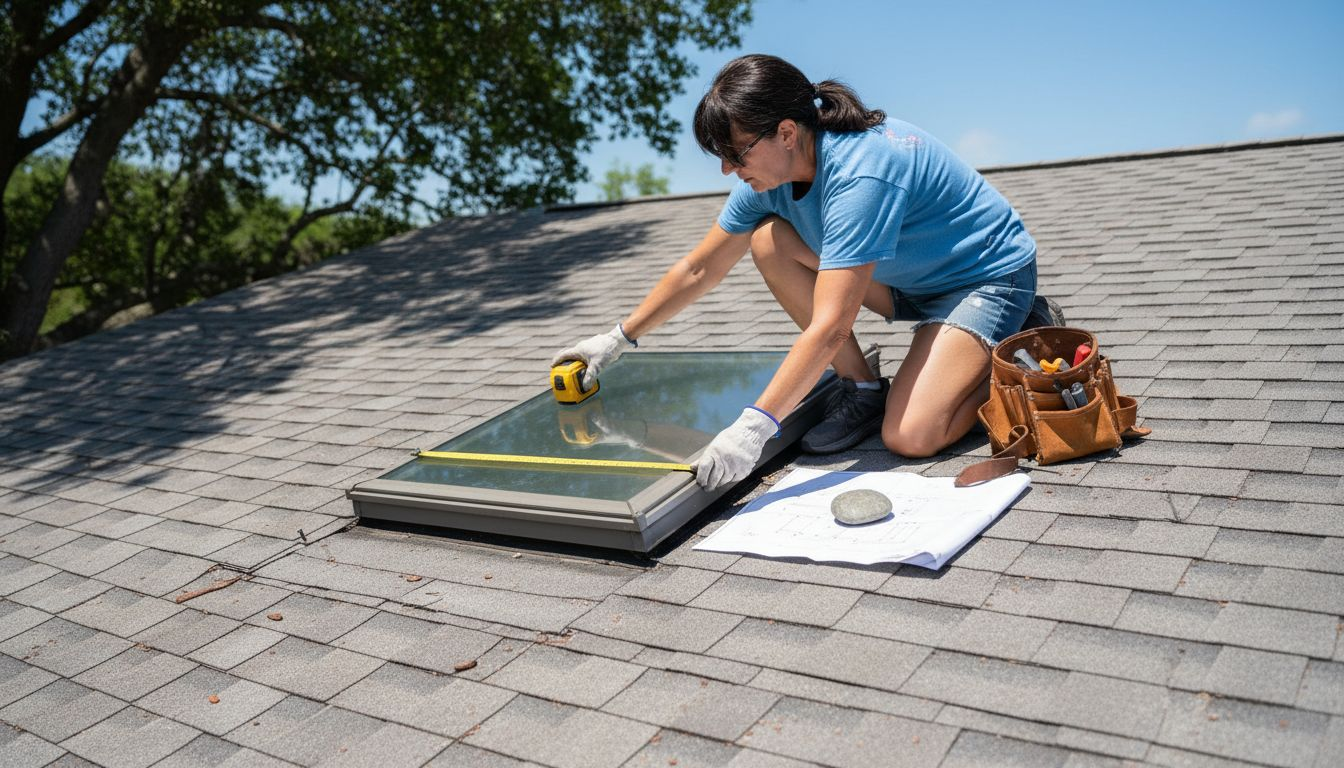
Next, verify your roof can physically support solar panels. Most residential roofs built in the last 20 years handle solar weight without issues, but older roofs may need structural assessment. Solar panels weigh roughly 40 pounds each, distributed across the roof surface. If your roofing contractor recommends replacement before solar installation, budget for that work first. Replacing the roof after installation means removing and reinstalling panels, which adds significant expense.
Now evaluate grid compatibility. Your home connects to the local utility grid through an interconnection process. Understanding interconnection standards and requirements helps you prepare for permitting and installation. Florida has specific rules about how solar systems connect to the grid, safety equipment needed, and timelines for utility approval.
Key compatibility factors include:
- Utility company rules for your specific grid (different utilities have different requirements)
- Utility meter type (whether it supports net metering to credit excess energy)
- System size limits (most utilities allow systems up to 125% of annual consumption)
- Distance to electrical infrastructure (affects interconnection costs)
Use the PVWatts calculator again to evaluate how your specific site location, roof orientation, and local weather patterns affect potential solar output. This helps you understand realistic energy production before grid interconnection discussions.
Contact your utility company to request their solar interconnection requirements and any available incentives. Many utilities provide free guides explaining their process. Ask about net metering policies, which allow you to receive credits for excess solar energy your system feeds back to the grid.
Grid compatibility isn’t complicated, but knowing your utility’s specific rules prevents installation delays and ensures your system meets all safety requirements.
Pro tip: Call your utility before hiring an installer and request their solar interconnection application package. Having these documents early eliminates weeks of back-and-forth communication later.
Step 3: Select Solar Equipment and Financing
Choosing the right solar equipment and financing method directly impacts your long-term savings and return on investment. This step combines equipment selection with exploring financing options that reduce your upfront costs. You’ll compare equipment quality, installer expertise, and payment structures to find the best fit for your budget and goals.
Start by researching solar panel quality and manufacturer warranties. Not all panels are created equal. High-efficiency panels from established manufacturers perform better over 25+ years. Look for panels with strong warranties (25 to 30 years is standard) and proven track records in Florida’s humid, salt-air environment. Ask your installer which brands they recommend and why. Read independent reviews from real Florida homeowners who have installed those systems.
Next, understand your financing options. Most Florida homeowners choose between three main approaches: cash purchases, solar loans, and leases or power purchase agreements (PPAs). Each has different costs, tax benefits, and long-term value.
Your financing choices include:
Here’s a quick comparison of popular solar financing options and their typical benefits:
| Financing Method | Ownership | Upfront Cost | Tax Credit Eligibility |
|---|---|---|---|
| Cash Purchase | Homeowner | Highest | Full federal and state |
| Solar Loan | Homeowner | Moderate | Full federal and state |
| Lease/PPA | Third party | Minimal | Limited or none |
| HELOC/Home Equity | Homeowner | Varies | Full federal and state |
- Cash purchases (upfront payment, you own the system and claim tax credits)
- Solar loans (borrow money, own the system, get tax credits, pay loan back)
- Leases or PPAs (little or no upfront cost, third party owns system, limited tax benefits)
- HELOC or home equity loans (borrow against home equity at potentially lower rates)
Don’t overlook federal and state incentives that dramatically reduce costs. The federal residential clean energy credit covers 30% of your system cost through a tax credit. This applies to new solar installations through 2032. If your system costs $20,000, you receive a $6,000 tax credit. This credit reduces what you owe in federal income taxes.
Beyond federal credits, Florida and your local utility may offer additional incentives. Use DSIRE to search for state and local rebates, tax credits, and financing programs specific to your address. Florida’s incentives change periodically, so checking DSIRE ensures you find the latest programs available.
Compare offers from multiple installers. Get at least three quotes that include equipment specifications, system size, total costs, financing options, and estimated energy production. Comparing financing options across quotes reveals which lender offers the best rates and terms.
Federal tax credits and state incentives can reduce system costs by 40% to 50% or more, making financing far more affordable than the sticker price suggests.
Pro tip: Stack your incentives: use the federal tax credit, check for state rebates, and explore utility incentive programs. Many Florida homeowners combine multiple programs to reduce their actual out-of-pocket investment significantly.
Step 4: Schedule Installation and Inspections
Once your financing is approved and equipment selected, scheduling installation and inspections becomes your next priority. This step involves coordinating with your installer, obtaining permits, and arranging county inspections to ensure your system meets all building codes and safety standards. Most installations complete within one to three days, but the full process from scheduling to final inspection takes two to eight weeks.
Your installer handles most coordination, but understanding the timeline helps you prepare. Start by confirming your installation date with your solar company. Ask for a specific window (morning or afternoon) rather than an all-day estimate. Check that your electrician and roofing teams are coordinated if roof work is needed beforehand. Prepare your home by ensuring the installer can access your roof safely and your electrical panel is accessible.
Before installation begins, your county requires a building permit. Most installers submit permit applications on your behalf, but verify this in your contract. The permit process typically takes one to three weeks depending on your county’s workload. Your installer must obtain this permit before work starts.
Key steps in the scheduling process include:
- Confirm installation dates with your installer in writing
- Obtain building permits from your county (installer usually handles this)
- Schedule electrical inspection for after panel installation
- Schedule final roofing inspection if roof penetrations occurred
- Plan utility interconnection inspection before the system operates
After installation, county inspectors verify the work meets building codes. Different counties have slightly different procedures, but scheduling building inspections typically involves contacting your county building department to request electrical and roofing inspections. Your installer usually schedules these, but confirm responsibility in your contract. Inspections usually occur within one to two weeks of installation requests.
Your utility company also inspects the system before you can operate it. This final inspection ensures your system properly interconnects with the grid and has all required safety equipment. After utility approval, your system activates and you begin generating electricity.
Here’s a summary of the key types of inspections for Florida solar systems and what they ensure:
| Inspection Type | Responsible Party | Purpose |
|---|---|---|
| Building Permit Review | County Authorities | Confirms code compliance |
| Electrical Inspection | County Inspector | Verifies safety standards |
| Roofing Inspection | County Inspector | Checks roof penetrations |
| Utility Grid Inspection | Utility Company | Validates grid integration |
Inspections protect your safety and investment. Never operate a solar system before final inspections are complete and approved.
Pro tip: Schedule your county inspections immediately after installation is complete. Inspectors have busy schedules, and scheduling early prevents delays that keep your system offline for weeks.
Step 5: Verify System Performance and Incentives
After your system activates, verifying it performs as expected and claiming all available incentives completes your solar investment. This step ensures your system generates the energy you anticipated and that you receive every tax credit and rebate you qualify for. Proper verification protects your investment and maximizes your financial returns.
Start by monitoring your system’s energy production from day one. Most solar systems include monitoring apps that show real-time kilowatt-hour generation and cumulative production. Check your app weekly during the first month to establish baseline performance. Compare actual production against your system’s expected output. Your installer provided production estimates based on your location and system size.
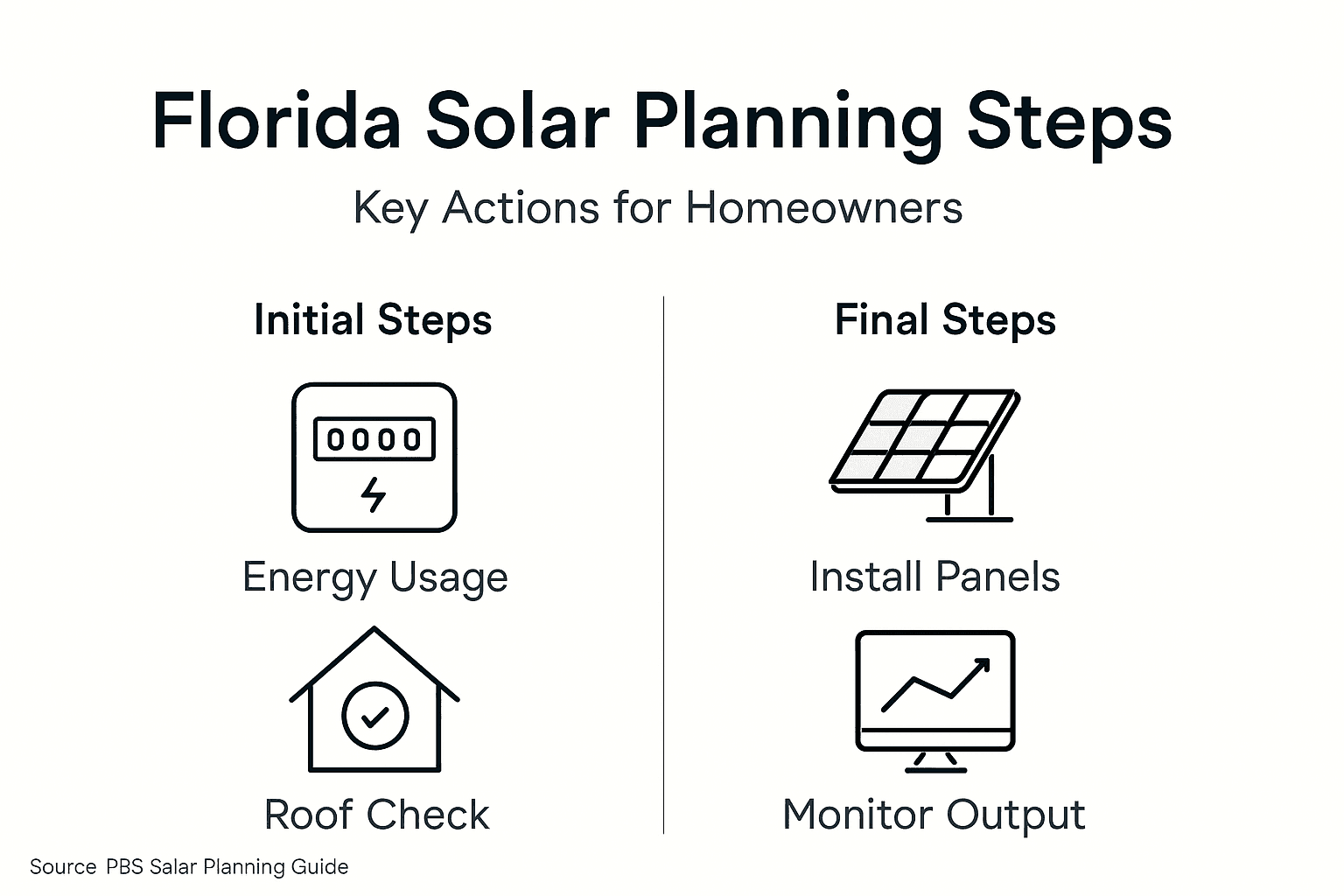
Use the PVWatts performance calculator to verify your system is generating at expected levels. Enter your system specifications and compare the results to your actual production data. In Florida, typical solar systems produce about 1,200 to 1,400 kilowatt-hours per year per kilowatt installed. Weather variations will cause monthly fluctuations, so compare full-month or seasonal data rather than daily numbers.
Underperformance can signal equipment issues or shading problems. Contact your installer immediately if production falls more than 10% below expectations. Common causes include inverter failures, loose electrical connections, or unexpected shading from new vegetation.
Steps to verify performance include:
- Check monitoring data weekly during your first month
- Compare actual output against system estimates from your installer
- Review monthly statements from your utility showing energy credits
- Document production patterns for seasonal trends throughout the year
- Report issues to your installer if generation falls below expected levels
Next, claim and track all your incentives. The federal tax credit appears on your tax return the year your system activates. Keep your Form 5695 documentation and IRS receipts with your tax records. If you received state rebates or utility incentives, ensure those were processed and applied to your account.
Verify incentive claims by checking DSIRE periodically to confirm you captured all available programs. Some incentives have expiration dates or annual limits. Staying informed ensures you don’t miss opportunities to reduce costs further.
Real-world solar performance varies by month and season. Annual production targets matter more than weekly fluctuations when evaluating system success.
Pro tip: Take screenshots of your monitoring app’s monthly production data and save all tax documents and rebate confirmations in a dedicated folder. This documentation proves system performance and incentive claims if questions arise later.
Take Control of Your Solar Journey with PES Solar
Planning your solar system step by step can feel overwhelming when balancing energy needs, site evaluation, equipment choices, financing, installation, and performance verification. Many Florida homeowners struggle with sizing their systems correctly, navigating utility requirements, and maximizing incentives. At PES Solar, we understand these challenges and provide expert guidance to make your solar transition smooth and confident.
Our comprehensive residential solar solutions include personalized system design, trusted equipment like REC solar panels and Tesla Powerwall batteries, flexible financing options, and full support throughout permitting and inspections. We help you reduce energy bills, increase your property value, and claim every available tax credit with ease. Learn more about how we can support your solar goals at PES Solar.
Ready to start planning the perfect solar solution for your Florida home today Stay ahead by partnering with a locally certified expert who prioritizes your energy independence and savings. Get your free estimate now at PES Solar and explore our full range of services designed to power your future.
Discover detailed solar planning tips on our site and take advantage of proven strategies at PES Solar to make your solar investment a success.
Frequently Asked Questions
How do I assess my home energy needs for solar planning?
To assess your home energy needs, gather your last 12 months of electric bills and record the kilowatt-hours (kWh) used each month. Calculate your annual average consumption to understand how many kilowatt-hours your solar system needs to generate.
What factors should I consider for evaluating site and grid compatibility?
When evaluating site and grid compatibility, check your roof’s sunlight exposure, shading from nearby objects, and the structural integrity of your roof. Ensuring your roof can support solar panels and is not obstructed by trees or buildings will aid in a successful installation.
What financing options are available for installing solar systems?
You can consider several financing options for your solar system, including cash purchases, solar loans, leases, and power purchase agreements (PPAs). Review the benefits and costs associated with each method to determine which aligns with your financial goals.
How long does the installation and inspection process take?
The installation process can take one to three days, but the overall timeline from scheduling to final inspection may range from two to eight weeks. Confirm specific dates with your installer to prepare your home and access.
How can I verify my solar system’s performance after installation?
To verify your solar system’s performance, monitor its energy production through tracking apps and compare actual production to the expected output provided by your installer. Check your system weekly in the first month to ensure it meets your energy generation goals.
What steps should I take to claim solar incentives?
To claim solar incentives, keep all necessary tax documents related to your system and confirm that any state or utility rebates are processed. Regularly check for available programs to ensure you do not miss any opportunities to reduce your overall costs.
