
Over 75 percent of American business owners say energy costs are a top financial concern. For companies in Florida, these rising expenses can hurt profitability and make long-term planning difficult. Commercial solar power offers a practical way to lower utility bills, support sustainability goals, and take advantage of expert guidance and available incentives designed for American businesses in the Sunshine State.
Table of Contents
- What Is Commercial Solar Power?
- Common Types Of Commercial Solar Systems
- How Commercial Solar Installation Works
- Financial Benefits And Tax Incentives In Florida
- Permitting, Compliance, And Safety Requirements
- Risks, Challenges, And How To Avoid Mistakes
Key Takeaways
| Point | Details |
|---|---|
| Commercial Solar Power Benefits | Commercial solar systems offer businesses a sustainable energy solution that reduces operational costs and stabilizes electricity expenses. |
| System Types | Businesses can choose from grid-connected, stand-alone, and hybrid systems, each suited to different energy needs and operational contexts. |
| Financial Incentives | Florida’s financial advantages, including federal tax credits and property tax exemptions, make solar investments economically attractive for businesses. |
| Regulatory Compliance | Navigating the complex permitting and regulatory framework is crucial for successful solar installation, requiring expert guidance and thorough documentation. |
What Is Commercial Solar Power?
Commercial solar power represents a sophisticated energy solution transforming how businesses generate and consume electricity in Florida. At its core, solar photovoltaic technology converts sunlight directly into usable electrical power for commercial applications, ranging from small rooftop installations to expansive solar farms.
The fundamental mechanism involves solar panels composed of photovoltaic cells that capture solar radiation and transform it into electricity. These panels can be strategically mounted on business rooftops, parking structures, or dedicated ground areas, allowing companies to generate their own clean, renewable energy. Unlike traditional fossil fuel methods, solar power produces electricity without generating air pollutants or carbon dioxide, making it an environmentally responsible choice for forward-thinking businesses.
Commercial solar systems differ from residential installations primarily in scale and complexity. Businesses typically require larger arrays capable of supporting significant energy demands, often utilizing more advanced inverter technologies and complex electrical infrastructure. These systems are designed to maximize energy production, reduce operational costs, and provide a predictable, long-term electricity generation strategy that can substantially lower monthly utility expenses.
Pro tip: When considering commercial solar, conduct a comprehensive energy audit to precisely determine your business’s electricity consumption and optimal solar system size.
Common Types of Commercial Solar Systems
Commercial solar systems are primarily categorized into distinct configurations designed to meet diverse business energy requirements. Grid-connected systems are the most prevalent, operating in direct synchronization with the local electric utility grid, allowing businesses to both consume and potentially sell excess electricity back to the utility provider.
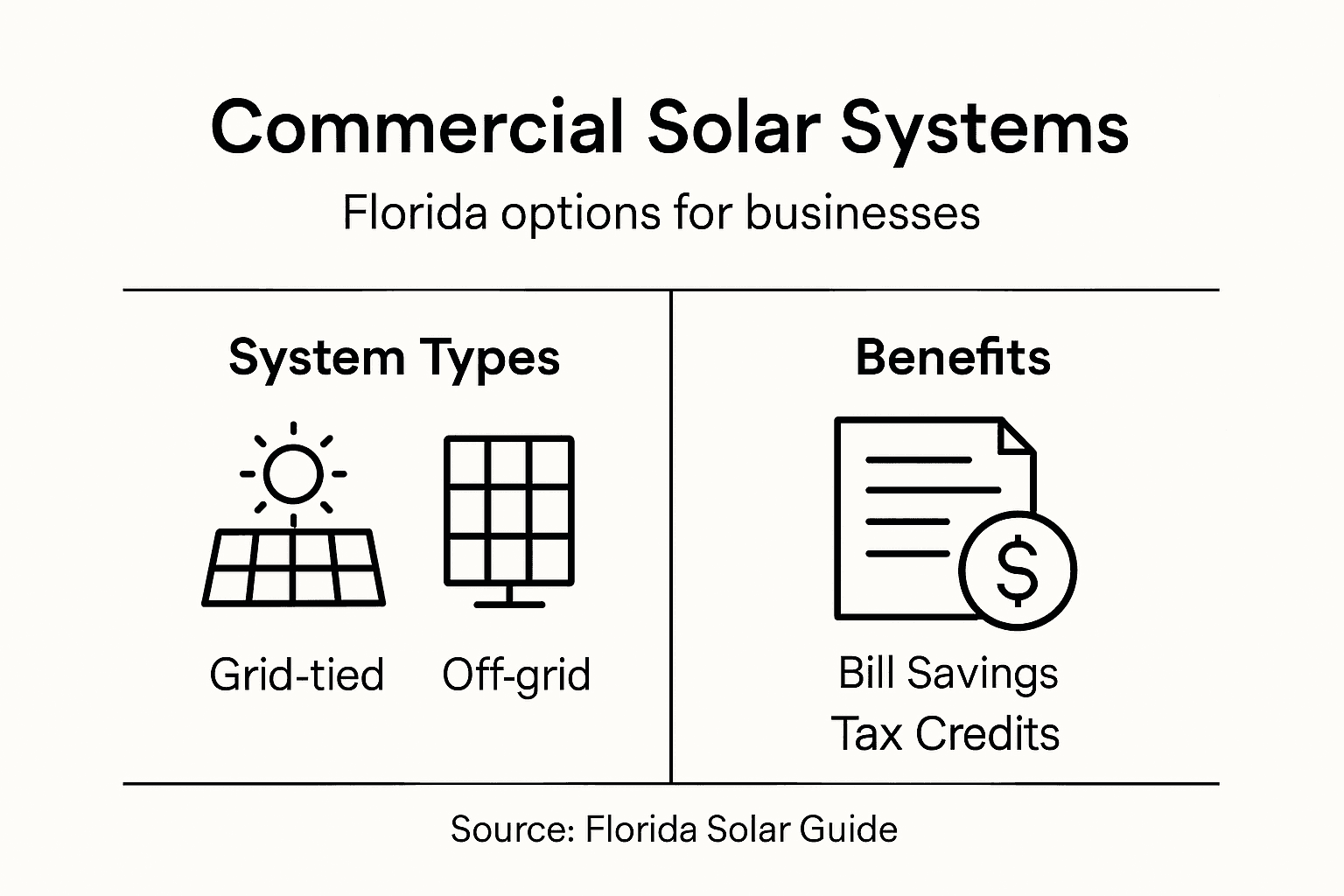
These systems typically fall into three primary configurations. Grid-interactive systems provide seamless power generation with utility grid backup, enabling businesses to draw electricity when solar production is insufficient. Stand-alone systems, by contrast, operate independently and often incorporate battery storage solutions, making them ideal for remote locations or businesses seeking complete energy independence. Hybrid systems represent a sophisticated approach, integrating solar generation with auxiliary power sources like generators or wind turbines to ensure consistent energy availability.
Commercial solar technologies encompass two fundamental approaches: photovoltaic (PV) and solar thermal systems. PV systems directly convert sunlight into electrical power using semiconductor materials, while solar thermal systems capture solar energy to heat water or other fluids for industrial processes. PV arrays for commercial applications are carefully engineered, comprising multiple interconnected modules designed to meet specific power demand profiles, with additional critical components including advanced inverters, specialized mounting hardware, and comprehensive electrical infrastructure.
Here’s a comparison of the main commercial solar system configurations:
| System Type | Power Source | Ideal For | Backup Features |
|---|---|---|---|
| Grid-Connected | Utility grid and solar panels | Most urban businesses | Utility grid backup |
| Stand-Alone | Solar panels, batteries | Remote/off-grid facilities | Battery storage |
| Hybrid | Solar, plus generators or wind turbines | Businesses needing reliability | Multiple backup sources |
Pro tip: Conduct a detailed site assessment to determine which solar system configuration best matches your business’s unique energy consumption patterns and infrastructure requirements.
How Commercial Solar Installation Works
Commercial solar installation is a comprehensive process that transforms business energy infrastructure through multiple carefully orchestrated stages. Solar installation begins with a detailed site assessment that evaluates solar irradiance, roof or ground space characteristics, electrical infrastructure, and overall energy consumption patterns specific to the business’s unique requirements.
The design phase involves precise engineering and system configuration. Professionals conduct comprehensive electrical load calculations to determine the optimal number and arrangement of photovoltaic modules, ensuring maximum energy generation efficiency. This includes selecting appropriate solar panels, inverters, mounting structures, and developing a comprehensive electrical integration plan that aligns with local building codes and utility regulations. Critical considerations include panel orientation, potential shading issues, structural load-bearing capacity, and electrical system compatibility.
The actual installation process involves several technical steps. Solar panels are mounted using specialized racking systems designed to withstand Florida’s challenging environmental conditions, including high winds and intense solar radiation. Electrical components are meticulously connected, with inverters converting direct current (DC) electricity generated by the panels into alternating current (AC) electricity usable by business equipment. After installation, the system undergoes rigorous testing and commissioning to verify performance, safety, and grid interconnection compliance.
Pro tip: Schedule a professional energy audit before installation to accurately determine your business’s precise solar system requirements and maximize potential cost savings.
Financial Benefits and Tax Incentives in Florida
Florida businesses can leverage substantial financial advantages through strategic solar power investments, with federal tax credits offering significant cost reductions for commercial solar installations. The current federal investment tax credit provides a 30% credit for solar energy equipment, dramatically lowering the upfront costs of transitioning to renewable energy and creating a compelling economic incentive for businesses across the state.

Beyond federal incentives, Florida offers a unique ecosystem of financial benefits for commercial solar adopters. Property tax exemptions for solar installations mean businesses can increase their property value without incurring additional tax burdens. Utility companies also provide net metering programs, allowing businesses to receive credit for excess electricity generated and fed back into the grid. These financial mechanisms effectively reduce overall energy expenses and create new revenue streams that can offset initial installation investments.
The long-term economic benefits of commercial solar extend far beyond immediate tax credits. Solar installations stabilize energy costs, protecting businesses from fluctuating electricity rates and providing predictable energy expenses. Advanced solar technologies have significantly reduced equipment costs, with modern systems offering improved efficiency and faster return on investment. By strategically timing solar investments, Florida businesses can simultaneously reduce operational expenses, demonstrate environmental responsibility, and enhance their competitive market positioning.
Pro tip: Consult with a tax professional to maximize available solar incentives and ensure comprehensive documentation for federal and state tax credits.
Permitting, Compliance, and Safety Requirements
Commercial solar installations in Florida are subject to comprehensive regulatory oversight, with detailed permitting processes ensuring safety and performance at every stage of implementation. Businesses must navigate a complex landscape of local, state, and federal regulations that govern solar system design, installation, and operational standards. This multi-layered compliance framework protects both property owners and the broader electrical infrastructure.
The permit application process requires meticulous documentation and professional expertise. Contractors must submit comprehensive plans demonstrating compliance with Florida Building Code, electrical standards, and zoning requirements. This includes providing detailed system designs, contractor credentials, proof of insurance, and Florida-specific product approvals. Each submission undergoes rigorous review to verify structural integrity, electrical safety, and adherence to local building regulations. Inspections are mandatory both during and after installation to confirm that all technical and safety standards are precisely met.
Beyond initial permitting, commercial solar installations must maintain ongoing compliance with multiple regulatory bodies. Fire safety codes, electrical system interconnection standards, and utility company requirements create a complex compliance environment. Businesses must ensure their solar systems meet National Electrical Code (NEC) standards, local building department specifications, and utility grid interconnection protocols. Professional solar installers play a critical role in navigating these intricate regulatory requirements, helping businesses avoid potential legal and safety complications.
Key regulatory and compliance aspects for Florida commercial solar installation:
| Requirement | Description | Business Impact |
|---|---|---|
| Building Code Compliance | Must meet Florida structural and electrical codes | Avoids legal issues |
| Zoning Approvals | Adheres to site-specific land use rules | Ensures proper placement |
| Utility Interconnection | Follows utility grid standards | Safe grid integration |
| Ongoing Inspections | Regular checks for safety and performance | Sustained system reliability |
Pro tip: Work exclusively with certified solar contractors who have proven experience navigating Florida’s complex permitting landscape and maintaining current knowledge of regulatory requirements.
Risks, Challenges, and How to Avoid Mistakes
Commercial solar investments come with complex challenges that businesses must strategically navigate. Solar power adoption involves multiple technical risks that require comprehensive planning and proactive management. These risks range from initial infrastructure complexities to long-term performance uncertainties that can impact financial projections and operational efficiency.
The primary challenges stem from solar power’s inherent variability and technical intricacies. Weather dependency creates potential energy generation inconsistencies, meaning businesses must design systems with robust backup strategies and realistic performance expectations. Equipment selection becomes crucial, as inferior solar panels or inverters can dramatically reduce system efficiency. Potential risks include premature component failure, suboptimal energy conversion rates, and unexpected maintenance expenses that could erode anticipated financial benefits.
Mitigating these risks requires a multifaceted approach involving thorough due diligence and strategic planning. Businesses should conduct comprehensive site assessments, engage certified solar professionals, and implement detailed performance monitoring systems. Critical risk management strategies include selecting high-quality equipment with substantial manufacturer warranties, developing comprehensive maintenance protocols, and building flexibility into solar system designs. Professional energy audits, careful contractor selection, and ongoing system performance tracking can significantly reduce potential technical and financial vulnerabilities associated with commercial solar investments.
Pro tip: Request detailed performance guarantees and comprehensive warranty documentation from solar installers to protect your investment against potential system underperformance.
Unlock the Full Potential of Commercial Solar Power for Your Florida Business
Navigating the complexities of commercial solar installation can be overwhelming, especially with the challenges of site assessment, permitting, and maximizing financial incentives. Many Florida businesses struggle with choosing the right system type, ensuring compliance with local codes, and securing reliable equipment that delivers consistent savings. This article highlights key pain points like managing technical risks, understanding tax credits, and designing systems that truly match your unique energy needs.
At PES Solar, we specialize in addressing these very challenges with tailored commercial solar solutions. Our experienced team guides you from initial energy audits through expert system design and installation—ensuring you benefit from the latest advancements such as high-efficiency photovoltaic panels and advanced battery storage options like Tesla Powerwall. Because we know how important it is to reduce operational costs while securing long-term energy independence in Florida, we help maximize tax incentives and streamline permitting to avoid costly delays.
Discover how PES Solar can transform your business energy strategy with proven expertise and trusted technology.
Ready to learn more about how commercial solar power can deliver real savings? Explore our comprehensive offerings today.
Experience the difference commercial solar can make for your business.
Get your free consultation with PES Solar now.
Benefits you’ll gain when working with PES Solar:
- Customized system designs tailored to your energy consumption
- Access to exclusive financing options to reduce upfront costs
- Full support navigating Florida’s permitting and compliance process
Take control of your electricity expenses and future proof your business with renewable energy. Visit PES Solar and get started on your solar journey.
Secure lasting energy savings with a trusted Florida solar expert today.
Explore commercial solar solutions at PES Solar now.
Frequently Asked Questions
What is commercial solar power?
Commercial solar power utilizes solar photovoltaic technology to convert sunlight into electricity for business use, allowing companies to generate clean, renewable energy and reduce their operational costs.
How do I determine the right size for a commercial solar system for my business?
Conducting a comprehensive energy audit is essential to precisely assess your electricity consumption and determine the optimal solar system size needed to meet your business’s energy demands.
What are the financial benefits of installing commercial solar systems?
Businesses can benefit from significant cost reductions through federal tax credits, property tax exemptions, and the ability to earn credits from net metering programs, ultimately lowering energy expenses and improving long-term ROI.
What factors should I consider during the commercial solar installation process?
Key factors include conducting a detailed site assessment, ensuring compliance with local building codes and zoning requirements, and engaging with experienced solar contractors to navigate the permitting process effectively.
