
Many Florida homeowners and business owners believe solar permitting is a simple formality, but underestimating this process often leads to costly delays, rejected applications, and lost incentive eligibility. Navigating Florida’s solar permitting landscape requires understanding multiple permits, local jurisdictions, and compliance standards. This guide clarifies the permitting process, helping you avoid common pitfalls and expedite your solar installation with confidence.
Table of Contents
- Introduction To Solar Permitting In Florida
- Florida Solar Permitting Regulations And Agencies
- Typical Timelines And Process Stages For Solar Permits
- Common Pitfalls Causing Delays Or Denials
- Comparison Of Residential Vs Commercial Solar Permitting
- Interaction With Rebates And Incentives Tied To Permits
- Best Practices To Expedite Solar Permit Approval
- Ready To Install Solar Panels With Confidence?
Key takeaways
| Point | Details |
|---|---|
| Multiple permits required | Solar projects need building, electrical, and sometimes zoning permits from various agencies. |
| Approval timing varies | Typical approval time ranges from 2 to 6 weeks depending on jurisdiction and application completeness. |
| Incomplete applications delay projects | Missing documentation is the leading cause of permit rejections and timeline extensions. |
| Residential and commercial differ | Commercial permits involve more complexity, longer reviews, and additional safety inspections. |
| Permits unlock incentives | Proper permitting and inspections are mandatory to qualify for federal tax credits and state rebates. |
Introduction to solar permitting in Florida
Solar permitting is the official approval process that verifies your solar installation meets safety standards, building codes, and electrical regulations. This process protects you, your property, and your community by ensuring proper system design and installation. Without permits, you risk legal penalties, insurance complications, and disqualification from valuable financial incentives.
Florida requires multiple permits for most solar installations. You’ll typically need a building permit to confirm structural integrity, an electrical permit to validate wiring safety, and sometimes a zoning permit to address local land use rules. Various local agencies oversee these permits, with county offices, city building departments, and utility companies all playing roles.
Understanding solar panel rules Florida provides essential context for navigating this regulatory landscape. The Florida Building Code sets baseline standards, but local jurisdictions add specific requirements. Miami-Dade County, for example, enforces stricter wind load standards due to hurricane risks. Broward County has distinct electrical code interpretations.
Key permits you’ll encounter include:
- Building permits ensuring your roof can support panel weight and withstand wind loads
- Electrical permits verifying safe connection to your home’s electrical system and utility grid
- Zoning permits confirming compliance with property setbacks and aesthetic requirements
- HOA approvals if your community has architectural restrictions
Grasping this framework helps you prepare complete applications and anticipate agency interactions. The Florida Department of Business and Professional Regulation provides statewide guidelines, but execution happens at the local level. Each jurisdiction maintains its own timeline, fee structure, and documentation requirements.
Florida solar permitting regulations and agencies
Building permits form the foundation of solar approvals in Florida. These permits assess whether your roof structure can safely support solar panels and mounting equipment. Engineers review load calculations, roof age, and structural integrity. Wind load requirements are especially critical in Florida’s hurricane-prone regions, where panels must withstand sustained winds exceeding 150 mph.
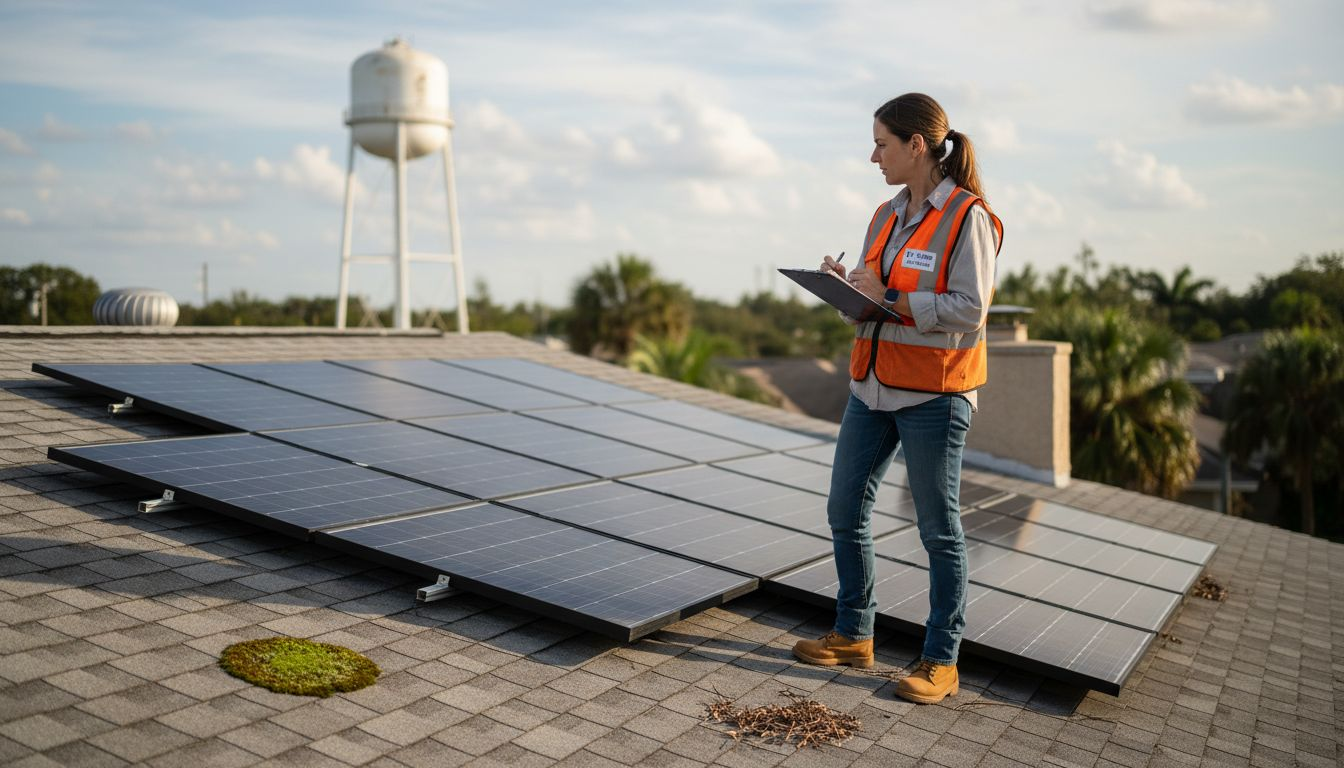
Electrical permits verify that your solar system’s wiring, inverters, and grid connections meet National Electrical Code standards and Florida-specific amendments. Inspectors examine panel ratings, wire gauging, grounding systems, and disconnect switches. Your system must include proper shutdown mechanisms for firefighter safety.
Zoning permits address local land use regulations affecting solar installations. These permits ensure your panels don’t violate setback requirements, height restrictions, or community aesthetic standards. Coastal areas often have additional environmental review requirements. Some jurisdictions restrict ground-mounted systems or require screening.
The Florida solar installation process guide details how these permits interconnect throughout your project timeline. Miami-Dade County operates its own Building Department with specialized solar permit reviewers. Broward County coordinates through municipal building departments. Orange County centralizes permitting through its Development Services division.
Key agencies involved in Florida solar permitting:
- Local building departments issuing structural and construction permits
- County or city electrical inspection offices reviewing system safety
- Planning and zoning departments enforcing land use compliance
- Utility companies requiring interconnection agreements
- Homeowners associations approving design aesthetics
- Florida Department of Business and Professional Regulation setting contractor licensing standards
Each agency operates independently with distinct submission requirements, review timelines, and fee schedules. Coordinating these multiple approvals requires careful planning and documentation.
Typical timelines and process stages for solar permits
The solar permitting process follows a predictable sequence, though timing varies by location. Understanding each stage helps you set realistic expectations and plan your installation timeline.
Your permitting journey begins with application submission. You’ll compile system designs, engineering calculations, site plans, electrical diagrams, and contractor licenses. Submit these documents to relevant agencies, either through online portals or in-person at permitting offices. Application fees range from $200 to $1,000 depending on system size and jurisdiction.
Review stages assess application completeness and code compliance. Plan reviewers examine structural calculations, electrical schematics, and zoning conformity. They check for missing information, calculation errors, or code violations. Reviewers may request additional documentation or design modifications. This stage typically takes one to three weeks.
Inspections verify your installation meets approved plans and safety standards. Jurisdictions require multiple inspections at different construction phases. Common inspection points include roof attachment verification, electrical rough-in review, and final system commissioning. Each inspection must pass before proceeding to the next stage.
Average approval time ranges from 2 to 6 weeks, influenced by jurisdictional workload and application quality. Urban counties like Miami-Dade and Broward often experience longer waits during peak construction seasons. Smaller jurisdictions may approve permits within days if applications are complete.
Permit validity periods vary by jurisdiction. Most building permits remain active for six months to one year from issuance. You must complete installation and pass final inspection before expiration. Some jurisdictions allow permit extensions with additional fees. Electrical permits typically mirror building permit validity.
The step-by-step solar consultation process helps you coordinate permitting with installation scheduling. Experienced installers time permit submissions to align with equipment delivery and crew availability, minimizing idle periods and maximizing permit validity.
Common pitfalls causing delays or denials
Incomplete or inaccurate documentation leads permit rejection statistics in Florida. Missing engineering stamps, unsigned applications, outdated site plans, or incorrect system specifications force resubmission. Each resubmission restarts the review clock, adding weeks to your timeline. Double-check every document before submission.
Failure to comply with local building and electrical codes causes outright denials. Florida adopts the Florida Building Code with local amendments that vary by jurisdiction. What passes in Tampa may fail in Fort Lauderdale. Wind load calculations appropriate for inland areas don’t meet coastal requirements. Verify your jurisdiction’s specific code requirements before finalizing system design.
Misunderstanding distinct permit requirements per jurisdiction creates confusion and delays. Some counties require separate electrical and building permit applications. Others consolidate permits into single submissions. Certain jurisdictions mandate engineering review for systems exceeding specific kilowatt thresholds. Research your local requirements thoroughly.
Ignoring inspection scheduling delays final approvals significantly. Inspectors maintain busy schedules, especially during construction season. Waiting until installation completion to schedule inspections can add weeks. Some jurisdictions require 48-hour notice for inspection requests. Plan inspection timing during the design phase.
Common mistakes to avoid:
- Submitting applications without required engineering stamps or contractor licenses
- Using generic system designs not customized for your property
- Failing to obtain HOA approval before permit application
- Overlooking utility interconnection agreement requirements
- Skipping pre-application consultations with local permitting offices
- Missing inspection deadlines or failing to coordinate with contractors
Pro Tip: Create a detailed checklist of your jurisdiction’s specific requirements and consult local permitting offices before submission. Experienced installers familiar with local nuances can help you avoid these pitfalls. Selecting solar provider Florida guidance emphasizes choosing contractors with proven local permitting track records.
Comparison of residential vs commercial solar permitting
Residential solar permits involve streamlined processes designed for standard rooftop installations. Most single-family homes qualify for simplified review procedures with fewer inspection checkpoints. Residential applications typically require basic structural calculations, standard electrical diagrams, and straightforward site plans. Review times average two to four weeks.
Commercial solar permits demand comprehensive documentation and multi-stage reviews. Large systems trigger additional scrutiny for fire safety, emergency access, and structural loads. Commercial projects often require environmental assessments, utility coordination meetings, and specialized engineering reviews. Approval timelines extend to six to twelve weeks.
| Aspect | Residential Permits | Commercial Permits |
|---|---|---|
| Documentation complexity | Standard templates acceptable | Custom engineering required |
| Review stages | Single consolidated review | Multiple department reviews |
| Inspection requirements | 2-3 basic inspections | 4-6 detailed inspections |
| Typical approval time | 2-4 weeks | 6-12 weeks |
| Cost range | $200-$600 | $1,000-$5,000+ |
| Agency involvement | Building and electrical only | Fire, environmental, utilities |
Commercial installations face stricter fire safety requirements. Fire marshals review access pathways, equipment spacing, and emergency shutdown systems. Rooftop installations must maintain clear perimeters for firefighter access. Ground-mounted commercial arrays require additional setback clearances and fencing specifications.
Environmental reviews apply to larger commercial projects, especially ground-mounted systems exceeding one acre. Agencies assess wetland impacts, stormwater management, and habitat disruption. Coastal commercial projects undergo additional environmental scrutiny. These reviews add months to permitting timelines.
Distinct inspection protocols separate residential from commercial projects. Commercial inspections involve specialized reviewers for structural, electrical, fire, and environmental compliance. Each discipline conducts independent inspections at different construction phases. Coordinating multiple inspector schedules complicates project management.
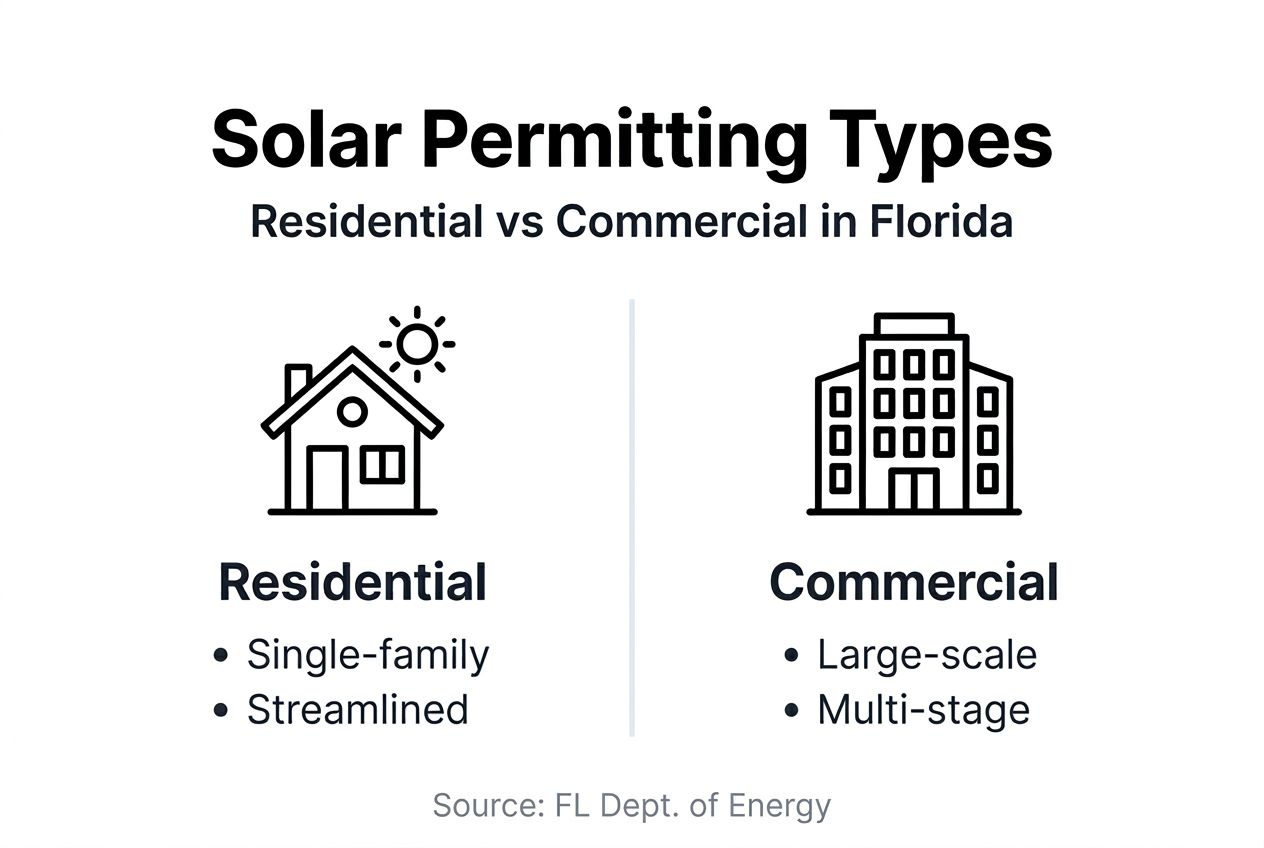
Understanding commercial vs residential solar permits helps property owners budget time and resources appropriately. Commercial projects benefit from dedicated project managers who coordinate complex multi-agency approvals.
Interaction with rebates and incentives tied to permits
The federal Investment Tax Credit requires compliant permitting and inspection documentation. You must provide proof of permitted installation and passed final inspections when claiming the 30% tax credit. IRS audits request permit copies and inspection certificates. Missing documentation disqualifies your claim.
State and local rebates depend on permit approval verification. Florida’s property tax exemption for solar installations requires recorded permits demonstrating system value. Utility rebate programs mandate inspection sign-offs confirming proper installation. Some programs release rebate payments only after final permit closure.
Inspection sign-offs trigger incentive eligibility in most programs. The final electrical inspection confirms your system operates safely and meets interconnection standards. This inspection approval activates your utility’s net metering agreement. Without final sign-off, you cannot legally operate your system or receive bill credits.
Non-compliance causes loss of financial benefits worth thousands. Installing systems without permits voids manufacturer warranties, insurance coverage, and incentive eligibility. Retroactive permitting after installation discovery costs more and may require system modifications. Some jurisdictions impose penalties up to three times standard permit fees for unpermitted work.
Properly timed permitting accelerates access to rebates and tax benefits. Submit permit applications early in your project timeline to ensure approval before year-end tax deadlines. Coordinate final inspections with equipment commissioning to avoid delays in claiming incentives.
Key permitting connections to incentives:
- Federal tax credit requires permit documentation and final inspection certificates
- Solar incentives in Florida depend on compliant installations meeting code standards
- Property tax exemptions need recorded permits showing system installation dates
- Utility net metering activation requires passed electrical inspections
- Manufacturer warranties specify permitted installations as coverage conditions
Understanding solar tax deductions in Florida clarifies how permitting documentation supports your tax filing requirements. Maintain organized permit files including applications, approvals, inspection reports, and final sign-offs for future reference.
Best practices to expedite solar permit approval
Submit complete applications with detailed system design and load calculations the first time. Include all required documents in proper formats with correct agency forms. Attach engineering stamps where required and verify contractor license numbers. Complete applications bypass common rejection reasons and enter review queues immediately.
Schedule inspections early by aligning with local office calendars and inspector availability. Contact inspection departments during the design phase to understand typical wait times and preferred scheduling windows. Book inspection slots provisionally, adjusting as construction progresses. Early scheduling prevents installation completion without inspection availability.
Utilize Florida’s online permit portals for faster submissions and real-time tracking. Many jurisdictions offer electronic plan submission reducing processing time by 30%. Online portals provide application status updates, review comments, and approval notifications. You can respond to reviewer questions quickly through portal messaging.
Respond promptly to requests for additional information or clarification. Reviewers often need minor documentation additions or calculation clarifications. Quick responses keep your application moving through review stages. Delayed responses send applications to the bottom of review queues.
Pre-application consultations with local permitting staff identify jurisdiction-specific requirements before formal submission. Many offices offer free pre-submittal meetings reviewing your project for compliance issues. These consultations catch problems early when corrections cost less.
Effective strategies include:
- Using experienced local installers familiar with jurisdiction requirements and reviewer preferences
- Organizing documents in the exact order specified by permitting checklists
- Submitting during off-peak seasons when review queues are shorter
- Including cover letters highlighting code compliance for complex projects
- Maintaining regular communication with permit reviewers throughout the process
- Preparing inspection sites with clear access and proper safety measures
Pro Tip: Partner with installers who maintain relationships with local permitting offices and understand reviewer expectations. These professionals anticipate common questions and structure applications to address reviewer concerns proactively. The solar installation process Florida benefits significantly from experienced permitting specialists who navigate local nuances efficiently.
Ready to install solar panels with confidence?
Now that you understand Florida’s solar permitting landscape, you’re prepared to move forward with your installation project. Navigating permits doesn’t have to slow your journey to energy independence. Access comprehensive guides that walk you through every installation phase, from initial planning to final activation.
Explore detailed resources tailored specifically for Florida homeowners and businesses. Our home solar panel installation guide provides step-by-step instructions that align with Florida’s permitting requirements. Review complete solar installation steps that coordinate permitting with construction timelines. Discover solar energy solutions for homeowners designed to maximize your investment while ensuring full compliance. Start your solar journey equipped with expert knowledge that reduces delays and optimizes results.
Frequently asked questions
What is solar permitting and why is it important in Florida?
Solar permitting is the official approval process ensuring your installation meets Florida’s safety standards, building codes, and electrical regulations. It protects you from legal issues, qualifies you for valuable tax incentives, and ensures your system operates safely for decades.
How long does the solar permitting process typically take in Florida?
Approval ranges from 2 to 6 weeks based on your jurisdiction and application completeness. Urban counties during peak construction seasons may take longer, while smaller jurisdictions with complete applications often approve within days. Submitting thorough documentation significantly reduces wait times.
What are the main reasons solar permit applications get delayed or rejected?
Incomplete documentation leads rejection statistics, including missing engineering stamps or incorrect specifications. Code non-compliance causes denials when designs don’t meet local building or electrical standards. Failing to schedule required inspections on time delays final approval even after permit issuance.
How does solar permitting affect eligibility for rebates and tax incentives in Florida?
Permit compliance and passed inspections are mandatory for claiming the federal 30% tax credit and state rebates. Non-compliance disqualifies your project from thousands in incentives and voids manufacturer warranties. Proper permitting documentation must accompany all incentive applications and tax filings.
