
Many homeowners believe solar panels are just about cutting energy bills, but the real story is far more compelling. Solar energy transforms how Florida properties contribute to environmental sustainability while delivering measurable financial returns. This guide breaks down the genuine role solar plays in sustainability, cuts through the marketing noise, and shows you exactly how installation works for Florida homes and businesses. You’ll discover which system fits your property, understand the financial incentives available in 2026, and learn how solar panels perform during storm season.
Table of Contents
- How Solar Energy Drives Sustainability In Florida
- Components And Process Of Solar Panel Installation
- Comparing Solar Energy Options For Florida Homes And Businesses
- Financial And Environmental Benefits Of Solar Adoption
- Explore Your Solar Options With Pro E Solar
Key takeaways
| Point | Details |
|---|---|
| Carbon reduction | Solar installations eliminate thousands of pounds of CO2 annually compared to grid electricity |
| Financial returns | Florida homeowners save hundreds to thousands yearly while increasing property values by 4% |
| System longevity | Panels operate efficiently for 25 to 30 years with minimal maintenance requirements |
| Storm resilience | Modern panels withstand Category 4 hurricanes and continue generating power post-storm |
How solar energy drives sustainability in Florida
Florida’s geographic position makes it ideal for solar adoption. The state receives over 230 sunny days annually, allowing solar energy to significantly reduce carbon emissions compared to fossil fuel sources. Each kilowatt hour your panels generate replaces electricity that would otherwise come from natural gas or coal plants, directly cutting greenhouse gas output.
The sustainability impact goes beyond simple carbon math. When you install solar panels, you reduce demand on Florida’s aging power grid during peak hours. This decreases the need for utilities to fire up supplemental “peaker” plants, which are typically the dirtiest and least efficient generators in the energy mix. Your system works hardest during midday when electricity demand peaks, creating maximum environmental benefit.
Economic sustainability matters just as much as environmental impact. Florida offers property tax exemptions for solar installations, meaning your system adds value without increasing annual tax bills. The federal Investment Tax Credit covers 30% of installation costs in 2026, making the switch financially accessible. These incentives transform solar from an environmental choice into a sound economic decision.
Consider how solar panels eliminate the environmental cost of energy transmission. Traditional electricity loses 5% to 8% of its power traveling through transmission lines from distant plants to your property. Your rooftop system generates power exactly where you use it, eliminating these transmission losses entirely.
Pro Tip: Calculate your potential carbon offset by multiplying your current annual electricity usage in kilowatt hours by 0.92 pounds. That’s how many pounds of CO2 your solar system could eliminate yearly.
The benefits of solar energy compound over time. A typical residential system offsets 100 tons of carbon dioxide over its lifetime, equivalent to planting 2,500 trees. For Florida businesses, larger commercial installations can offset 300 tons or more, significantly advancing corporate sustainability goals while reducing operating expenses.
Components and process of solar panel installation
Understanding what goes into your solar system helps you make informed decisions. Every installation includes four essential components working together. Solar panels capture sunlight and convert it to direct current electricity. The inverter transforms that DC power into alternating current your home uses. The mounting system secures panels to your roof at the optimal angle. Optional battery storage lets you use solar power after sunset.
The installation process follows a clear sequence. First, a site assessment evaluates your roof condition, orientation, and shading patterns. This determines system size and optimal panel placement. Second, your installer designs a custom system and handles permit applications with local authorities. Third, the physical installation typically takes one to three days for residential properties. Finally, your system connects to the grid after passing inspection.
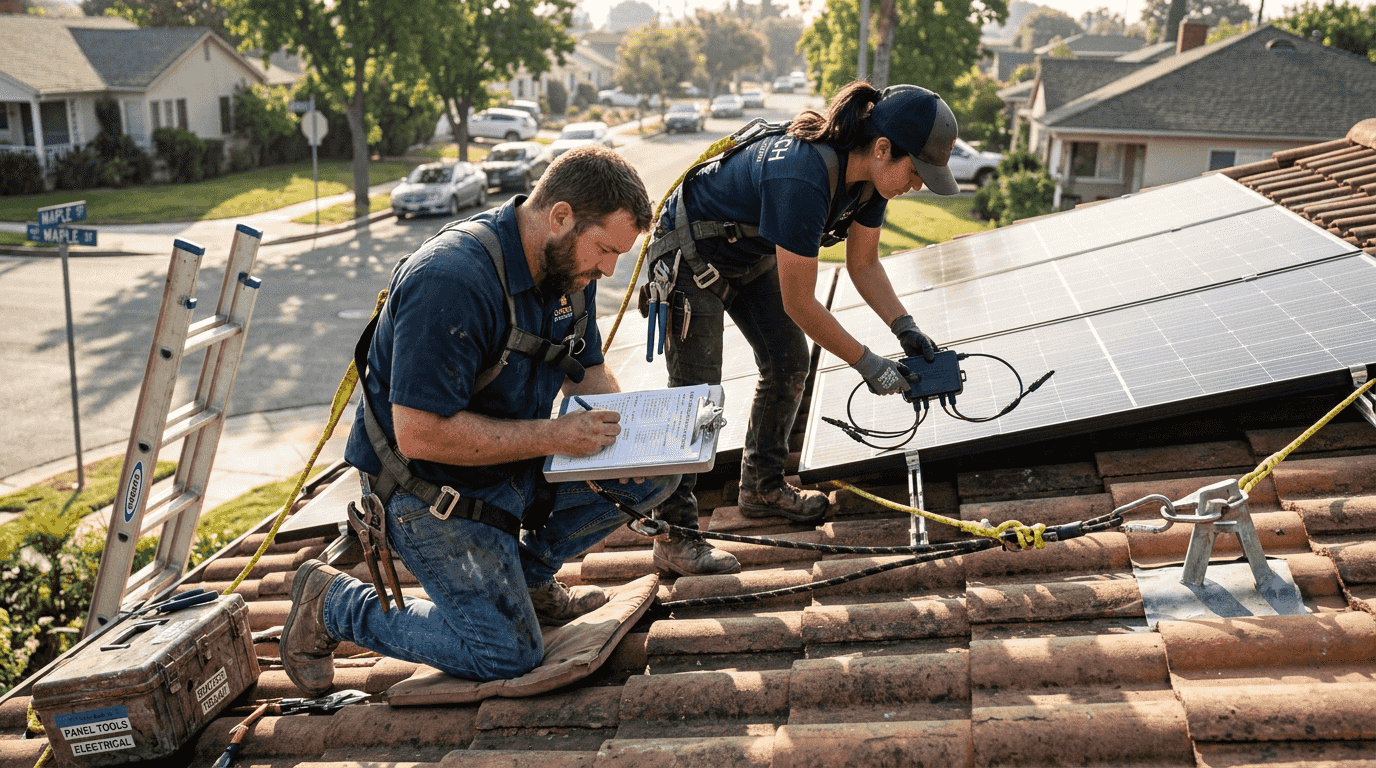
Step-by-step installation ensures you understand each phase before work begins. Florida requires electrical permits and building permits for solar installations. Your installer coordinates these applications, but approval timelines vary by county. Expect two to six weeks for permit processing in most Florida jurisdictions.
Maintenance requirements stay minimal throughout your system’s life. Panels have no moving parts to wear out. Florida’s frequent rain naturally cleans panels, though you might hose them down during extended dry periods. Annual inspections verify connections remain tight and inverters function properly. Most inverters need replacement once during a panel’s 25 to 30 year lifespan.
| Installation Phase | Timeline | Key Activities |
|---|---|---|
| Assessment | 1-2 weeks | Site evaluation, energy analysis, system design |
| Permitting | 2-6 weeks | Building permits, electrical permits, utility agreements |
| Installation | 1-3 days | Mounting, panel placement, electrical connections |
| Inspection | 1-2 weeks | Final inspection, grid connection approval |
Pro Tip: Schedule your installation between October and April when Florida’s weather is most predictable and installers face less demand, often resulting in faster timelines and better availability.
Your solar panels installation guide should detail warranty coverage for each component. Panels typically carry 25 year performance warranties guaranteeing at least 80% output. Inverters include 10 to 15 year warranties. Installation workmanship warranties span 5 to 10 years. Understanding these protections ensures long term system reliability.
Comparing solar energy options for Florida homes and businesses
Three main system types serve different sustainability and independence goals. Grid-tied systems connect directly to utility power, allowing you to draw electricity when panels aren’t producing enough. Off-grid systems operate independently with large battery banks storing excess power. Hybrid systems combine grid connection with battery backup, offering flexibility and resilience.
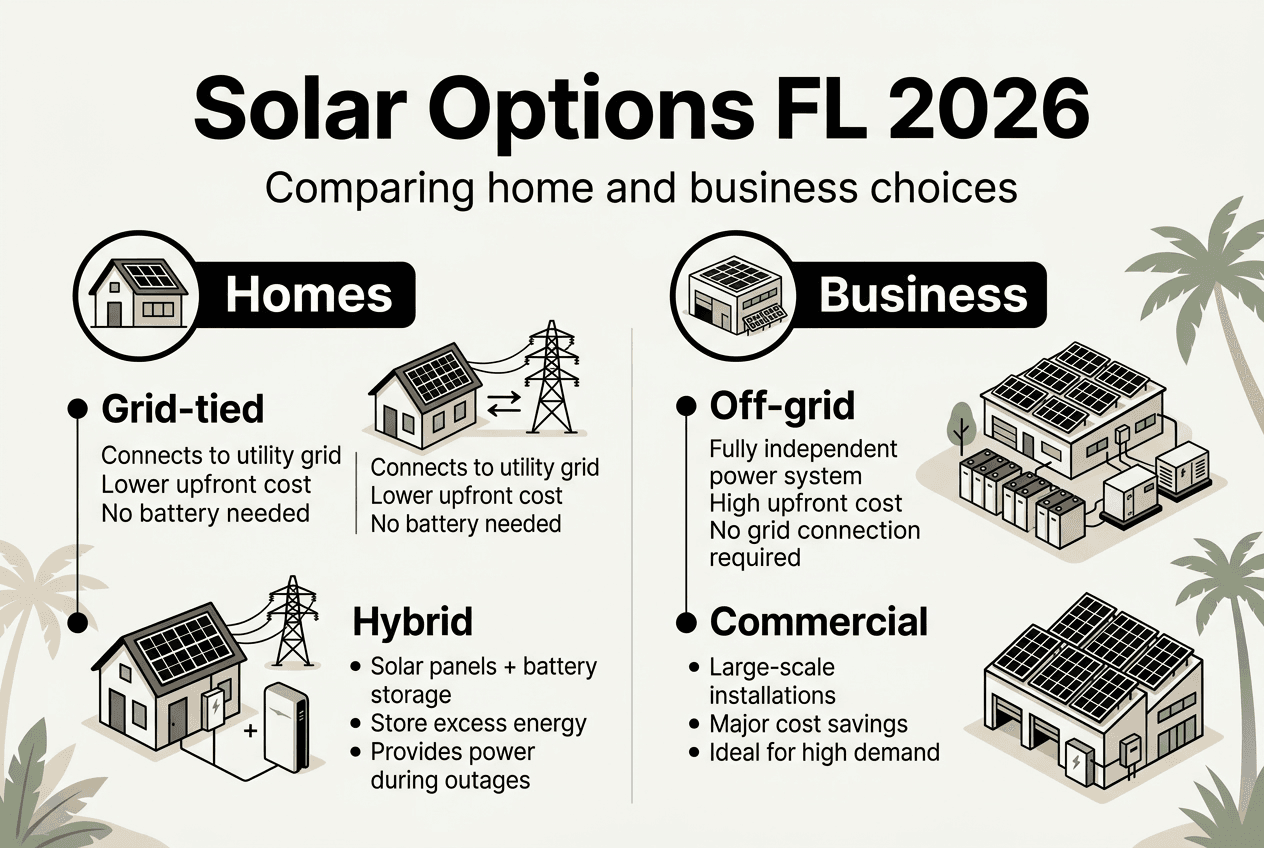
Grid-tied installations cost least because they skip expensive battery storage. When your panels generate more power than you use, excess electricity flows back to the grid. Florida utilities credit your account through net metering, effectively using the grid as a virtual battery. This setup maximizes financial returns but provides no power during outages.
Off-grid systems deliver complete energy independence. You generate and store all the power you need without utility connections. This appeals to remote properties or those prioritizing self-sufficiency. However, off-grid requires oversized panel arrays and substantial battery capacity to cover cloudy periods. Initial costs run 40% to 60% higher than grid-tied systems.
Hybrid configurations offer the best of both approaches. You stay connected to the grid for reliability while batteries provide backup during outages. This matters in Florida where hurricanes can knock out power for days. Your batteries charge from panels during the day and power essential loads when the grid fails.
| System Type | Initial Cost | Energy Independence | Backup Power | Best For |
|---|---|---|---|---|
| Grid-tied | Lowest | Low | None | Maximum ROI, urban areas |
| Off-grid | Highest | Complete | Full | Remote properties, self-sufficiency |
| Hybrid | Moderate | High | Selective | Storm resilience, critical loads |
Financial incentives vary by system type. The federal tax credit applies to all configurations, including batteries if charged primarily by solar. Some Florida utilities offer additional rebates for grid-tied systems that support grid stability. Off-grid installations miss out on net metering credits but eliminate monthly utility bills entirely.
Payback periods depend on your chosen configuration and energy usage. Grid-tied systems typically break even in 6 to 9 years. Hybrid systems take 8 to 12 years due to battery costs. Off-grid payback is harder to calculate since you’re replacing grid connection entirely rather than offsetting bills.
Evaluate your property carefully before deciding. Homes with reliable grid service benefit most from grid-tied or hybrid systems. Properties in areas prone to extended outages justify hybrid battery backup. Businesses with critical operations might choose hybrid systems to avoid costly downtime during storms.
Pro Tip: If you’re considering batteries, size them to power essential loads for 24 to 48 hours rather than trying to run everything. This dramatically reduces costs while maintaining critical functions during outages.
Solar panels sustainability options continue evolving as battery technology improves and costs decline. The configuration you choose today can often be upgraded later, giving you flexibility as your needs change.
Financial and environmental benefits of solar adoption
The financial case for solar strengthens yearly as utility rates climb. Florida electricity prices increased 12% between 2024 and 2026, making locked-in solar costs more attractive. A typical residential system eliminates 70% to 90% of electricity bills, saving $1,200 to $2,400 annually for average households. Those savings compound over 25 years, totaling $30,000 to $60,000 in avoided utility costs.
Government incentives amplify returns significantly. The federal Investment Tax Credit remains at 30% through 2032, directly reducing your net installation cost. Florida’s solar property tax exemption means your system adds zero to annual property taxes despite increasing home value. Sales tax exemptions on equipment purchases save an additional 6% on hardware costs.
Solar installations reduce energy bills while simultaneously boosting property values. Research shows homes with solar panels sell for 4% more than comparable properties without them. For a $400,000 Florida home, that translates to $16,000 in added value. Buyers recognize solar as a valuable asset that reduces their future housing costs.
Environmental benefits translate to measurable impacts. The average Florida residential system offsets 4 to 6 tons of CO2 annually. Over a 25 year lifespan, that’s 100 to 150 tons prevented from entering the atmosphere. This equals taking two cars off the road permanently or planting 150 mature trees.
Commercial installations deliver even greater environmental impact. A 100 kilowatt commercial system typical for small businesses eliminates 140 tons of CO2 yearly. This substantial reduction helps companies meet corporate sustainability commitments while cutting operating expenses. Many Florida businesses use solar installations as visible proof of environmental responsibility, enhancing brand reputation.
Long term sustainability aligns perfectly with Florida’s climate action goals. The state aims to generate 40% of electricity from renewables by 2030. Every residential and commercial solar installation contributes directly to this target while reducing strain on aging infrastructure. Your system helps build a more resilient, distributed energy network less vulnerable to single points of failure.
Financing options make solar accessible regardless of upfront capital. Solar loans spread costs over 10 to 20 years with monthly payments often lower than eliminated utility bills. This means immediate positive cash flow from day one. Lease agreements and power purchase agreements require zero down payment, though they reduce total savings compared to ownership.
Pro Tip: Run a detailed payback analysis including all incentives, projected utility rate increases, and your actual energy usage patterns. Most installers provide this free, giving you clear financial projections before committing.
The renewable energy benefits Florida homeowners experience extend beyond personal finances. Widespread solar adoption reduces peak demand on the grid, potentially lowering rates for all customers. Your installation contributes to grid stability and helps avoid the need for expensive new power plants.
Explore your solar options with Pro E Solar
Ready to transform your property’s sustainability profile while cutting energy costs? Pro E Solar specializes in custom solar solutions for Florida homeowners and businesses. Our team handles everything from initial assessment through final grid connection, ensuring a smooth installation experience.
Explore our comprehensive solar panels installation guide to understand each step of the process. Discover solar financing options Florida residents use to make the switch without large upfront investments. Learn about solar panel maintenance tips that keep your system operating at peak efficiency for decades. Our local expertise and certified installers ensure your investment delivers maximum returns while supporting Florida’s renewable energy future.
FAQ
What is the lifespan of solar panels installed in Florida?
Solar panels last 25 to 30 years with proper maintenance, maintaining 80% or more of their original output throughout this period. Florida’s climate doesn’t significantly reduce panel longevity despite heat and humidity. Most manufacturers guarantee performance for 25 years, and many panels continue generating power well beyond warranty periods. Regular inspections and occasional cleaning ensure your system reaches its full lifespan potential.
How much can I save annually by switching to solar in Florida?
Florida homeowners save hundreds to thousands annually depending on system size, energy consumption, and utility rates. A typical 7 kilowatt residential system eliminates $1,200 to $2,000 in yearly electricity costs. Larger homes with pools or electric vehicle charging can save $3,000 or more. Savings increase over time as utility rates rise while your solar costs remain fixed.
Are solar panels reliable during Florida’s storm seasons?
Modern solar panels withstand severe weather including Category 4 hurricane winds when properly installed. Panels undergo rigorous testing to meet Florida Building Code requirements for wind resistance. Grid-tied systems automatically shut down during outages for safety, but hybrid systems with batteries continue powering your home. Most panels survive storms undamaged and resume normal operation once the grid restores.
Do I need battery storage with my solar system?
Battery storage is optional but valuable for backup power during outages. Grid-tied systems without batteries offer the best financial returns through net metering. Hybrid systems with batteries cost more upfront but provide energy security during Florida’s hurricane season. Evaluate your priorities around energy independence, budget, and backup needs. You can always add batteries later as technology improves and costs decline.
How does net metering work in Florida?
Net metering credits you for excess solar power sent to the grid at the retail electricity rate. When your panels generate more than you use, your meter runs backward, banking credits. You draw those credits at night or during cloudy periods. This effectively uses the grid as free battery storage, maximizing your system’s financial value. Florida utilities must offer net metering, though specific policies vary by provider.
