
Florida homeowners and businesses face soaring electricity costs that outpace inflation, yet many overlook solar’s power to slash bills by up to 70%. The Sunshine State offers exceptional solar irradiance combined with robust federal and state incentives, creating an ideal environment for capturing massive savings. This guide reveals how solar installations reduce operating expenses, boost property values, and deliver financial returns that challenge common misconceptions about renewable energy investments.
Table of Contents
- Why Solar Matters For Reducing Operating Costs In Florida
- How Solar Energy Reduces Operating Costs
- Financial Incentives And Tax Rebates In Florida
- Impact Of Solar On Property Value In Florida
- Role Of Energy Storage In Enhancing Cost Savings
- Common Misconceptions About Solar Cost Savings In Florida
- Alternative Solar Solutions For Expanding Access And Savings In Florida
- Comparison Of Solar Panel Technologies And Cost Implications
- Ready To Cut Your Florida Energy Costs With Solar?
- Frequently Asked Questions
Key takeaways
| Point | Details |
|---|---|
| Bill reduction potential | Solar cuts monthly electricity costs by 40% to 70% depending on system size and energy usage patterns. |
| Combined incentives | Federal tax credits and Florida rebates lower upfront investment costs by approximately 40% in 2026. |
| Property value boost | Solar installations increase home values by an average 4.1% in Florida markets. |
| Storage amplification | Battery systems add 10% to 20% more savings while providing backup power during outages. |
| Myth correction | Florida’s high irradiance makes solar highly profitable contrary to beliefs it only works in desert climates. |
Why solar matters for reducing operating costs in Florida
Florida residents and commercial property owners wrestle with some of the steepest electricity rates in the Southeast. Electricity prices have been rising faster than inflation, creating budget uncertainty for households and businesses alike. These escalating costs make energy expenses an increasingly heavy burden on operating budgets.
The state’s geography presents a silver lining. Florida receives abundant sunshine year round, ranking among the top states for solar irradiance levels. This natural advantage means solar panels generate electricity more efficiently here than in many other regions. The high solar potential directly translates to greater energy production per installed watt.
Utility price volatility compounds the challenge of managing energy costs. Grid electricity rates fluctuate based on fuel costs, infrastructure upgrades, and regulatory changes. Solar energy offers protection against these unpredictable spikes by replacing grid consumption with free electricity from your roof. You gain control over a significant portion of your energy expenses.
Understanding local market conditions helps you gauge realistic savings potential. Florida’s combination of high electricity rates and excellent solar conditions creates an economic sweet spot. The math becomes compelling when you compare the levelized cost of solar energy to current and projected utility rates over a 25 year system lifespan.
Key factors driving Florida solar economics:
- Southeast electricity rates among the highest regionally
- Abundant year round sunshine maximizing generation
- Utility rate increases outpacing general inflation
- Solar providing predictable energy costs for decades
- Local incentives improving return on investment
How solar energy reduces operating costs
Solar panels generate electricity from sunlight without fuel costs or emissions. Every kilowatt hour your system produces replaces grid electricity you would otherwise purchase. This direct offset forms the foundation of solar savings. A properly sized system can reduce electricity bills by 40% to 70% based on your consumption patterns and installation capacity.
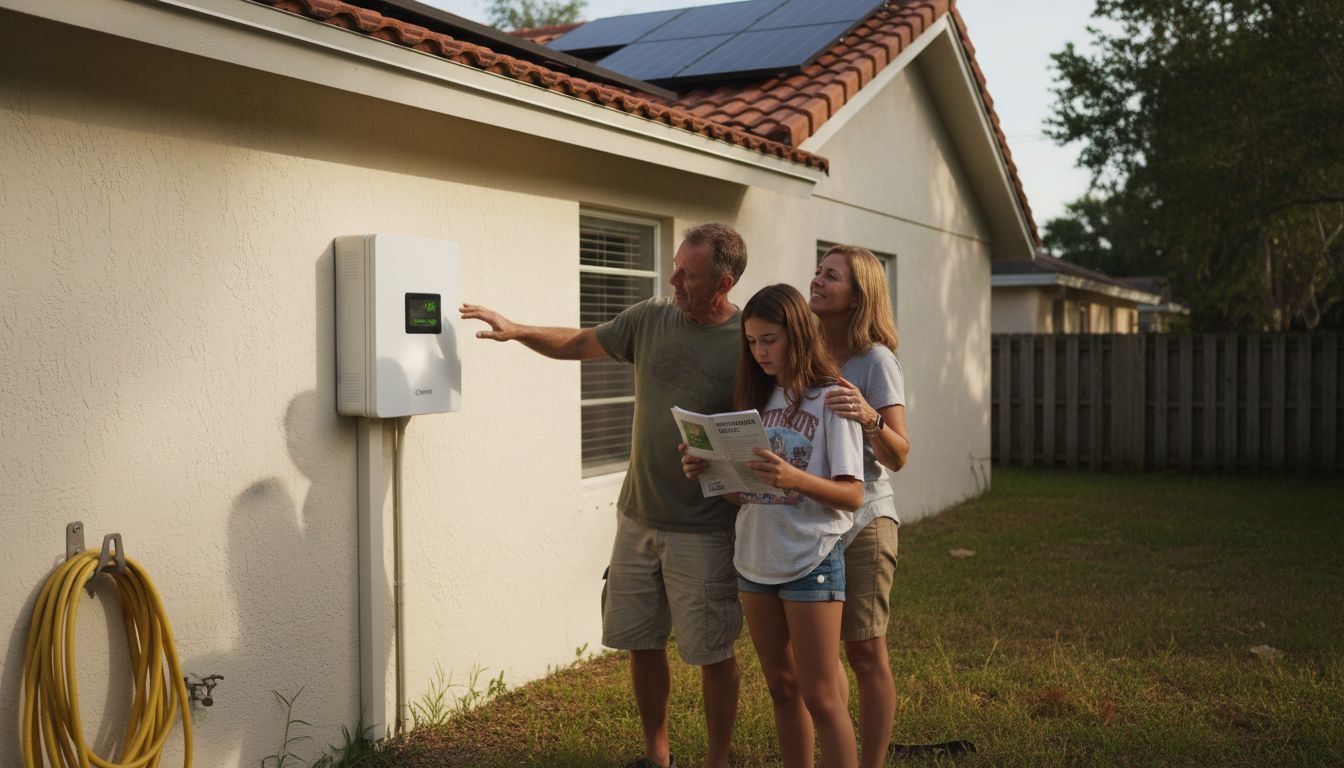
The levelized cost of energy metric reveals solar’s true financial advantage. Residential solar LCOE in Florida ranges from $0.12 to $0.28 per kilowatt hour when you account for equipment, installation, and maintenance over the system’s lifespan. This figure competes favorably with current utility rates that often exceed $0.13 per kilowatt hour before fees and surcharges.
Energy independence represents another crucial saving mechanism. When you generate your own power, you insulate yourself from utility rate increases that erode household budgets year after year. Your solar investment locks in predictable energy costs for 25 years or more. The financial benefit grows larger each time your utility raises rates.
Peak demand reduction offers additional savings for commercial properties. Businesses often face demand charges based on their highest electricity usage during billing periods. Solar generation naturally peaks during daylight hours when commercial activity and air conditioning loads are highest. This alignment helps flatten demand spikes and lower monthly charges.
Core savings mechanisms:
- Direct replacement of purchased grid electricity
- Fixed energy costs immune to utility rate hikes
- Competitive LCOE compared to retail electricity prices
- Peak load reduction lowering demand charges for businesses
- Net metering credits for excess generation in some areas
Pro Tip: Calculate your potential savings by reviewing 12 months of utility bills to understand your consumption patterns and peak usage times.
Financial incentives and tax rebates in Florida
Federal and state programs dramatically reduce the upfront investment required for solar installations. The 30% federal Investment Tax Credit remains available in 2026, allowing you to deduct nearly a third of your system cost from federal income taxes. This powerful incentive applies to both residential and commercial installations.
Florida offers additional incentives that stack with the federal credit. State and local rebate programs can reduce costs by another 10% depending on your location and utility provider. Combined, these incentives slash total investment costs by approximately 40%. The reduction transforms solar economics and accelerates payback periods significantly.
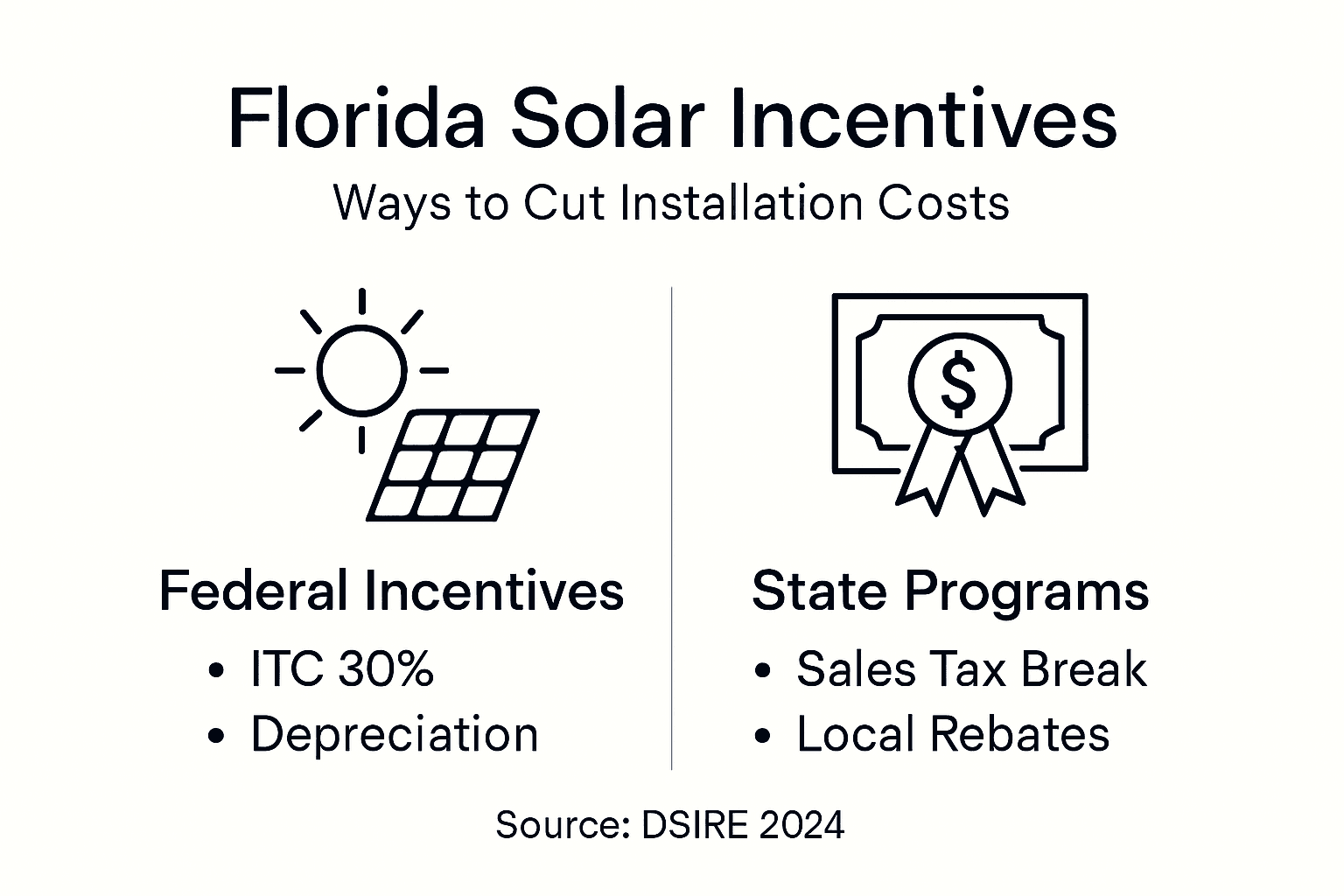
Understanding eligibility requirements proves essential for maximizing benefits. The federal ITC applies to systems placed in service during the tax year, with no cap on residential credit amounts. Business owners can also leverage accelerated depreciation schedules that provide additional tax advantages beyond the base credit.
Timing matters when planning your installation. While the 30% federal credit extends through 2032, Florida state incentives often operate on limited budgets that can be exhausted. Early action ensures you capture available rebates before funding runs out. The financial impact of missing incentives can extend your payback period by several years.
Incentive stacking strategies:
- Claim 30% federal ITC on total system costs
- Apply for utility and local government rebates
- Businesses leverage MACRS depreciation for additional savings
- Time installation to maximize current year tax benefits
- Work with experienced installers familiar with incentive programs
Impact of solar on property value in Florida
Real estate data demonstrates that solar installations command premium prices in Florida markets. Studies show homes with solar systems sell for approximately 4.1% more than comparable properties without renewable energy. For a $400,000 home, that translates to $16,400 in additional value before considering operating cost savings.
Buyers increasingly prioritize properties with lower ongoing expenses. Solar homes attract interest from environmentally conscious purchasers and financially savvy investors who recognize long term savings. The combination of reduced utility bills and energy independence makes these properties more desirable in competitive markets. Multiple offers become more common on solar equipped homes.
Commercial properties experience similar valuation benefits. Buildings with solar installations attract quality tenants willing to pay premium rents for lower operating costs. The reduced energy expenses improve net operating income calculations, directly increasing property values using standard capitalization rate formulas. Longer tenant retention adds further financial value.
Florida’s solar friendly reputation amplifies these effects. The state’s high electricity costs and excellent solar conditions create particularly strong buyer appreciation for renewable energy features. Market dynamics favor solar properties more in Florida than in regions with lower electricity rates or less consistent sunshine.
| Property Type | Average Value Increase | Florida Market Premium |
|---|---|---|
| Residential homes | 4.1% | Strong buyer demand due to high electricity costs |
| Commercial buildings | 3.8% to 5.2% | Enhanced NOI from reduced operating expenses |
| Multi family properties | 4.5% | Attractive to tenants and long term investors |
Role of energy storage in enhancing cost savings
Battery storage systems transform how you use solar generated electricity. Rather than sending excess daytime production back to the grid, batteries store energy for use during evening peak hours when utility rates often spike. This time shifting capability can boost overall savings by 10% to 20% beyond solar panels alone.
Energy independence reaches new levels when you pair solar with storage. Batteries provide backup power during grid outages, which occur regularly in Florida due to severe weather. The resilience benefit carries real financial value for businesses that lose revenue during downtime and homeowners who face food spoilage and discomfort without electricity.
The attachment rate of battery systems to new solar installations continues climbing in Florida. Homeowners increasingly recognize that storage amplifies their investment returns while adding security. Initial costs run higher with batteries included, but the expanded savings and backup capability justify the premium for many buyers.
Commercial properties gain substantial advantages from storage systems. Batteries help flatten demand curves by discharging during peak usage periods, directly reducing demand charges that can represent 30% to 50% of commercial electricity bills. The combination of solar generation and strategic battery discharge creates powerful savings for businesses.
Storage value drivers:
- Time shift solar energy to high cost evening hours
- Eliminate backup generator fuel costs and maintenance
- Reduce business demand charges through peak shaving
- Provide critical backup power during storm related outages
- Increase energy independence beyond solar alone
Pro Tip: Model your hourly electricity usage patterns to determine if time of use rates and peak demand charges justify adding battery storage to your solar installation.
Common misconceptions about solar cost savings in Florida
Many people wrongly believe solar only delivers strong returns in desert states like Arizona or Nevada. Reality contradicts this myth. Florida’s high solar irradiance combined with robust incentives makes the state one of the best markets nationally for solar return on investment. The combination of sunshine and high electricity rates creates ideal economics.
Concerns about upfront costs deter some potential adopters who assume poor financial returns. This misconception ignores current incentive programs that reduce net investment by 40% and solar pricing that has dropped over 70% in the past decade. Modern systems typically achieve payback in six to ten years, then provide 15 or more years of virtually free electricity.
The maintenance myth suggests solar requires expensive ongoing service that erodes savings. Modern panels need minimal maintenance beyond occasional cleaning and annual inspections. Most systems operate trouble free for 25 years with only inverter replacement around year 12 to 15. Total lifetime maintenance costs typically amount to less than 1% of initial investment.
Skepticism about solar performance during Florida’s cloudy summer afternoons persists despite data showing year round generation remains strong. Panels produce electricity even on overcast days, though at reduced capacity. Annual production figures account for seasonal variations and still deliver the savings projections. The math works because Florida receives abundant sunshine over the full year.
Myths versus reality:
- Myth: Solar only pays off in desert climates; Reality: Florida ranks top tier for solar ROI
- Myth: High costs lead to poor returns; Reality: Incentives and low pricing enable six to ten year payback
- Myth: Maintenance expenses negate savings; Reality: Modern systems need minimal service over 25 years
- Myth: Clouds eliminate summer production; Reality: Year round generation remains strong in Florida
Pro Tip: Request actual production data from local installations similar to your property to verify real world performance in your specific area.
Alternative solar solutions for expanding access and savings in Florida
Traditional rooftop installations are not the only path to solar savings. Plug in solar systems connect directly to standard electrical outlets with minimal installation requirements. These portable units work well for renters, condo owners, and others who cannot modify their roofs. The technology expands solar access beyond traditional property owners.
These emerging solutions offer genuine cost reduction despite smaller capacity. A typical plug in system generates 300 to 800 watts, enough to offset standby loads from refrigerators, computers, and other continuous use devices. Monthly savings might only reach $15 to $40, but the low upfront cost of $500 to $1,500 creates attractive payback periods under five years.
Widespread adoption could generate substantial collective impact. Plug in solar technologies could save billions nationally if regulatory barriers are removed and products gain market acceptance. Florida’s abundant sunshine makes the state an ideal testing ground for democratizing solar access through flexible, affordable options.
These systems complement rather than replace traditional installations. Property owners with suitable roofs still benefit more from full scale solar arrays. However, plug in options let renters and others start capturing savings immediately while building toward future traditional system ownership. Every kilowatt hour of solar generation reduces fossil fuel consumption and operating costs.
Expanding solar access:
- Plug in systems ideal for renters and limited roof access
- Lower upfront costs improve accessibility for budget conscious consumers
- Portable units require no permanent installation or permits
- Collective savings potential reaches billions with widespread adoption
- Technology bridges gap until traditional solar becomes feasible
Comparison of solar panel technologies and cost implications
Monocrystalline panels dominate Florida installations due to superior efficiency ratings of 20% to 22%. These black paneled systems generate more electricity per square foot, making them ideal for properties with limited roof space. Prices run 10% to 15% higher than alternatives, but the extra generation often justifies the premium. Expected lifespan exceeds 25 years with minimal degradation.
Polycrystalline panels offer a value alternative for properties with ample roof area. Their 15% to 17% efficiency means you need more panels to match monocrystalline output. However, lower costs per watt can make polycrystalline systems more economical for larger installations. The blue tinted panels carry similar longevity to monocrystalline options.
Battery integration adds 30% to 50% to system costs but expands savings potential significantly. Adding storage can boost total savings by 10% to 20% through time shifting and demand charge reduction. The backup power capability provides additional value that is difficult to quantify until you experience a multi day outage.
Choosing the right configuration depends on your specific situation. Panel technology selection balances roof space, budget, and aesthetic preferences. Battery decisions weigh upfront costs against expanded savings and backup power value. Working with experienced installers helps optimize your system design for maximum return.
| Technology | Efficiency | Cost per Watt | Lifespan | Best For |
|---|---|---|---|---|
| Monocrystalline | 20% to 22% | $2.75 to $3.25 | 25+ years | Limited roof space, maximum output |
| Polycrystalline | 15% to 17% | $2.25 to $2.75 | 25+ years | Large roofs, budget conscious buyers |
| With battery storage | Same as panels | Add $8,000 to $15,000 | Batteries: 10 to 15 years | Time shifting value, backup power needs |
Technology selection factors:
- Available roof area determines if higher efficiency justifies premium pricing
- Budget constraints may favor polycrystalline for large system sizes
- Panel lifespan expectations influence long term value calculations
- Battery storage decisions balance cost against savings expansion and resilience
- Aesthetic preferences sometimes favor uniform black monocrystalline appearance
Ready to cut your Florida energy costs with solar?
Now you understand how solar delivers substantial operating cost reductions through direct bill savings, valuable incentives, and property value increases. PES Solar specializes in designing customized systems that maximize your financial returns while providing energy independence.
Our team guides you through every step from initial consultation to final installation. Learn how to install solar panels with our comprehensive walkthrough covering planning, permitting, and activation. We help you navigate Florida’s solar incentive programs to capture every available dollar of savings. Explore how adding Tesla Powerwall storage amplifies your energy independence and savings potential. Contact us today for a free consultation and discover your personalized path to lower electricity costs.
Frequently asked questions
What is the typical payback period for solar in Florida?
Most Florida residential solar systems achieve payback in six to ten years depending on system size, electricity usage, and available incentives. After payback, systems generate essentially free electricity for 15 or more additional years. Commercial installations often see faster returns due to higher electricity rates and additional tax benefits.
Can businesses in Florida benefit from the same solar tax incentives as homeowners?
Businesses qualify for the same 30% federal Investment Tax Credit available to homeowners. Commercial properties also access accelerated depreciation through MACRS, allowing them to recover costs faster. Combined, business incentives often provide greater total tax benefits than residential programs, though specific advantages depend on tax situation.
How does solar affect home resale value in non solar friendly neighborhoods?
Solar installations typically increase property values by about 4.1% even in neighborhoods without widespread adoption. Buyers increasingly recognize long term savings regardless of local solar penetration rates. The value proposition remains strong because electricity costs and environmental benefits apply universally. Early adopters often see stronger appreciation as solar becomes more mainstream.
Is battery storage necessary for solar to save money?
Battery storage is not required for substantial solar savings. Grid connected systems without batteries still reduce electricity bills by 40% to 70% through direct generation offset. Batteries add 10% to 20% more savings through time shifting and provide backup power during outages. The decision depends on your budget, utility rate structure, and value placed on energy resilience.
Are there financing options to reduce upfront solar costs in Florida?
Multiple financing options make solar accessible without large upfront payments. Solar loans let you own the system while making monthly payments often lower than your previous electricity bills. Leases and power purchase agreements require no money down though you sacrifice tax incentives. Many installers offer zero percent financing promotions that maximize cash flow benefits while preserving ownership advantages.
