
Lowering energy bills while improving home value is a top concern for many Florida homeowners. Solar panel installation offers a practical way to turn the state’s abundant sunshine into reliable, clean energy, helping reduce monthly expenses and boost property equity. With solar energy technologies rapidly evolving and backed by financial incentives, this guide breaks down the essential concepts Florida residents need to make informed decisions about switching to solar.
Table of Contents
- Solar Energy Defined: Key Concepts Explained
- Types of Solar Solutions for Homes and Businesses
- How Modern Solar Panels Work in Florida
- Financial Incentives and Tax Benefits Available
- Long-Term Savings, Property Value, and ROI
- Environmental Impact and Grid Resilience
Key Takeaways
| Point | Details |
|---|---|
| Solar Energy Technology | Solar energy utilizes technologies like Photovoltaic Systems and Concentrating Solar Power to convert sunlight into electricity efficiently. |
| Financial Incentives | Florida homeowners can significantly reduce upfront costs through available federal and state tax credits for solar installations. |
| Long-Term Benefits | Investing in solar systems offers potential savings on utility bills, increased property values, and reduced dependence on traditional energy sources. |
| Environmental Impact | Solar power generates electricity with zero direct emissions, supporting sustainability and resilience against climate change. |
Solar Energy Defined: Key Concepts Explained
Solar energy represents a groundbreaking renewable power source that transforms sunlight into usable electricity through sophisticated technological processes. At its core, solar energy captures the radiant light and heat emitted by the sun, converting these natural resources into clean, sustainable power for homes and businesses across Florida.
The primary technologies driving solar energy generation include:
- Photovoltaic (PV) Systems: These semiconductor-based technologies directly convert sunlight into electricity by using specialized solar panels composed of light-sensitive cells.
- Concentrating Solar-Thermal Power (CSP): Advanced systems that utilize mirrors to concentrate sunlight, generating high temperatures used for electricity production
- Solar Thermal Technologies: Methods that capture solar heat for water heating, space conditioning, and industrial processes
Understanding how solar panels function requires recognizing their fundamental mechanism. Solar cells contain photovoltaic materials that generate electrical current when exposed to sunlight through a process called the photovoltaic effect. When photons from sunlight strike these cells, they dislodge electrons, creating an electric current that can be harnessed for powering homes, businesses, and electrical grids.
Here’s a comparison of the main solar technology types used in Florida:
| Technology Type | How It Works | Typical Uses |
|---|---|---|
| Photovoltaic (PV) Systems | Convert sunlight to electricity via solar cells | Home and business electricity |
| Concentrating Solar-Thermal | Mirrors focus sunlight to generate high temperatures | Utility-scale power plants |
| Solar Thermal Technologies | Capture heat for water or space heating | Heating, hot water, industry |
Key Components of Solar Energy Systems:
- Photovoltaic panels
- Inverter systems
- Mounting hardware
- Electrical connection infrastructure
- Battery storage options
Solar energy represents more than just an alternative power source – it’s a transformative technology with significant environmental and economic implications. Solar technologies are rapidly evolving to become more efficient, affordable, and accessible for residential and commercial applications.
Pro tip: Research local solar incentives and tax credits specific to Florida to maximize your potential savings and return on investment.
Types of Solar Solutions for Homes and Businesses
Solar technology offers diverse solutions tailored to meet the unique energy needs of Florida homes and businesses. Residential and commercial solar systems encompass multiple design approaches that can be customized to maximize energy production, cost savings, and environmental benefits.
Primary Solar Solution Categories:
- Rooftop Solar Panels: Ideal for residential and commercial properties with suitable roof space
- Ground-Mounted Solar Arrays: Perfect for properties with extensive land available
- Community Solar Projects: Excellent option for residents without ideal roof conditions
For residential applications, photovoltaic (PV) systems remain the most popular solar technology. These systems convert sunlight directly into electricity using semiconductor materials like silicon, enabling homeowners to generate their own power and reduce dependence on traditional electrical grids.
Solar Panel Installation Options:
- Roof-integrated panels
- Standalone roof mounts
- Ground-level installations
- Solar panel carports
- Solar roof tiles
Commercial solar solutions often involve larger-scale installations with more complex energy management strategies. Solar thermal technologies can supplement these systems by providing additional heating and hot water capabilities for businesses, further enhancing overall energy efficiency.
Solar solutions are not one-size-fits-all – they require careful assessment of individual energy needs, property characteristics, and financial goals.
Pro tip: Consult with a local solar professional to conduct a comprehensive site evaluation and determine the most suitable solar solution for your specific property.
How Modern Solar Panels Work in Florida
Solar panel technology transforms Florida’s abundant sunshine into clean, sustainable electricity through an innovative process that combines advanced semiconductor materials and sophisticated energy conversion techniques. At the heart of this technology are photovoltaic (PV) cells, which capture solar energy with remarkable efficiency.
Key Components of Solar Panel Functionality:
- Semiconductor materials (typically silicon)
- Photovoltaic cells
- Electron-generating surface
- Electrical conductors
- Inverter system
The core mechanism involves absorbing sunlight and generating electricity through the photovoltaic effect. When photons from sunlight strike the semiconductor cells, they dislodge electrons, creating a flow of direct current (DC) electricity. This raw electrical energy then passes through an inverter, which transforms it into alternating current (AC) electricity compatible with home electrical systems and the power grid.
Solar Panel Performance Factors in Florida:
- High solar irradiance levels
- Consistent year-round sunlight
- Minimal seasonal temperature variations
- Optimal panel orientation
- Advanced panel technology
Florida’s unique solar landscape provides exceptional conditions for photovoltaic systems. Solar electricity basics reveal that the state’s geographic position allows solar panels to generate electricity with remarkable consistency, making it one of the most promising regions for solar energy adoption in the United States.
Solar panel efficiency continues to improve, with modern technologies converting more sunlight into usable electricity than ever before.
Pro tip: Have a professional solar assessment to determine the optimal panel configuration and placement for your specific property and energy needs.
Financial Incentives and Tax Benefits Available
Federal and state financial incentives offer Florida homeowners significant opportunities to reduce the upfront costs of solar energy installations. These programs are designed to make solar investments more accessible and financially attractive, helping residents transition to renewable energy with reduced economic barriers.
Key Federal Solar Incentives:
- Federal Investment Tax Credit (ITC)
- Residential Clean Energy Tax Credit
- USDA Rural Energy for America Program (REAP)
- Department of Energy grant programs
- Modified Accelerated Cost Recovery System (MACRS)
The Federal Investment Tax Credit (ITC) remains the most substantial financial benefit for solar adopters. This credit allows homeowners to deduct a percentage of their solar installation costs directly from their federal tax liability, significantly reducing the overall investment required for transitioning to solar energy.
Tax Credit Qualification Requirements:
- Own the solar energy system
- Install system in primary or secondary residence
- System must be new or being used for the first time
- Meet specific IRS technical requirements
- Retain all installation documentation
Tax credit documentation requires careful record-keeping, including receipts for equipment and installation labor. Homeowners must file IRS Form 5695 alongside their annual tax return to claim these valuable credits.
Solar incentives can substantially reduce initial investment, making renewable energy more financially accessible for Florida residents.
Pro tip: Consult with a tax professional to maximize your solar tax credits and ensure proper documentation for claiming federal and state incentives.
Long-Term Savings, Property Value, and ROI
Residential solar electricity investments offer Florida homeowners a compelling financial strategy that extends far beyond immediate energy production. The long-term economic benefits include substantial utility bill reductions, increased property values, and protection against rising electricity rates.
Key Financial Advantages of Solar Investment:
- Reduced monthly electricity expenses
- Potential increase in home market value
- Protection from utility rate fluctuations
- Low-risk, predictable financial returns
- Energy independence
Homeowners can expect significant savings over the solar system’s typical 25-30 year lifespan. Most solar installations break even within 7-10 years, after which the electricity generated represents pure financial gain. The return on investment (ROI) depends on factors like local electricity rates, solar resource availability, system size, and installation costs.
Factors Influencing Solar Investment Returns:
- Local electricity pricing
- Annual sunshine hours
- System efficiency
- Installation costs
- Available tax incentives
Climate change research suggests solar investments will become even more financially attractive, with potential value increases of up to 19% by 2100 due to growing energy demands and environmental shifts.
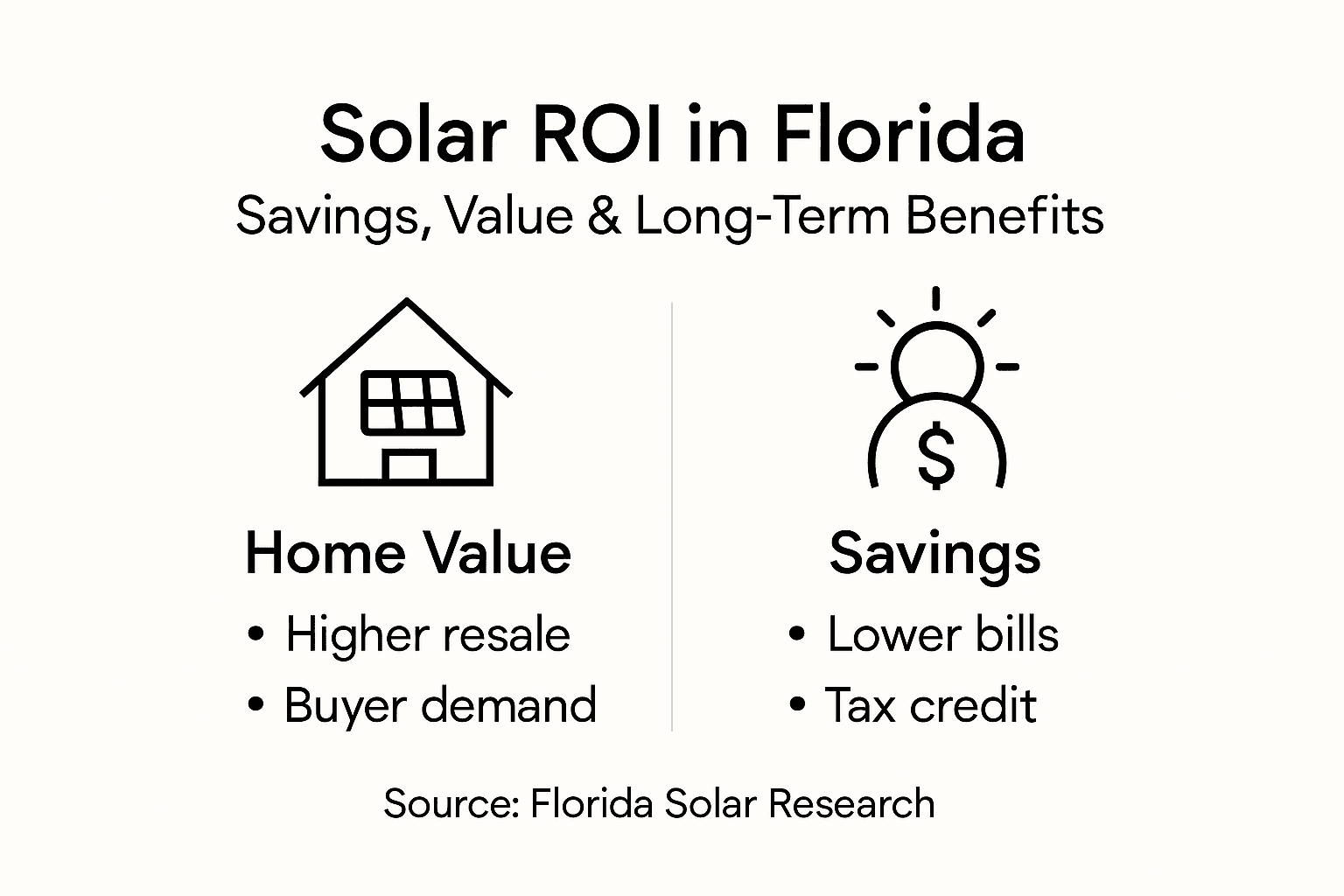
This table summarizes the long-term financial and environmental advantages of solar adoption in Florida:
| Benefit Category | Key Long-Term Advantage | Impact for Homeowners |
|---|---|---|
| Financial | Lower electric bills over decades | Increases home equity |
| Environmental | Significant greenhouse gas reductions | Supports climate change solutions |
| Resilience | Reliable energy during outages | Greater energy independence |
Solar panels are not just an environmental choice, but a strategic financial investment with measurable economic benefits.
Pro tip: Request a detailed solar investment analysis from a professional to understand your specific potential savings and return on investment.
Environmental Impact and Grid Resilience
Solar energy technologies represent a transformative approach to reducing environmental impact while simultaneously enhancing energy infrastructure resilience. Unlike fossil fuel-based energy systems, solar power generates electricity with zero direct greenhouse gas emissions, positioning it as a critical solution for combating climate change.
Environmental Benefits of Solar Energy:
- Zero direct air pollution
- Minimal carbon footprint during operation
- Reduced reliance on non-renewable resources
- Decreased greenhouse gas emissions
- Sustainable energy production
The environmental lifecycle of solar panels involves some initial manufacturing impacts, but most photovoltaic systems rapidly offset their production energy within 2-4 years of operation. This quick energy payback makes solar a remarkably sustainable long-term energy solution for Florida homeowners committed to reducing their carbon footprint.
Grid Resilience Advantages:
- Distributed energy generation
- Enhanced power system reliability
- Reduced strain on central infrastructure
- Backup power capabilities
- Improved disaster response potential
Solar combined with battery storage creates robust microgrid systems that can maintain power during extreme weather events, a critical consideration for Florida’s hurricane-prone environment. These systems provide energy independence and critical backup during potential grid disruptions.
Solar energy is not just an alternative power source, but a strategic investment in environmental sustainability and community resilience.
Pro tip: Consider integrating battery storage with your solar system to maximize environmental benefits and enhance home energy security.
Harness Florida’s Solar Potential with PES Solar for Lasting Savings and Energy Independence
The article highlights key challenges faced by Florida homeowners such as navigating complex financial incentives, maximizing return on investment, and choosing the right solar technology for their unique property. If you are concerned about rising energy bills, want to increase your property value, or seek a reliable renewable energy solution tailored to Florida’s abundant sunshine, you are not alone. With terms like photovoltaic systems, Federal Investment Tax Credit (ITC), and battery storage now familiar, it’s clear that smart solar adoption requires expert guidance and personalized solutions.
At PES Solar, we specialize in turning these challenges into opportunities. Our trusted local experts guide you through every step from initial site evaluation and financing options to seamless installation of top-tier solar panels and Tesla Powerwall batteries. By partnering with us, you benefit from maximizing tax incentives, reducing your utility bills, and enhancing your home or business resilience against grid outages. Learn more about our comprehensive solar services and how we help Florida residents achieve energy independence.
Ready to transform your Florida property with sustainable solar power?
Discover why so many homeowners are choosing PES Solar for their solar panel installation and system upgrades. Get a free consultation today to unlock the financial and environmental rewards of solar energy. Visit PES Solar now and take the first step toward a brighter energy future.
Frequently Asked Questions
What are the main benefits of investing in solar energy for my home?
Investing in solar energy can lead to significantly lower electricity bills, an increase in property value, protection against rising energy costs, energy independence, and substantial long-term return on investment.
How does solar energy impact the environment?
Solar energy systems produce zero direct greenhouse gas emissions during operation, contributing to reduced air pollution and a smaller carbon footprint, making them a sustainable choice for environmentally conscious homeowners.
What types of solar solutions are available for homeowners?
Homeowners can choose from various solar solutions, including rooftop solar panels, ground-mounted solar arrays, and solar thermal technologies, depending on their property characteristics and energy needs.
How can financial incentives improve the affordability of solar installations?
Federal and state financial incentives, such as the Federal Investment Tax Credit (ITC), can significantly reduce the initial costs of solar installations, making solar power more financially accessible for homeowners.
