
Rising electricity bills and uncertain power outages leave many Florida families searching for control over their energy future. With so much sunshine and supportive policies, the Sunshine State stands out as the perfect place to harness solar power for real savings and greater self-reliance. This guide uncovers the core principles of solar energy in Florida, revealing how smart incentives and advanced technology can increase your home’s value while protecting your bottom line.
Table of Contents
- Florida’s Solar Power: Core Principles Explained
- Types of Solar Solutions for Florida Homes
- How Net Metering and Incentives Work
- Financial Payback, Cost, and Value Increase
- Energy Independence and Storm Resilience
Key Takeaways
| Point | Details |
|---|---|
| Florida’s Solar Advantage | Florida’s abundant sunlight and supportive policies make it a leading state for solar energy adoption. |
| Diverse Solar Solutions | Homeowners can choose from various solar technologies tailored to individual energy needs and budgets. |
| Financial Incentives | Substantial federal and state incentives significantly lower the costs of solar installation, enhancing its economic appeal. |
| Energy Independence | Solar power, combined with battery storage, offers resilience during storms and energy independence during grid outages. |
Florida’s Solar Power: Core Principles Explained
Florida’s solar energy landscape represents a remarkable transformation, positioning the Sunshine State as a pioneering renewable energy hub. Unlike other regions, Florida’s unique geographic and regulatory environment creates extraordinary opportunities for solar power adoption. Comprehensive solar research has demonstrated that the state’s abundant sunlight and progressive energy policies make it an ideal location for transitioning toward sustainable electricity generation.
The core principles driving Florida’s solar power revolution center on three critical factors: natural solar potential, technological innovation, and strategic economic incentives. Florida receives approximately 237 days of sunshine annually, providing an exceptional natural foundation for photovoltaic energy production. Advanced solar panel technologies now convert more than 22% of captured sunlight into electricity, significantly improving efficiency compared to earlier generations of solar systems.
Political and regulatory support has been instrumental in Florida’s solar expansion. State policies have gradually removed barriers to solar installation, enabling homeowners and businesses to more easily invest in renewable energy infrastructure. Solar capacity growth has accelerated, with utility-scale solar projects dramatically increasing across the state. These developments demonstrate a strategic commitment to diversifying energy resources and reducing carbon emissions.
Pro tip: Research local solar installation companies that offer comprehensive assessments and can help you navigate available state and federal tax incentives for maximum financial benefit.
Types of Solar Solutions for Florida Homes
Florida homeowners have multiple solar energy solutions available, each designed to maximize the state’s exceptional solar potential. Solar technologies for residential use primarily include photovoltaic (PV) systems, solar thermal solutions, and integrated energy management approaches. These options allow homeowners to customize their renewable energy strategy based on specific energy needs, budget constraints, and property characteristics.
Photovoltaic (PV) panel systems represent the most popular and versatile solar solution for Florida homes. These systems directly convert sunlight into electricity, with modern panels achieving energy conversion rates exceeding 22%. Homeowners can choose between monocrystalline, polycrystalline, and thin-film panel technologies, each offering unique performance characteristics. Residential solar configurations typically include rooftop installations, ground-mounted arrays, and increasingly sophisticated integrated solar roof designs that blend seamlessly with existing architectural styles.
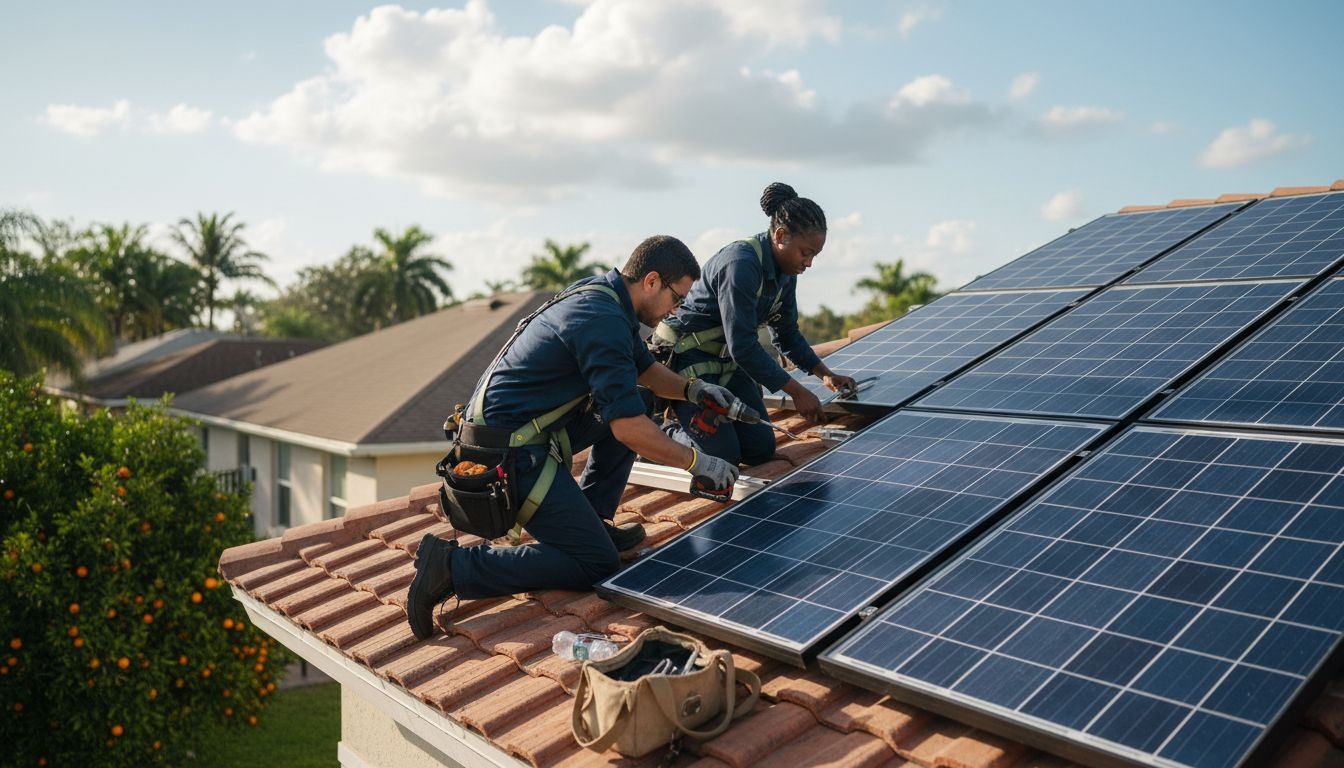
Beyond traditional electricity generation, Florida homeowners can also implement complementary solar technologies like solar water heating systems. These specialized solutions use solar thermal collectors to heat water, significantly reducing electricity consumption associated with traditional water heating methods. Some advanced residential solar setups now incorporate battery storage systems, enabling homeowners to store excess energy generated during peak sunlight hours for use during evening or cloudy periods, further enhancing energy independence and cost savings.
Here’s a summary comparing Florida’s primary residential solar options and their benefits:
| Solar Solution Type | Main Purpose | Key Benefit for Homeowners | Example Application |
|---|---|---|---|
| Photovoltaic (PV) Panels | Generates household electricity | Lower utility bills with clean energy | Rooftop solar installation |
| Solar Thermal Systems | Heats water using sunlight | Cuts water heating costs | Solar water heater for showers |
| Battery Storage | Stores excess solar energy | Backup power during outages | Home battery for storms |
Pro tip: Consult with local solar installation professionals who can conduct a comprehensive site assessment to determine the most efficient solar solution tailored specifically to your home’s unique energy profile and structural characteristics.
How Net Metering and Incentives Work
Net metering represents a revolutionary approach to solar energy economics, allowing Florida homeowners to maximize their renewable energy investment. Net metering policies enable solar system owners to receive credits for excess electricity they generate and feed back into the power grid. This means when your solar panels produce more electricity than your home consumes, the surplus is converted into energy credits that offset future utility bills, effectively turning your electricity meter backwards and creating significant long-term savings.
Florida’s solar incentive landscape includes multiple financial mechanisms designed to make solar adoption more accessible and affordable. The federal Investment Tax Credit remains the cornerstone of these incentives, allowing homeowners to deduct a substantial percentage of their solar installation costs from federal tax obligations. State-level incentives complement these federal benefits, providing additional financial support through property tax exemptions and specialized solar rebate programs. These layered incentives dramatically reduce the upfront costs of solar installation, making renewable energy more economically attractive for Florida residents.
The mechanics of net metering work through a straightforward process of energy generation and credit allocation. During peak sunlight hours, solar panels often generate more electricity than a home immediately requires. Instead of wasting this excess energy, the electricity is transmitted back to the local utility grid, and homeowners receive kilowatt-hour credits. These credits can then be applied during periods of lower solar production, such as nighttime or cloudy days, effectively creating a banking system for renewable energy that provides consistent financial benefits and increased energy independence.
Pro tip: Request a detailed solar energy assessment from a certified professional to understand exactly how net metering and local incentives can be specifically optimized for your unique home energy profile.
Financial Payback, Cost, and Value Increase
Solar investments in Florida represent a strategic financial decision that extends far beyond traditional energy expenses. Homeowners can expect a comprehensive financial transformation, with solar panel systems typically achieving full cost recovery between 7 to 10 years. The initial investment ranges from $15,000 to $25,000 for an average residential system, but substantial federal tax credits and state incentives can reduce these upfront costs by up to 30%, dramatically improving the overall economic proposition.
The value increase for solar-equipped homes is particularly compelling in Florida’s real estate market. Studies consistently demonstrate that homes with solar installations command premium pricing, often selling for 4.1% to 6.8% more than comparable properties without solar systems. This translates to an average value increase of approximately $15,000 for a median-priced home, effectively offsetting installation costs while providing a significant return on investment. Potential buyers recognize solar panels as a valuable asset that promises reduced electricity expenses and enhanced energy independence.
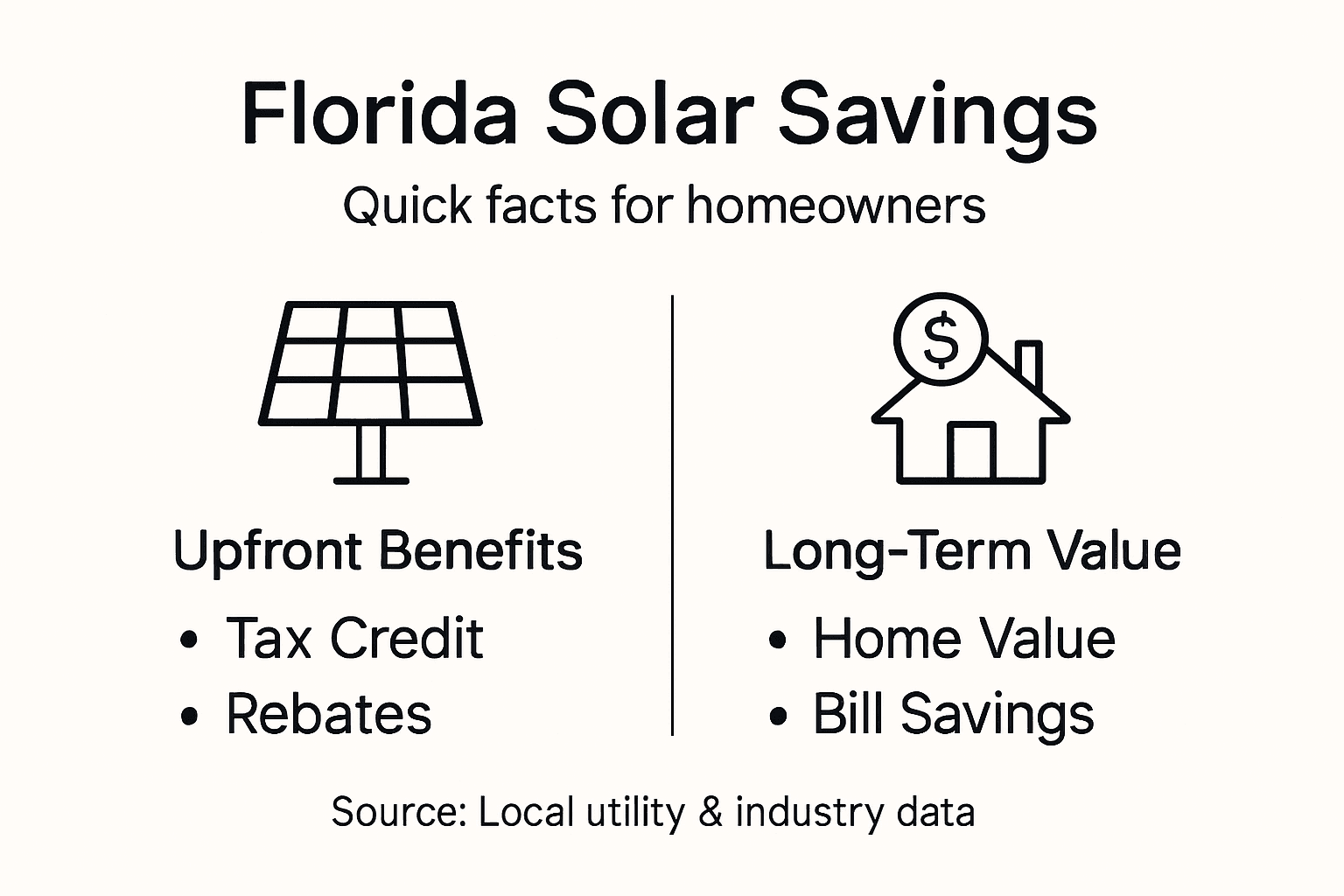
Financial benefits extend beyond immediate energy savings and property value appreciation. Florida homeowners can leverage multiple economic advantages, including federal tax credits, property tax exemptions for solar installations, and net metering policies that generate electricity credits. The cumulative financial impact creates a multi-layered economic benefit structure. Typical residential solar systems can generate annual electricity savings between $1,200 to $1,500, depending on system size and energy consumption patterns, presenting a compelling long-term financial strategy for energy management.
The table below summarizes financial factors and value impact when investing in solar in Florida:
| Financial Factor | Typical Range/Value | Long-Term Impact |
|---|---|---|
| System Payback Period | 7–10 years | Fast return on investment |
| Initial Cost | $15,000–$25,000 | Reduced by incentives |
| Home Value Increase | 4.1%–6.8% premium | Higher resale price |
| Annual Savings | $1,200–$1,500 | Ongoing yearly cost reduction |
Pro tip: Calculate your precise solar return on investment by requesting a comprehensive financial analysis that accounts for your specific energy consumption, roof characteristics, and available local incentives.
Energy Independence and Storm Resilience
Florida homeowners increasingly recognize solar energy as a critical strategy for achieving true energy independence and enhanced storm resilience. Hurricane panel performance has dramatically improved, with modern solar installations designed to withstand extreme weather conditions common in the Sunshine State. Advanced mounting systems and impact-resistant panel technologies now enable solar arrays to endure wind speeds up to 160 miles per hour, providing both energy generation and structural protection during severe weather events.
Energy independence through solar power means more than just generating electricity. It represents a comprehensive approach to managing energy consumption and maintaining critical power during grid disruptions. Battery storage systems integrated with solar panels allow homeowners to store excess energy, creating a reliable backup power source during hurricanes, tropical storms, and unexpected utility outages. This capability becomes especially crucial in Florida, where extreme weather can cause prolonged electricity interruptions, potentially leaving traditional grid-dependent homes without power for days or even weeks.
The resilience provided by solar plus battery storage extends beyond personal convenience. During major storm events, solar-equipped homes can serve as critical community resources, maintaining power for essential medical equipment, communication devices, and emergency lighting. This decentralized energy approach transforms individual solar installations into a network of reliable power sources, reducing strain on the broader electrical grid and providing a layer of community-wide energy security that traditional power infrastructure cannot match.
Pro tip: Consult with local solar professionals about integrated battery storage solutions that can provide seamless power transition during storm-related grid failures.
Discover How Solar Power Can Transform Your Florida Home Today
If you are ready to overcome the challenge of high energy bills and want to achieve real energy independence while increasing your property value, switching to solar is the smart solution. Florida’s abundant sunshine gives you a unique opportunity to benefit from net metering, tax incentives, and advanced battery storage, but navigating these options can feel overwhelming without expert guidance.
At PES Solar, we specialize in helping homeowners like you unlock the full financial and environmental advantages of solar energy. From high-efficiency solar panel installation using trusted brands to integrated Tesla Powerwall batteries that boost your storm resilience, our team crafts personalized solutions tailored to your home’s specific needs.
Take control of your energy future now with a free consultation that explains exactly how you can maximize savings through Florida’s unique solar incentives. Don’t wait to make your home more sustainable and valuable.
Explore our solar services and start saving today.
Get your personalized solar plan from Florida’s trusted experts at PES Solar. Act now to take advantage of rising incentives and begin lowering your energy costs immediately.
Frequently Asked Questions
What types of solar solutions are available for homeowners in Florida?
Florida homeowners can choose from various solar solutions, including photovoltaic (PV) panel systems, solar thermal systems, and battery storage solutions. PV panels convert sunlight into electricity, while solar thermal systems heat water using solar energy. Battery storage systems allow homeowners to store excess energy for later use.
How does net metering work for solar energy systems?
Net metering allows solar system owners to receive credits for excess electricity generated and fed back into the power grid. This means that when your solar panels produce more electricity than your home needs, the surplus is converted into credits that offset future utility bills, effectively saving you money.
What are the financial incentives available for switching to solar in Florida?
Florida residents can benefit from several incentives, including the federal Investment Tax Credit, which allows homeowners to deduct a percentage of solar installation costs from their federal taxes. Additional state-level incentives, such as property tax exemptions and solar rebate programs, further reduce the overall financial burden of solar installation.
How long does it take to see a return on investment from solar panels?
Homeowners in Florida can expect to fully recover their investment in solar panels within 7 to 10 years. The initial installation costs range from $15,000 to $25,000 but can be significantly lowered through available tax credits and incentives, making solar energy a financially sound choice in the long run.
