
Faced with rising energy bills and unpredictable costs, many Florida business owners are searching for practical ways to gain control over expenses while supporting sustainable growth. Installing solar panels can unlock powerful financial rewards, especially through business solar incentives designed to reduce upfront investment. This guide breaks down how federal tax credits, state exemptions, and utility rebates combine to make clean energy adoption a smart, cost-saving strategy for Florida enterprises.
Table of Contents
- Understanding Business Solar Incentives
- Types of Incentives Available in Florida
- How Federal Tax Credits Impact Savings
- Net Metering and Utility Programs Explained
- Property Tax and Sales Tax Exemptions
- Common Mistakes When Applying Incentives
Key Takeaways
| Point | Details |
|---|---|
| Solar Incentives Boost Adoption | Federal and state solar incentives significantly reduce upfront costs, making renewable energy more accessible for businesses. |
| Federal Tax Credits are Integral | The Federal Investment Tax Credit provides up to 30% off solar project costs, greatly enhancing financial feasibility. |
| Net Metering Saves Money | Florida’s net metering policies allow businesses to earn credits for excess electricity produced, effectively lowering energy expenses. |
| Consult Experts for Maximum Benefits | Engaging a solar tax professional can help businesses optimize available incentives and avoid common application mistakes. |
Understanding Business Solar Incentives
Business solar incentives represent a powerful financial mechanism designed to accelerate renewable energy adoption among commercial enterprises in Florida. These strategic financial benefits help offset the substantial upfront costs associated with solar installations, making clean energy more accessible and economically attractive for small and medium-sized businesses.
The landscape of solar incentives encompasses multiple layers of financial support, primarily driven by federal and state-level policies. Federal tax credits for solar investments have become increasingly robust, particularly with the passage of the Inflation Reduction Act of 2022. This legislation provides businesses with significant tax credits that can cover up to 30% of their solar project expenditures, dramatically reducing the financial barriers to renewable energy adoption.
Key business solar incentives in Florida typically include:
- Investment Tax Credits (ITCs) that provide direct dollar-for-dollar reductions in income tax liability
- State-level property tax exemptions for solar equipment installations
- Performance-based incentives that reward energy production
- Accelerated depreciation benefits for solar infrastructure
- Grant programs supporting clean energy technology deployment
Businesses considering solar investments should understand that these incentives are not just financial tools, but strategic opportunities to reduce long-term energy costs, enhance sustainability credentials, and contribute to Florida’s clean energy transition. The combination of federal tax credits and state-level support can significantly improve the economic calculus of solar projects.
Pro tip: Consult with a solar energy tax professional to maximize your specific incentive opportunities and ensure comprehensive financial optimization of your solar investment.
Types of Incentives Available in Florida
Florida’s solar incentive landscape offers a diverse range of financial opportunities for businesses looking to invest in renewable energy. Renewable energy incentive programs provide multiple avenues for businesses to offset solar installation costs and maximize their return on investment. These incentives span federal, state, and utility-level support mechanisms designed to make solar adoption more economically attractive.
The primary types of solar incentives available for Florida businesses include:
- Federal Investment Tax Credit (ITC) offering up to 30% of total project costs
- Property Tax Exemptions for solar equipment installations
- Sales Tax Exemptions on solar system purchases
- Net Metering Programs allowing energy credit for excess electricity generation
- Performance-Based Incentives rewarding energy production
- Utility Rebate Programs providing direct financial support
While Florida does not currently offer a state-specific solar tax credit, the combination of federal incentives and utility-level programs creates a robust financial framework for businesses. The state’s approach emphasizes net metering policies that enable businesses to receive credit for surplus energy generated by their solar installations, effectively reducing overall energy expenses.

Utilities across Florida play a significant role in supporting solar adoption through targeted incentive programs. Municipal and investor-owned utilities often provide additional financial support, rebates, and favorable terms that can further enhance the economic viability of commercial solar projects.
Pro tip: Conduct a comprehensive review of available incentives with a solar energy consultant to develop a tailored strategy that maximizes your specific financial benefits.
Here’s how major Florida solar incentive types impact business savings:
| Incentive Type | Main Benefit | Example of Financial Impact |
|---|---|---|
| Federal Tax Credit | 30% cost reduction | $30,000 off $100,000 system |
| Property Tax Exemption | Avoids increased taxes | No property tax hike post-installation |
| Net Metering | Earns utility credits | Reduced monthly electric bills |
| Utility Rebates | Direct cash or bill credits | $500 to $5,000 off project cost |
| Sales Tax Exemption | Cuts upfront costs | No 6% sales tax on solar equipment |
How Federal Tax Credits Impact Savings
Federal tax credits have transformed the economic landscape for solar investments, providing businesses with substantial financial incentives to transition to renewable energy. Federal solar tax credits offer businesses a powerful mechanism to dramatically reduce the overall cost of solar installations through direct tax liability reductions.
The key components of federal tax credits for solar investments include:
- 30% Tax Credit applicable for solar projects installed between 2022 and 2025
- Dollar-for-Dollar Tax Reduction directly lowering tax liability
- Carry-Forward Provisions allowing unused credits to be applied in subsequent tax years
- Wage and Apprenticeship Compliance enabling maximum credit potential
- Domestic Content Bonuses for using American-manufactured equipment
- Additional Performance-Based Incentives
Inflation Reduction Act provisions have significantly enhanced these tax credit opportunities by extending and expanding available benefits. Businesses can now leverage more comprehensive financial support, effectively reducing solar investment costs and accelerating renewable energy adoption.
The strategic impact of these tax credits extends beyond immediate financial savings. By offsetting a substantial portion of solar installation expenses, federal incentives enable businesses to achieve faster return on investment, improve long-term energy cost stability, and demonstrate environmental responsibility.
Pro tip: Consult a tax professional specialized in renewable energy credits to maximize your specific solar investment tax benefits.
Net Metering and Utility Programs Explained
Net metering represents a critical financial mechanism that transforms how businesses approach solar energy production and consumption in Florida. Net metering policies enable solar system owners to receive direct credits for electricity exported back to the electrical grid, creating a powerful economic incentive for renewable energy investments.
The key features of Florida’s net metering programs include:
- Full Retail Rate Credits for excess electricity generation
- System Size Limits up to 2 megawatts (MW)
- Monthly Credit Rollover for unused energy production
- Grid Integration without complex battery storage requirements
- Utility-Specific Credit Structures
- Annual Reconciliation of accumulated energy credits
Utility net metering rules vary across different types of electric providers in Florida. Investor-owned utilities are mandated to offer standardized net metering, while municipal utilities and cooperatives have more flexibility in designing their specific credit and compensation structures. This approach allows for tailored approaches that accommodate diverse business energy needs.
The strategic value of net metering extends beyond immediate financial benefits. By creating a direct economic incentive for solar production, these programs encourage businesses to invest in renewable infrastructure, reduce grid dependency, and contribute to Florida’s broader sustainability goals.
Pro tip: Carefully review your specific utility’s net metering policies and design your solar installation to maximize energy credit potential.
Property Tax and Sales Tax Exemptions
Florida offers strategic tax incentives that make solar investments significantly more attractive for businesses by reducing financial barriers through solar tax exemption programs. These exemptions effectively lower the upfront and ongoing costs associated with solar energy system installations, creating a more compelling economic case for renewable energy adoption.
The key tax exemption benefits for businesses include:
- Property Tax Protection preventing increased assessments from solar installations
- Sales Tax Exemptions on solar equipment purchases
- Zero Valuation Increase for solar system property value
- Direct Cost Reduction for solar infrastructure investments
- Permanent Equipment Exemptions
- Comprehensive Financial Support
Property tax exemption mechanisms in Florida are designed to specifically support renewable energy investments by preventing solar equipment from incrementing overall property valuation. This approach means businesses can install solar systems without triggering higher property tax assessments, making the financial calculus of solar adoption more straightforward and appealing.
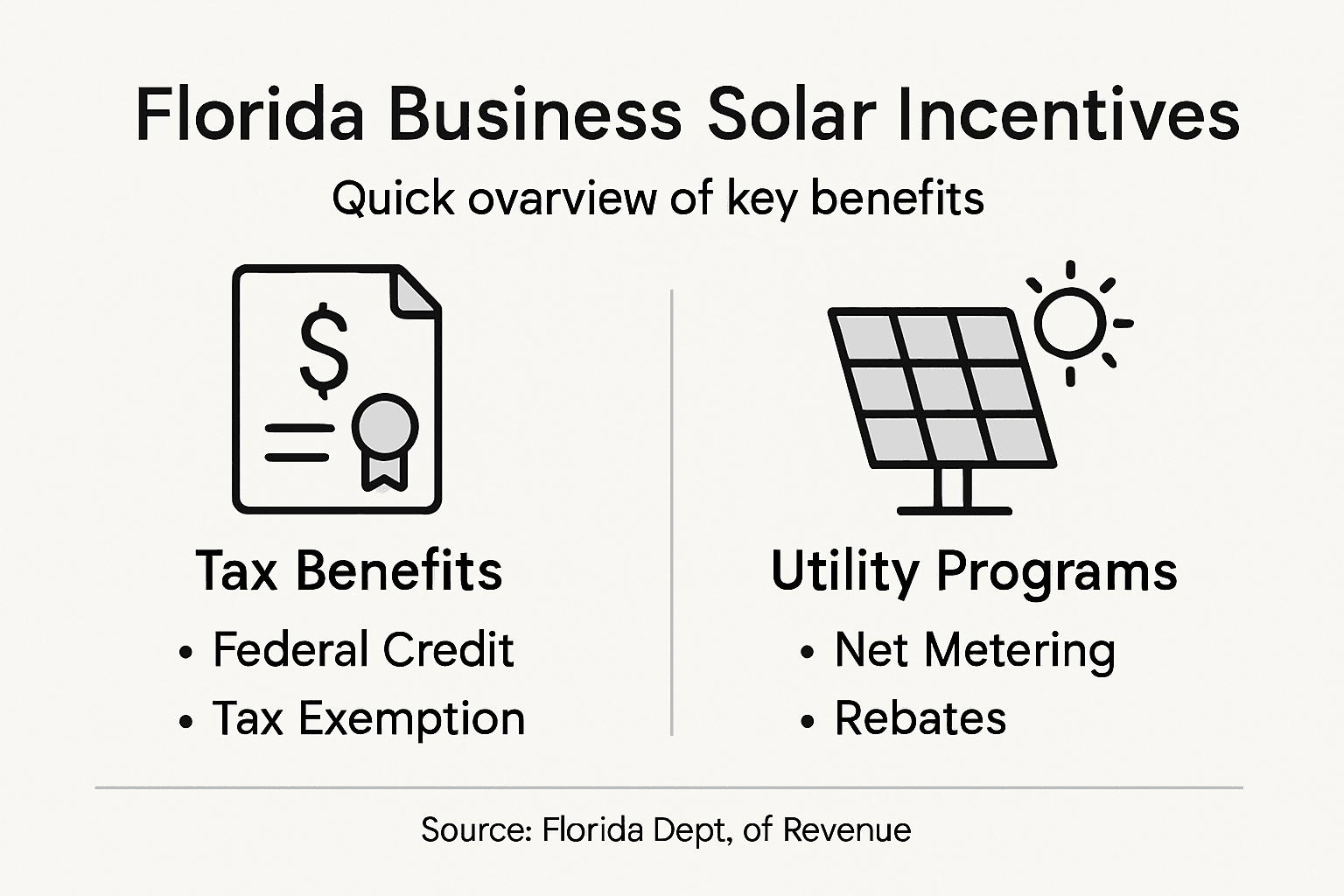
These tax exemptions represent more than simple cost savings—they are strategic policy tools engineered to accelerate Florida’s transition to renewable energy. By removing financial disincentives, the state encourages businesses to invest in sustainable infrastructure that benefits both individual enterprises and the broader community.
Pro tip: Consult a local tax professional to understand the specific tax exemption details applicable to your unique business solar project.
Common Mistakes When Applying Incentives
Navigating solar incentives requires careful attention to detail and proactive planning. Tax credit application errors can significantly reduce or eliminate potential financial benefits for businesses investing in solar technology.
Common mistakes businesses frequently encounter include:
- Incomplete Documentation for solar equipment purchases
- Missed Filing Deadlines for tax credit claims
- Incorrect Equipment Qualification
- Failing to Verify System Eligibility
- Overlooking Specific Utility Requirements
- Neglecting Professional Tax Consultation
Solar installation restrictions extend beyond financial considerations, particularly when navigating local regulations and homeowners association guidelines. Businesses must carefully research and understand potential installation limitations that could impact their solar investment strategy.
Successful solar incentive application requires meticulous preparation, thorough documentation, and a comprehensive understanding of both federal and state-level requirements. Each step of the process demands careful attention to ensure maximum financial benefit and compliance with complex regulatory frameworks.
Common errors versus best practices when applying for solar incentives:
| Pitfall | Outcome | Best Practice |
|---|---|---|
| Missed deadlines | Loss of financial benefits | Track and calendar all due dates |
| Incomplete paperwork | Rejected or delayed claims | Prepare detailed documentation |
| Unqualified equipment | Ineligible for credits | Confirm qualified system lists |
| Skipped professional advice | Suboptimal savings | Hire a solar tax consultant |
Pro tip: Maintain comprehensive records of all solar equipment purchases and consult a tax professional specializing in renewable energy credits to maximize your incentive potential.
Unlock the Full Benefits of Florida Business Solar Incentives with PES Solar
Navigating the complex landscape of federal tax credits, property and sales tax exemptions, and utility net metering programs can feel overwhelming. Many Florida businesses face challenges in maximizing these solar incentives while avoiding common pitfalls like incomplete documentation or missed deadlines. If your goal is to reduce upfront costs, accelerate return on investment, and build long-term energy independence, it is critical to have a trusted partner who understands the details and nuances of these financial benefits.
At PES Solar, we specialize in helping Florida businesses tap into every available incentive while delivering high-quality solar panel installations tailored to your energy needs. With extensive local experience and comprehensive financing options, we guide you through the entire process — from selecting solar systems and understanding tax credits to optimizing net metering benefits. Our solutions include advanced products like Tesla Powerwall batteries and REC solar panels to enhance your energy resilience and savings.
Ready to transform your business into a sustainable energy leader and take advantage of Florida’s incentives today

Contact PES Solar now to request a free consultation and estimate to start saving. Visit PES Solar to learn more about our commercial solar energy services and financing strategies designed specifically for Florida businesses looking to benefit from solar incentives.
Frequently Asked Questions
What are the main business solar incentives available in Florida?
The key business solar incentives in Florida include federal Investment Tax Credits (ITCs), property tax exemptions, performance-based incentives, accelerated depreciation benefits, and utility rebate programs.
How do federal tax credits impact the cost of solar installations for businesses?
Federal tax credits allow businesses to reduce their tax liability by up to 30% of total project costs, effectively lowering the upfront financial burden associated with solar installations.
What is net metering and how does it benefit businesses with solar installations?
Net metering allows businesses to earn credits for excess electricity produced by their solar systems, which can offset their energy costs and lead to significant savings on utility bills.
Are there any common mistakes businesses make when applying for solar incentives?
Common mistakes include incomplete documentation, missed filing deadlines, and failing to verify system eligibility which can lead to reduced or lost financial benefits.
Recommended
- Commercial Solar Tax Incentives: Maximizing Savings In Florida
- 7 Key Commercial Solar Incentives For Florida Businesses
- Solar Incentives In Florida: Boosting Savings And Value
- Why Consider Solar For Your Business In Florida
- Renewable Energy and Smart Consumption Systems | Singleclic
- Solar Panel Installation Tampa FL
- Solar Panel Installation Orlando FL
