
Paying high utility bills in the Florida summer can quickly become frustrating, especially when air conditioning is running nonstop. With Florida’s reputation for strong solar potential and intense sunlight, more homeowners are turning to solar energy as a smart way to lower monthly expenses and add value to their properties. This step-by-step guide shows you how to assess your home’s energy needs, choose the best system, and access solar incentives that make installation more affordable for Florida residents.
Table of Contents
- Step 1: Assess Energy Needs And Property Suitability
- Step 2: Choose Optimal Solar System Components
- Step 3: Secure Financing And Incentives
- Step 4: Schedule Professional Installation
- Step 5: Monitor Performance And Optimize Savings
Quick Summary
| Key Point | Explanation |
|---|---|
| 1. Assess Energy Consumption | Review electricity bills to understand usage patterns and determine the need for a solar system. |
| 2. Evaluate Solar Potential | Check roof orientation, pitch, and shading to ensure optimal performance of solar panels. |
| 3. Understand Financing Options | Familiarize yourself with federal tax credits and local incentives to reduce installation costs. |
| 4. Schedule Professional Installation | Choose certified installers and obtain assessments to ensure proper setup and compliance. |
| 5. Monitor System Performance | Regularly track energy production and conduct annual reviews to maintain efficiency and savings. |
Step 1: Assess Energy Needs and Property Suitability
Knowing your home’s energy requirements and solar potential is the critical first step in maximizing solar benefits for Florida properties. Investigating your home’s energy efficiency helps determine whether solar makes financial and practical sense for your specific situation.
Start by analyzing your current electricity consumption by reviewing past utility bills. Look for patterns in your monthly energy usage, paying special attention to peak consumption periods during Florida’s hot summers when air conditioning demands surge. Calculate your average monthly kilowatt-hour (kWh) usage to understand the size of solar system you’ll need. Typically, a detailed review reveals opportunities for both energy reduction and solar system sizing.
Next, evaluate your property’s solar potential by examining roof characteristics. Key factors include:
- Roof orientation (south-facing roofs are ideal)
- Roof angle and pitch
- Available unshaded roof space
- Structural integrity and age of existing roofing
- Current roof material and condition
Solar installations work best on roofs with direct southern exposure and minimal shade from trees, chimneys, or neighboring buildings. Understanding local energy infrastructure can help you strategically plan your solar investment.
Pro tip: Consider scheduling a professional solar assessment to get precise measurements and expert recommendations tailored to your specific property.
Step 2: Choose Optimal Solar System Components
Selecting the right solar system components is crucial for maximizing energy production and long-term performance in your Florida home. Evaluating solar system components requires careful consideration of several key elements that will impact your system’s efficiency and reliability.
The core components of a solar installation include solar panels, inverters, and mounting hardware. Solar panels come in two primary types: monocrystalline and polycrystalline. Monocrystalline panels are typically more efficient but also more expensive, while polycrystalline panels offer a more budget-friendly option with slightly lower performance. When choosing panels, consider these critical factors:
Here’s a comparison of solar panel types frequently chosen for Florida homes:
| Panel Type | Efficiency Range | Average Lifespan | Typical Upfront Cost |
|---|---|---|---|
| Monocrystalline | 18%-22% | 25+ years | Higher investment |
| Polycrystalline | 15%-17% | 20-25 years | Lower cost option |
| Thin-Film | 10%-13% | 15-20 years | Lowest initial cost |
- Efficiency rating of the panels
- Durability and manufacturer warranty
- Cost per watt of electricity generated
- Aesthetic appearance and design
- Compatibility with your roof structure
The inverter is another crucial component that converts the direct current (DC) electricity generated by your solar panels into alternating current (AC) electricity used in your home. Matching solar modules to system requirements ensures optimal energy conversion and system performance. String inverters, microinverters, and power optimizers each offer unique advantages depending on your specific installation needs.
Pro tip: Consult with a local solar professional who understands Florida’s specific climate and energy requirements to get personalized recommendations for your solar system components.
Step 3: Secure Financing and Incentives
Navigating the financial landscape of solar installation requires understanding the various funding options and incentives available to Florida homeowners. Exploring solar financing programs can significantly reduce your upfront costs and make solar energy more accessible.
Florida offers several compelling financial incentives for solar adopters. The federal solar investment tax credit remains one of the most substantial benefits, allowing homeowners to deduct a percentage of their solar installation costs from federal taxes. Additionally, Florida provides property tax exemptions for solar energy systems, meaning the added value of your solar installation won’t increase your property tax assessment. Key financing and incentive options include:
- Federal solar tax credit (currently 30% of installation costs)
- Property tax exemptions for solar systems
- Low-interest solar loans from local banks
- Utility company rebate programs
- State-specific solar incentives
Home improvement grants can provide additional financial support, with some programs offering up to $10,000 in matching funds that can complement your solar investment. These grants can help offset installation costs and potentially improve your home’s overall energy efficiency and resilience.
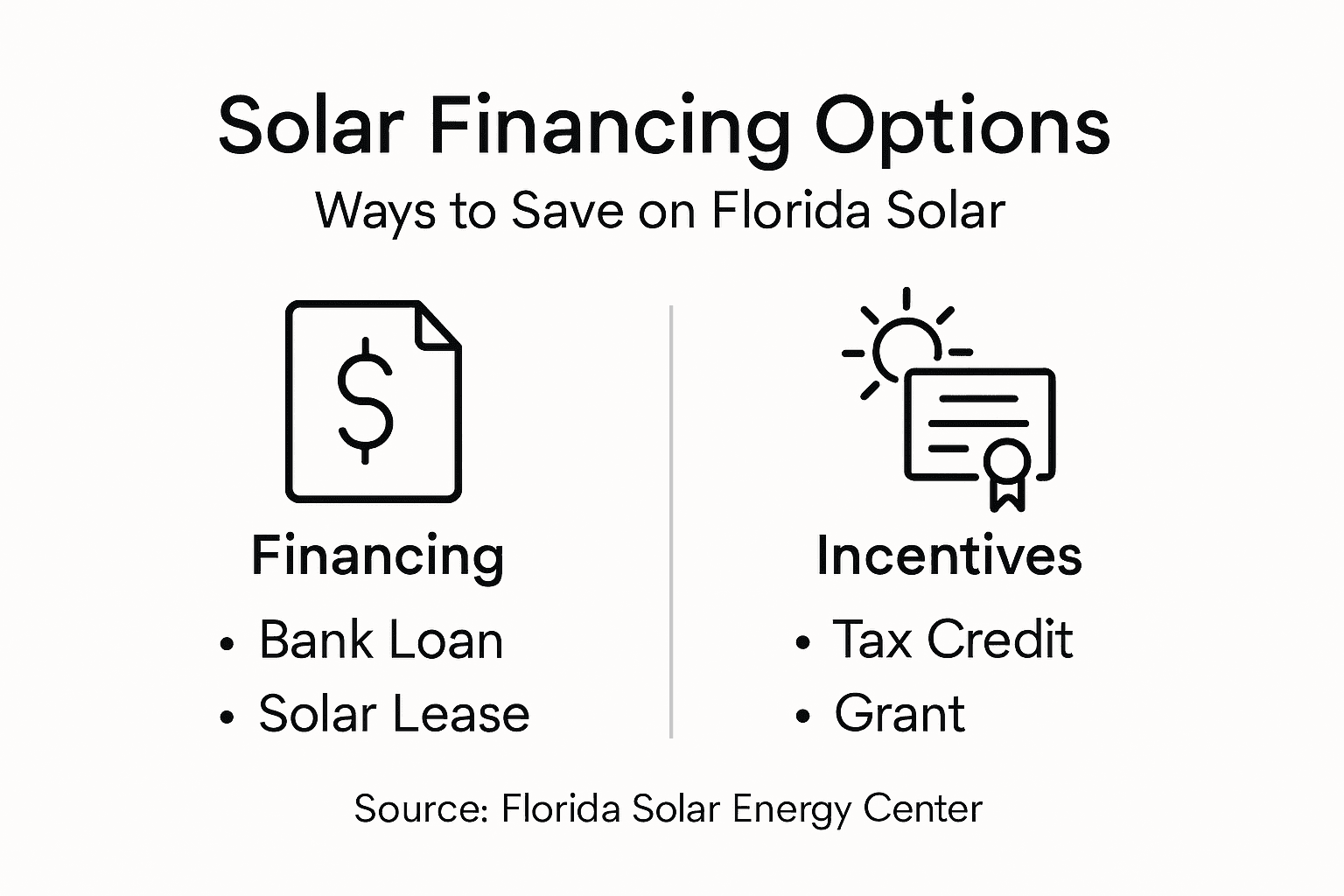
Below is a summary of key solar financing options and their benefits for Florida homeowners:
| Financing Method | Main Benefit | Typical Requirement |
|---|---|---|
| Federal Tax Credit | Lowers total system cost | Sufficient taxable income |
| State Property Exemption | Reduces property tax bill | System must be properly installed |
| Solar Loans | Spread payments over time | Good credit history |
| Utility Rebates | Immediate savings | Utility provider participation |
Pro tip: Consult with a local tax professional to maximize your solar investment tax benefits and ensure you’re capturing every available financial incentive.
Step 4: Schedule Professional Installation
Scheduling a professional solar installation represents the critical transition from planning to actual implementation of your solar energy project. Selecting qualified solar installers requires careful research and strategic evaluation to ensure a smooth, efficient solar system deployment.
The installation process involves several key stages that your chosen professional will navigate. Begin by requesting comprehensive site assessments from multiple certified installers who can provide detailed proposals. During these assessments, expect professionals to:
- Conduct thorough roof structural evaluations
- Measure precise solar panel positioning
- Assess electrical system compatibility
- Develop custom system design
- Provide detailed cost estimates
Solar permitting tools have streamlined the bureaucratic aspects of installation, helping reduce potential delays. Most professional installers will handle permit applications, utility interconnection paperwork, and coordinate necessary inspections, transforming what could be a complex process into a straightforward experience for homeowners.
Pro tip: Request references and verify certifications from potential installers to ensure you’re working with experienced professionals who understand Florida’s specific solar installation requirements.
Step 5: Monitor Performance and Optimize Savings
Tracking your solar system’s performance is crucial for maximizing long-term energy savings and ensuring your investment continues to deliver expected results. Understanding solar system performance allows you to detect potential issues early and maintain optimal energy production.
Modern solar systems come equipped with monitoring technologies that provide real-time data about energy generation and consumption. These digital tools enable you to track your system’s output, identify performance variations, and understand your household’s energy patterns. Key monitoring strategies include:
- Reviewing daily energy production
- Comparing actual vs. predicted output
- Tracking seasonal performance variations
- Identifying potential equipment inefficiencies
- Analyzing energy consumption trends
Solar research centers recommend regular system assessments to maintain peak performance. This might involve checking for potential shading issues, ensuring panel cleanliness, and verifying all electrical connections remain secure. By proactively managing your solar system, you can maximize energy savings and extend the lifespan of your solar investment.
Pro tip: Schedule an annual professional performance review to catch any potential issues that might not be immediately visible through digital monitoring tools.
Unlock the Full Potential of Solar Energy for Your Florida Home
Maximizing solar benefits requires expert guidance to navigate energy needs, optimal system components, and financing options that fit your unique property. If you face challenges like understanding roof suitability or choosing the right panels and inverters, PES Solar offers tailored solutions that simplify every step. Our experienced team leverages local knowledge to ensure your installation is designed for Florida’s climate, helping you lower energy bills, increase property value, and fully capitalize on tax incentives.
Explore how our comprehensive solar services can transform your energy independence today.
Ready to take action and maximize your solar investment? Visit PES Solar now to schedule a free consultation and learn about financing options that make switching to solar both smart and affordable.
Frequently Asked Questions
How can I assess my home’s energy needs for solar benefits?
To assess your home’s energy needs, start by reviewing past utility bills to calculate your average monthly kilowatt-hour usage. Analyze consumption patterns, particularly during peak periods, to determine the size of the solar system required to meet your needs.
What are the ideal roof characteristics for solar panel installation?
The ideal roof for solar panel installation should be south-facing with minimal shade from trees or buildings. Ensure sufficient unshaded roof space and check the structural integrity and roofing material before installation.
What financing options are available for installing solar panels in Florida?
Several financing options exist for solar panel installation in Florida, including federal tax credits, property tax exemptions, and low-interest solar loans. Explore these options to potentially reduce your upfront costs and improve your overall investment.
How should I choose the right solar system components?
Select solar system components by comparing the efficiency, cost, and durability of solar panels, inverters, and mounting hardware. Consider consulting a local solar professional to guide your choice based on your specific needs and Florida’s climate.
What steps should I follow to schedule a professional solar installation?
Begin by researching and requesting site assessments from multiple certified solar installers. Ensure they conduct thorough evaluations and provide detailed proposals for your solar installation to select the best option for your needs.
How can I monitor my solar system’s performance effectively?
You can monitor your solar system’s performance by using built-in monitoring technologies that give real-time data on energy production. Regularly review daily energy output and compare predicted versus actual performance to identify any inefficiencies.
