
Looking for ways to lower high electricity bills in Florida can feel overwhelming as energy prices fluctuate and summer temperatures soar. For homeowners in the Sunshine State, switching to solar offers a practical way to save money and embrace sustainable living. By understanding your home’s solar potential, comparing system options, and exploring financial incentives, you can make a confident decision that delivers both immediate savings and long-term value.
Table of Contents
- Step 1: Assess Your Home’s Solar Potential
- Step 2: Select Cost-Effective Solar Panel Options
- Step 3: Choose Smart Financing and Incentives
- Step 4: Optimize System Placement and Usage
- Step 5: Monitor Performance and Track Savings
Quick Summary
| Key Point | Explanation |
|---|---|
| 1. Assess your home’s solar potential | Evaluate your roof’s condition, sunlight exposure, and orientation before investing in solar panels. |
| 2. Choose efficient solar panel options | Look for panels with high efficiency, durability, and compatibility with Florida’s climate for better savings. |
| 3. Explore financing and incentives | Take advantage of federal and state incentives to significantly reduce the initial cost of your solar installation. |
| 4. Optimize placement for maximum output | Ensure your panels are positioned properly to capture maximum sunlight and minimize shading for higher energy production. |
| 5. Regularly monitor system performance | Keep track of your solar panels’ performance and energy savings to address issues early and maximize returns. |
Step 1: Assess Your Home’s Solar Potential
Determining whether your Florida home is suitable for solar panel installation requires a strategic assessment of multiple factors that directly impact potential energy generation and cost savings. Understanding your home’s solar potential will help you make an informed decision about investing in renewable energy.
To effectively evaluate your solar readiness, you’ll want to analyze several critical elements. First, examine your roof’s condition and orientation. Solar panels perform best on south-facing roofs with minimal shading and a pitch between 15 to 40 degrees. Mapping solar energy potential using specialized tools can provide precise estimates for your specific location.
Key factors to consider during your assessment include:
- Roof condition: Check for structural integrity and remaining lifespan
- Sunlight exposure: Measure daily direct sunlight hours
- Roof angle and direction: Ideal for maximum solar energy capture
- Existing electrical infrastructure: Compatibility with solar systems
- Local building regulations: Zoning and permit requirements
Accuracy in assessing your home’s solar potential can significantly impact your long-term energy savings and system performance.
Utilize online solar assessment tools to get preliminary estimates of potential energy production and financial benefits. These resources can help you understand the feasibility and expected return on investment for solar panels in your specific Florida home.
Pro tip: Consider scheduling a professional solar assessment to get the most accurate and comprehensive evaluation of your home’s solar potential.
Step 2: Select Cost-Effective Solar Panel Options
Choosing the right solar panels is crucial for maximizing your Florida home’s energy savings and long-term return on investment. The solar panel market offers various technologies and options that can significantly impact your system’s overall performance and cost-effectiveness.
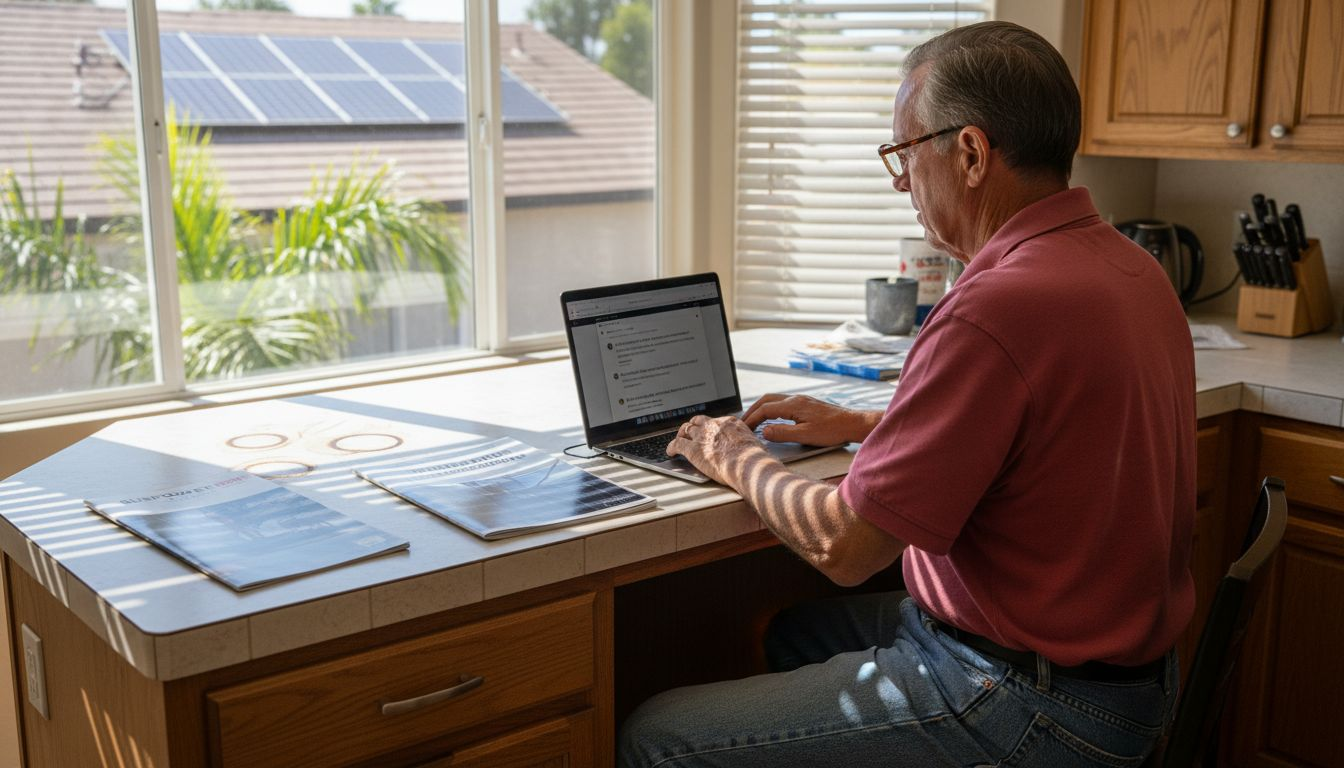
When selecting solar panels, consider multiple factors that influence their efficiency and financial benefits. Photovoltaic technologies have evolved dramatically, with modern panels offering improved performance at lower costs. Understanding the key characteristics of different panel types will help you make an informed decision that aligns with your energy goals and budget.
Critical considerations for selecting cost-effective solar panels include:
- Panel efficiency: Higher efficiency panels generate more electricity per square foot
- Durability: Look for panels with robust warranties and long-expected lifespans
- Climate compatibility: Choose panels designed for Florida’s specific weather conditions
- Installation costs: Compare total system expenses, not just panel prices
- Performance guarantees: Verify manufacturer’s long-term power output commitments
Investing time in comparing solar panel options can result in substantial long-term energy savings for your home.
The Homeowner’s Guide to Solar recommends obtaining multiple installation quotes and carefully evaluating each system’s components. Pay close attention to not just the panel type, but also inverter quality, mounting equipment, and potential future expansion capabilities.
Pro tip: Request detailed performance estimates for each panel type and compare their projected energy production under Florida’s specific sunlight conditions.
Step 3: Choose Smart Financing and Incentives
Navigating the financial landscape of solar panel installation requires strategic planning and a comprehensive understanding of available funding options and incentives. Maximizing your solar investment means carefully exploring multiple financial pathways that can significantly reduce your upfront costs and accelerate your return on investment.
Florida homeowners have access to an array of renewable energy financing programs designed to make solar more affordable. These programs include federal tax credits, state-level rebates, and specialized loan options that can dramatically lower the initial expense of transitioning to solar energy.
Key financial strategies to consider include:
- Federal tax credits: Claim substantial deductions on your solar system installation
- State incentives: Explore Florida-specific solar rebate programs
- Property assessed clean energy (PACE) financing: Low-interest loans tied to property taxes
- Solar renewable energy certificates: Additional income through energy production
- Utility company incentives: Potential credits for excess energy generation
Strategic financial planning can reduce your solar installation costs by up to 50% through targeted incentives and credits.
The U.S. Energy Information Administration recommends carefully documenting all potential incentives and comparing multiple financing options. Consider consulting with a solar financial advisor who can help you navigate the complex landscape of available programs and maximize your potential savings.
Pro tip: Request a comprehensive financial analysis that includes all potential tax credits, rebates, and incentives specific to your Florida home and energy consumption profile.
Here’s how popular solar financing options differ for Florida homeowners:
| Financing Method | Upfront Cost Impact | Repayment Structure | Key Advantage |
|---|---|---|---|
| Cash Purchase | Highest initial outlay | One-time payment | Immediate full ownership |
| Solar Loan | Low to moderate upfront | Monthly fixed payments | Spreads cost over years |
| Lease or Power Purchase Agreement | Minimal upfront | Monthly fixed payments | No maintenance responsibility |
| PACE Financing | Low upfront, added to taxes | Paid via property tax bill | No credit check required |
Step 4: Optimize System Placement and Usage
Maximizing your solar panel system’s performance goes beyond installation—it requires strategic placement and ongoing management to ensure you’re generating the most energy possible for your Florida home. Understanding how to position and utilize your solar panels can significantly impact your long-term energy savings and system efficiency.
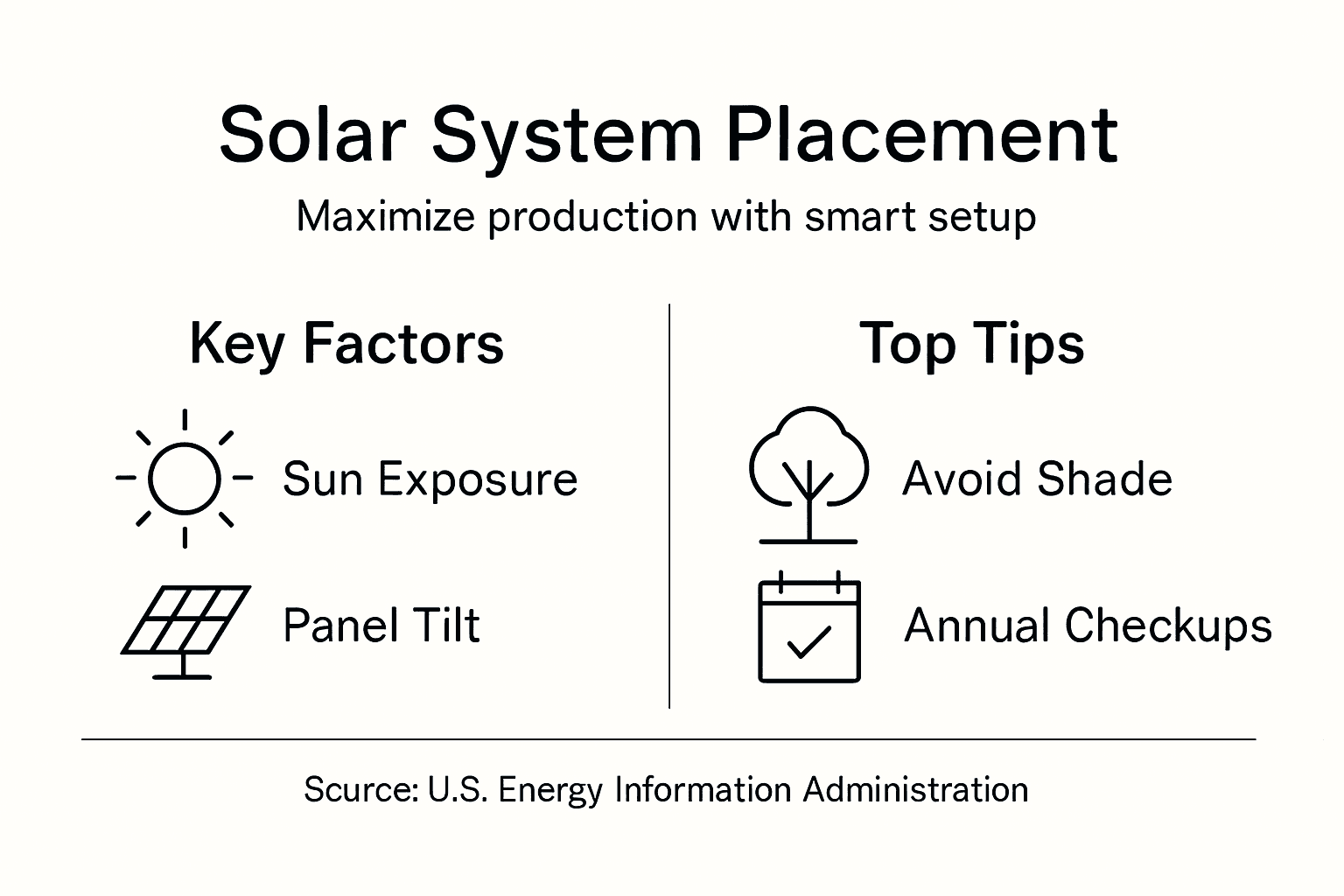
The key to optimizing solar performance starts with strategic system placement. Careful consideration of roof orientation, panel angle, and potential shading can dramatically increase your system’s electricity generation. In Florida’s sunny climate, these details can mean the difference between good and exceptional solar performance.
Critical optimization strategies include:
- Roof orientation: Position panels to maximize southern exposure
- Panel tilt: Adjust angles to capture maximum sunlight throughout the year
- Shade management: Minimize obstructions from trees and surrounding structures
- Energy monitoring: Track daily and seasonal production levels
- Regular maintenance: Keep panels clean and inspect for potential issues
Proper solar panel placement can increase annual energy production by up to 30% compared to suboptimal installations.
Shading analysis techniques can help you understand how even small amounts of shade can impact your system’s overall performance. Consider using solar tracking tools or consulting with a professional to identify the most effective panel positioning for your specific property.
Pro tip: Schedule an annual professional assessment of your solar system to ensure optimal placement and identify any potential performance-reducing factors.
The following table summarizes how different panel placement choices impact overall energy production:
| Placement Factor | Optimal Setting | Effect on Production | Typical Adjustment Needed |
|---|---|---|---|
| Roof Direction | True south-facing | Highest annual output | Realign panels if possible |
| Panel Angle | 15-40 degree tilt | Maximizes sunlight capture | Adjust mount angle |
| Shading | Absolutely minimal | Prevents significant losses | Trim overhanging trees |
Step 5: Monitor Performance and Track Savings
Effective solar energy management goes beyond installation—it requires consistent monitoring and analysis to maximize your financial returns and system efficiency. Understanding how to track your solar panel performance will help you identify opportunities for optimization and ensure you’re getting the most value from your investment.
Solar performance data tracking provides critical insights into your system’s long-term energy generation and potential degradation. By regularly analyzing your solar production, you can make informed decisions about maintenance, potential upgrades, and overall energy consumption strategies.
Key monitoring strategies include:
- Real-time performance tracking: Use digital monitoring platforms
- Monthly energy bill comparison: Measure actual savings against projections
- System efficiency metrics: Track kilowatt-hours produced
- Seasonal performance analysis: Understand variations in energy generation
- Degradation rate monitoring: Identify potential system performance issues
Consistent monitoring can help you detect and address performance issues before they significantly impact your energy savings.
Performance estimation tools can help you compare your actual system output against expected generation levels. These resources provide valuable benchmarks that allow you to understand whether your solar installation is meeting performance expectations.
Pro tip: Set up automated monthly reports from your solar monitoring system to easily track and visualize your energy production and savings.
Unlock Your Florida Home’s Full Solar Potential with PES Solar
Maximizing solar savings requires expert guidance to assess your home’s unique factors like roof condition, panel placement, and financing options. PES Solar understands the specific challenges Florida homeowners face in optimizing solar energy performance and navigating complex incentives. From selecting high-efficiency REC solar panels to integrating Tesla Powerwall batteries for smarter energy use, we tailor solutions that increase your energy independence and reduce monthly bills.
Our comprehensive services remove the guesswork around system placement, warranty choices, and available tax credits. Don’t settle for less when it comes to harnessing the sun’s power effectively. Trust PES Solar’s experienced team to deliver customized installations backed by transparent financing plans designed to maximize your return on investment.
Start your journey toward smarter solar savings today with a free estimate from PES Solar.
Looking for tailored solar solutions that fit your goals and Florida’s unique climate? Explore our full range of services to learn how we can help you optimize your investment.
Ready to transform your home’s energy future and see real financial benefits? Visit PES Solar and schedule your consultation now.
Take control of your energy savings with expert insights and trusted service. Contact PES Solar today for your free solar savings analysis and discover how easy it is to maximize solar benefits for your Florida home.
Frequently Asked Questions
How can I assess my Florida home’s solar potential?
To assess your home’s solar potential, check the roof’s condition, orientation, and sunlight exposure. Start by measuring the daily direct sunlight hours and identifying any shade from trees or nearby structures to determine the best spots for solar panel placement.
What factors should I consider when selecting solar panels for my home?
When choosing solar panels, prioritize panel efficiency, durability, and climate compatibility. Compare warranties and ensure the panels you select are designed to perform well in Florida’s specific weather conditions to maximize energy savings.
How can I leverage financial incentives for solar installation?
Maximize solar savings by exploring federal tax credits, state rebates, and local financing options like property assessed clean energy (PACE) programs. Research available incentives and calculate how they can reduce your upfront installation costs significantly, sometimes by up to 50%.
What steps can I take to optimize the placement and usage of my solar panels?
To optimize solar panel performance, position them to maximize southern exposure, adjust their tilt angle for seasonal sunlight, and minimize any shading. Regularly monitor your system’s performance and keep panels clean to maximize energy production throughout the year.
How do I monitor my solar panel performance effectively?
To monitor performance, utilize digital tracking platforms for real-time data about energy production and system efficiency metrics. Conduct monthly comparisons with your energy bills to ensure your solar panels are performing as expected and make adjustments if necessary.
