
Think solar panels only work when Florida’s sky is perfectly clear? That’s one of the biggest misconceptions holding back homeowners and businesses from embracing renewable energy. Solar technology has evolved far beyond these outdated beliefs, yet myths about cost, performance, and maintenance continue to prevent smart energy decisions. This article cuts through the noise with evidence-based insights, local data, and expert perspectives to help you understand what’s real and what’s fiction about solar energy in the Sunshine State.
Table of Contents
- How Solar Panels Work In Florida’s Weather
- Solar Energy Financials And Incentives In Florida
- Solar Energy Storage And Power Reliability
- Solar Panel Installation And Maintenance Myths
- Environmental Benefits And Misconceptions Of Solar Energy
- Economic Impact Of Solar On Florida Property Values
- Common Solar Myths: What Florida Should Stop Believing
- Explore Professional Solar Solutions For Your Florida Property
Key takeaways
| Point | Details |
|---|---|
| Solar panels work efficiently even on cloudy Florida days | Panels generate 40-70% of typical output under cloud cover using photovoltaic technology. |
| The cost of solar has dropped significantly with incentives | Installation costs have fallen over 40% in the past decade, with tax credits and rebates improving affordability. |
| Battery storage improves reliability during outages | Solar-plus-storage systems provide backup power during Florida’s hurricane season and grid failures. |
| Proper installation prevents roof damage and keeps maintenance low | Professional installation protects roofs while panels require minimal upkeep over their 25+ year lifespan. |
| Solar improves property values and benefits the environment | Homes with solar sell for 3-4% more while offsetting carbon emissions within 1-3 years. |
How solar panels work in Florida’s weather
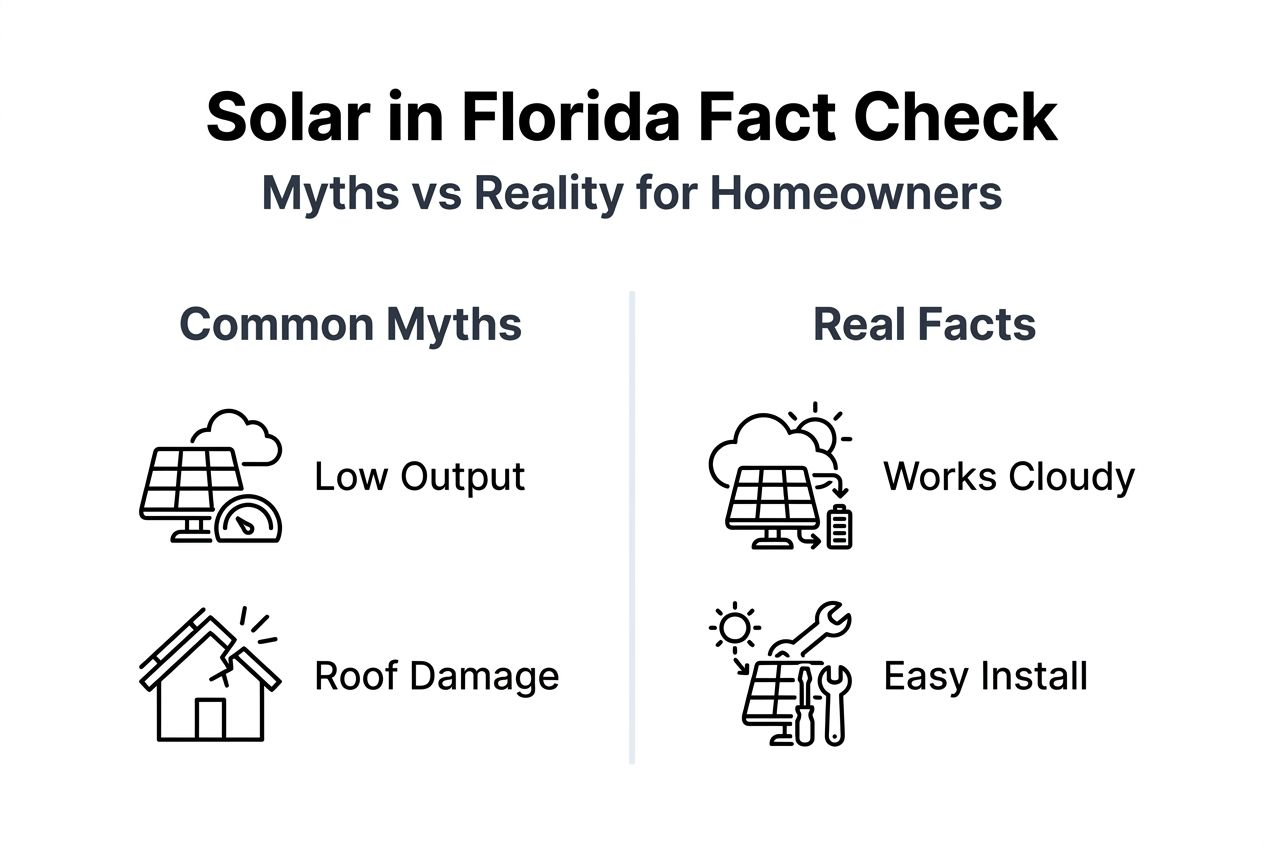
Understanding how photovoltaic technology operates clears up the biggest weather-related misconceptions. Solar panels convert sunlight into electricity through photovoltaic cells, not heat. This distinction matters because solar panels generate significant electricity even on cloudy days, producing 40-70% capacity when overcast.
Florida’s frequent cloud coverage reduces but doesn’t eliminate solar output. The panels still capture diffuse sunlight that penetrates clouds, maintaining steady energy generation throughout the year. Many homeowners worry that Florida’s heat will diminish performance, but cooler temperatures actually enhance panel efficiency compared to extremely hot climates.
Humidity and rain have limited negative effects since panels are designed as weather-resistant systems. Rain actually helps by washing away dust and debris that accumulate on panel surfaces, maintaining optimal performance. Modern solar installations are engineered specifically for Florida’s subtropical climate.
Solar output comparison in Florida weather conditions:
| Weather Condition | Energy Output | Efficiency Notes |
|---|---|---|
| Full sun | 100% capacity | Peak performance hours |
| Partly cloudy | 50-80% capacity | Diffuse light still generates power |
| Overcast/cloudy | 40-70% capacity | Reduced but consistent output |
| Rain | 30-50% capacity | Cleaning effect improves future performance |
Pro Tip: Optimizing panel angle and positioning based on your specific location maximizes generation even on overcast days, compensating for reduced sunlight intensity.
The technology behind why choosing solar energy in Florida makes sense goes beyond simple sun exposure. Even when you wonder are panels affected by rain, the answer reinforces how resilient these systems truly are. For deeper technical insights, explore solar myths and facts from Forbes to understand the science behind weather-resistant solar technology.
Solar energy financials and incentives in Florida
The financial landscape for solar has transformed dramatically, making it accessible to more homeowners and businesses than ever before. Solar installation costs have dropped by more than 40% over the past decade, demolishing the myth that solar remains prohibitively expensive.
Federal and state incentives further reduce upfront expenses. The federal Investment Tax Credit allows you to deduct 30% of installation costs from your federal taxes. Florida offers additional property tax exemptions, meaning your solar system won’t increase property tax assessments despite adding significant value to your home.
Financing options have evolved to make monthly payments often lower than current electricity bills. Many homeowners discover that switching to solar actually reduces their monthly energy expenses from day one.
Common financing methods compared:
- Solar loans: Own your system outright while spreading costs over 10-25 years with competitive interest rates
- Solar leases: Pay a fixed monthly amount to use the system without ownership responsibilities
- Power Purchase Agreements (PPAs): Pay only for the electricity your panels generate at a predetermined rate
- Cash purchase: Maximize long-term savings and incentives with upfront payment
Pro Tip: Check eligibility for combined federal and local incentives to maximize savings, as stacking multiple programs can reduce total system costs by 50% or more.
Understanding solar incentives and Florida savings helps you calculate real costs versus perceived barriers. Exploring solar financing for Florida homeowners reveals how payment structures align with your budget. Businesses benefit from learning about the role of solar in Florida to cut operating costs, where commercial installations often see even faster returns.
For additional perspective on cost myths, review solar myths and facts from Forbes to see how national trends apply to Florida’s unique market conditions.
Solar energy storage and power reliability
Battery storage systems have revolutionized solar reliability by addressing the intermittency concern that stopped many early adopters. These systems store excess energy generated during peak sun hours for use during nighttime, cloudy periods, or grid outages.
Florida’s hurricane vulnerability makes backup power especially valuable. When the grid fails during severe weather, solar-plus-storage systems keep essential appliances running while neighbors wait days for utility restoration. Solar customers adding batteries increased by over 30% in 2024, demonstrating growing adoption of storage technology.
Benefits of solar battery storage systems:
- Ensures continuous power during grid outages caused by hurricanes, storms, or infrastructure failures
- Reduces dependence on utility companies by using stored solar energy during peak-rate hours
- Improves hurricane resilience by providing multi-day backup power for critical systems
- Maximizes solar investment by capturing and using energy that would otherwise return to the grid
- Qualifies for additional incentives through federal tax credits covering battery storage costs
Storage integration transforms solar from a daytime-only solution into a comprehensive energy system. The technology addresses the core reliability myth that solar can’t provide consistent power when you need it most.
Pro Tip: Consider system size and battery capacity based on typical local outage durations in your area, with most Florida homeowners benefiting from 10-15 kWh storage capacity for essential loads.
Learn about Tesla Powerwall for Florida energy storage as a leading battery solution. Compare solar battery options for Florida homeowners to find the right capacity for your needs. If you already have panels, discover options for adding batteries to your grid-tied system without replacing existing equipment.
Explore more about storage adoption trends through renewable energy myths debunked by Third Act to understand how battery technology is changing solar viability.
Solar panel installation and maintenance myths
Fears about roof damage and complex maintenance prevent many homeowners from considering solar, yet both concerns stem from outdated information. Properly installed solar panels do not damage roofs and often protect them from weather elements that would otherwise cause deterioration.
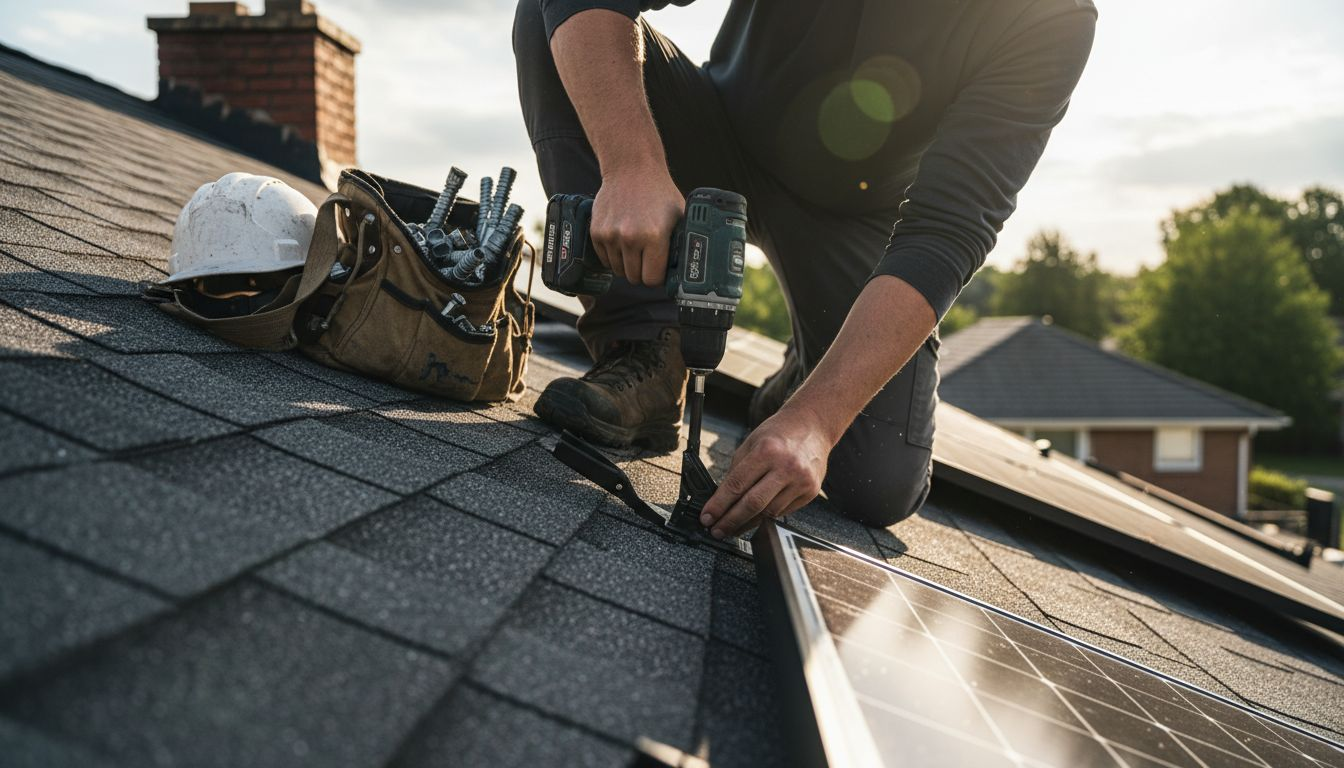
Professional installers use mounting systems that distribute weight evenly and seal penetration points to prevent leaks. Most installations include warranties covering roof-related issues for 20-25 years, protecting your investment and your home’s structural integrity.
Solar installation and maintenance myths vs. facts:
| Myth | Fact |
|---|---|
| Solar panels damage roofs | Proper installation protects roofs and prevents weathering |
| Maintenance is expensive and complex | Minimal upkeep needed; panels require cleaning only a few times yearly |
| Panels degrade quickly | Performance warranty guarantees 80-90% output after 25 years |
| Repairs are frequent and costly | No moving parts mean few breakdowns; most systems operate maintenance-free |
The simplicity of solar technology works in your favor. Panels have no moving parts, eliminating mechanical failures that plague other energy systems. Beyond occasional cleaning and annual inspections, solar systems operate independently for decades.
Minimal maintenance tasks:
- Rinse panels 2-4 times yearly to remove pollen, dust, and debris
- Schedule professional inspections every 1-2 years to check connections
- Monitor system output through mobile apps to catch performance issues early
- Trim nearby trees if branches create excessive shading
Pro Tip: Hiring certified installers reduces risk of installation-related issues and ensures manufacturer warranties remain valid, protecting you from potential problems that void coverage.
Address specific concerns by reading about solar panel maintenance requirements and whether solar panels damage roofs. For broader context, review solar myths from Forbes and solar myths from ConsumerAffairs covering installation and care misconceptions.
Environmental benefits and misconceptions of solar energy
Critics sometimes argue that solar panel manufacturing creates pollution that negates environmental benefits, but lifecycle analysis tells a different story. Solar panels offset manufacturing emissions within 1-3 years and reduce carbon footprint for decades afterward, creating a massively positive net environmental impact.
The manufacturing process does require energy and materials, but the long operational life far outweighs these initial costs. A typical residential solar system prevents 100-200 tons of carbon dioxide emissions over its lifetime, equivalent to planting thousands of trees.
Solar panel lifecycle environmental considerations:
- Manufacturing phase: Energy-intensive production with carbon emissions from panel, inverter, and mounting system creation
- Transportation and installation: Minimal environmental impact from delivery and setup processes
- Operational phase: Zero emissions for 25-30+ years while generating clean electricity
- End-of-life recycling: Growing programs recover 95% of materials including silicon, glass, and metals
- Net environmental benefit: Positive impact achieved after 1-3 years, with 20+ additional years of clean energy
Recycling initiatives continue improving as the industry matures. Major manufacturers now offer take-back programs, while specialized facilities recover valuable materials from decommissioned panels. These advances address waste concerns that worried early environmental advocates.
In Florida’s energy profile, solar provides particular value by reducing reliance on natural gas power plants that dominate the state’s electricity generation. Every kilowatt-hour from solar directly displaces fossil fuel consumption, improving air quality and reducing greenhouse gas emissions statewide.
Discover more about solar impact and environmental benefits for Florida’s ecosystem. Review comprehensive information through solar energy myths from the Center for Energy Education to understand full lifecycle environmental considerations.
Economic impact of solar on Florida property values
Homebuyers and commercial tenants increasingly prioritize energy efficiency, making solar installations valuable property upgrades rather than neutral additions. Data shows homes with solar systems command premium prices in Florida’s competitive real estate market.
Property value benefits of solar installation:
- Higher sale prices: Homes with solar sell for an average of 3-4% more than comparable properties
- Faster market transactions: Energy-efficient homes attract more buyers and sell quicker
- Increased market appeal: Younger buyers especially value sustainability and lower operating costs
- No property tax increases: Florida exempts solar installations from property tax assessments despite added value
- Commercial credibility: Businesses with solar attract environmentally conscious tenants and investors
The financial advantage extends beyond the sale price. Lower utility bills make properties more affordable to operate, an attractive feature for both residential buyers and commercial lessees. In Florida’s hot climate where air conditioning drives high electricity costs, solar represents significant ongoing savings.
Commercial properties gain additional benefits through sustainability credentials that appeal to corporate tenants with environmental goals. Green building certifications become easier to achieve, opening doors to premium tenants willing to pay higher rents for eco-friendly spaces.
Learn whether solar panels add value in Florida based on recent market data. Understand exactly how much solar panels increase home value in Florida across different regions. Verify that solar panels don’t increase property taxes in Florida thanks to state exemptions protecting your investment.
Common solar myths: what Florida should stop believing
Despite overwhelming evidence supporting solar viability, persistent myths continue circulating through neighborhoods and online forums. Clarity on these misconceptions empowers better decision-making for Florida homeowners and businesses.
Myths debunked with facts:
- Myth: Solar only works in full sun; Fact: Panels generate 40-70% output on cloudy days through diffuse light capture
- Myth: Solar is too expensive for average homeowners; Fact: Costs dropped 40%+ with financing making monthly payments lower than utility bills
- Myth: Installation damages roofs and voids warranties; Fact: Professional installation protects roofs with 20-25 year coverage guarantees
- Myth: Maintenance is complex and costly; Fact: No moving parts mean minimal upkeep with occasional cleaning sufficient
- Myth: Manufacturing harms environment more than solar helps; Fact: Carbon payback occurs in 1-3 years with 20+ years of clean energy following
Florida’s unique combination of climate conditions and financial incentives makes solar particularly viable compared to many other states. The Sunshine State offers consistent year-round generation potential, substantial state and federal tax benefits, and growing utility rates that increase solar savings over time.
Rejecting outdated myths opens the door to practical energy solutions that reduce costs, increase property values, and contribute to environmental sustainability. The evidence supporting solar adoption in Florida has never been stronger.
Revisit the fundamentals of why choose solar energy in Florida with myths cleared away. Understand what solar energy means for Florida homeowners and businesses in practical terms.
Explore professional solar solutions for your Florida property
Now that you understand the reality behind solar myths, taking the next step becomes straightforward with expert guidance. Professional resources simplify the installation process, financing decisions, and long-term system management for Florida homeowners and businesses.
PES Solar provides step-by-step support tailored to Florida’s unique regulatory environment and climate conditions. From initial assessment through financing arrangements and ongoing maintenance, experienced professionals eliminate guesswork and ensure optimal system performance. Understanding how to install solar panels with a home guide helps you know what to expect. Exploring solar financing options in Florida reveals payment structures that fit your budget. Comprehensive solar panel maintenance services ensure worry-free ownership throughout your system’s lifetime.
FAQ
Do solar panels generate power on cloudy days?
Yes, solar panels produce 40-70% of their typical output on cloudy Florida days thanks to photovoltaic technology that uses sunlight, not heat. This ensures consistent energy generation even under frequent cloud cover. The diffuse light that penetrates clouds still triggers the photovoltaic effect, maintaining steady electricity production throughout varying weather conditions.
Are solar panels expensive to install and maintain?
Installation costs have dropped over 40% in recent years, with financing options and incentives making solar affordable for most homeowners. Maintenance is low-cost since panels have no moving parts and need occasional cleaning only. Most systems operate maintenance-free for years between professional inspections.
Will solar panels damage my roof?
Properly installed panels do not harm roofs and can actually shield them from weathering and UV damage. Most installations come with warranties covering roof-related issues for 20-25 years. Professional mounting systems distribute weight evenly and seal all penetration points to prevent leaks or structural problems.
How long do solar panels last in Florida’s climate?
Solar panels typically last 25-30 years or longer with minimal performance degradation in Florida’s subtropical climate. Most manufacturers guarantee 80-90% output after 25 years, with many systems continuing to generate electricity well beyond warranty periods. Weather-resistant materials and sealed construction protect against humidity, rain, and salt air in coastal areas.
Does solar make sense for businesses in Florida?
Yes, commercial solar installations offer substantial benefits including reduced operating costs, tax incentives, improved sustainability credentials, and increased property values. Businesses benefit from accelerated depreciation schedules and larger-scale economies that improve return on investment compared to residential systems. Solar demonstrates environmental commitment that attracts eco-conscious customers and tenants.
