
Finding the right energy solution in Florida can feel overwhelming when myths about solar panel performance cloud your decision. Solar panel efficiency, which measures how effectively sunlight is converted to electricity, is key for homeowners aiming to cut utility costs and tap into valuable tax incentives. This guide clarifies solar panel efficiency, explains panel types, and helps you make choices grounded in accurate facts and local climate realities.
Table of Contents
- Solar Panel Efficiency: Core Definition And Myths
- Types Of Panels And Efficiency Ratings
- How Weather And Installation Impact Output
- Financial Benefits And Payback For Florida Homes
- Mistakes That Lower Solar Panel Performance
Key Takeaways
| Point | Details |
|---|---|
| Solar Panel Efficiency | Efficiency measures how well solar panels convert sunlight to electricity, with typical rates of 15-20%. Understanding this helps homeowners set realistic expectations. |
| Types of Solar Panels | Monocrystalline, polycrystalline, and thin-film panels each have unique efficiency ratings and use cases, so homeowners should choose based on their specific energy needs and budget. |
| Environmental Impact | Weather conditions and proper installation critically affect solar performance, emphasizing the need for site assessments and strategic planning to maximize output. |
| Financial Benefits | Solar investments in Florida offer potential savings and incentives, with payback periods often around 7-10 years, making it a financially sound decision for homeowners. |
Solar Panel Efficiency: Core Definition and Myths
Solar panel efficiency represents the critical measure of how effectively photovoltaic cells transform sunlight into electrical energy. When discussing solar panel performance, homeowners need a clear understanding of what efficiency truly means. Solar panel efficiency defines the percentage of sunlight converted directly into usable electricity, with most current commercial panels achieving between 15-20% conversion rates.
The core components influencing solar panel efficiency include several key technical factors:
- Material quality of photovoltaic cells
- Semiconductor design and electron movement
- Light absorption and reflection characteristics
- Operating temperature and heat management
- Electrical current generation mechanisms
Many Florida homeowners encounter persistent myths about solar panel performance that can distort their expectations. Common misconceptions include believing solar panels operate at 100% efficiency or that they produce zero electricity during cloudy days. In reality, modern photovoltaic technology continues advancing, with laboratory research pushing efficiency boundaries beyond traditional limitations.
Solar panel efficiency is not about perfection, but about continuous technological improvement and realistic performance expectations.
Understanding the nuanced factors affecting solar panel output helps homeowners make informed decisions. While typical commercial solar panels operate around 15-20% efficiency, ongoing research aims to minimize energy conversion losses through advanced material science and innovative design strategies.
Pro tip: Request a professional solar assessment to understand how specific panel efficiency ratings translate to real-world energy production for your unique Florida property.
Types of Panels and Efficiency Ratings
Solar panel technologies have evolved significantly, offering Florida homeowners multiple options to meet their energy needs. Solar panel types primarily include monocrystalline, polycrystalline, and thin-film technologies, each with distinct performance characteristics and efficiency ratings that impact overall energy production.
The primary solar panel categories include:
- Monocrystalline Panels
- Highest efficiency ratings (20-22%)
- Made from single-crystal silicon
- Premium performance and sleek appearance
- Higher cost per panel
- Polycrystalline Panels
- Moderate efficiency (15-17%)
- Multiple silicon crystal structures
- More affordable option
- Slightly lower performance compared to monocrystalline
- Thin-Film Panels
- Lower efficiency (10-12%)
- Flexible and lightweight design
- Best for large commercial installations
- Lower cost per square foot
Understanding efficiency ratings becomes crucial when selecting solar panels for Florida’s unique climate. Crystalline silicon technologies dominate the residential market, with monocrystalline panels representing the top-tier performance option for homeowners seeking maximum energy generation.
Efficiency isn’t just about percentages – it’s about matching panel technology to your specific energy needs and property characteristics.
When evaluating solar panel options, homeowners should consider factors beyond raw efficiency ratings, including installation space, budget constraints, and long-term energy production goals. Modern solar technologies continue advancing, promising increasingly sophisticated and efficient solutions for residential energy generation.
Here’s a quick comparison of the major solar panel types and their suitability for different needs:
| Panel Type | Best Use Case | Average Lifespan | Climate Suitability |
|---|---|---|---|
| Monocrystalline | High efficiency homes | 25-30 years | Performs well in hot climates |
| Polycrystalline | Budget-friendly installs | 20-25 years | Reliable in mild climates |
| Thin-Film | Large-scale projects | 10-20 years | Suited for shaded roofs |
Pro tip: Consult with a local solar professional to perform a comprehensive site assessment that matches your specific roof configuration and energy requirements to the most suitable panel type.
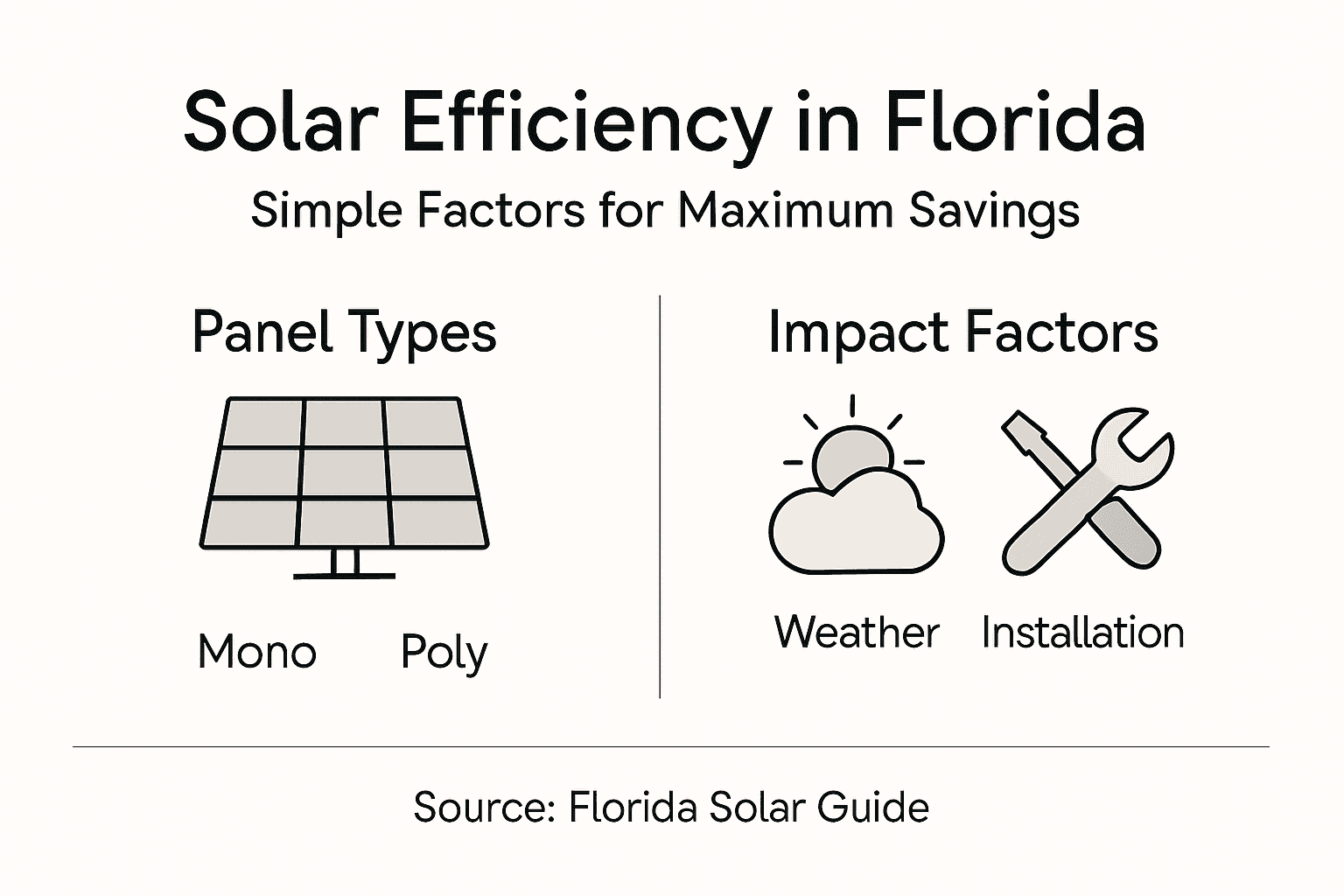
How Weather and Installation Impact Output
Solar panel performance in Florida depends critically on understanding how environmental conditions and installation strategies influence energy production. Weather conditions dramatically affect solar panel efficiency, with factors like temperature, sunlight intensity, and precipitation playing significant roles in overall system output.
Key environmental factors impacting solar panel performance include:
- Sunlight Intensity
- Direct sunlight maximizes energy generation
- Cloud cover reduces immediate output
- Seasonal variations affect total energy production
- Temperature Effects
- High temperatures decrease panel voltage
- Optimal performance occurs in moderate temperatures
- Cooling mechanisms can help maintain efficiency
- Installation Considerations
- Precise panel angle maximizes sun exposure
- Roof orientation critical for energy capture
- Minimal shading essential for consistent output
Solar energy simulation tools help homeowners predict potential energy production by analyzing complex weather patterns and site-specific conditions. These advanced technologies account for nuanced local climate characteristics that impact solar panel performance.
Solar panel efficiency is a dynamic interaction between technology, environment, and strategic installation.
Understanding these variables allows Florida homeowners to make informed decisions about solar investments, recognizing that performance extends beyond simple panel specifications. Careful site assessment and professional installation can significantly optimize solar energy generation despite challenging weather conditions.
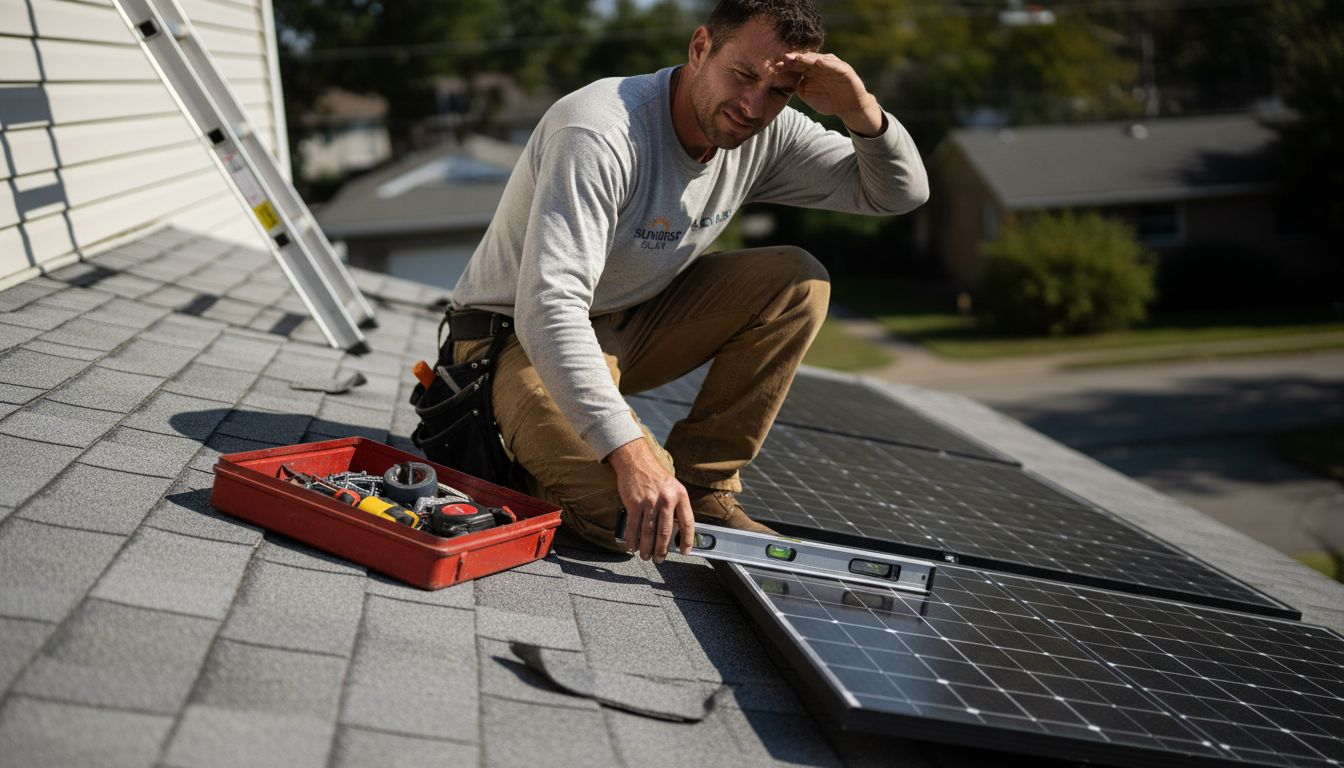
Pro tip: Request a professional solar assessment that includes detailed analysis of your specific property’s sun exposure, roof angle, and potential shading obstacles.
Financial Benefits and Payback for Florida Homes
Solar investments in Florida represent a compelling financial opportunity for homeowners seeking to reduce energy costs and leverage substantial economic incentives. Residential Clean Energy Credit provides a remarkable 30% tax credit for solar installations, dramatically lowering upfront expenses and accelerating potential return on investment.
Key financial advantages of solar panel installation include:
- Direct Energy Cost Savings
- Reduce monthly electricity bills
- Protection against rising utility rates
- Potential net metering credits
- Tax Incentive Benefits
- 30% federal tax credit
- Potential state-level solar incentives
- Accelerated depreciation for installations
- Property Value Enhancement
- Increased home market value
- Attractive feature for potential buyers
- Long-term investment in sustainable infrastructure
Solar energy programs in Florida can help homeowners lower household energy bills by up to 38%, creating significant long-term financial advantages. The state’s abundant sunlight further accelerates potential payback periods compared to less solar-friendly regions.
Financial benefits of solar extend far beyond immediate energy savings – they represent a strategic long-term investment in your property and personal economic stability.
Calculating solar payback involves analyzing installation costs, available incentives, and projected energy savings. Most Florida homeowners can expect to recover their initial investment within 7-10 years, after which solar panels continue generating essentially free electricity for their remaining 25-30 year lifespan.
To help homeowners maximize their investment, here is a summary of solar payback factors for Florida properties:
| Factor | Impact on Payback | Typical Range in Florida |
|---|---|---|
| Installation Cost | Higher upfront = longer payback | $10,000-$25,000 |
| Incentives | Reduces payback years | 30% federal tax credit |
| Energy Savings | Shortens payback period | Up to 38% bill reduction |
| Sunlight Hours | Increases energy output | 4-6 hours daily avg |
Pro tip: Consult with a local solar professional to perform a detailed financial analysis that accounts for your specific energy consumption, roof characteristics, and available incentives.
Mistakes That Lower Solar Panel Performance
Solar panel performance in Florida can be dramatically compromised by several common yet avoidable mistakes that homeowners often overlook. Solar panel performance issues stem from a range of technical and maintenance-related challenges that can significantly reduce energy generation and system efficiency.
Key performance-reducing mistakes include:
- Installation Errors
- Incorrect panel orientation
- Improper roof angle selection
- Inadequate mounting techniques
- Failure to account for local climate conditions
- Maintenance Neglect
- Irregular panel cleaning
- Dust and debris accumulation
- Lack of periodic professional inspections
- Ignoring potential electrical system issues
- Environmental Challenges
- Excessive shading from trees or structures
- Poor ventilation around panel systems
- Inadequate protection against heat
- Unexpected microclimatic variations
Dust and soiling research reveals that unchecked particle accumulation can reduce solar panel output by up to 30%, making regular maintenance critically important for Florida homeowners.
Solar panel efficiency is a delicate balance between technology, environment, and consistent care.
Understanding these potential pitfalls allows homeowners to proactively manage their solar investments, ensuring maximum energy production and system longevity. Each mistake represents an opportunity to optimize performance and protect your renewable energy infrastructure.
Pro tip: Schedule bi-annual professional solar panel inspections to identify and address potential performance-reducing issues before they significantly impact your system’s efficiency.
Maximize Your Florida Solar Savings with ProE Solar
Understanding solar panel efficiency is essential to unlocking the full potential of renewable energy for your Florida home or business. This article highlights the challenges of matching panel efficiency to your property’s unique environment and how factors like installation, panel type, and weather influence output and financial returns. If you want to overcome common performance pitfalls and make confident investment decisions that enrich your property’s value while reducing your energy bills, ProE Solar is here to help.
Our team specializes in tailored solar panel installations using top-tier products like Tesla Powerwall batteries and REC solar panels. We provide detailed assessments that consider your roof’s orientation, shading, and efficiency needs. By combining expert design with Florida-specific knowledge, we ensure your solar system delivers the savings and reliability you expect. Don’t leave your solar investment to chance when you can partner with trusted local experts.
Experience the difference that professional installation and ongoing support can make. Visit PES Solar for comprehensive solutions, explore how we maximize solar performance on your property, and learn why system optimization is key to real-world energy production.
Jumpstart your solar journey today.
Are you ready to boost your solar panel efficiency and save more on energy costs with a customized plan?
Contact ProE Solar now to schedule your free consultation and take advantage of Florida’s best solar incentives while maximizing your energy independence.
Frequently Asked Questions
What is solar panel efficiency?
Solar panel efficiency measures how effectively solar panels convert sunlight into electricity, typically expressed as a percentage. Most commercial panels achieve efficiencies between 15-20%.
How do different types of solar panels compare in efficiency?
Monocrystalline panels generally offer the highest efficiency (20-22%), followed by polycrystalline panels (15-17%) and thin-film panels (10-12%). The choice depends on energy needs, budget, and available installation space.
What environmental factors affect solar panel efficiency?
Key factors include sunlight intensity, temperature effects, and installation conditions. Direct sunlight maximizes energy production while high temperatures can reduce the panel’s voltage and efficiency.
How can I ensure optimal performance from my solar panels?
To maximize solar panel efficiency, ensure proper installation, regular maintenance (including cleaning), and minimize shading from nearby objects. A professional solar assessment can help address these factors.
