
Florida homeowners who install solar panels recover investments in less than 8 years, locking in energy costs for 25+ years while traditional electricity bills continue climbing. With 2026 policy changes on the horizon and utility rate hikes approved through 2029, understanding the true cost comparison between solar and grid power has never been more critical. This guide breaks down installation costs, payback timelines, policy impacts, and long-term savings to help you make an informed energy decision.
Table of Contents
- Understanding Florida’s Electricity Landscape
- Comparing Costs: Solar Energy Vs Traditional Electricity
- Impact Of 2026 Florida Solar Policies
- Benefits Beyond Cost: Energy Independence And Home Value
- Common Misconceptions About Solar Energy
- Making The Decision: Is Solar Right For Your Florida Home?
- Discover Expert Solar Solutions With ProESolar
- Frequently Asked Questions
Key Takeaways
| Point | Details |
|---|---|
| Payback Period | Solar systems typically recover costs in 5–7 years with decades of near-zero energy expenses afterward. |
| 2026 Policy Changes | Net metering credits will be reduced after 2026, making earlier installation more financially advantageous. |
| Energy Independence | Solar plus battery systems provide backup power during storms and increase home resale value by 4.1%. |
| Rising Grid Costs | Traditional electricity rates continue upward trends while solar locks in predictable long-term expenses. |
Understanding Florida’s Electricity Landscape
Florida homeowners face unique energy challenges due to high cooling demands, hurricane risks, and fluctuating utility rates. Before comparing solar to traditional electricity, you need a clear picture of what grid power actually costs.
Florida’s average electricity rate is about $0.14/kWh, which sits 12% below the national average. However, this seemingly reasonable rate masks significant variability. Monthly bills for typical Florida households range from $130 to $180, depending on home size and air conditioning usage during brutal summer months.
Current trends show utility companies requesting rate increases through 2029 to fund infrastructure improvements and grid resilience upgrades. These approved hikes will push your monthly costs higher regardless of your conservation efforts. Traditional electricity prices have historically risen 2–3% annually, and recent regulatory approvals suggest that pattern will accelerate.
Typical Florida household electricity consumption patterns:
- Average monthly usage: 1,100–1,400 kWh
- Peak summer consumption: 1,600–2,000 kWh due to cooling needs
- Annual electricity spending: $1,800–$2,400 for grid-dependent homes
- Projected 10-year cost increases: 25–35% based on approved rate hikes
Understanding these baseline costs helps you evaluate whether solar energy in Florida offers genuine financial advantages or simply shifts expenses from one category to another. The comparison becomes especially important when you consider that solar systems lock in production costs for decades.
Comparing Costs: Solar Energy vs Traditional Electricity
The upfront investment in solar often intimidates homeowners, but breaking down the numbers reveals a different financial story. Florida solar panel system costs typically range from $20,000 to $35,000 pre-incentives with payback periods of 5 to 7 years.
Federal tax credits immediately reduce your net cost by 30%, bringing that $25,000 system down to $17,500 out of pocket. State and local incentives can further reduce this amount. When you explore Florida solar incentives, you discover programs that make the initial investment far more manageable than the sticker price suggests.
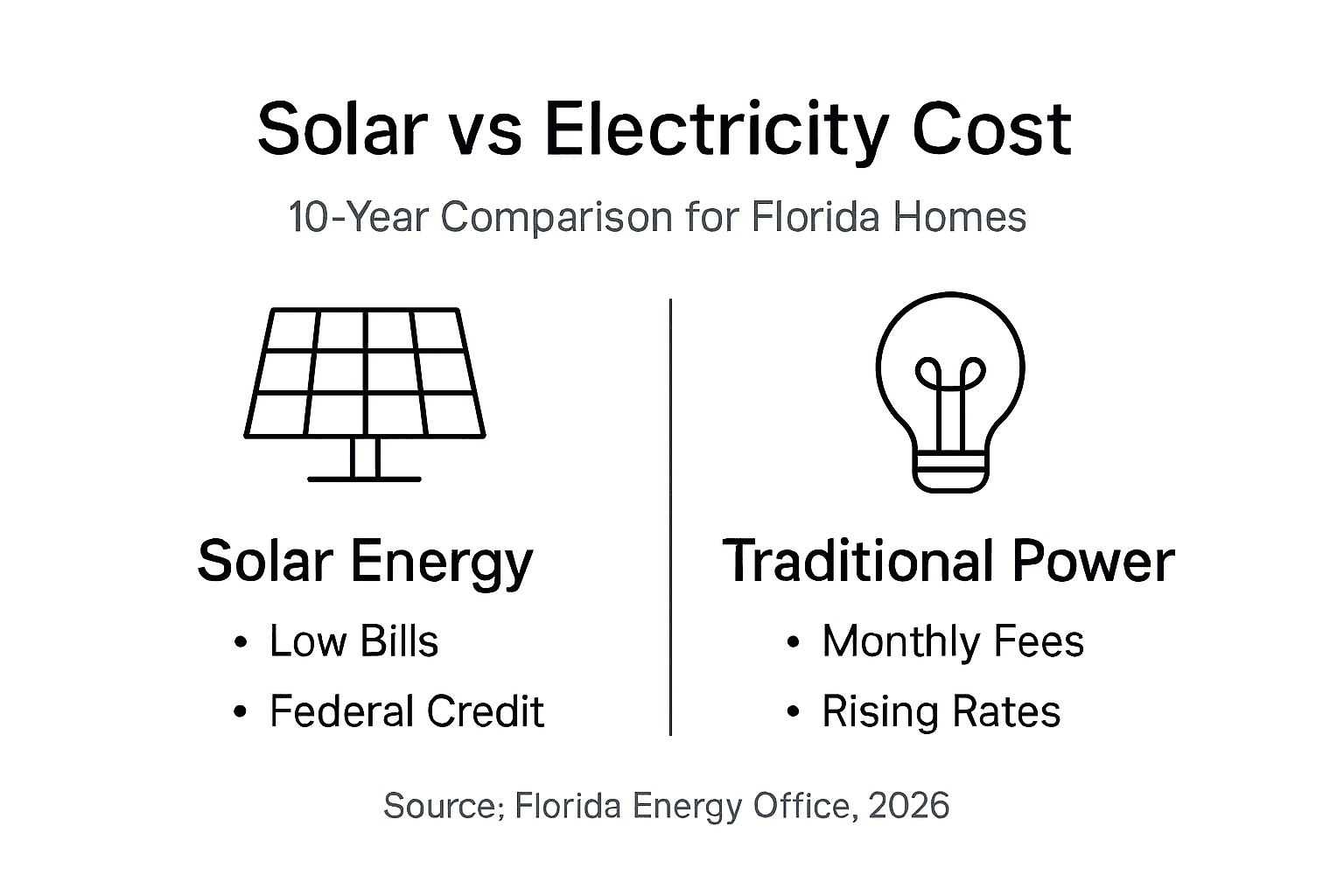
Solar vs Traditional Electricity: 10-Year Cost Comparison
| Factor | Solar Energy | Traditional Electricity |
|---|---|---|
| Initial Investment | $17,500 (after 30% tax credit) | $0 upfront |
| Year 1–7 Costs | System payment + minimal grid usage | $1,800–$2,400 annually, increasing 2–3% yearly |
| Year 8–10 Costs | Near-zero energy costs | $2,200–$3,000 annually with rate hikes |
| Total 10-Year Cost | $17,500 + ~$2,000 maintenance | $22,000–$28,000 in utility bills |
| Net Savings | $4,500–$10,500 over 10 years | None |
After payback, energy costs drop close to zero, unlike rising grid prices that continue draining your budget. The real advantage emerges in years 8 through 25, when your solar system generates free electricity while your neighbors watch their utility bills climb.
Key financial advantages of solar:
- Predictable energy costs for 25+ years
- Protection against utility rate increases
- Increased home equity and resale value
- Potential for selling excess energy back to the grid through net metering
You can estimate solar savings for your specific situation by analyzing your current usage patterns, available roof space, and local sunlight exposure. Most Florida homes receive 5–6 peak sun hours daily, providing excellent solar production potential.
Pro Tip: Evaluate solar costs over the full 25-year system lifespan, not just the payback period. This perspective reveals that solar delivers 15–20 years of essentially free electricity after initial cost recovery, while traditional electricity expenses never stop growing.
Impact of 2026 Florida Solar Policies
Timing matters enormously when installing solar in Florida. Policy changes taking effect in 2026 will significantly reduce financial benefits for homeowners who delay their decisions.
Net metering credits are expected to be reduced after 2026, meaning the rate utilities pay you for excess solar production will drop. Current net metering programs credit you at retail electricity rates, but new rules may shift to wholesale rates that are 50–70% lower. This change alone can extend your payback period by 1–2 years.
Interconnection fees for new solar installations are also under revision. Utilities argue that solar customers still rely on grid infrastructure and should contribute to maintenance costs. While reasonable in theory, these new fees add hundreds of dollars annually to your solar operating expenses, eroding long-term savings.
2026 policy changes impacting Florida solar adoption:
- Reduced net metering compensation for excess generation
- New monthly grid connection fees for solar customers
- Stricter technical requirements for system interconnection
- Phase-down of certain state-level solar incentive programs
State initiatives to improve grid resilience actually work in solar’s favor. Programs encouraging distributed generation and battery storage aim to reduce strain during peak demand and hurricane seasons. Solar homeowners contribute to these goals while capturing personal benefits.
Pro Tip: Install your solar system before 2026 policy changes take effect to lock in current net metering rates and avoid new interconnection fees. Projects completed by December 2025 qualify for grandfathered incentive structures that protect your investment.
You can review Florida solar incentives details to understand exactly which programs remain available and how upcoming changes affect your potential savings. Acting now versus waiting just one year could mean a difference of $3,000–$5,000 in lifetime system value.
Benefits Beyond Cost: Energy Independence and Home Value
Financial savings tell only part of the solar story. Florida homeowners gain significant lifestyle and security advantages that pure cost comparisons miss.
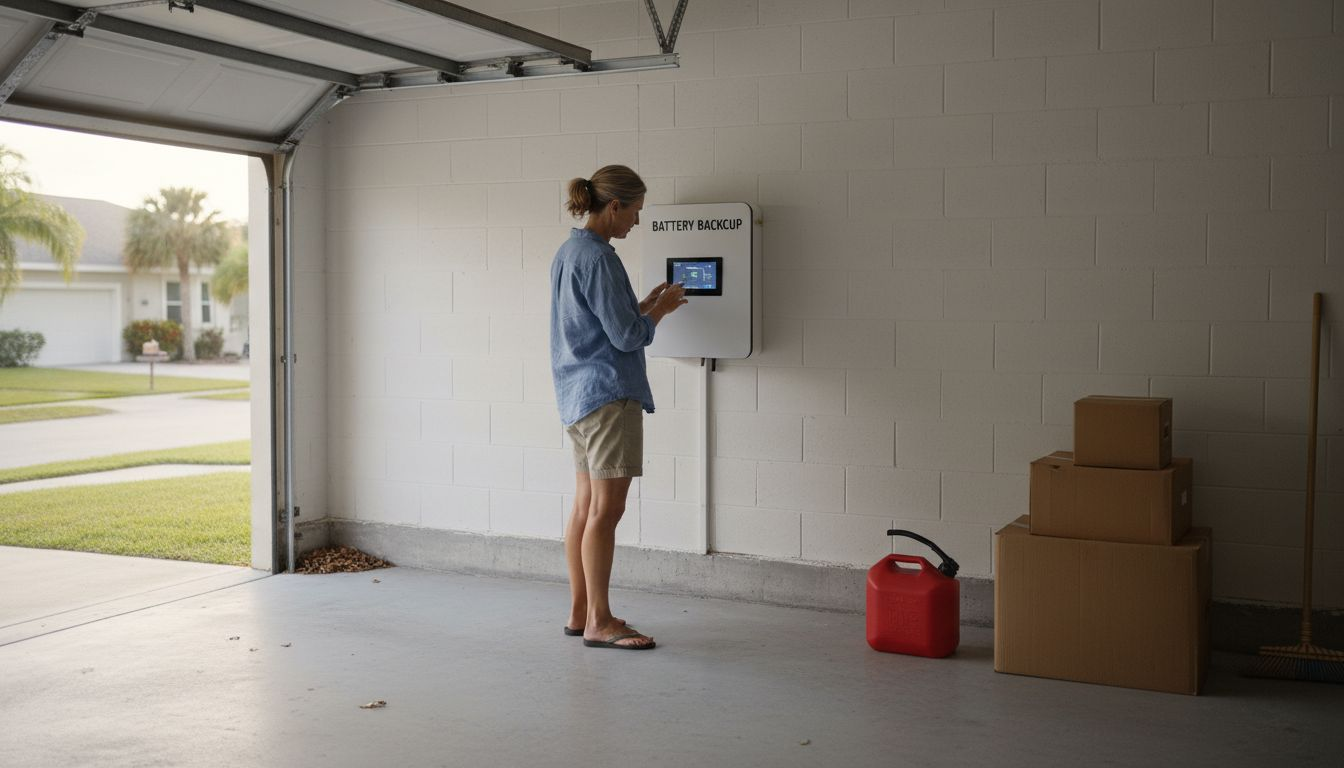
Backup power capability becomes critical during hurricane season when grid outages can last days or weeks. Solar panels paired with battery storage keep your refrigerator running, phones charged, and air conditioning operational while neighbors swelter in the dark. Systems like Tesla Powerwall store excess daytime solar production for nighttime use and emergency situations.
Homes with solar show a 4.1% higher sale price in Florida, translating to $10,000–$15,000 added value on a $300,000 property. Buyers increasingly prioritize energy efficiency and resilience, making solar panels an attractive feature that speeds sales and justifies premium pricing.
Reduced reliance on fossil fuel markets insulates you from geopolitical disruptions and commodity price swings. Natural gas price spikes, international conflicts, or domestic supply chain issues that send traditional electricity costs soaring have zero impact on your solar production costs.
“Solar installations effectively hedge against future energy inflation while providing immediate budget predictability that traditional electricity customers simply cannot access, regardless of their utility provider.”
Additional benefits driving Florida solar adoption:
- Hurricane resilience with battery backup systems
- Reduced carbon footprint and environmental impact
- Increased property marketability and faster sales
- Energy security independent of grid reliability issues
Exploring solar energy benefits in Florida reveals how these advantages compound over time. The combination of financial returns, security improvements, and property value increases creates a compelling case that extends far beyond simple utility bill reduction.
For maximum resilience, consider Florida solar battery options that provide 24-hour energy independence. Battery technology has improved dramatically while costs have dropped, making whole-home backup affordable for average homeowners.
Common Misconceptions About Solar Energy
Myths about solar costs, reliability, and performance create unnecessary hesitation among Florida homeowners. Clearing up these misconceptions helps you make decisions based on facts rather than outdated information.
-
Myth: Solar takes 15–20 years to pay back. Reality shows average solar payback in Florida is under 8 years thanks to high electricity rates, excellent sun exposure, and strong incentives. Some homeowners achieve payback in just 5–6 years depending on system size and energy usage.
-
Myth: Solar panels fail during storms. Modern solar installations withstand Category 4 hurricane winds when properly installed. Solar+battery systems improve resilience during storms by providing backup power when the grid goes down. Panels are tested to survive 1-inch hail at 50 mph and extreme wind loads.
-
Myth: Traditional electricity is cheaper overall. This comparison ignores rate increases, maintenance costs, and inflation. Solar locks in energy costs while grid prices rise 2–3% annually. Over 25 years, the cumulative difference reaches $30,000–$50,000 in favor of solar.
-
Myth: Solar requires constant expensive maintenance. Panels need occasional cleaning and inverter replacement after 10–15 years. Total maintenance costs over 25 years typically run $2,000–$3,000, far less than continued utility bill increases.
-
Myth: Solar doesn’t work on cloudy days. Panels generate electricity from indirect sunlight, producing 20–40% of peak capacity even on overcast days. Florida’s abundant sunshine ensures strong annual production despite occasional weather.
You can verify solar power reliability in Florida through performance data from thousands of existing installations across the state. Real-world results consistently exceed homeowner expectations for both production and durability.
Making the Decision: Is Solar Right for Your Florida Home?
With 2026 policy changes approaching and utility rates climbing, timing your solar installation strategically maximizes benefits. Several factors determine whether solar makes sense for your specific situation.
Acting before incentives reduce and utility rates rise captures maximum value. Federal tax credits of 30% are phasing out prompting earlier installation, and utility rate hikes approved through 2029 increase cost pressure to switch. Installing now versus waiting two years could save $4,000–$6,000 in lost incentives and higher utility expenses.
Assessing your home’s solar suitability requires evaluating roof condition, orientation, shading, and available space. South-facing roofs with minimal shade perform best, but east and west orientations still generate strong returns. Professional installers provide free site assessments that account for all these variables.
Steps for evaluating solar for your Florida home:
- Review 12 months of utility bills to understand usage patterns
- Get multiple quotes from licensed Florida solar installers
- Compare financing options including loans, leases, and cash purchases
- Verify installer credentials, warranties, and customer reviews
- Calculate payback period and lifetime savings for your situation
Benefits of professional installation by licensed Florida providers include proper permitting, optimized system design, warranty protection, and code compliance. DIY solar rarely delivers comparable performance or reliability, and financing options typically require professional installation.
Pro Tip: Capture full federal tax credits before phase-out by starting your project now. Systems installed and operational by December 31, 2026 qualify for the current 30% credit, which drops to 26% in 2027 and 22% in 2028.
Learn about choosing Florida solar installers who provide comprehensive service from design through monitoring. Quality installation matters as much as equipment selection, affecting system performance for decades.
Explore solar financing options in Florida that match your budget and financial goals. Zero-down loans, cash purchases, and power purchase agreements each offer distinct advantages depending on your tax situation and available capital.
Understand the solar system selection process for Florida homes to choose equipment that balances performance, warranty coverage, and cost. Premium panels and inverters cost more upfront but deliver better long-term returns through higher efficiency and longer lifespans.
Discover Expert Solar Solutions with ProESolar
Ready to transition from traditional electricity costs to solar savings? ProESolar guides Florida homeowners through every step of the solar journey with transparent pricing, quality equipment, and expert installation.
Our step-by-step solar installation guide walks you through assessment, system design, permitting, installation, and activation. We handle the technical complexities while you focus on envisioning lower energy bills and increased home value.
Flexible solar financing options make going solar affordable regardless of your budget. Choose from cash purchases that maximize savings, solar loans with competitive rates, or power purchase agreements with zero upfront costs. We help you select the financing structure that optimizes your return on investment.
Advanced Tesla Powerwall solar battery solutions enhance energy independence by storing excess solar production for nighttime use and emergency backup. Combine panels with batteries for true 24-hour energy security that keeps your home powered during grid outages and severe weather.
Frequently Asked Questions
What is the average lifespan of solar panels in Florida?
Quality solar panels last 25–30 years with minimal performance degradation, typically retaining 85–90% of original output after 25 years. Florida’s climate poses no special durability challenges for properly installed systems. Manufacturers provide 25-year performance warranties backing these longevity claims.
Can I install solar panels if my roof is shaded or small?
Partial shade reduces but doesn’t eliminate solar viability, especially with microinverters or power optimizers that minimize shading impacts. Small roofs may require higher-efficiency panels to generate adequate power within limited space. Professional site assessments determine whether your specific roof conditions support worthwhile solar production.
How do battery storage systems work with solar panels?
Batteries store excess daytime solar production for nighttime use and grid outages, enabling 24-hour solar power. Systems automatically switch to battery power during outages and recharge from solar panels when the sun returns. Modern batteries integrate seamlessly with solar arrays through smart inverter technology.
What happens if I sell my home with solar panels installed?
Owned solar systems transfer with the home and typically increase sale price by 4% while attracting buyers seeking energy efficiency. Leased systems require transferring the lease agreement to the new owner, which most buyers readily accept. Solar homes sell faster than comparable properties without panels in Florida’s competitive market.
Do I still pay utility bills with solar panels?
Most solar homeowners maintain grid connection and pay minimal monthly fees even when producing surplus energy. Net metering credits offset consumption during low-production periods, keeping bills near zero. Complete elimination of utility bills requires battery storage for 100% energy independence from the grid.
