
Florida homeowners and business owners face a real puzzle: energy bills keep climbing, storm season never takes a break, and the renewable energy market is flooded with options that all claim to be the best. Picking the wrong solution means wasted money, missed incentives, and a system that underperforms in Florida’s specific climate. This guide cuts through the noise by walking you through clear selection criteria, real pricing data, and the incentives that make Florida one of the strongest solar markets in the country. By the end, you’ll know exactly which solutions fit your property and how to act before policy windows close.
Table of Contents
- Criteria for choosing renewable energy solutions in Florida
- Top renewable energy solution: Solar panels
- Other emerging renewable solutions: Solar batteries, solar water heating, and more
- Special incentives and property value impacts
- Renewable solutions for Florida businesses: Tax savings and bottom-line impact
- What most lists miss: Customizing solutions for Florida’s real risks and returns
- Ready to make your move to renewable energy?
- Frequently asked questions
Key Takeaways
| Point | Details |
|---|---|
| Solar panels lead | Solar panels provide the greatest savings and value boost for most Florida homes and businesses. |
| State and federal incentives | Tax exemptions and credits significantly lower the upfront cost of renewables in Florida. |
| Home value increases | Solar installation raises home resale value while property taxes stay flat thanks to exemptions. |
| Business benefits | Florida businesses enjoy commercial-specific tax breaks and major energy savings with renewables. |
| Customization is key | Optimizing your setup for Florida’s climate and policies ensures the best returns and resilience. |
Criteria for choosing renewable energy solutions in Florida
Florida is not like the rest of the country when it comes to renewable energy. You get more than 230 sunny days per year, which makes solar performance unusually strong. But you also deal with intense heat, high air conditioning loads, and a hurricane season that can knock out the grid for days. Any renewable solution you pick needs to hold up against all three.
Before you compare products, run every option through these core criteria:
- Upfront cost and financing: What do you pay today, and what loan or lease terms are available?
- Available incentives: Florida offers sales tax and property tax exemptions, and PV performance depends heavily on these local incentives to be cost-effective.
- Property value impact: Will this upgrade raise your resale price without raising your tax bill?
- Resilience: Can the system keep your home or business running during a hurricane outage?
- Net metering access: Florida currently allows retail-rate net metering, meaning your utility credits excess power at full price. That policy may shift, so timing matters.
- Maintenance needs: Solar panels need occasional cleaning. Batteries need monitoring. Some technologies need more hands-on care than others.
You can explore the full picture of Florida solar costs and benefits to benchmark what a well-designed system should deliver in your zip code.
Pro Tip: If you’re in a hurricane-prone area, prioritize battery backup from day one. Adding storage later costs more than bundling it with your original installation.
Top renewable energy solution: Solar panels
Solar panels remain the single most effective renewable upgrade for Florida properties, and the numbers back that up. Here’s how a standard residential installation works:
- A licensed installer evaluates your roof angle, shading, and local utility rates.
- Panels are mounted and wired to an inverter that converts DC power to usable AC electricity.
- The system connects to the grid, and a bidirectional meter tracks what you use versus what you send back.
- Net metering credits your account for surplus power at retail rates.
Here’s a snapshot of what typical Florida homeowners are looking at in 2026:
| System size | Installed cost (before incentives) | After 30% federal ITC | Est. annual savings | Payback period |
|---|---|---|---|---|
| 6 kW | $18,000 | $12,600 | $1,200 | 10-13 years |
| 8 kW | $24,000 | $16,800 | $1,500 | 11-13 years |
| 10 kW | $30,000 | $21,000 | $1,800 | 11-12 years |
Florida homeowners save $1,200 to $1,800 annually on electricity, with payback periods running 8 to 13 years depending on system size and usage. The installed cost per watt typically falls between $2.50 and $3.50 before incentives.
For best results, keep these sizing and placement tips in mind:
- Face panels south or southwest for maximum output in Florida’s latitude.
- Avoid rooftop areas shaded by trees, chimneys, or neighboring structures.
- Size the system to cover 90 to 100% of your average monthly usage, not just peak months.
“Homes with solar panels sell for an average of 4% more than comparable homes without them, according to Zillow research.”
You can dig into Florida solar panel costs to get a more precise estimate for your home size and location. For ongoing savings strategies, the solar tips for savings resource covers practical ways to cut costs by up to 30%.
Pro Tip: Adding a battery like the Tesla Powerwall at installation time can reduce your total project cost by 10 to 15% compared to retrofitting later.
Other emerging renewable solutions: Solar batteries, solar water heating, and more
Solar panels are central, but Florida homes can benefit from complementary renewable technologies. Here’s how:
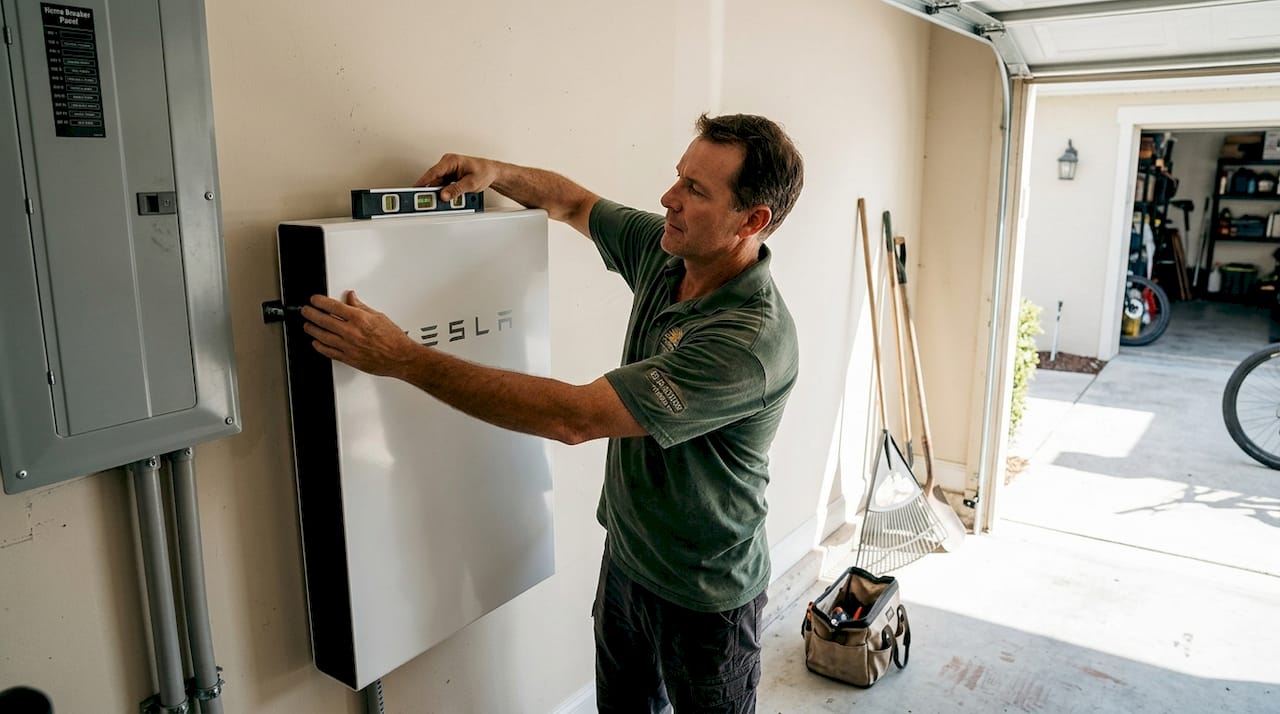
Solar batteries store excess power for use at night or during outages. Grid-tied solar with batteries provides real resilience, and the property tax exemption applies to battery upgrades as well. The main drawback is cost: a quality battery system adds $8,000 to $15,000 to your project.
Solar water heaters use roof-mounted collectors to pre-heat your water supply before it reaches your tank. They cut water heating costs by 50 to 80% and are especially effective in Florida’s climate. Upfront cost runs $2,500 to $5,000, with a payback period of 5 to 8 years.
Solar pool heaters are one of the most overlooked upgrades in Florida. They extend your swim season and eliminate gas or electric heating costs with almost no maintenance. Installation runs $2,000 to $4,000 and often pays back in under 4 years.
Geothermal heat pumps use underground temperature stability to heat and cool your home. They’re highly efficient but require significant excavation, making them better suited for new builds or major renovations.
Here’s a quick comparison to help you prioritize:
| Technology | Avg. install cost | Annual savings | Hurricane resilience |
|---|---|---|---|
| Solar panels | $18,000-$30,000 | $1,200-$1,800 | Low (without battery) |
| Solar battery | $8,000-$15,000 | Varies | High |
| Solar water heater | $2,500-$5,000 | $300-$500 | Medium |
| Solar pool heater | $2,000-$4,000 | $400-$700 | Medium |
For a deeper look at storage options, check out home solar battery options and browse solar panel examples for real Florida installations. You can also explore energy efficient upgrades that pair well with solar to lower your overall consumption.
Special incentives and property value impacts
Whether you’re retrofitting or building new, here’s how incentives and value gains stack up with renewable energy solutions.
Florida’s incentive stack is genuinely strong. Solar raises Florida home values by 4 to 4.6%, which translates to $9,000 to $20,000 on a median-priced home. The state’s property tax exemption means that added value is completely excluded from your tax assessment, so you get the resale premium without a higher annual tax bill.
Here’s what’s currently available for homeowners and businesses:
- Federal Investment Tax Credit (ITC): 30% of total system cost, applied directly to your federal tax liability.
- Florida sales tax exemption: No state sales tax on solar equipment purchases.
- Property tax exemption: Permanent exemptions on property and sales tax make Florida’s incentive environment unusually stable compared to other states.
- Net metering: Retail-rate credits for surplus power sent to the grid. This policy is under review, so locking in now matters.
- Utility rebates: Some Florida utilities offer additional cash-back programs for qualifying systems.
For homeowners, the combination of the ITC, exemptions, and net metering can cut your effective payback period by 3 to 5 years. Businesses get even more leverage, covered in the next section.
Pro Tip: Install before any net metering policy changes take effect. Systems already connected to the grid are typically grandfathered into existing rate structures for 10 to 20 years.
For a full breakdown of how value stacks up, visit solar panel home value and commercial solar incentives for business-specific details.
Renewable solutions for Florida businesses: Tax savings and bottom-line impact
Transitioning from residential to business, see how incentives and bottom-line savings scale even further for Florida companies.
For commercial property owners, the financial case for solar is even stronger. Florida businesses benefit from 80% commercial property tax abatement, accelerated MACRS depreciation (which lets you write off most of the system in years one through five), net metering, and the federal ITC. Stack those together and your effective cost can drop by 50 to 60% before you generate a single kilowatt-hour.
Key business incentives include:
- Federal ITC at 30%: Applies to commercial installations of any size.
- MACRS depreciation: Accelerated schedule lets businesses recover costs faster than standard depreciation.
- 80% property tax abatement: Reduces the assessed value increase tied to solar upgrades.
- Net metering credits: Offset utility bills month over month at retail rates.
- Utility demand charge reduction: Large commercial systems reduce peak demand charges, which often make up 30 to 40% of a business’s electric bill.
Over a 25-year system life, a typical Florida commercial installation can generate more than $81,000 in cumulative utility savings. That figure grows with utility rate increases, which have averaged 3 to 5% annually in Florida.
Two risks worth noting: leased systems don’t qualify for the ITC or depreciation benefits, so ownership almost always wins financially. Also, if your building needs hurricane hardening before installation, factor that into your total project budget.
Explore commercial solar benefits and Florida business solar savings to model the numbers for your specific facility.
What most lists miss: Customizing solutions for Florida’s real risks and returns
Most national renewable energy guides treat Florida like any other sunny state. They recommend the biggest system you can afford, skip the battery, and call it a day. That advice leaves real money on the table and creates real risk.
Here’s what we’ve seen working with Florida homeowners and businesses over the years: shade is the silent killer of solar ROI. A system that looks perfect on paper can underperform by 20 to 30% if a single tree or roofline casts shadow during peak hours. A thorough site assessment isn’t optional. It’s the foundation of a good investment.
Ownership beats leasing every time in Florida’s current incentive environment. Leasing locks you out of the ITC, the property tax exemption, and the home value premium. You’re essentially paying for someone else’s tax benefit.
Battery planning is also more nuanced than most guides admit. You don’t need to back up your entire home. A well-designed partial backup system covering critical loads like refrigeration, medical equipment, and lighting costs far less and still keeps you functional through a multi-day outage.
If you’re still weighing the timing question, timing your solar investment breaks down why 2026 is a particularly strong window given current incentive levels and utility rate trends.
Ready to make your move to renewable energy?
You now have a clear picture of what works in Florida, what the numbers look like, and which incentives are worth acting on quickly. The next step is turning that knowledge into a real plan for your property.
At PES Solar, we specialize in designing systems that match Florida’s specific climate, incentive landscape, and storm risks. Whether you’re starting from scratch or adding storage to an existing system, our solar installation guide walks you through every step of the process. If cost is your main concern, our solar financing options page covers loans, leases, and power purchase agreements so you can find the path that fits your budget. Reach out for a free estimate and let’s build a system that actually works for your property.
Frequently asked questions
How much can Florida homeowners save each year by installing solar panels?
Florida homeowners typically save $1,200 to $1,800 annually on electricity bills, depending on system size and household consumption.
What Florida incentives are available for solar and renewable energy installations?
Florida offers permanent sales and property tax exemptions for solar systems, plus access to net metering and the federal 30% Investment Tax Credit.
Does going solar in Florida increase home or business value?
Yes. Solar raises Florida home values by 4 to 4.6% on average, and the state’s property tax exemption means that added value won’t increase your annual tax bill.
Are solar batteries worth it for Florida homes and businesses?
For properties in hurricane-prone areas, batteries are highly recommended. They add upfront cost but provide critical backup power during the extended outages Florida storms regularly cause.
What are important risks to consider with renewable energy in Florida?
Shade, potential net metering policy changes, hurricane hardening requirements, and possible reductions in federal credits after 2025 are the main factors that can affect your long-term returns.
Recommended
- Top 7 Renewable Energy Benefits For Florida Homeowners In 2026
- Solar Power Tips For Florida 2026: Cut Costs By 30%
- Solar Vs Traditional Electricity Florida 2026: Save 60%
- Solar Financing Examples For Florida Homeowners In 2026
- Cozee Bay – Energy Efficient Home Products: Making Everyday Living Sustainable
